The Independent Ear

2015 WPFW Jazz Programmer’s Poll

wpfwLogo
When I arrived in DC in ’89 to accept a position at the former National Jazz Service Organization, Washington was blessed with an abundance of jazz radio, particularly by comparison to most markets. Back then there was WDCU “Jazz 90” and WPFW 89.3 FM. Few markets in the world could boast of one public and one community radio station whose majority music mandate was jazz. Those radio riches only lasted a few more years as the University of the District of Columbia, which held the license and served as home for WDCU, eventually abdicated its throne and caved in to university fiscal shorts, foolishly and myopically selling off its frequency to CSPan Radio.

Meanwhile I had begun what has been a very fruitful 26-year programming relationship with WPFW 89.3 FM. Starting with a long stint as “Friday Drivetime Jazz” host, later migrating to a 5am-8am slot on Thursdays, and my current 10pm-midnight Wednesday “Night Jazz” post. For those not familiar, WPFW is part of the perpetually embattled Pacifica Network of stations, the last outpost of left-leaning radio in America. WPFW in recent years has adopted the operating credo of “Jazz and Justice Radio,” owing to its provocative mix of peace & justice news, talk, and hard-hitting information programming, and the continued provenance of jazz as the core of a music mix that also includes a M-F noontime blues hour, a quite popular old school R&B and Caribbean music mix on Saturdays, and a weekend liberation-oriented hip hop collective. Luckily for WPFW, when WDCU went the news/talk route under CSPan’s stewardship, the best & brightest of its former jazz programmers migrated over to WPFW, including Candy Shannon, Faunee Williams, Tim Masters, and the venerable Rusty Hassan, DC’s reigning jazz radio veteran.

Jazz programming on WPFW is in the main a highly popular Sunday strip 9am-6pm; M-F 5am-8am, and 7pm throughout most nights, with certain after-midnight programmers striving for an eclectic mix with jazz at its core. And in this day and age that is indeed a robust menu of jazz programming. Check www.wpfwfm.org for complete scheduling information, our “listen live” streaming service, and running playlists during music programming.

Joining the year-end parade of “Best Of” listings, we recently conducted the 2015 WPFW Jazz Programmer’s Poll, which asked programmers to list their picks for the top ten new releases of 2015, as well as their personal picks for their three favorite live jazz performance experiences during the year. Clearly the results prove out the eclectic, free form nature of WPFW, jazz programming not governed by a station playlist; jazz programming governed purely by our volunteer programmers’ individual tastes. Each WPFW programmer has a weekly stint, generally in the 2-3 hour range, and all program their own shows from their personal record collections. I doubt seriously if jazz programming anywhere in the U.S. is more eclectic than is reflected in the results of our 2015 WPFW Jazz Programmer’s Poll.

WPFW 2015 Jazz Programmer’s Poll

TEN BEST
(Artist/Album title/Label)
Cecile McLorin Salvant, For One To Love, Mack Avenue
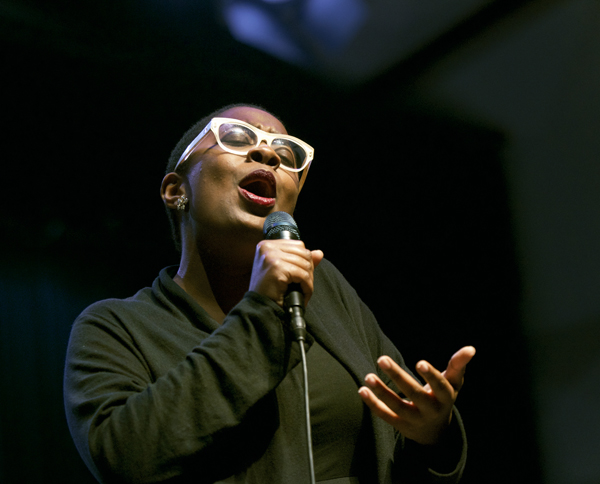
Tri-C JazzFest 2013 Photos by Jeff Forman Tri-C JazzFest 2013 Photos by Jeff Forman

Heads of State (Gary Bartz/Larry Willis/Buster Williams/Al Foster), Search for Peace, Smoke Sessions

Kamasi Washington, The Epic, Brainfeeder

Jack DeJohnette, Made in Chicago, ECM

Steve Coleman, Synovial Joints, Pi

Joe Locke, Love is a Pendulum, Motema

Maria Schneider, The Thompson Fields, ArtistsShare

Vijay Iyer, Break Stuff, ECM

Danilo Perez/John Patitucci/Brian Blade, Children of the Light, Mack Avenue

Fred Hersch, Solo, Palmetto

AND THE REST OF THE BEST OF 2015…
Jose James, Yesterday I Had the Blues, Blue Note
Tomeka Reid Quartet, Thirsty Ear
Nicole Mitchell/Tomeka Reid/Mike Reed, Artifacts, 482 Music
Sons of Kemet, Lest We Forget What We Came Here For, Naim
The Avant-Age Garde, Heroes Are Gang Leaders, CD Baby
Dave Douglas, Brazen Heart, Greenleaf
Makaya McCraven, In The Moment, International Anthem
Weather Report, The Legendary Live Tapes 1978-1981, Legacy
John Scofield, Past Present, Impulse!
Luciana Souza, Speaking in Tongues, Sunnyside
Rudresh Mahanthappa, Bird Calls. ACT
Aaron Diehl, Continuum, Mack Avenue
Satoka Fuji Tobiro, Yamiyo Ni Karasu, Libra
Lionel Loueke, Gaia, Blue Note
Amina Figarova, Blue Whisper, In + Out

Amina
Chris Potter Underground Orchestra, Imaginary Cities, ECM
William Parker, For Those Who Are Still, AUM Fidelity
Jamal Moore & Organix Trio, Ancestral Communion, Ankh Djed
Henry Threadgill, In for a Penny, In for a Pound, Pi
Darius Jones, Le Bebe de Brigette, AUM Fidelity
Lizz Wright, Freedom & Surrender, Concord
Charenee Wade, The Offering-The Music of Gil Scott-Heron, Motema
Elijah Jamal Balbed, Lessons from the Streets, EJB
Christian McBride Trio, Live at the Village Vanguard, Mack Avenue
Robert Glasper Trio, Covered, Blue Note
Chris Washburne & The Syotos Band, Low Ridin’, Zoho
Abbey Lincoln, Sophisticated Abbey, HighNote
Ben Williams, Coming of Age, Concord
Harold Mabern, Afro Blue, Smoke Sessions
David S. Ware & Apogee, Birth of a Being, AUM Fidelity
Orrin Evans, The Evolution of Oneself, Smoke Sessions
George Cables, In Good Company, HighNote
Matthew Shipp, The Conduct of Jazz, Thirsty Ear
Jason Miles/Ingrid Jensen, Kind of New, Whaling City
Jeremy Pelt, Tales Musings and Other Reveries
Ron Carter, My Personal Songbook, WDR
Marshall Gilkes & the WDR Big Band, Koln, WDR
Terri Lyne Carrington, Mosaic, Concord
Stanley Jordan & Kevin Eubanks, Duets, Mack Avenue
Snarky Puppy, Sylvia, Impulse!/UMC
Charles Lloyd, Wild Man Dance, Blue Note
SF Jazz Collective, Live at SF Jazz Center, SF Jazz
Albert “Tootie” Heath/Ethan Iverson/Ben Street, Philadelphia Beat, Sunnyside
Sarah Elizabeth Charles, Inner Dialogue, Musiq
Najee, You Me and Forever, Shanachie

FAVORITE 2015 DC-Area JAZZ PERFORMANCES…
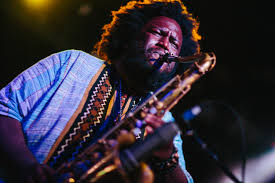
Kamasi
Kamasi Washington (Howard Theatre)
Ernest Dawkins Orchestra (CapitalBop Loft Jazz/DC Jazz Festival)

Nicole Mitchell/Tomeka Reid/Mike Reed (CapitalBop Loft Jazz/DC Jazz Festival)
Tomeka Reid Quartet (Transparent Productions/Bohemian Caverns)
The Cookers (Historic Synagogue Sixth & I/DC Jazz Festival)
Tenor Summit (Paul Carr/Craig Handy/Marcus Strickland/Mid Atlantic Jazz Fest)
Jamal Moore and Organix Trio (CapitalBop Loft Jazz/DC Jazz Festival)
Andrew White (Blues Alley)
Jack DeJohnette (the Hamilton/DC Jazz Festival)
Cassandra Wilson (Kennedy Center)
Revive: Clifford Brown/Sarah Vaughan Reimagined (Kennedy Center)
Jason Moran Finding a Line: Skateboarding, Music and Media (Kennedy Center)
Strickland Brothers (Kennedy Center)
Cecile McLorin Salvant (Historic Synagogue Sixth & I)
Sean Jones (Mid Atlantic Jazz Festival)
Posted in General Discussion | 3 Comments

DC Jazz Festival announces major new competition

Band

The DC Jazz Festival Introduces DCJazzPrix

New national competition will recognize and support top rising jazz band talent

WASHINGTON – December 17, 2015 — The DC Jazz Festival® (DC JazzFest) today announced the launch of DCJazzPrix, a national jazz band competition that aims to identify and showcase emerging and exceptional jazz band talent from across the U.S. The event is designed to help launch and promote the careers of emerging jazz artists committed to sustained and creative band development and performance opportunities.

Providing a unique professional performance and adjudication platform for jazz bands that is outside of the traditional academic or commercial competition arenas, the Call for Applications and Guidelines for DCJazzPrix – including eligibility, review criteria, terms, registration payment and digital submission requirements – will be announced on January 7, 2016 at dcjazzprix.org. A prestigious panel will adjudicate with an array of criteria based on artistic merit and artistic excellence.

“We are excited to introduce DCJazzPrix, a national competition that adds yet more cultural significance to the DC Jazz Festival, and to the national jazz community,” said Artistic Director Willard Jenkins. “We envision the competition adding a bold new element to our festival, one which responds to the challenges lesser-known bands face when seeking inclusion in the major jazz festival circuit, even when they are clearly excellent and poised for greater exposure.”

The competition will offer a well-timed catalyst to elevate emerging jazz bands to a national festival platform by providing a substantial $15,000 cash prize and year-long association with the DC Jazz Festival to include: extensive public exposure; business support and career navigation services; and a main stage 2017 DC Jazz Festival paid engagement.

“DCJazzPrix is a natural extension of DC JazzFest’s cultural mission, and is a wonderful complement to the rich jazz legacy of Washington, DC” said Executive Director Sunny Sumter.

The fastest-growing jazz festival in the U.S., the DC Jazz Festival dates are June 10-19, 2016. For more information about the DC Jazz Festival, visit www.dcjazzfest.org.

Keep up with the DCJF:

• Twitter: @dcjazzfest #DCJazzPrix

• Facebook: facebook.com/dcjazzfest
f
• Instagram: @dcjazzfest

High resolution imagery here: https://www.dropbox.com/sh/rmw2z7rms4s38vp/AAAwtWpJ0mGmh9Wg1BZcAbP6a?dl=0

Posted in General Discussion | Leave a comment

In the latest edition of Brilliant Corners

Interview of nationally-recognized jazz author highlight of journal

Brilliant Corners

December 8, 2015

Interview of nationally-recognized jazz author highlight of journal
Download Image: Web

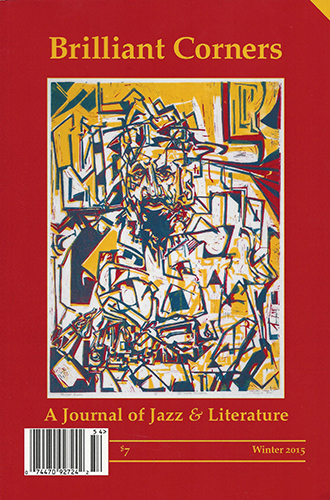
The recently released issue of “Brilliant Corners,” a unique blend of literature about jazz, features an interview by prominent jazz author Willard Jenkins. Sascha Feinstein, Ph.D., professor of English and creative writing at Lycoming College, conducted the interview last May.

The publication includes excerpts of three of Jenkins’ writings and an excerpt from an earlier interview he gave. Under Feinstein’s guidance, Jenkins shares some of the larger influences on his writing style and love for music, particularly jazz.

Willard Jenkins is a journalist, arts consultant and presenter, and co-author of “African Rhythms: The Autobiography of Randy Weston.” His writings have appeared in scores of publications specializing in music. He also has written liner material for records and CDs of a number of jazz greats, including Dizzy Gillespie, Clifford Jordan, Joe Lovano and Cannonball Adderley.

Readers also will find an enticing array of poetry, stories and essays about the musical genre by a variety of authors, including Al Young, a former poet laureate of California and author of four books; poet and trombonist Tony Whedon; Robert Gibb, whose work has earned a National Poetry Series award and a Pushcart Prize; and poets Linda Susan Jackson and Richard Jackson, who have earned multiple fellowships for their works.

Founded in 1996, the journal is edited by Feinstein and published biannually. A subscription costs $12 a year ($18 for international orders). Send check or money to Brilliant Corners, Lycoming College, 700 College Place, Williamsport, PA 17701. More information can be found at www.lycoming.edu/BrilliantCorners.

Published at Lycoming College, “Brilliant Corners” is funded in part by Lycoming College, the National Endowment for the Arts, the Pennsylvania Council of the Arts and private endowments.

Posted in General Discussion | Leave a comment

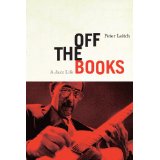
On the Bandstand but Off The Books

Peter Leitch

Look under jazz book releases at your favorite online literary retailer – and yes, I almost said ‘at your favorite bookstore’ unleashing the old school impulse – and you’ll find hundreds of titles chronicling the lives, times, and even minute recording session details of the giants of jazz. On that latter tip there is a growing legion of useful, informative books simply detailing one recording period or even one recording session in the recorded life of Miles Davis, the definitive volume of which is my friend and colleague Ashley Khan’s chronicle of all things “Kind of Blue.” We’ll call it the White Collar section, that section of the aggregate jazz bibliography dedicated to the giants. But what of those relative blue collar jazz artists, those who have contributed much, labored mightily and largely successfully in the figurative trenches of the art form, yet never really achieved top of the polls status? Such an artist is the ever-swinging guitarist Peter Leitch, and he’s written a book appropriately titled Off The Books (A Jazz Life; Vehicule Press).

For those not familiar, Peter Leitch is one of those no pretense, superb craftsmen whose artistry is measured by his skillful way around a standard, knowing and loving the blues in the pit of his stomach, and his ability to enhance whatever setting he graces. He’s one of those artists whose warmth and humility – in both his guitar playing and his personality – may have left him slightly out of focus of the big spotlight, but he’s no less worth your attention than his more celebrated peer artists.

There is much to be learned from this book of the trials, tribulations and triumphs of the jazz musician’s life, and Leitch tells it quite successfully. From humble beginnings as an English-speaking Montreal native, Leitch aptly details growing up musically in Canada. Along the way there is much to be learned of the various players who’ve developed jazz, particularly modern jazz, in our neighbor to the north, including pursuits of the music in and around Montreal, in the outreaches of Quebec province where you’ve likely never ventured, and informative helpings on the jazz life in Toronto, where the guitarist migrated in the 1970s. One of the more valuable aspects of this book is that Leith, ever the keen and perceptive observer, pulls no punches in his clear eyed assessment of his many scenes or the musicians he encounters along the way, dry wit firmly in place, including this passage on life in Toronto:

“Toronto’s population in the late seventies and early eighties appeared to consist mainly of people whose belief in the financial, social, and political systems was unshakeable, although among musicians many of the jazz and studio players seemed to be involved with various spiritual advisors, gurus, and therapy groups. There was a character called Mr. Mills, who had quite an international following. You gave him a percentage of your income, and if you gave him enough money, you were allowed to wash his feet. There was another one called Bawa, who was supposedly four hundred years old, and had never been seen to ingest food or water. There was a Catholic psychoanalytic commune called Therafields, which allowed you to pick bean sprouts on their farm if you paid them, which they then sold in health food stores. It seemed that a lot of musicians in Toronto were ripe for this kind of con.”

Throughout the book are great stories on the life of the jobbing jazz musician – the have axe will travel, itinerant life of the sideman, adept in any setting, valued by traveling soloists playing Canada from south of the border looking for a complimentary musician with big ears and a willingness to schlep that guitar case far and wide in pursuit of the jazz truth. And along the way Peter Leitch drops pungent sidebars and stories of encounters in that life, like his account of this stop on the road with the late B-3 master and Prestige recording artist Don Patterson: “One night at the Flight Deck club in Wilmington (hometown of Clifford Brown) I was sitting at the bar between sets and started conversing with an older black man, who seemed to be quite knowledgeable about the music. It turned out he had gone to school with Clifford Brown. He talked about how serious Clifford was and how much he practiced, and I started thinking about how this music was just not a cultural reality in the places I had been living. What were the chances of having this conversation in Toronto or Montreal? I had learned by now that it wasn’t enough to just try to play this music. You had to understand where it came from, intimately know the culture that produced it, and know in whose footsteps you were following.”

Inevitably Peter Leitch’s road led to New York, where he details the hard scrabble life of a jobbing jazz musician, including both harrowing street life encounters, the follies of Manhattan apartment rental, the joys and idiosyncrasies of recording the many sessions he made for the Reservoir and Criss Cross labels at Rudy Van Gelder’s historic studio, and beating back the devil of drug addiction. Leitch pulls no punches on the racial idiosyncracies of the music, recounting how in New York he found his most welcoming home, both in terms of playing and establishing lasting interpersonal relationships, largely with black musicians. This passage illustrates Leitch’s view of the inevitable racial politics in jazz:

“[John] Hicks told me he’d gotten a little heat from the black community for hiring me at Bradley’s. I have always accepted the fact that this music is the creation of black Americans, but I have never bought into the concept that white people “stole the music.” There has always been a lot of stealing going on in music or any art, by people of every conceivable race or color. In my own case, I’ve never felt that I’d stolen something. This music was given to me. And it was given with a lot of love. By a lot of black people. By the happenstance of employment I happened to be thrown into the culture that produced the music, which was such a valuable experience. If you want to really learn about something, you’d better understand the culture that produced it. That said, coming to the United States from Canada, especially Montreal where there was a lot of diversity, I failed to realize that race was still such a huge issue in America. Racism has aways walked hand in hand with its partner, ignorance. But come to think of it, by the same token so to speak, ignorance and stupidity are two of the few things in our society that know no color line. When you consider the four hundred years of slavery and repression, it should come as no surprise that racism (on both sides) exists in jazz, supposedly the most democratic of musical forms. John put it in perspective when we were in the South together. As we got out of the van at a gas station somewhere in Arkansas, John asks, “Where’s the colored toilet?

Along the way Leitch became one of the MVPs of the fertile 80s/90s late night scene at Bradley’s, one of the great musicians stomping grounds which achieved a measure of fame as much for its late night hang atmosphere as for the potent duos, trios and cavalcade of brilliant piano players it boasted. Among those piano masters was another fellow relative underdog, the late, incredible John Hicks, with whom Leitch developed a beautiful friendship (ditto altoist Bobby Watson and bassist Ray Drummond) rooted in the Bradley’s scene, relationships recounted succinctly in this book.

“In early January of 1990 John hired me for my first week at Bradley’s, with Ray [Drummond] on bass. Bradley’s was not just a world-class jazz club, it also served as a clearing house and office for the musicians. It was the only club with a 2am set, which attracted a lot of musicians who would drop by after their earlier gigs. If anything happened in the jazz world, you heard it first there. Being at Bradley’s was breathing rarified air. New York forces you to grow and develop faster than in other places. You would be playing and look up and there’s Tommy Flanagan sitting there. Or Kenny Barron. Or George Coleman. Or Ron Carter. Your idols, people you had grown up listening to on records were sitting there checking you out. Scared the hell out of me! It was like going to school every night, and made me work that much harder on the music. I would get up the next day and practice some more. One of my fond memories is of sitting in the office at Bradley’s one morning around 5 am with John Hicks and Tommy Flanagan, listening to Tommy tell about John Coltrane laying “Giant Steps” on him.” Sorry ya’ll, but you just don’t get that kind of wisdom from the academy!

Ever the keen observer, Leitch’s perceptive eye leads him inevitably to photography, first as a hobbyist’s pursuit and eventually as a serious artistic obsession. His fascination with life below the Mason Dixon line takes him on fascinating photographic excursions into the heart of Dixie, richly detailed in this chronicle. Off The Books is a vivid, quite successful portrait – roots & fruits, warts & triumphs – of what it means to be a working jazz musician, sidebars and all – well worth your read.

Posted in General Discussion | 1 Comment

A New day for jazz vinyl & delivery

Full disclosure: I’m no audiophile. Call it a record collector’s conceit or think of it as a measure of protectionism for an old-schooler who has been collecting vinyl Lps (and a few 45s to boot) since the late 1960s, amassing a decent collection (which the average Jack or Jill might consider rather massive) of vinyl records that dominates a large room, As a result I’ve viewed with curiosity news of the resurgence of interest in vinyl records. Sounding the steady drumbeat pointing to the whys & wherefores of this resurgence has been Jim Eigo and his daily Jazz Promo Services posts. Having volunteered at my local Friends of the Library used book store in Wheaton, MD for the last several years as weekly vinyl recordings intake manager (a stint chronicled in an earlier Independent Ear post), it was with interest that I read the following news:

“A new kind of record label with a curated repertoire of world class musicians. Newvelle ships six impeccably produced and beautifully packaged vinyl LPs to your door every year. This music is available only on vinyl and solely through Newvelle.”

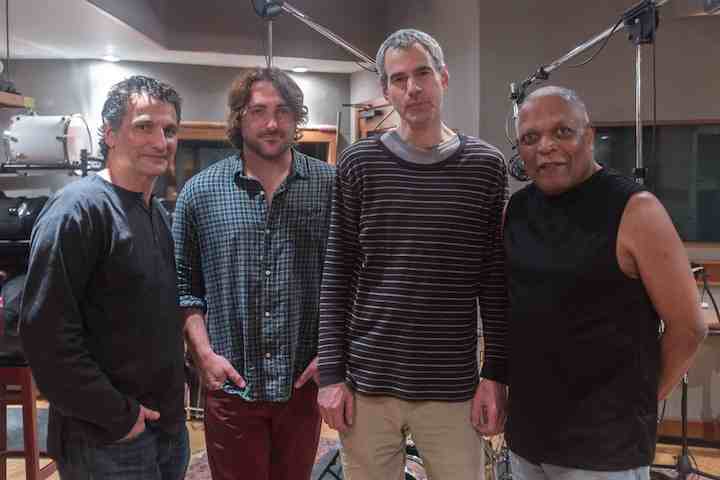
Spotting such endlessly creative artists as NEA Jazz Master drummer Jack DeJohnette (delivering a solo piano date no less!) and pianist Frank Kimbrough among the initial batch of Newvelle releases, not to mention counting drummer Billy Hart and bassist John Patitucci as sidemen in the accompanying photo as participants in Newvelle’s maiden voyage releases, guaranteed a certain high level of artistic sophistication. Those names alone lent a certain credibility, and overall the whole concept seemed rather intriguing; so we sought one of the Newvelle principles, Elan Mehler, for some whys & wherefores.

What is the philosophy behind the launch of Newvelle and why vinyl only?
I think vinyl is answering a question in the music industry that the industry didn’t see coming, and that is “How do I reconnect with recorded music?” With Newvelle, we have recorded some world class music and we’re releasing it on what we think is the best sounding medium for this music.

However, what we really drew us to creating Newvelle is that we saw in this vinyl resurgence an opportunity for a new model for releasing music. A musically and aesthetically uncompromising model, devoted to high quality, where musicians are paid upfront and keep their rights to the music and where a stable economic model is provided by a membership base, allowing the art to be paramount.

Detail how one becomes a “member” of Newvelle and the benefits of membership.
Currently we have two ways to become a member.
1. Once we launch, prospective members will be asked to pay an entrance fee and then a monthly fee. There will be some exclusive online content available to members and invitations to special events/concerts; but the principal benefit of membership is that members will be sent one record to their home every other month. We believe that we are offering something unique. We are not disseminating any digital copies of these albums and these are not re-issues of old recordings; what we are doing is testing if there’s enough of an audience that wants exclusive access to this brand new music, recorded impeccably and presented in only one format, to make this model work. Members will be supporting a model from studio to press that actually pays musicians up front AND lets them keep control and rights to their music.

2. Starting in January 2016 we are launching a crowd-funding campaign to get Newvelle off the ground. During the 6 week campaign we will be selling two month memberships. This means you will get Frank Kimbrough’s record sent to you, with no further obligation to buy. Members will not have to pay the membership fee if they choose to continue. We will also be selling 12 month subscriptions upfront which means of course that all 6 records will be sent over the course of the year, with no entrance or monthly fees.

Apparently curated cover art is a key component of Newvelle. Talk about how that works and the role visual art will play in Newvelle going forward.
The cover art follows directly from the medium. Once you have only one format in which you’re releasing and that format is a 12’ by 12’ vinyl (no digital, no tiny CD cover), well than you have a beautiful canvas to work with. So, although it certainly starts with the music, we have been able to attract some world class artists that are interested in participating in a project like this. Bernard Plossu, who’s photos are comprising the covers and gatefold interiors of our first series of six records, is a national treasure in France. His work is inspiring, creative, surprising, mysterious and above all, gorgeous. We feel extremely blessed that he has allowed us access to his enormous catalogue. Curating the series was a joy and a challenge. I called an old friend, Andrew Burke from the celebrated artistic duo Simmons and Burke to help me tease out relationships. The idea is really to utilize all the space of 6 vinyl covers and 6 interiors to allow something beautiful to happen.

Lastly, we didn’t want to have traditional liner notes on the record. But we did want to have some text. Incredibly, we found poet Tracy K. Smith was willing to print copies of her work from her Pulitzer prize winning collection “Life on Mars” on the record sleeves. As we were selecting works to use, I found pieces that I think fit beautifully the aesthetic and the intention and, for lack of a better word, the “vibe” of what we were trying to produce. The concept is to have separate streams of artistic output; musical, visual and literary, all presented in the best possible quality we can achieve, and without any part leaning on any other. The relationships between the musical, visual and literary are hopefully not explicit but felt.

How do you envision and position these releases as “bi-monthly events” as you describe them?
Well thats pretty much what I was getting at in the last response. It’s also about the way that vinyl makes you slow down when you listen: you have to flip a vinyl record over after 20 minutes, you can’t put it on in your car. Its more of a meeting with the music then something you can just plug into your daily life; a bi-monthly rendezvous. (We are at least 50% French here, we’re allowed to say things like that.)

Frank Kimbrough head shot low quality
FRANK KIMBROUGH

How did you forge relationships with the artists in your initial releases, and why those particular artists?
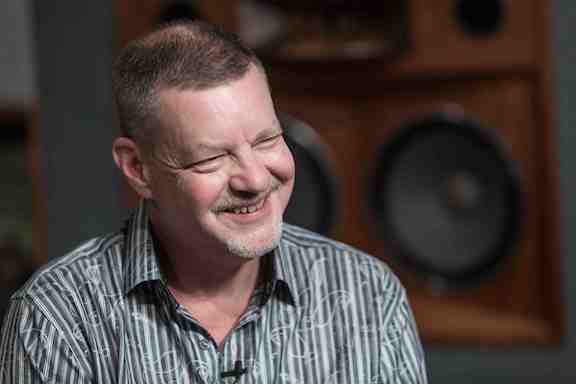
I’m a pianist and composer that worked in NYC for 12 years, before moving to Paris in 2010, so I have relationships with a lot of musicians in New York. The very first person I thought of when I set up this project was Frank Kimbrough. I studied with Frank at NYU in the late 90’s so I know him well. Frank’s tone, touch and above all his melodic and lyrical sense embody exactly what we’re looking to release at Newvelle. Frank’s been living in NYC since the 80’s but doesn’t fall into the idea of a “New York sound” rather, Frank embodies what I think is a truer sense of New York Jazz. Frank is a musician’s musician, he can play with the best and make them sound better, but he’s always himself, and has a voice that rings out. I wrote more about Frank and my relationship with him at NYU here. Our first release with Frank also features musicians that I’ve admired and played a lot with in NYC. Andrew Zimmerman the saxophonist is another person I thought of immediately. I think Andrew has that same, rare sense of melodic purpose and he plays with one of the best tenor saxophone sounds on earth.

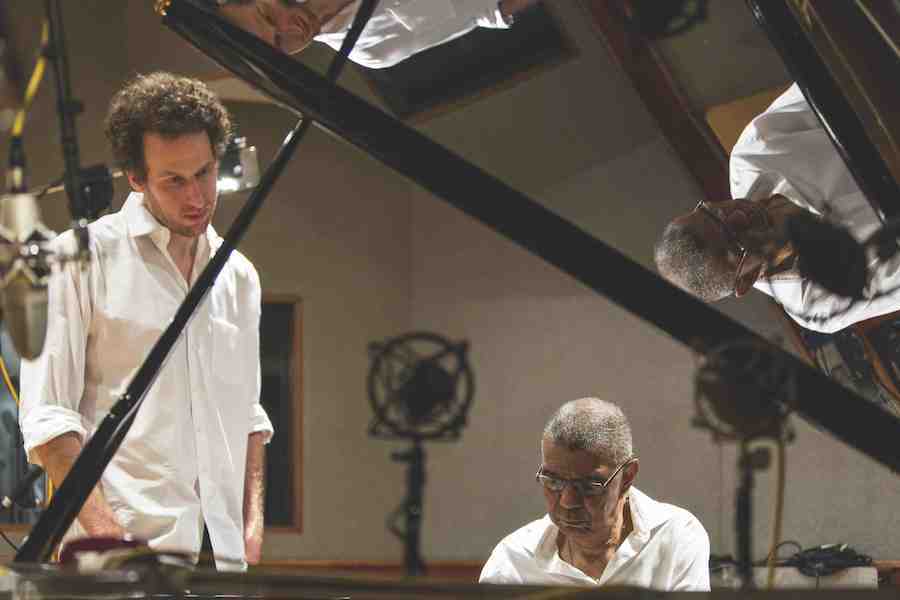
Elan Mehler and Jack DeJohnette
ELAN & JACK DEJOHNETTE AT JACK’S SOLO PIANO SESSION

Recording a piano record with Jack DeJohnette was a dream come true. The first time I heard Jack play live was when I was fourteen and he was touring with the Gateway Trio featuring Dave Holland and John Abercrombie. It was my first jazz concert! Everyone knows that Jack is one of the greatest drummers to ever hold a stick, but I’ve always greatly admired Jack’s compositions and touch on piano as well (He did play some piano on that concert as well). We reached out to him with the idea, and he liked our model and responded immediately. To have him come back and play drums with Leo Genovese’s Trio along with Esperanza Spalding was, of course, unbelievable. Just being in the studio, was one of the most intense musical experiences of my life. Jack introduced me to Leo’s music but he’s quickly become one of my favorite living musicians.

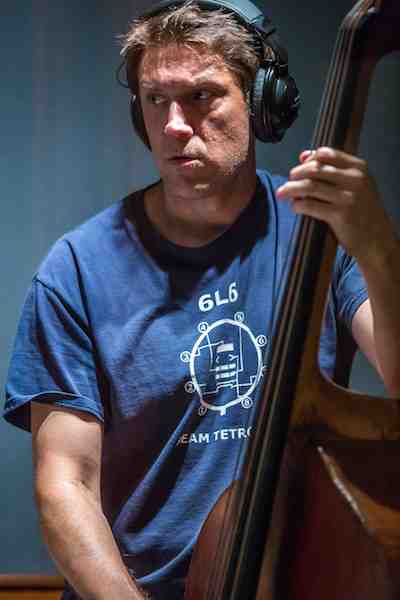
Ben Allison, Playing Bass.
I know both Ben Alison and Noah Preminger, through Frank Kimbrough and from my time living in NYC. I’ve admired Ben’s playing and writing since I was a teenager and first arrived in New York. He’s another musician driven by a melodic sense that is the engine behind everything he does. And his sound on bass is unparalleled. Noah, is a younger guy but he doesn’t play like it. He’s got technique that goes on for miles but he’s never in thrall to it. For this date he’s playing all ballads but a tune selection that’s going to surprise some people. Between these two dates the sidemen are: Billy Hart, Ben Monder, John Patitucci, Ted Nash and Steve Cardenas. Holy shit!
John Patitucci, Noah Preminger, Ben Monder and Billy Hart
L to R: JOHN PATITUCCI, NOAH PREMINGER, BEN MONDER, BILLY HART

We also made a record with the great Don Friedman. Don is another guy who I know from when he was studying at NYU. Don played on some of my favorite records of all time. In 1960, he recorded two semi-forgotten gems with Booker Little “Out Front” and “Victory and Sorrow,” these records were so beautiful and progressive and featured titanic musicians like Eric Dolphy, Julian Priester, George Coleman and Max Roach. For the session we recorded, Don revisited these masterpieces with his trio and, at the age of 81, destroyed. I can’t wait to share this one with the world.

What advice do you have for artists who may wish to affiliate with Newvelle? Are you open to artist inquiries or do you develop those relationships on your own?
Absolutely open to inquiries! I’m at elan@newvelle-records.com

PHOTOS BY: William Semeraro

Posted in General Discussion | 2 Comments