The Independent Ear

Tweet: Voice Your Choice!

Friend, colleague and veteran journalist-commentator Howard Mandel has launched a very clever and useful campaign in response to the dire jazz audience reportage that has been flying out here recently in response to the recently-released — and deeply flawed — National Endowment for the Arts audience survey, and subsequent teeth-gnashing of Ted Gioia in www.jazz.com and Terry Teachout in the Wall Street Journal.  Like many of us — including Nate Chinen in his follow-up piece in the New York Times, Howard is skeptical, feeling the survey was flawed in overlooking what he characterizes as "…a significant segment of the vital audience for live jazz today…"


The intrepid Howard Mandel: on the case for a truer picture of the jazz audience


In response he is advocating for the following social networking experiment which The Independent Ear wholeheartedly endorses; Howard writes…


A campaign has been launched on Twitter to prove there IS a large, vigorous audience for live jazz.  It’s not a promotional effort for upcoming events, but rather a shout-out about what music jazz people have just heard, WHO and WHERE with the hashtag #jazzlives (all within Twitter’s 140 character limit).  This is somewhat in response to the NEA’s 2008 data about diminishing and aging audience at live jazz events (and all other arts events), which I believe undercounted a significant segment of the populace, probably including those who use social networking media to stay in touch and energize each other around their entertainment preferences.  It’s also an experiment about the use of Twitter for jazz, whether such a campaign can go viral, maybe move to other social networking platforms, and whatever else may result.


So, if you Tweet (and Twitter accounts are free), please send a message that jazz lives!  Tell the world WHO you heard, WHERE [you heard them], and include #jazzlives in the message.  We ought to be able to work up a new metric (though it won’t be a certifiable statistic) demonstrating the energy and breadth of jazz listeners, especially in the US over the weeks starting with the Charlie Parker Fest in NYC this weekend, including Labor Day weekend’s jazz fests at Tanglewood, in Detroit, Chicago, LA (both the Angel City and Sweet & Hot Music Fest), Philly (Tony Williams Scholarship fest), Jazz Aspen Snowmass, Vail Jazz Party, Bumbershoot in Seattle, Getdown fest and campout, leading to the Monterey and BeanTown (Boston) fests.  It’s not ONLY about audiences at fests though — Tweet about jazz heard in stand-alone concerts, in clubs, in the streets and subways, anywhere jazz lives.  Jazz heard in live-broadcast on the radio or online counts!


The hashtag, by the way, is essential — it’s what enables us to see all the campaign’s Tweets together, to count them up.


A widget has been created to show the Tweets scrolling as they come out in real time — you can see this widget on my website — www.HowardMandel.com, and I hope soon at www.Jazzhouse.org — you can also embed this widget on your own website — get the code from Darcy James Argue’s Secret Society vkif, http://secretsociety.typepad.com/


If you aren’t on Twitter, you can advance this effort by mentioning it in blog postings, on broadcasts, to friends, through email…  I wonder if there are as many listeners who will Tweet they’ve heard live jazz in the next few weeks as there were people at Woodstock.


Write to tweetjazzlives@gmail.com for further info…

Posted in General Discussion | Leave a comment

Ain’t But a Few of Us: Black jazz writers tell their story #7

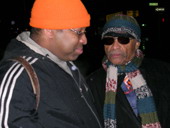
The pt. 7 contributor to our dialogue with black jazz writers on their respective career arcs, issues they’ve faced, and their various observations on recent recordings is MARTIN JOHNSON, shown (left) in the photo below conversing with the late, great soprano saxophone master Steve Lacy.
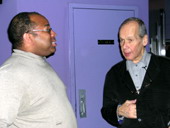


Martin Johnson got his start writing about jazz for the Amsterdam News in 1984 — joining previous contributors to this series Ron Scott and Herb Boyd (scroll down or check past installments below) as vets of that long-running cornerstone of the black dispatch.  Within a year Martin was writing regularly for Newsday and The City Sun.  After diversifying into pop music and film, he wrote for a wide variety of publications and websites, including Essence, Vogue, Elle, the Village Voice, the New York Times, the Washington Post, the Chicago Tribune, the NY Sun, Los Angeles New Times, the SF Weekly, Rolling Stone, Vibe, Tower Records Pulse!, Downbeat, JazzTimes, Paste, amazon.com, bn.com, and numerous other outlets. 


Earlier this decade, as music journalism retreated from a primary revenue source into a sidelight income, Martin began writing critical analysis of sports for the NY Sun, and he launched an information service called The Joy of Cheese, conducting public and private tastings in New York City.  He presently writes about music for the Wall Street Journal and New York magazine, and on sports and many other cultural matters (including music) for www.theroot.com.


What orignially motivated you to write about serious music?


I loved to write and I loved music.  In the third grade, my Dad encouraged me to write a book report on Milestones, which I had always enjoyed mostly because I had the same type of shirt Miles Davis wore on the cover.  I was especially thrilled that the album included "Billy Boy", a song I knew, but I was really blown away by the catchy rhythms of "Straight No Chaser."  I had a blast writing about the record and thereafter whenever I could turn a school assignment into writing about music I did.


I worked at WKCR-FM in college [Columbia U] both as Jazz Director and as a member of the Executive Board.  My senior year I co-produced the "Interpretations of Monk" concert.  I had won journalism awards in high school so this seemed like a natural synthesis.  After graduating I spent a couple of years spinning my wheels in an unproductive job, so I quit, took unemployment, and marched into the office of the Amsterdam News and told Mel Tapley that I would write about jazz for him.  Fortunately he interpreted my declaration as a request and said "sure young man, what would you like to write about?"


When you began writing about jazz were you aware of the dearth of African Americans writing about serious music?


No, I went through a difficult adolescence as my family moved from Chicago (Hyde Park/Kenwood no less) to Dallas right before I entered ninth grade.  In school I was frequently called an Uncle Tom and beaten by other African Americans because (1) I lived in the white neighborhood.  (2) I was the new kid.  (3) I didn’t speak with a "black" accent and (4) my musial tastes were "white."  (I think today my tastes would be called eclectic: I liked all the things that my black classmates liked – WAR, Isley Brothers, P-Funk… but I also liked Steely Dan, Bob Dylan, and Joni Mitchell and — gasp — Miles Davis, Duke, Coltrane, etc.


I figured getting waaaaaay away from there to go to college would solve this situation, but I was wrong.  When I was Jazz Director at WKCR I was called on the carpet by the Black Students Organization and asked to explain why the station didn’t play any black music.  I enthustiastically explained about the annual day-long festivals devoted to Thelonious Monk, Billie Holiday, Duke Ellington, and Coleman Hawkins among others, and that the station was presently doing a 200 hour plus marathon devoted to the music of Max Roach.  I remember the woman bellowing at me "no, I mean real black music!"  By that time I was accustomed to the fact that my personal concept of blackness might not match other African Americans’ concept of blackness and I could mostly deal with that.  But if I had to defend the blackness — er, the "real" blackness — of Billie, Duke, Monk, and Bean, then I knew I was in with people that I shouldn’t be in with and I left.


So I started writing and one of the first people I meet is Don Palmer, another African American writer with, ahem, eclectic tastes.  Then I meet Greg Tate, then Stanley Crouch…  I didn’t know if these cats had written about Miles Davis in the third grade, but it felt like they had.  I was thrilled and proud to be part of this contingent; I felt like I’d found the crowd I’d been looking for all my life.


On the other hand, from the way that musicians treated me, after a while I soon realized that my colleagues might not be the norm.  All jazz musicians in general, but African American musicians in particular, went out of their way to look out for me; sometimes they’d come to my home for interviews.  They’d call me to praise the pieces I wrote.  I wasn’t getting paid much money for my work, but it was richly rewarding.


Why do you suppose that’s still such a glaring disparity — where you have a significant number of black musicians making serious music but so few black jazz media commentators?


With the skills that it takes to be a great cultural commentator, you could do a lot of things that would make a lot more money.  I assume that most African Americans with the option choose not to starve and worry endlessly about the rent. 

[Editor’s note: Hmmm… the same could be said regarding musicians who choose the jazz path rather than the path more clearly paved with potential gold; proving once again that there is something about our respective quests that transcends the traditional strive for creature comforts.]


Do you think that disparity, or dearth of African American writers contributes to how the music is covered?


Sure, but that’s one of the breaks of the game.


Since you’ve been writing about serious music, have you ever found yourself questioning why some musicians may be elevated over others and is it your sense that has anything to do with the general lack of cultural diversity among the writers covering this music?


No, not really.  At the level I work at, so much of this stuff is just timing and luck.  If I wrote for music magazines with some regularity, I might be focused to wonder.
 

Martin Johnson with the inimitable Cecil Taylor


What’s your sense of the indifference of so many African American-oriented publications towards serious music, despite the fact that so many African American artists continue to create serious music?


In some ways I’m the wrong person to answer that question; remember I grew up amongst African Americans who thought that listening to Duke was "acting white." 

[Editor’s note: …Which causes one to wonder aloud how many of our previous correspondents grew up in similar circumstances; I don’t recall there being such a phenomenon for those of us who grew up in the 50s and 60s — we may have been considered a bit musically different or even "odd" — back then the term was "off-beat" — but not "acting white."]

On the other hand, you sell more issues with Beyonce on the cover than with Cassandra Wilson.  Overall, though, I think most African American publications dropped the ball on critical analysis of life… cultural and otherwise a long time ago, so it should come as no surprise that jazz falls through the cracks.


How would you react to the contention that the way and tone of how serious music is covered has something to do with who is writing about it?


I think that’s stating the obvious.  Observations about any cultural work will vary from observer to observer.


In your experience writing about serious music what have been some of your most rewarding encounters?


Geez.  I have been writing for 25 years.  I could go on a while on this one.  Hmmm.  In 1985 I was invited to Max Roach’s house to watch a ball game.  He was checking me out before agreeing to an interiew.  Max tested me on my knowledge of Negro League stars.  Satchel Paige?  Of course!  Josh Gibson?  Hit a homerun out of Yankee Stadium!  Oscar Charleston?  Ummmm…  Max leaned back on his sofa and smiled, looked at me and said "you don’t know as much as you think you know."  That was true about baseball and is good advice in general.  When I asked him about his insatiable appetite for experimentation, he offered another resonant piece of advice, "you can’t win today’s ballgames with yesterday’s home runs." 


A few weeks later the phone rang one morning when I was sleeping late.  I rushed to answer it (no voicemail in those days) and the man on the other end is Sonny Rollins, he heard I wanted to interview him.  I thought I must have been dreaming.  Rollins asked if he should call me later (are you kidding, how often is Sonny Rollins just going to ring me up!)  I did the interview on the spot and he spoke at great length about everything.


I had two memorable encounters with Don Cherry.  In the mid-80s he and Eagle Eye met me at the radio station and we walked the two miles down the Upper West Side to Gray’s Papaya so his son could get a hot dog, and then with the traffic whizzing by us on Broadawy, we sat on one of the benches in the parkway between the lanes on the busy street and did an interview.  Then a few years later, I was to meet him in an East Village bar for an interview.  He arrives on roller skates!  He besieges the bartender to put on a CD he has.  The bartender agrees; it’s Neneh’s debut disc and Don dances on his roller skates for Buffalo Stance before settling in for the interview.


Lunch with Betty Carter in 1992 ahead of the Vogue piece I wrote on her was great.  For the first time in my life I had an expense account, a rather large one at that.  But Carter insisted on going somewhere fairly modest.  We ate at a Union Station area restaurant with outdoor seating and while we were talking Jimmy Heath walks up and the two of them trade great war stories about the 50s and 60s.  Then afterward, we shop together at the Farmer’s Market and she wouldn’t even let me send her home in a limo, but she seemed genuinely flattered that I wanted to.


Walking through Tompkins Square Park in 1984 with Butch Morris was an education as to how he hears the world around him.


Lastly, and perhaps a surprise, sometime in the mid-90s Downbeat assigned me to do an equipment piece on Adam Holtzman.  We met on Avenue A, got massive pastrami sandwiches at Katz’s Delicatessen, and then went to his studio, in a basement on the Lower East Side.  Then for the next four hours he pulls out rig after rig and plays me lines, if not entire songs that he performed with Miles Davis and with Chaka Khan.  It was like a private concert.


What obstacles have you run up against — besides difficult editors and indifferent publications — in your efforts at covering serious music?


Um, my editors have been great.  All of them.  Seriously.  Okay, maybe one or two exceptions but in 25 years that means all of them.  I got lucky.  I got into the biz at a good time, made some great connections, lucked into a few others, never expected this stuff to be easy, and I’ve had a great time.  It saddens me a little that you can’t make a living writing about this music, but you can’t make a living writing about sculpture either.


If you were pressed to list several musicians who may be somewhat bubbling under the surface or just about to break through as far as wider spread public consciousness, who might they be and why?


My list includes: Matana Roberts, Jenny Scheinman, Jonathan Blake, Tyshawn Sorey, Noah Preminger, Ted Poor, Loren Stillman, Michael Attias, Edward Ratliff, Lage Lund, David Binney, and many, many others.


What have been the most intriguing new records you’ve heard this year so far?


I’m still enthralled by Mike Reed’s 2008 releases.  Okay 2009, Joshua Redman’s new one as well as those by Robert Glasper, Burnt SUgar, Melvin Gibbs, Darcy James Argue, Positive Catastrophe, Pedro Giraudo, The Tiptons, Vijay Iyer, Andrew Green, Klaang, Oran Etkin, John Herbert, Carl Maguire, Tim Kuhl, and 13th Assembly.


                                              Next time: Bridget Arnwine

Posted in General Discussion | 2 Comments

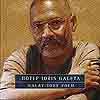
The Development of Jazz in South Africa by Hotep Idris Galeta

Pianist-composer-educator Hotep Idris Galeta


Continuing on the path begun by our interview posting last week, the following is an essay by Hotep Idris Galeta on the development of jazz in South Africa.  The richness of jazz expression by South African jazz musicians was no secret, however a trip several years ago to the Cape Town International Jazz Festival — including some furious crate digging in record shops in Cape Town, Jo’Burg, and Durban — proved to be a real revelation as to how deep the tradition is in that beautiful country.  Jazz musicians in SA have not only adapted jazz precepts and fused them with their own unique cultural expressions, they are adept at all manner of jazz expression… from trad to swing to bebop to free jazz and smooth jazz.  And the country has developed and continues to educate a number of exceptional jazz musicians. 


Interviews with Hotep, bassist Bakhiti Khumalo, and vocalist Sibongile Khumalo provided further insights into the music’s history in SA.  Those insights, Gwen Ansell’s superb book Soweto Blues, record purchases, and subsequent acquisitions have provided much food for my ongoing monthly series of Jazz in South Africa broadcasts on the Ancient Future program for WPFW (most recently Thursday, August 20; playlist posted elsewhere in The Independent Ear).  Following up on his insights from last week’s posting on the subject, Hotep sent the following historical overview on jazz in South Africa.


African music, the progenitor of jazz and all other forms of African-American music has been around for a while. Given its ancient track record of longevity and creativity, I suspect it will be around for a long time to come, molding and influencing the various genres of world music. From a historical point of view and in this particular case, the musical chickens have come home to roost. Jazz has come full circle returning to its African roots.


South African Jazz has had many elements contributing to its evolution and development. The most prominent and significant being the rich eclectic cultural diversity of the country’s inhabitants and the influence of African/American musical culture upon it over the years. These two variants coupled with an environment of legislated racism, gross human rights violations, created the unique artistic forge and mould responsible for the evolution of South African Jazz.


The first informal contact the inhabitants of Cape Town had with African Americans was during the American Civil War, when the Confederate warship the “Alabama” came into the port of Cape Town in 1862 to replenish its supplies. The “Alabama” patrolled the South Atlantic where it would lie in wait for Union Ships to come around the Cape from the Far East on its way to the east coast ports of Philadelphia, New York, New Port and Boston. It would then attack, plunder and sink them. The “Alabama” was one of the most notorious and feared Southern commerce raiders on patrol in the South Atlantic sending some fifty eight Union vessels to the bottom of the ocean during her two year patrol. Confederate captain Raphael Semmes commanded this British built steam powered schooner.


A mixed crew of British mercenary and Southern white sailors manned the ship. On board there were also a small contingent of African-American slaves who served as cleaners, mess stewards and also provided some sort of musical entertainment for the crew. When the Alabama docked in Cape Town the local population flocked to the waterfront to look at her. It was then that the African-Americans dressed in their minstrel outfits gave impromptu musical recitals at the dockside where the “Alabama” was moored. When the inhabitants of Cape Town enquired from the white crew who the black entertainers were, the reply was "These are just our "Coons"! Or more succinctly put, "Just Our Niggers!


 The Alabama was finally tracked down and sunk off Cherbourg, France by the Union Warship the U.S.S. Kearsarge on the 19th of June 1864.


On June 19th 1890 South Africans had their first formal contact with black-Americans and Black-American music when the minstrel troupe of Orpheus Myron McAdoo’s “Virginia Jubilee Singers” from Hampton Virginia presented a series of concerts in Cape Town. Orpheus McAdoo was born in 1858 in Greensborough, North Carolina. As a young man he attended the Hampton Institute in Hampton Virginia, where he studied and graduated as a teacher in 1876. Before turning to music as a professional career in 1886 he taught school in Pulaski and Accomac Counties in the state of Virginia for ten years. In 1886 he toured Europe, Australia, New Zealand and the Far East after joining five members of the original Fisk Jubilee singers. Upon his return to the U.S. a year or two later McAdoo formed his own company by recruiting some ex students and graduates from Hampton amongst who were his future wife Mattie Allen and his brother Eugene.


With his newly formed troupe consisting of six women and four men, they set sail on a European tour in 1888. Two years later we find them arriving in South Africa. Their appearance was to have a significant impact upon the music scene as it later influenced the creation and formation of the “Kaapse Klopse” or “Coon Carnival.” Since it’s inception at the turn of the century the minstrel street carnival became an integral part of Cape Town’s performing arts culture during the New Year celebrations. To use the derogatory term of the racist American, south of that time,“ Coon” or "Nigger" being the equivalent of the South African derogatory term of “Kaffir,” "Boesman," “ Cooley” or “Hotnot”. 


 If we look back to the Alabama’s visit to Cape Town we can now clearly see how the derogatory racist American term “Coon’ came to be known and adopted in Cape Town. Given South Africa’s colonial past of class consciousness, racism, divide and rule tactics, leaves little doubt for any speculation as to the name "Coon" and its tenure, popularity and longevity amongst the working class coloured population of Cape Town.   The “Coon carnival’s” popularity however decreased as more and more young people became politicized as the struggle for liberation intensified during the late 1970’s and into the 1980’s.  


 McAdoo’s Minstrels stayed and toured throughout South Africa for eighteen months visiting places such as Grahamstown, King Williams Town and Alice where they visited and performed at Lovedale College, a South African equivalent of Tuskegee University. Musical history also indicates that their impact and influence upon the performing arts culture of the Eastern Cape was quite significant as it influenced the rich Xhosa choral traditions in existence there. It is somehow ironic that this genre of Creole/African/American minstrel-spiritual music which became one of the key developmental elements of jazz in New Orleans in 1895 should also become a contributing factor and play a crucial role in the development of South African Jazz.


The introduction of Jazz into South Africa took place shortly after the 1st World War, around 1918 and this introduction was again via Cape Town. The first Jazz recording was only made in 1917, and this by the all white New Orleans Band called “The Original New Orleans Dixieland Band”. Some of these early recordings were brought to Cape Town by American merchant seaman. Local white and coloured bands (the Creole mixed racial population group resident in the Cape Town area) and even some visiting American musicians were instrumental in popularizing early New Orleans style jazz at the Cape after the 1st World War. To the white musicians who played it and the white audiences who danced to it in America and elsewhere in the British and European Imperial colonies it became known as Dixieland. Given the dreary social life and appalling conditions in the black South African townships, it is easy to understand why the introduction of the radio, gramophone and recordings of New Orleans Jazz served as the biggest catalyst for the developing styles of early township music and black professional musicianship in the 1920’s.


It was in Queenstown in the province of the Eastern Cape that Jazz first developed and started to take on its South African character. Of all black people in South Africa at that time, the Xhosa nation were the most educated as the result of the early establishment of the British Missionary school system. Formal education, exposure to European hymnody and western classical music gave rise to a black upper class and a group of very sophisticated musicians and composers who embraced this new black American art form called Jazz.


 In the 1920’s Queenstown became known as “Little Jazz Town” because of the many New Orleans style bands that were resident there. The most popular bands there in the 20’s and 30’s were Meekly Matshikiza’s “Blue Rhythm Syncopators” and William Mbali’s “Big Four” who entertained both whites and upper class blacks. Some of the earliest preserved examples of South African Jazz were recorded by Gumede’s Swing Band on Gallotone GE 942 in the late 1920’s.


It was during the late 20’s that Boet Gashe an itinerant organist from Queenstown popularized the three chord system the forerunner to the Marabi and Mbaqanga styles that were later to be perfected in the township shebeen [township speakeasys] environments of Johannesburg and Marabastad situated on the outskirts of Pretoria. Sophiatown the legendary ghetto of Johannesburg became the experimental ground for this vibrant new township music that was to under go further innovation during the 1930’s into the 50’s.


The music of the townships served as an important platform and vehicle for developing singers and instrumentalists.  Larger 15 piece bands such as the “Jazz Maniacs” were formed by popular Doornfontein shebeen pianist turned saxophonist, Solomon “Zulu Boy” Cele. Cele who was listening to the African/American bands of Fletcher Henderson,Count Basie and Duke Ellington saw the enormous potential of developing marabi into a big band style. This band was to feature and develop some of the legendary township Jazz players. They included saxophonists Mackay Davashe, Zakes Nkosi, Ntemi Pilliso and Wilson “King Fish” Silgee.


The Jazz Maniacs are significant because they carried the spirit of marabi to the dance halls and provided inspiration for a new breed of emergent Jazz musicians such as Dollar Brand now known as Abdullah Ibrahim, Hugh Masekela, Kiepie Moeketsie, Jonas Gwangwa, Sol Klaaste, Early Mabuse and Gwigwi Mwerebi. Some of the legendary Sophiatown vocal groups and singers associated with the “Jazz Maniacs” are the Manhattan Brothers, The Quad Sisters, The Woody Wood Peckers and a group that was to launch four great individual singers, The Skylarks, consisting of Miriam Makeba, Abigail Khubeka, Letta Mbulu and Mary Rabotaba. The demise of marabi big bands can be directly attributed to encroaching legislated racism, forced removals and regulations forbidding blacks to appear at venues where liquor was served.                   


As the dance halls in Sophiatown and other areas around the country were destroyed, black musicians were shut out of the inner cities or had to play behind a curtain when playing with some of their white counterparts at whites only clubs, Jazz was gradually being deprived of its multi racial audience.


                       …TO BE CONTINUED…


                             Copyright: by Hotep Idris Galeta            


Posted in General Discussion | 2 Comments

Heads Up: It’s all about Jazz Audience Development

A couple of months back I began a series of interview conversations for www.jazz.com.  Recognizing forever that the major issue facing jazz is certainly not a shortage of exceptional musicians; nor are there limited education opportunities for those who wish to pursue jazz performance.  The biggest issue we face is developing & growing the jazz audience.  The recent and rather specious National Endowment for the Arts audience survey which purports that the jazz audience has dwindled to alarming lows has put everyone on high alert — including a high alert signal from Terry Teachout’s overwrought recent piece in the Wall Street Journal in which he reported on that survey and otherwise postulated in dire terms on the jazz audience: small numbers, cloudy future. 


Fortunately Nate Chinen followed up with a reasoned and very balanced response in the August 19 edition of the New York Times that openly questioned the findings of the NEA survey and the subsequent dire responses of Teachout and prior to him Ted Gioia in www.jazz.com, while pointing to the young-ish and quite enthusiastic audiences he’s encountered at jazz presentations around the city.  Nate wondered aloud where the NEA, Teachout, and Gioia were looking for their evidence (perhaps Jazz at Lincoln Center where the big-ticket concerts and fairly staid menu tend to attract an older, more monied audience).  Not long after Nate’s piece came a release quoting George Wein on the surprising and unprecedented young audience his recent renewal of the Newport Jazz Festival (under the Care/Fusion banner) drew to Fort Adams State Park. 


The negative reportage of Teachout strikes me as more of what we longtime observers have read ad nauseum down through the years; more of the old bromide I refer to as the "…oh jazz, ‘po jazz, woe is jazz…" syndrome; first cousin to those periodic is jazz dying/jazz is dead/death of jazz doomsayers that have cropped up every five years or so since nearly the dawn of the music.  As an anecdote and a kind of DIY guidepost to others who may be sitting around gnashing their teeth or otherwise decrying the dearth of jazz in their given community, the series I started last spring at www.jazz.com is a series of conversations with jazz presenters — occasionally based in what in jazz parlance might be considered relatively disparate communities (at least where jazz performances are concerned) — under the umbrella of Setting the Stage. 


The first three installments in the series — still available at www.jazz.com by Search — were conversations with John Gilbreath of Earshot Jazz (and the Earshot Jazz Festival) in Seattle, WA; Marty Ashby of Manchester Craftsmen’s Guild in Pittsburgh, PA; and Tom Guralnick of Outpost Productions (and the New Mexico Jazz Festival) in Albuquerque, NM.  The current conversation hews closer to the cauldron of jazz, an interview with Loren Schoenberg of the National Jazz Museum in Harlem project, under the heading Jazz Outreach in Harlem.  The next installent in the series, slated for September, will be with an amazing jazz presenter in Burlington, VT at the Flynn Theatre (and the 27-year old Discover Jazz Festival), Arnie Malina.  Check it out at www.jazz.com.  These are grassroots, DIY jazz presenters who’ve carved out significant niches in the cultural life of their communities; there is much to be learned from these folks, lessons that might lead to similar new or renewed life for jazz in your own community.  Take the bull by the horns and Do It Yourself!!!

Posted in General Discussion | 1 Comment

Ain’t But a Few of Us: Black jazz writers tell their story #7

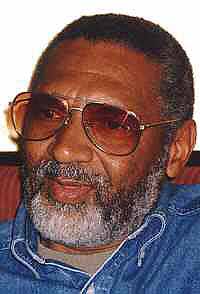
The latest installment in our ongoing series of virtual conversations with African American jazz writers features the venerable veteran journalist-critic-author, journalist-advocate and dedicated Harlemite Herb Boyd, a fellow midwesterner from Detroit.  I first became acquainted with Herb via his writings on Detroit and the many great musicians who make that city one of the key points on the jazz history trail.  Herb Boyd is an award-winning author and journalist who has published 17 books (including the biography of NEA Jazz Master Yusef Lateef) and countless articles for national magazines and newspapers.  He co-edited the anthology Brotherman – The Odyssey of Black Men in America (One World/Ballantine, 1995) with Robert Allen, which won the American Book Award for nonfiction.  In 1999, Herb Boyd won three first place awards from the New York Association of Black Journalists for his Amsterdam News articles. 


Our dialogue began at our customary starting point — wondering aloud what had motivated Herb to write about serious music in the first place?  Like several of the past participants in this dialogue Herb Boyd appears to a great measure to have arrived at writing about music in a purely organic way.


Willard, like much of my writing, writing about jazz was either by default or emerged organically out of my desire to report.  As a young person, I attended events, including political rallies and concerts, and later I would be asked what happened.  Sometimes my exuberance and storytelling was so vivid and passionate that I was compelled to document them, mainly as a diary entry.  Those journal or diary entries evolved into stories I shared with friends who felt they were worthy of publishing.  By the time I was in the U.S. Army and later college at Wayne State University the habit was full blown attempts at journalism, something I relished doing and something that came relatively easy.  I loved writing and I loved jazz and in time the two blended almost imperceptibly, and before long I found myself writing about the concerts I attended, and like my other jottings, folks thought they were good enough to be submitted to various publications.


When you started on this quest were you aware of the dearth of African Americans writing about serious music?


I had no idea who was writing about it or why at the very start, and I’m still trying to understand this instinct and desire to report.  Of course, after submerging myself in the world of jazz, it became apparent that not only was there a paucity of African American writers on the music, there were only a few devoted whites interested in writing about the music, at least writing in a way that appealed to my nationalistic tendencies.  I recall the first Downbeat and Metronome magazines I bought as a teenager and only Lionel Hampton, Duke Ellington, and Billie Holiday were consistently covered.  Otherwise, it was the white musicians on the cover and featured throughout in lead articles.  If the subject were white, there was little likelihood that the writer would be black.


Why do you suppose that’s still such a glaring disparity — where you have a significant number of black musicians making serious music but so few black media commentators?


There is a scarcity of black writers period, no matter what the topic or genre.  You can count the number of blacks writing about business, world politics, economics, and science, whether in newspapers, magazines, or authoring books.  I think if the overall pool of writers were larger there might be, proportionally, more writers covering issues and subjects across the board, and serious black music might be a beneficiary.  Even so, finding a few more writers seriously concerned about our music’s history and its current status could be more challenging than in other fields since there’s no real demand for it few publications are interested in jazz or black music.


Do you think that disparity or dearth of African American writers contributes to how the music is covered?


Indeed.  With a larger number of writers then the possibility of a wider distribution of interests should emerge, though again, there’s no guarantee of this.  For example, just because we have a number of Historically Black Colleges and Universities doesn’t mean they will have an interest in jazz, and sadly very few have music programs with an emphasis on jazz.


Since you’ve been writing about serious music, have you ever found yourself questioning why some musicians may be elevated over others and is it your sense that has anything to do with the lack of cultural diversity among the writers covering this music?


That may be a critical issue and consequence.  So much of the direction of music and culture in America is at the mercy of market forces.  There are very few radio stations where you can hear so-called avant garde music, and this may be based on the station’s orientation to mainstream jazz, which used to be, in another day and age, progressive or advanced.  To this degree we can be thankful that some outlets have finally caught up, though far too much of the programming features David Sanborn, Kenny G, Diana Krall et. al.


What’s your sense of the indifference of so many African American-oriented publications towards serious music, despite the fact that so many African American artists continue to create serious music?


If the Michigan Chronicle, the Chicago Defender, and the Pittsburgh Courier are representative of the African American press over the last generation or two, then jazz is virtually nonexistent, and I mean jazz of any style.  The most we’ve been able to hope for is coverage of rhythm and blues, music reflective of Motown and the Philly Sound.  And even this is so sporadic and usually only presented in association with a concert or an advertisement supplement.


How would you react to the contention that the way and tone of how serious music is covered has something to do with who is writing about it?


There may be a connection here, but the major concern is the extent to which the publication has an editorial stance that is sympathetic to the music.  Currently at the Amsterdam News, as it has been for the last quarter of a century, we’ve had three regular columnists who deal with rap, classical and jazz, and this is quite unusual for a black publication. Even so, the jazz writer’s column is limited in space and there is a tendency to key his coverage to engagements, and rarely to delve into pertinent issues about the music.


In your experience writing about serious music what have been some of your most rewarding encunters?


I began writing about jazz or serious music for the Southend student newspaper at Wayne State Univeristy and the Fifth Estate, an early alternative paper in Detroit.  They gave me the opportunities that evolved into a long stint as a stringer or correspondent for DownBeat.  After being away from the publication for several years, I returned as a correspondent in New York City, and depending on the editor, I’ve written features and several cover stories, mostly on ideas they proposed.  One of the most rewarding features with DownBeat was a piece on Stanley Turrentine and Ray Brown, both of whom were from Pittsburgh.  For Emerge magazine I did one of the last interviews with Dizzy Gillespie, along with Max Roach.  These two assignments will always be precious moments with four giants of the music.  Of course, working with Yusef Lateef on his autobiography stands as a memorable milestone as well. 


What obstacled have you run up against — besides difficult editors and indifferent publicatins — in your efforts at covering serious music?


Getting musicians to cooperate and adjusting to their schedules is always a challenge.


If you were pressed to list several musicians who may be bubbling just under the surface of widerspread recognition or just about to break through who might they be and why?


Recently, during a Jazz Vespers event at Abyssinian Baptist Church, it was rewarding to hear a mixture of aspiring and established musicians.  Most impressionable among the newcomers was alto saxophonist Brandon Primus.  Not only does he possess powerful chops and a mastery of circular breathing to good effect, he is also a true student of the music’s istory and knows how to present it with integrity and sensitivity.  Also, at the same church, during a memorial service for Freddie Hubbard, a young ensemble of teenagers from the Philadelphia-Camden area demonstrated promising careers if they choose to devote themselves to it.  They were tenor saxophonist Yesseh Furaha-Ali, pianist George Williams, trumpeter Manuel Jiminez, drummer Austin Marlowe, and bassist Jordan McBride, whose father James McBride is the noted writer and musician.


As we are well into the second half of 2009, what for you have been the most intriguing records released so far this year?


I was asked the same question during my annual Critics Poll for DownBeat and I submitted flutist Nicole Mitchell out of Chicago, bassist Esperanza Spaulding, and the veteran Sonny Rollins, particularly his recording "Doxy", as three musicians I’ve given considerable time to recently.  I interviewed Jon Hendricks at the National Jazz Museum in Harlem recently and I’m now reviewing some of his current work, and also the recent releases from Hubert Laws, who I may collaborate with on a project in the near future.

Posted in General Discussion | Leave a comment