The Independent Ear

Jazz Audience development conversation continues

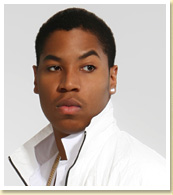
Trumpeter Christian Scott: Impressive!


Our editorial last time listed a few things artists should do to tighten up their end of the audience development equation.  That editorial was written purely in the spirit of things we must ALL do to ensure a more robust jazz audience for the future; and in this case I’m speaking of the responsibilities of those who play the music, those who set the stage and present the music, those who record the music, those who educate future musicians — and in this case also most importantly, those jazz educators who teach "lay" people who attend jazz appreciation and jazz history courses sans any tangible desire to play the music — those who represent jazz artists, as well as those of us who consider ourselves fans or enthusiasts, who must subesequently go forth with greater zeal preaching the gospel of jazz to our family, friends, peers and colleagues.


But our editorial dealt specifically with musicians’ responsibilities in this equation; and at least one reader took issue, which resulted in a productive email exchange.  Subsequently I had the pleasure of seeing a young artist live a few days ago, someone who has been somewhat highly touted as a fast-rising talent but someone whose records haven’t truly "slayed" me, as one of my radio colleagues likes to say.  I’m speaking of trumpeter Christian Scott, and this wasn’t exactly my first sighting.  I’d seen — and been impressed by his promise — Christian since he was a green youngster, performing with his uncle saxophonist Donald Harrison onstage at the New Orleans Jazz & Heritage Festival several times years ago. 


Since then Christian has matriculated at Berklee, is rapidly maturing as a trumpet player, bandleader, and composer, as he plys and massages what he characterizes as a musical concept incorporating elements of indie rock, hip hop, and jazz all rolled up into Christian Scott music.  His Concord records have evidenced a young artist in deep evolution but I can’t say they’ve exactly reached out and grabbed me yet.  So it was with a mildly skeptical sense of anticipation; not that I expected the worst or to be bored or disappointed, but one never knows the translation of artistry from disc to stage.


Performing a program entirely consisting of originals — save for his personal jazz propers proving ground "Eye of the Hurricane" (and that’s precisely how he introduced the Herbie Hancock burner which they subsequently took at supersonic tempo: as a means of expressing the band’s jazz bonafides) —  Scott and his quintet (which includes guitar instead of a second horn) were full of youthful fire & vinegar, obviously in great enjoyment of each other’s playing, finely communicative & complimentary in their high energy mode.


Where Scott’s performance intersected with that audience development editorial on artist responsibility was in Christian’s staging and mannerisms.  In the introduction of his fellow musicians he wove brief, engaging, funny and at points clearly fabricated (which he kiddingly admitted) stories about each band member that had the audience hanging on every word and chuckling along.  With each of his pieces he gave an introductory explanation that further engaged the audience and in some small ways gave them a brief glimpse into his ways & means; in effect demystifying a program of original material that was knotty and complex and might have otherwise flummoxed the audience. 


What resulted was an enthusiastic response from an obviously juiced and energized Kennedy Center Jazz Club audience that flocked to his merch table post-set to scoop up his records, and encouraged an autograph line which he patiently and cheerfully accommodated.  On his merch table, even if audience members declined a CD purchase, Scott’s rep pressed business cards with Christian’s photo, web site, Twitter, MySpace, and Facebook links, mini-snapshots of his initial Concord releases, and a "New Album Coming Soon!" graphic in every palm.  And in light of another aspect of that artist-responsibility-for-audience development editorial is the fact that Christian Scott is also clearly… shall we say, a fashion forward young artist.


Here was a young artist displaying a healthy measure of the trumpet player’s usual ego and hubris in his playing, but once the horn was removed from his lips he was happy to thoroughly engage his audience.  Later, on the Kennedy Center shuttle bus to the Metro I spied an audience member enthusiastically telling someone from another show about seeing Christian Scott, displaying that business card of someone she obviously did not know prior to seeing him at the KC Club.  That’s what I’m talkin’ about!!!


Posted in General Discussion | Leave a comment

Ain’t But a Few of Us: Black jazz writers tell their story #9

Our series of conversations with black music writers continues with a contribution from Robin D.G. Kelley, who is currently a Professor of American Studies & Ethnicity at the University of Southern California.  The author of several books Robin’s forthcoming release Thelonious Monk: The Life and Times of an American Original (Free Press) is eagerly anticipated, set for October ’09 release.  Additionally he is also completing Speaking in Tongues: Jazz and Modern Africa (Harvard University Press, set for 2010 release).


Robin D.G. Kelley has contributed to numerous newspapers and periodicals on jazz and other subjects, including the New York Times, Rolling Stone, Code Magazine, the Utne Reader, Black Music Journal, and Boston Review.


Robin D.G. Kelley


Our conversation began with the customary opener: What motivated you to write about serious music in the first place?


I grew up with the music.  I was introduced to this music initially through my mother, who arranged for me to have trumpet lessons with Jimmy Owens when I was in the second grade (this was New York in 1969).  As I got older, my tastes branched out, but I never lost a connection with the music because of my older sister, who also loved the music.  But my love for this music was reborn after my mother married a jazz musician, who incidentally was white.  By that time I was playing piano by ear and some bass but never really studied with anyone.  Under his tutelege and thanks to my sister’s prodding, I got deeper into music then labeled avant-garde — Ornette Coleman, Cecil Taylor, Albert Ayler, etc., in addition to Mingus, Monk, Miles, etc. 


When I got to college and decided that I wanted to become an historian, I considered writing about the music but was pulled more into politics and social movements.  I did write (bad) poems about and inspired by these artists, but not much more until the early 1990s.  I began playing more, reading more, and of course listening a great deal, but I also started writing about hip hop.  That gave me the confidence to write about a variety of black musical forms.  I never became a "critic" in the formal sense, but I began exploring broader social and historical questions pertaining to "jazz" in both my published essays and the classes I taught.


When you started on this writing quest were you aware of the dearth of African Americans writing about serious music?


When I began to read about this music — mainly for pleasure (whereas most readers choose fiction for their light reading, I had a jones for biographies of jazz musicians; most were terrible but that didn’t stop me from devouring them), I quickly learned that there were very few black writers in the field.  I was fortunate in that one of the first books I read that left a huge impact on me was A.B. Spellman‘s Four Lives in the Bebop Business.  It is a bona fide classic.  I also wore out Arthur Taylor‘s Notes and Tones, read everything Baraka [editor’s note: see Ron Washington’s piece referencing Baraka’s new book Digging elsewhere in The Independent Ear] ever wrote on the music, from Blues People to Black Music, and learned a great deal from Stanley Crouch, whose insights on this music are often unmatched. 


These were foundational texts that served as my model for writing, but quickly I discovered that they were the exception, not the rule.  I was blessed to become friends with the late Marc Crawford, one of the unsung black critics of this music; he really inspired me and is responsible for my decision to undertake a book on Thelonious Monk.  Things have changed a little but not much.  There are a few out here, but so many of the so-called jazz critics seem to operate as an exclusive club.  I don’t think it’s entirely racial; it’s partly generational, partly folks protecting their turf.  And it’s not everyone.  But as Monk would say, sometimes I feel a draft.


Why do you suppose it’s still such a glaring disparity — where you have a significant number of black musicians making serious music, but so few black media commentators?


Part of it has to do with the establishment; it’s hard to be a member of the club.  On the other hand, I don’t think there is a whole lot of interest on the part of young black writers/scholars.  I’ve taught courses on jazz and politics, the anthropology of jazz, and a seminar on Thelonious Monk, and the number of black students who take these courses or are interested is quite small.  In fact, my biggest frustration with some of the African American students is that they wanted to talk about hip hop and nothing else.  And those who are calling themselves music journalists and critics (and there are a lot who pass through my classes or my office) are committed to writing about hip hop and popular music, but not much more.  Our collective musical literacy is quite low.


Let me propose one other explanation, and this moves us into the next question.  For about three years, thanks to John Rockwell, then editor of the New York Times Arts and Leisure section, I contributed several pieces to the Times.  He generously invited me to write because I was pushing for more diverse voices on that page.  I never felt censored or pressured to do anything, and I always worked closely with an African American editor on the paper named Fletcher Roberts.  I understood how privileged I was, especially given how few of us were writing for the Times.  But then I proposed writing a piece about the history of jazz in Brooklyn and its renaissance in the community throgh various clubs, churches, and the Central Brooklyn Jazz Consortium, among other things. 


I had a ball with the piece and the main argument or discovery was that black folks in Brooklyn were taking jazz back through cultural institutions that are not necessarily on the downtown radar [editor’s note: again, see Ron Washington’s piece in The Independent Ear].  The piece was written and ready to go, but then John Rockwell was replaced by then 28-year old Jodi Cantor and she nixed it, said something like "who is going to believe black people are so into jazz" or it could have been "who cares?"  I don’t remember; all I know is that my writing for the Times ended then and there.


Do you think that disparity or dearth of African American writers contributes to how the music is covered?


The last part of the [Brooklyn jazz/NYT] story party answers this question: to put it more directly, in some cases, black writers want to look at questions of race, politics, power (not always!), and place this music within its broader context [editor’s note: Precisely the reason for The Independent Ear!].  I’ve found some resistance to this, mainly from those who think music is pure and that any discussion of politics, race, and power is an imposition.  What I do find interesting is how eager many musicians are to discuss these issues.


Since you’ve been writing about serious music, have you ever found yourself questioning why some musicians may be elevated over others and is it your sense that has anything to do with the lack of cultural diversity among the writers covering this music?


I’m not sure I can answer this question with much authority.  While I do write about serious music, I do so as an historian rather than a critic.  I don’t write reviews of shows or recordings, and the few times I have written on contemporary developments in the music (like my piece on DJs and jazz for the New York Times nearly 10 years ago!), I hardly pay attention to what critics are saying about the contemporary scene.  In other words, I don’t know who is being elevated over whom at the moment, except when I listen to the jazz station in Los Angeles (KJAZ) and I have to endure endless recordings by Jack Sheldon but virtually nothing by Thelonious Monk, let alone Cecil Taylor. 


I know in principle that lack of cultural diversity has a negative impact on any kind of writing or critical engagement.  The lack of intellectual diversity does, too.  What I mean is that not all writers are critics, and some times the issues are not about who is better than whom, but what is a particular artist trying to do and what does it teach us about the music and the world we inhabit.  This is exactly why I appreciate the work of Stanley Crouch and Baraka, not to mention Robert O’Meally, Farah Jasmine Griffin, John Szwed, Guthrie Ramsey, Krin Gabbard, George Lipsitz, George Lewis, Eddie Meadows, Kyra Gaunt, Tammy Kernodle, Salim Washington, Dwight Andrews, Eugene Holley, you, and many, many others who are trying to say something other than this is a great record, this is not.


What’s your sense of the indifference of so many African American-oriented publications towards serious music, despite the fact that so many African American artists continue to create serious music?


It is unfortunate, but has been going on for some time I think.  Having just finished Monk’s biography, I have scoured the black press for material — again, almost always ignored by other writers, scholars, biographers, etc. — and found what I think of as a forgotten legacy of black jazz writers.  We need to deal with Rhythm magazine, a black-owned but short-lived publication that my man Eugene Holley hipped me to.  Herbie Nichols wrote for them (and he wrote a regular column for the New York Age), as did John R. Gibson, among others. 


Few know about Nard Griffin’s little book To Be or Not to Bop? published in 1948 (Dizzy stole the title for his memoir from Griffin).  We haven’t paid attention to the brilliant critical writing of Frank London Brown, better known to us as a novelist but he was also a fine jazz writer and excellent singer himself.  I could go on.  There were also many black women writing about this music in the black press.  Most people never heard of Eunice Pye of the L.A. Sentinel, or Joy Tunstall of the Pittsburgh Courier, or Phyl Garland of Ebony.  But over time black publications withdrew from writing about this music and instead fell for the celebrity trap.  I think they thought they were losing their readership and, truth be told, they were competing with mainstream magazines and newspapers that had their own critics.


I give it to Joanne Cheatham, who [is trying] to get something out there with her publication *Pure Jazz [editor’s note: the Summer ’09 issue of the Brooklyn-based Pure Jazz is currently available; purejazzmagazine@aol.com].  But I don’t know how well she [is] supported.  I wrote a couple of pieces for it, but if we don’t support our publications and demand that others pay attention to this music, it just ain’t gonna happen.  I won’t go on, but I will say it is disgraceful how someone like Oprah just has no interest in serious music, to name one example.


How do you react to the contention that the way and tone of how serious music is covered has something to do with who is writing about it?


I began to answer that question [earlier].  I will say that I think it makes a difference, but I will not say that race is always determining.  Political worldview, experience, knowledge, cultural perspective — all these things matter.


In your experience writing about serious music what have been some of your most rewarding encounters?


Always meeting and getting to know musicians.  Through interviews and inquiries, I’ve made many friends with some amazing artists, and nearly everyone demonstrates a level of generosity and intelligence that hardly comes across in the mainstream reviews.  I can name many, but the relationship that has been most transformative for me has been getting to know  Randy Weston.  I’ve always loved his music since I was a teenager but meeting the man, benefiting from his insights, his deep commitment and love for all people, especially Africa and its immense history, his politics and deep knowledge — he’s like the father I wish I had.  He is a model musician and composer and a model human being who always has kind and thoughtful things to say.  And he’s down with the people!


What obstacles have you run up against — besides difficule editors and indifferent publications — in your efforts at covering serious music?


You named the biggest obstacles!  For me things are slightly different since I’m not really a critic and more of an historian.  I focus on rethinking and revising the history of serious music, thus sources continue to be a problem.  We need more archives and oral histories (and good work is being done now, by the way).  It is incredibly hard to write this history, especially those artists who have remained under the commercial radar.  I think about George Lewis’s magnificent book on the Association for the Advancement of Creative Musicians (AACM) and what a tremendous contribution he made.  Just look at the footnotes and you’ll see why it took so long and just how hard he had to work to reconstruct that story.  Brilliant book.  My book on Monk tries to do the same, especially when I try to give little capsule biographies of the folk who rarely make the history books — like Little Benny Harris and Denzil Best and Danny Quebec West and Vic Coulsen, or even the better known figures like Herbie Nichols.  I fought hard to tell their stories, and the reviewers will complain about the dizzying detail in my book.  But these stories have to be told, and reviewers, editors and readers don’t have the patience to engage the bigger, more truthful picture.  It’s easier to play into the cult of individual and write about what’s genius and jacked up about an artist, not the community that made the artist who she/he is.

*The editor has an interview with the brilliant South African vocalist Sibongile Khumalo in the Summer 2009 issue of Pure Jazz magazine.

Posted in General Discussion | 5 Comments

One Man’s take on the Jazz Audience Discussion


The contributor of this piece is jazz activist Ron Washington.  Besides being a stalwart jazz diehard and tireless observer of the scene, he is proprietor of Ron "Slim" Washington Productions, which provides jazz and other music for festivals, clubs and restaurants.


Ron "Slim" Washington (with mic) onstage at one of his jazz productions


How Can a “Music of the Spirit” Die?


   Jazz is dead! Here we go again; i.e. the recent Wall Street Journal article by Terry Teachout declaring that no one is listening to jazz and featuring a prominent cartoon of a “black Jazz musician” being wheeled out on a cart speaks volumes to a continued bourgeois, arrogant Eurocentric lack of understanding of jazz.


   Mr. Treachout’s methodology is the classic case of someone going out to investigate the flowers, but never getting off the horse to “smell the flowers.” Hence the article is so “lightweight” I had to keep a paper-weight on it to keep it from elevating and floating away on its own. Put another way, as Amiri Baraka in his latest book “Digging” would say, “The lack of knowledge about America’s richest contribution to world culture is a reflection as well of the deadly ignorance which stalks this country from the New York City Hall to the halls of Congress to the corporate offices to academic classrooms, like a ubiquitous serial killer…”


   Treachout uses a number of useless (without context!) numbers from a National Endowment of the Arts survey to conclude that only those with their head in the sand cannot see a larger picture of “lack of mass support for jazz” leading to its demise. There were fewer people attending a jazz concert; the audience is (graying) growing older; older people are less likely to attend jazz performances today than yesterday; and the audience among college educated adults is also shrinking. On the surface, this kind of approach can scare or misinform a great many people into following the ever present “jazz is dead” attacks upon the music. This kind of approach is not the approach of someone who wants to help jazz survive, but one that serves to drive people away from exploring and learning about jazz.


   How about we come at the non arguable “less than healthy’ state of jazz another way? Once again we call on America’s foremost jazz critic for guidance. Why not investigate and raise the question as to the “domination of US popular culture by an outrageously reactionary commercial culture of mindlessness, mediocrity, violence and pornography means that it is increasingly more difficult for the innovative, serious, genuinely expressive, or authentically popular artist to get the same kind of production and the anti-creative garbage that the corporations thrive on.” (Digging, Amiri Baraka). I suggest that this is the inquiry that the Wall Street Journal should be making into the subject matter, the health state of jazz. But when you’re part of the problem, it’s difficult. From the standpoint of the WSJ, jazz’s mystery can/cannot be solved by market forces. “Look here are the numbers!”


   From the great work “Blues People,” to his other book, “Black Music,” and the latest contribution from the peoples’ critic, “Digging,” there is one thing that stands out. Amiri Baraka insists that the music, from blues to jazz, is a creation and reflection of the struggles of the Afro-American people. The music is an expression of a people’s culture and cannot be separated from such. Jazz, Afro-American in origin, universal in content and expression, is nonetheless tied to a people, expressing their greatest fears and joys, hopes for the future and repository of the past, that it can said, “the music is the people.” Hence the music can never die, because the people live. Bill Cosby is quoted in Digging as saying, “There’s a wonderful story I like to tell. It’s the end of the world…gray, blowing, turbulent… and there is this tombstone that says, ‘Jazz: It Broke Even!’ The music has its high and lows, but it can never die.”   


   Art is a reflection of a people’s culture. As Baraka says, “Whether African Song, Work Song, Spiritual, Hollers, Blues, Jazz, Gospel, etc., no matter the genre, the ideas contained in Afro-American art, in the main, oppose slavery and desire freedom.” (Digging). For jazz to die, the entire history and Afro-American people would have to die. This is the content that an interloper like Treachout cannot understand.


   But since jazz is what the great trumpet player Ahmed Abdullah calls, “the music of the spirit,” it can never die. While the WSJ declares jazz dead, refuses to get off the horse and smell the flowers, the music continues to thrive and fight for its life, for its expression. In New Jersey , new small clubs are opening up all over the place, anchored by Cecil’s in West Orange . You have the work of Newark’s own Stan Myers, who has run a successful Tuesday night Jam session at Crossroads for years;  Papillion, Skipper’s, the Priory, Trumpets, John Lee’s annual concerts in South Orange, and countless other venues all testify to the fact that the “spirit” is alive. 


    Jazz is not popular culture. To compare and demand that Jazz be equated with the lowest common denominator cultural expression, packaged for the most extreme exploitation by monopoly capitalism is to have no understanding of the music. By its very nature it is “rebel” music. Treachout complains that it is not the music of the masses, of the youth, as determined by corporate measuring sticks. Well of course. I like hip-hop but I’m not going to any concerts. That’s youth music. Not particularly challenging.


   When we say jazz is “a music of the spirit,” sitting in on a jazz program has the possibility of elevating the listener to heights never experienced by a poplar culture event. For many it is a shared communal experience, as witnessed by the common clapping in appreciation of a musical interlude, or the strictly individual experience of the music. Some can appreciate the full recipe of musical virtuosity on display, some may connect deeply in an emotional way with the music, some relate to the democratic display of the skills of the musicians, and some may not have liked the particular performance.


Amiri Baraka’s latest volume on jazz Digging


Ron Washington, September 10, 2009

blacktel4justice@gmail.com 


Posted in General Discussion | 5 Comments

Ain’t But a Few of Us: Black jazz writers tell their story #8

Our correspondent for this edition of the series Ain’t But a Few of Us: Black jazz writers tell their story is Bridget Arnwine.  I first encountered Bridget in 2005 when the Jazz Journalists Association sponsored a one-time fellowship award in the name of the late African American jazz writer Clarence Atkins.  The fellowships were awarded to a small group of deserving, aspiring African American jazz writers enabling them to attend the National Critics Conference in May ’05. 


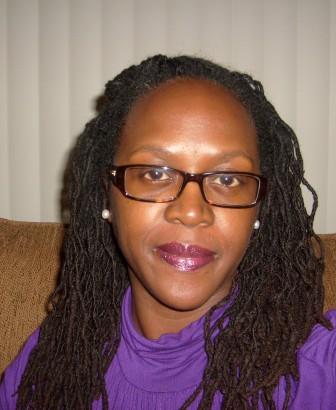
                     BRIDGET ARNWINE


The young writers who participated in that fellowship opportunity were Bridget Arnwine, Laylah Amatullah Barrayn, Michele Drayton, Robin James, and Rahsaan Clark Morris (whose contribution to this series will be posted soon).  Since then Bridget has continued to develop her writing craft; she spent a few years working in the Cleveland area, where among other things she wrote the program book copy for the annual Tri-C JazzFest.  Recently Bridget relocated to the Washington, DC area where she continues to write and work her new 9-5.


Per usual, our conversation began with an inquiry on what originally motivated Bridget to write about jazz in the first place.


I’d met Wynton Marsalis in August of 1995.  Up to that point all I knew about jazz was Kenny G.  I was more intrigued by hip hop, r&b, and rock music than anything else; in my mind jazz was something for other people to enjoy.


Over the next few years, my friendship with Wynton blossomed and as a result I began to seek out the music.  I could always call Wynton up and ask him questions and even though I wasn’t a musician I found that to be an invaluable experience.  Then I got to see him perform with guys like Eric Reed, Victor Goines, Herlin Riley, Wycliffe Gordon, and Wess Anderson.  They played like they really, really enjoyed the music.  I’d never experienced anything like that…  Ever.  None of those guys would be able to pick me out of a lineup if I were standing in front of them today, but I’ll never forget them because meeting them changed my life.


It was a long time coming, but when I finally did fall for jazz I fell for it pretty hard.  I don’t sing.  I don’t play an instrument, and my dancing is wild and unstructured at best.  About 7 years ago I began to feel an urgent need to express my love for this music.  I came up with the "brilliant" idea to write a book comprised of interviews with jazz musicians.  I began to contact musicians and publicists requesting interviews.  The only person to say yes was Wynton, but I didn’t have a book if my book of interviews consisted of interviews with one person!  As a last resort I contacted Wynton’s personal assistant and asked for guidance and she gave it to me!  She suggested that I take time to first build my writing resume, so I joined the Jazz Journalists Association and I started writing reviews.  I’m a bit shy and over-analytical, so in actuality the review/bio writing route was a better fit for my personality.


When you started on this writing quest were you aware of the dearth of African Americans writing about jazz?


No.  When I first started writing my motives were purely selfish, so I had no idea.  I figured it out pretty quickly though.


Why do you suppose that’s still such a glaring disparity — where you have a significant number of black musicians making serious music, but so few black media commentators on the music?


In my opinion, black writers are going where the money is and that certainly is not in jazz’s direction.  I write about jazz because I’ve come to love it, but it’s hard.  A lot of the work that I’ve had to do in my 6 years as a writer has been for free.  Who can afford to do that?  I don’t want to work a 9-5, but I have to in order to sustain myself.  That’s not to say that every black writer covering this music has the same experience, but starting out can be tough.  Couple that with the fact that black audiences for jazz are typically small.  When you look at it that way, then the small number of black writers makes sense.


Do you think that disparity or dearth of African American jazz writers contributes to how the music is covered?


Definitely.  I write with a bit of emotion, because I have to rely more on describing how the music makes me feel than does a writer with a musical background.  Some of the people who have worked as editors for me usually don’t get the gist of my work, so I’m always struggling to preserve the uniqueness of my voice so that my writing doesn’t sound like everyone else’s.  It’s a challenge, particularly when you have to adhere to someone else’s writing guidelines.  A funny example of that for me involves my time writing for a heavy metal webzine.  I always discussed the music and my thoughts on the band and I always threw in a few funny little extras, but my reviews were heavily edited because to them my writing was "too professional" sounding.  I’ve yet to have a jazz editor tell me that about my writing!


Since you’ve been writing about serious music, have you ever found yourself questioning why some musicians may be elevated over others and is it your sense that has anything to do with the lack of cultural diversity among writers covering the music?


I do sometimes wonder about that…  I was thinking recently aboput the negative press that some of our African American jazz icons received during their lifetimes.  Before I really got into the music I had heard that Miles Davis was a jerk and that Charlie Parker was an addict.  I’d not heard a lick of music from either of them, but those statements were discussed around me more than their music and that’s unfortunate.  On the other hand, about a year ago I read something about Stan Getz and there was mention of his drug abuse and the extent of his physically abusive behavior toward his second wife.  I remember being shocked, because I’d never heard anyone mention that when talking about Mr. Getz.  Clearly someone covered it, because I did read it, but I wondered why that aspect of his personality wasn’t discussed on the same level that Miles and Bird’s issues were.  Was it because of the lack of diversity among the writers covering this music and its artists?  At the time I couldn’t help but think so.  To that end, however, I do thnk Miles and Bird were celebrated for their musical achievements more than I think Getz was, so I don’t know how to process that.


What’s your sense of the indifference of so many African American-oriented publications towards serious music, despite the fact that so many African American artists continue to create serious music?


It goes back to my thoughts about money.  Jazz music — and serious music of all genres — is largely not popular.  Popular music is what sells, so that’s what you find discussed in those pages.  I would think that the African American oriented publications would be a place where jazz musicians and less popular but equally talented musicians from other genres would have a home, but I guess money is money.


How would you react to the contention that the way and tone of how serious music is covered has something to do with who is writing about it? 


I’d say that I think that is right on the money.  When more writers of color start covering jazz, then I think things will change.


In your experience writing about serious music, what have been some of your most rewarding encounters?


Some of my most rewarding encounters involve just seeing people’s faces when I’m introduced as a jazz writer.  I’m a very brown woman, but I’m 100% certain that I turn red when that happens!  It’s an awesome feeling!  I also love it when I find my work on an artist’s webpage or in a press kit.  That’s pretty cool too.  I’d love it if I were called soon to cover a festival!  Oh what a happy day that would be!  I’m claiming South Africa, Monterey, and Umbria…


What obstacles have you run up against — besides difficult editors and indifferent publications  — in your efforts at covering serious music?


One obstacle that I’ve faced is being unknown AND being a woman of color.  There was a time recently where I’d written a book review that wasn’t received very well.  I liked the idea of the book, but I thought it was poorly written and poorly edited.  I struggled with this, because the author of the book was a woman and she has been around for a long time.  I contacted the [publication] editor about how torn I felt over wanting to write an honest review without being offensive and he advised me to just be honest.  I had the misfortune of making a mistake in my review (I incorrectly noted the wrong college when referencing the author’s alma mater) and I really, really beat myself up over that mistake.  Here I was critiquing someone else’s book (a book that people would have to purchase to see the errors I’d pointed out) and i made my mistake in a free publication! 


When my review was published the editor I worked with was bombarded with emails from the author and he happened to share some of those emails with me.  He wanted me to be prepared in case the author decided to reach out to me personally.  The emails turned into an official Letter to the Editor!  I was advised not to respond and, even though I really wanted to, I followed the advice and did not respond.  Surprisingly, the author only mentioned my mistake once and it was in passing.  What really seemed to set her off was the fact that I didn’t like the book.  What stung most about those emails and that letter was that she said (when referring to me) "at least she’s not one of us."  Just like there aren’t many writers of color covering jazz, there are probably just a few women.  I’d never met this woman, so I don’t know that she surmised that I was black, but I was left with a bad taste in my mouth over that "not one of us" comment.  To read those comments coming from a woman really hurt, particularly when I’d gone out of my way to not be negative in my review of her work.  I’d never felt like more of an outsider than I did after I read her words.  I ended up taking another hiatus from writing and I’m just now starting to feel like I want to write again.


If you were pressed to list several younger musicians who’ve impressed you who might they be and why?


I really like Esperanza Spaulding, Sean Jones, and Jason Moran.  While I think Jason Moran is fairly accomplished, I’m including him in my list beause I think he’s on the verge of being included in the long list of greats on his instrument.  He’s really interesting and I like his music.  Esperanza Spaulding is also really interesting, because she sings and plays bass.  I’ve met a few female bass players, but I haven’t met any who sing.  I’m exicted to see her career unfold.


Sean Jones is just talented.  It would seem that he’d have a harder path than the others, because he’s a Jazz at Lincoln Center Orchestra trumpeter and he works closely with Wynton Marsalis, arguably one of the most famous jazz musicians the world has ever seen.  Sean has recorded a lot of music and accomplished a lot at a young age, so I don’t think he’s paying attention to any real or perceived obstacles.  His talent is undeniable  and I say get out of his way.  I received an email request to review a CD for Orbert Davis and the Chicago Jazz Philharmonic.  I listened to their music online first and was blown away by what I heard.  I suspect that they will definitely get lots of acclaim in the future.


I also interact with a lot of musicians online.  I’ve encountered some really talented folks like a sax player out of Chicago named Chris Greene.  He plays with an infectious enthusiasm that I think is great.  He’s so hungry and I love hearing that.  Hearing him reminds me why I love music!  Doug Wamble is another guy that I’ve interacted with online that I think has tremendous talent.  He’s signed to Branford Marsalis’ Marsalis Music label and I think he’s on the verge of something great.  Then there’s a singer named Teressa Vinson who actually holds a PhD and teaches Psychology!  She has a soft and pleasant voice.  If she were able to dedicate more time to music and get with a great producer, I think she’d be a force to be reckoned with.  There’s another guy named Leigh Barker who’s a bassist out of Australia.  He also has a pretty cool sound.  I know I’m missing some musicians, but it’s exciting to know that there’s so much good music out there.


What have been some of the most intriguing new records you’ve heard this year?


I’m just coming out of my hiatus, so I haven’t had an opportunity to listen to much this year.  I will say that I really loved "He and She" by Wynton Marsalis, "Collective Creativity" by the Chicago Jazz Philharmonic, "Metamorphosen" by Branford Marsalis, and "Bossa Nova Stories" by Eliane Elias.


Posted in General Discussion | 3 Comments

The Development of Jazz in South Africa – Pt. 2

This is part two of pianist-composer-educator Hotep Idris Galeta’s capsule chronicle of the history of jazz in South Africa.  Many agree, and Hotep confirms, that South Africa is arguably blessed with the broadest, richest history of jazz musicians and jazz expression this side of the music’s country of origin.  Last time (scroll down) Hotep left off with the destruction of the early jazz-powered dance hall scene in Sophiatown at the time of the draconian apartheid laws which destroyed several previously multi-racial communities in SA in favor of the enforced township exile of black citizens.


Part 2: THE DEVELOPMENT OF JAZZ IN SOUTH AFRICA

by Hotep Idris Galeta


Cover of Hotep’s Malay Tone Poem release (Sheer Sound)


The 1950’s are remembered as the days of passive resistance against the Nationalist government’s institutionalized racism, but it is also remembered as a great age of Jazz development in South Africa.  A new strain of Jazz began to emerge which contained a greater American influence. This new strain was the result of the Bebop revolution in the U.S. Young emergent musicians such as Dollar Brand [later known as Abdullah Ibrahim], Chris McGregor, Johnny Gertse, Sammy Moritz, Makaya Ntoshoko Mra “Cristopher Columbus” Ngcukana, Jonas Gwangwa, Jimmy Adams, Early Mabuza, “Cups and Saucers” Nkanuka, Hugh Masekela, Kippie Moeketsie, Henry February, Anthony and Richard Schilder, Harold Japhta and this writer included took to this new exciting Jazz form from America like ducks to water.


The real milestone occurred when one of my future mentors to be, visiting American pianist and Jazz educator John Mehegan came to South Africa in the late 50’s on an American State Department sponsored tour.  After the tour he assembled a local group to record an album for Gallo Records entitled “Jazz in Africa”. Beside Mehegan on piano the group consisted of Hugh Masekela on Trumpet, Jonas Gwangwa on Trombone, Kiepie Moeketsie on Alto Saxophone, Gene Latimore on Drums and Claude Shange on Bass. When Mehegan departed for the U.S. Dollar Brand added Johnny Gertse on Bass and Makaya Ntoshoko  on Drums, creating a new rhythm section to which he added Masekela, Gwangwa and Moeketsie,  calling this new band “The Jazz Epistles”  One of the most dynamic and creative bands of the late 50’s. The band recorded two albums “The Jazz Epistles Vol. 1 and Vol. 2” played a few gigs around the country and disbanded when Masekela and Gwangwa left to study in the U.S. in 1960.


That unfortunately was the end of the line for that kind of American Jazz in South Africa. Many of the musicians who played it left the country because of the increasingly repressive political situation, this writer included. With the advent of the Avant Garde in the 60’s the “Blue Notes” led by Eastern Cape born pianist Chris McGregor together with saxophonist Dudu Pukwane, trumpeter Mongezi Feza, bassist Johnny Mbizo Dyani and drummer Louis Tebogo Moholo took up the banner and propelled the music in a new direction. They also had to leave the country but made a huge impact upon the European and British jazz scene with their fiery brand of South African Avant Garde Jazz. It is only Louis Tebogo Moholo that is alive today. The rest of them all died in exile before they could experience the freedom of democracy in the land of their birth. Many stayed and continued to produce creative music in a political environment that became increasingly oppressive and brutal.


In the province of the Western Cape in the city of Cape Town musicians such as Basil “Mannenberg” Coetzee, Robbie Jansen, Paul Abrahams, Chris Schilder, Gilbert Matthews, and many others too numerous to mention gave their commitment, time and creativity to the struggle for democracy. They used South African Jazz as a platform and became deeply involved in the struggle for democracy on a creative level using their music as a clarion call for liberation at United Democratic Front political rallies in the townships.


Today in a democratic South Africa jazz is thriving in an environment of freedom and racial reconciliation. At present there exists an up and coming core of extremely masterful young musicians, both black and white. Some of them are graduates from tertiary institutions here in South Africa with vibrant jazz education programs and some come from community jazz education programs.  Gloria Bosman, Judith Sephuma, Melanie Scholtz, Zim Ngqawana, Kevin Gibson, Andile Yenana, Lulu Gontsana, Mark Fransman , Eddie Jooste, Buddy Wells, Paul Hamner, Keshivan Naidoo, Dominic Peters , Andre Petersen, Victor Masondo, Marcus Wyatt, Herbie Tshoali, Themba Mkize and the late Moses Taiwa Molelekwa. These are just a few of some of the new innovative core of younger South African musicians who are responsible for taking the music into a new creative direction. Their vision and innovative approaches is creating a significant impact upon the South African jazz scene by the development of new concepts and ideas within the South African jazz genre. This bodes extremely well for the development of jazz in South African which like in Nazi Germany some sixty odd years ago had been suppressed and stifled during the turbulent apartheid era.


                             Copyright: by Hotep Idris Galeta            


Posted in General Discussion | 5 Comments