The Independent Ear

Ain’t But a Few of Us: Black jazz writers tell their story #6

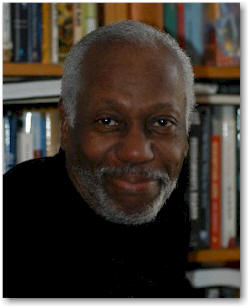
Installment #6 in this ongoing series of stories on their development, trials, tribulations and in some cases recommendations from black music writers continues with a contribution from RON SCOTT, who comes from a perspective unique to our contributors thus far.  And that’s because Ron is a regular contributor to what has long been referred to in black communities as "the black dispatch."  Ron’s primary vehicle for his jazz writings is the venerable Amsterdam News, for many decades the New York City community’s most reliable dispatch of news in and around the black community and of concern to black folks.  Ron is certainly unique in that respect as other traditional black dispatches such as the Chicago Defender, Pittsburgh Courier, and (Cleveland) Call & Post have long neglected this art form we call jazz, which is a unique development of the African experience in America.  Per usual we started this virtual conversation trying to learn what motivated Ron Scott to write about serious music.


To be honest writing wasn’t really in my program…  English was my favorite subject in high school.  As a senior I submitted two short poems for the yearbook; unfortunately they weren’t accepted and I was very disappointed.  While in college I continued writing poems as I pursued my goal to become a social worker.  After college I attended NYU graduate school, the school of social work.  While looking for a part-time job I noticed on the school bulletin board a freelance writing position for a soul [music] magazine (Soul Sounds) in Brooklyn.  I went for the interview and was immediately hired; that was the beginning of my career as a music writer.


When you started on this quest were you aware of how few African Americans there were writing about serious music?


At the time I was not aware.  It should be noted that I started out writing about R&B music and later met and became close friends with the writers in that genre; at that time I wasn’t aware of the writers in jazz.  When I started reading the Village Voice on a regular basis I became a fan of Greg Tate and Stanley Crouch.


Why do you suppose that is still such a glaring disparity — where you have a significant number of black musicians making serious music but so few black music writers or commentators?


I view jazz like the NBA (National Basketball Association) — a host of black players but very little representation as commentators, managers, lawyers, promoters, agents or writers.  Unfortunately I feel that institutional racism is alive and well in jazz.  As a point of reference just look at our representation in the major jazz publications like DownBeat and JazzTimes (and what happend to Stanley Crouch at that publication).  Even Amiri Baraka, who has written a wealth of books, including my bible Black Music, is not a welcomed contributor to any of the major jazz publications or dailies.


Do you think that disparity of African American writers contributes to how the music is covered?


Most definitely music is objective, it’s based on emotions, life experiences, societal stimuli, and cultural background.  When black writers aren’t proportionately involved in sharing their thoughts about the music the coverage becomes one-sided.


Since you’ve been writing about serious music, have you ever found yourself questioning why some musicians may be elevated over others and is it  your sense that has anything to do with the lack of cultural diversity among the writers covering this music?


It’s similar to Benny Goodman being called the "King of Swing".  How could that be possible when he played under the time of Fletcher Henderson, Count Basie, and Duke Ellington?  A lack of cultural diversity is a mild phrase for stating the obvious.


What’s your sense of the indifference of so many African American-oriented publications towards serious music, despite the fact that so many African-American artists continue to create serious music?


This is a difficult question, but most of it has to do with black history.  I feel if more blacks were really aware of their history and the role that jazz has played in society they would be more apt to promote the music.  However, the same could be said for the electronic media; just look at the Grammy Awrds.  Where is jazz on their prime-time priority list?  Or radio?… Only one jazz station in New Jersey and not one in New York City, the multi-media capitol of the world!


How do you react to the contention that the way and tone of how serious music is covered has something to do with who is writing about it?


This relates to my answer to [the question about the dearth of black jazz writers].


In your experience writing about serious music what have been some of your most rewarding experiences?


Writing is my life, without it I wouldn’t exist.  My most rewarding encounter is being accepted into the jazz family of musicians and becoming friends with them as well as their family members.  More than anything I am honored and humbled that these music warriors have accepted me into their most significant lives.


What obstacles have you run up against — besides difficult editors and indifferent publications — in your efforts at covering serious music?


Difficult editors and indifferent publications covers it for me.


If you were pressed to list several musicians who may be somewhat bubbling under the surface or just about to break through as far as wider spread public consciousness, who might they be and why?


There are many young musicians who fit into this category, but I would say alto saxophonist Jaleel Shaw, saxophonist Marcus and drummer E.J. Strickland, and pianist Aaron Diehl.  All are composers bringing their own sound and personal exciting colors to the show.  They aren’t playing safe but taking chances incorporating spoken word and black history moments, connecting the dots…  Aaron, a recent graduate of Julliard, has yet to record his debut album but is already on the radar of major musicians.  He plays everything from blues to stride to straight-ahead and has a strong grasp of the music from a historic perspective.


As we are now in the second half of 2009, what for you have been the most intriguing records released so far this year?


Unfortunately, I tend to listen to the same stuff over and over when I like it, so stuff that just came out this year is still on my "to listen to" list.  But here’s a few: E.J. Strickland In This Day, Gregory Generet (re)generation, Pyeng Threadgill Of the Air, and Frank Wess Once Is Not Enough.

Posted in General Discussion | 4 Comments

Ancient Future – the radio program 7/30/2009

Ancient Future is heard Thursdays on WPFW 89.3 FM, Pacifica Radio serving the Washington, DC region at 50,000 watts.  Hosted/Produced by Willard Jenkins…


ARTIST
TUNE

ALBUM

LABEL


THE MUSIC & INFLUENCE OF GEORGE RUSSELL

George Russell

Stratusphunk

Outer Thoughts

Milestone


George Russell

Concerto for Billy the Kid

The Jazz Workshop

Milestone


Dizzy Gillespie

Cubana Be, Cubana Bop

The Complete RCA Victor Recordings

RCA


George Russell

All About Rosie

The Birth of the Third Stream

Columbia Legacy


George Russell

Swingdom Come

At the Five Spot

Decca


George Russell

Honesty

Ezz-Thetics

Riverside


John Coltrane

Africa

Africa Brass

Impulse!


George Russell

Waltz From Outer Space

Jazz in the Space Age

Decca


George Russell

It’s About Time

The 80th Birthday Concert

Concept


Miles Davis

So What

Kind of Blue

Columbia


George Russell

So What

The London Concert

Label Bleu


WHAT’s NEW: THE NEW RELEASE HOUR

Jackie Ryan

Dat Dere

Doozy

Open Art


Kurt Elling

It’s Easy to Remember

Dedicated to You

Concord


Kurt Elling

Dedicated to You

Dedicated to You

Concord


The Monterey Quartet

50

Live at the 2007 Monterey Jazz Festival

Monterey


Chris Potter

Ultrahang

Underground

Artists Share


Gerald Clayton Trio

Two Heads, One Pillow

Shade

Artists Share

Posted in General Discussion | Leave a comment

Ancient Future – the radio program 7/16/09

Ancient Future is heard Thursdays on WPFW 89.3 FM, Pacifica Radio serving the Washington, DC metro area at 50,000 watts.  Ancient Future is produced and hosted by Willard Jenkins…


ARTIST

TUNE

ALBUM

LABEL


(3rd Thursday: Jazz in South Africa – Historic/Contemporary)

The Blue Notes

Now

The Ogun Collection

Ogun


The Blue Notes

Kudala

The Ogun Collection

Ogun


Elite Swingsters

Thcunlandile

(CDR compilation)


Dudu Pukwana

Ubaqile

Diamond Express

Arista-Freedom


Dudu Pukwana

Angel Nemali

In the Township

Virgin


Dudu Pukwana

Big Apple

Zila

Ah-Um


Johnny Dyani

Witchdoctor’s Son

(CDR compilation)


Dolly Rathebe and The African Inkspots

Unomeva

The History of Township Music

Wrass


Chris McGregor Brotherhood of Breath

Country Cooking

Country Cooking

Virgin


Chris McGregor Brotherhood of Breath

Andromeda

Chris McGregor Brotherhood of Breath

RCA


Chris McGregor Brotherhood of Breath

Now

Eclipse at Dawn

Cuneiform


Chris McGregor Brotherhood of Breath

Travelling Somewhere

Travelling Somewhere

Cuneiform


Dorothy Masuka

Ufikizolo

(CDR compilation)


Louis Moholo Septet

B My Dear

Bra Louis – Bra Tebs

Ogun


Louis Moholo

One Less Sugar and Stir Like Hell

Viva La Black

Ogun


(What’s New: New/Recent Release Hour)

Chembo Corniel

September Cha

Things I Wanted to Do

Chembo


Allen Toussaint

Bright Mississippi

Bright Mississippi

Nonesuch


Ralph LaLama

Old Folks

Energy Fields

Mighty Quinn


Tessa Souter

Crystal Rain

Obsession

Motema


Mike Clark

Like That

Blueprints of Jazz Vol. 1

Talking House


Bob Fraser/Ki Allen

Wish You Were Here

Calling Card


Eddie Harris/Ellis Marsalis

Out of This World

Homecoming

ELM


Ben Wendell

A Flower is a Lovesome Thing

Simple Song

Sunnyside


Contact

Willard Jenkins

5268-G Nicholson Lane

#281

Kensington, MD 20895


willard@openskyjazz.com


Posted in General Discussion | Leave a comment

Congo Nation communes with the Gnawa

Our April 2009 installment of The Independent Ear detailed a then-forthcoming project to take Donald Harrison’s Congo Nation to Morocco for the 12th annual Gnaoua & World Music Festival.  Supported by a grant from USArtists International, the project which brought together Harrison’s Mardi Gras Indian (or Black Indian as he would likely prefer) traditions in collaboration with ensembles from the rich Gnaoua (or Gnawa) black Moroccan traditions (read more background on both in the April 2009 edition) came together beautifully during the recent festival, the weekend of June 25-28 in the lovely Moroccan seaside town of Essaouira on the shores of the Atlantic.  There are hopeful signs that a project is in the works to reverse the equation and bring a Gnawa ensemble to New Orleans for the 2010 New Orleans Jazz & Heritage Festival and a second collaboration with Donald Harrison’s Congo Nation.  Stay tuned…  In the meantime, here’s what happened in Essaouira last month:


Through a grant from USArtists International that was arranged via Jason Patterson’s not-for-profit Jazz Centennial organization (Jason is the proprietor of New Orleans’ leading jazz club Snug Harbor) we facilitated a historic collaboration with deep ancestral roots between Donald Harrison’s Congo Nation and the master Gnaoua musicians of Morocco (or Gnawa as it is spelled in some references; as died-in-the-wool Africanist and frequent Gnawa collaborator, NEA Jazz Master Randy Weston has been known to chuckle, in Africa there are often multiple spellings of the same word, term or title).  The event was the 12th annual Gnaoua & World Music Festival (www.festival-gnaoua.net) June 25-28, 2009 in the seaside town of Essaouira, Morocco.  Each June that idyllic, tranquil town of 70,000 inhabitants is transformed by hundreds of thousands of festival goers who descend on the seaside for this unique free festival.  One interesting sidebar: the festival is produced by the A3 organization based in Casablanca — an all-woman production company!


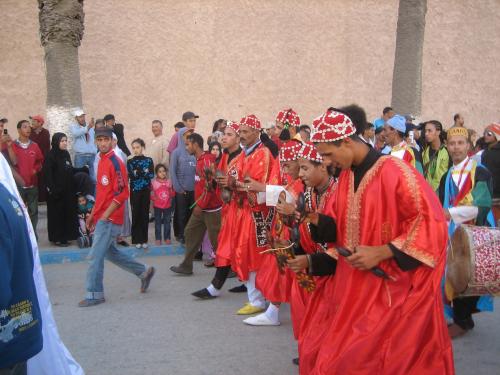
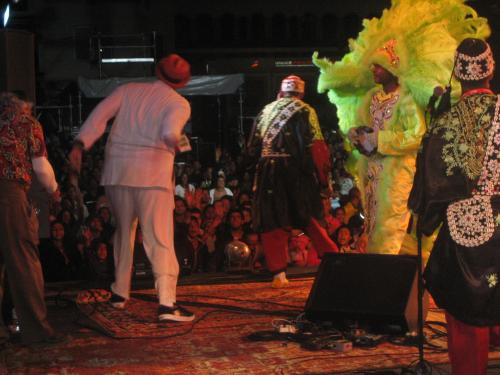
 The opening of the Gnaoua & World Music Festival includes a grand parade of Gnawa ensembles through town which was the first of many epiphanies for Donald Harrison, who found this grand processional uncannily reminiscent of Black Indian and Second Line parades in New Orleans.


The Gnaoua & World Music Festival plays two massive outdoor plaza-stages; the most vibrant is on Moulay Hassan Square adjacent to the town’s bustling fishing boat docks.  Additionally the festival has a lively beachside stage that hosts all manner of deejay-powered electronica and world music hook-ups.  After the action concludes on the three outdoor stages, at approximately midnight or so, it moves indoors to two (ticketed) spaces which are converted to club settings for jams that run deep into the night.  Congo Nation arrived in Essaouira the Monday prior to the festival’s Thursday evening kick-off to necessitate what turned out to be congenial communal rehearsals with the Gnawa and to get acclimated.  Essaouira has a colorful history, having hosted the filming of Orson Welles’ version of Othello (there is an Orson Welles statue and square just off the medina or old city).  Additionally such counter-culture types as Jimi Hendrix, Jimmy Page, and members of the Rolling Stones among others found the town to be a congenial 60s-70s era vacation haven.


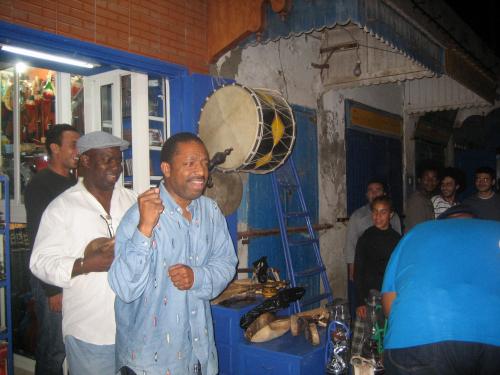
One evening after one of our many communal dinners Donald Harrison, Congo Nation guitarist Detroit Brooks (blue cap), percussionist Gerald French (back turned in blue shirt) and other members of the band struck up an impromptu New Orleans rhythm & chant at a music store across the street from the restaurant; needless to say they soon drew a delighted and curious crowd of Moroccan onlookers with their organic Crescent City groove.  This impromptu stop included several instrument purchases; during the festival Essaouira also morphs into a fascinating retail haven.


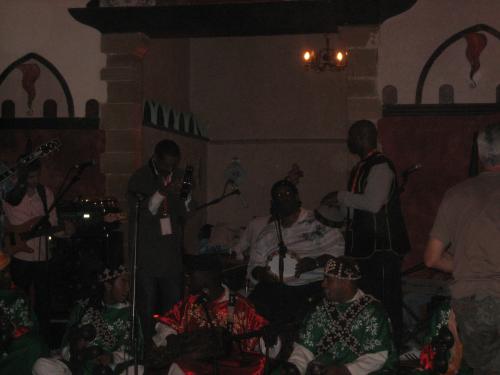
After the revelations of Thursday evening’s opening festival processional (see first photo) had time to marinate with Congo Nation, Friday night’s first scheduled festival gig couldn’t arrive soon enough.  The first of their two performances was a midnight hit Friday night at one of the after-hours club spaces, Chez Kebir.  This was particularly apopos for Jason & Sylvia Patterson, serving as Congo Nation’s road managers for the journey, since they’re diehard club people.  Any trip to Africa is bound to be full of surprises and this night was no exception.  On their way to the club Congo Nation assumed they would hit with the Gnawa ensemble they’d been rehearsing with.  Instead this was slated as a real deal jam as they were paired instead with musicians they’d never met, a Gnawa ensemble from Agadir, a city down the coast from Essaouira.  The impromptu nature of this jam actually heightened the deeply spiritual aspect of the Congo Nation/Gnawa collaboration. 


Chez Kebir, with its thick stone walls and vaulted Moroccan archways, proved to be a natural acoustic treasure once the sound reinforcement issues were ironed out.  As Congo Nation checked sound Suzan and I received separate breathless text messages from our daughters that Michael Jackson had suffered his fatal heart attack (note: there’s a 7-hour time difference between the west coast and Morocco).  We spread the shocking news to Congo Nation and befitting the art of an improviser, Donald quickly put together a Michael Jackson medley for the band’s opening piece.  After their short opening set the Gnawa followed with a short set, then came the first of the two grand collaborations.  Sometimes such efforts at bringing different cultures together fail because one of the proposed partners defers too much to the other, or dominates the proceedings.  Congo Nation, totally respectful as guests, were able to comfortably lock into the Gnawa groove and inject some of their own folkloric chants and rhythms ("Big Chief" etc.), weaving their traditions seamlessly with the Gnawa.  They positively lifted the room for the next two hours; it was a truly magic moment. 


One of the keys to the Gnaoua Festival has long been their custom of inviting improvisers from the West (along with artists and bands from sub-Saharan Africa) to the festival to interact with Gnawa musicians.  These invited guests have included such notables as Archie Shepp, Wayne Shorter Quartet, Joe Zawinul Syndicate, Pat Metheny Trio and many others, including a host of soloists.  After their Chez Kebir hook-up the Gnawa musicians were effusive in excitedly informing Donald and the other members of Congo Nation that this evening marked what for them was their closest, most successful collaboration ever with Western musicians!


Jammin’ at Chez Kebir; from left: Congo Nation guitarist Detroit Brooks (hidden except for his axe), bass guitarists Max Moran, Donald on tambourine, Gerald French seated on tambourine, Shaka Zulu (vest) on tambourine), and the Gnawa from Agadir seated in front.


The next night was the grand collaboration with the Gnawa ensemble led by Maalem (or Master) Mohamed Kouyou on the big stage at Moulay Hassan before tens of thousands of celebrants as far as the eye could see all the way to the sea wall.  As detailed in our April 2009 preview of this project, a major part of this mission was to not only bring distinctive New Orleans rhythms and songs to this festival in collaboration with the Gnawa, but most specifically to bring Black Indian (or Mardi Gras Indian if you prefer) traditions to Morocco.  Take note of the colorful costuming of the Gnawa in photos above and later in this piece.  Clearly the injection of "masking" (as the rich Black Indian costuming traditions of New Orleans are referered to in NOLA) Indians in collaboration with the Gnawa presents at the very least the prospects of a grand and glorious mosaic of costumes.  When we were laying the groundwork for this project last fall over lunch one afternoon at Mothers on Canal Street, Big Chief Donald Harrison was very clear in his contention that he had long ago determined that masking and playing the saxophone were entirely too arduous to sustain for an entire performance, and never the twain shall meet, so Donald didn’t bring one of his Indian suits.  (Later he was mildly regretful of that omission when he experienced the opening festival parade.)  Instead the plan was for his two percussionists, Shaka Zulu and Gerald French, both members of separate Indian sects, to mask.  The best laid plans… on arrival in Morocco Gerald was deeply dismayed to find that Royal Air Maroc had lost his costume case!  Fortunately Shaka’s suit was recovered.


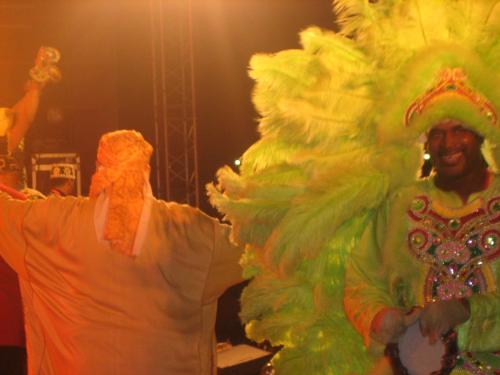
As had been the case at Chez Kebir the preceeding evening, Congo Nation (Harrison, Brooks, Shaka, French, and the brilliant, precocious young rhythm section of NOCCA grads, bassist Max Moran, keyboardist Conun Pappas, and drummer Joseph Dyson) opened the proceedings with a short set that evolved from Donald’s "Ain’t No Party Like a New Orleans Party", through a now-more refined Michael Jackson tribute to the Indian chant "Hu-Ta-Nay."  They remained in place as the Gnawa ensemble took the stage and played a couple of their traditional songs.  What followed was a kinetic collaboration that successfully melded the distinctive Gnawa rhythms and traditional songs seamlessly with New Orleans tradition, the likes of "Big Chief", "Hey Pocky Way," and assorted improvisations from Congo Nation.  The set reached an additional peak when Shaka strode offstage and got in costume, masking in vivid green. 


Shaka Zulu masking onstage with the Gnawa


In the ensuing days Donald Harrison was interviewed by all manner of print and electronic journalists from across the globe, including New Zealand, France, Spain, the BBC, sub-Saharan Africa and several parts of Morocco.  We’re working towards producing a radio documentary of this project once additonal funding is in place, to originate at WPFW in DC and be carried by fellow community radio stations WWOZ (New Orleans), and KFAI (Minneapolis-St. Paul).  As they say in radio parlance…  Stay tuned!


In true Crescent City spirit, Jason Patterson had the good sense to bring along a bag of Mardi Gras beads towards the end of the set; the Gnawa quickly got in the spirit and grabbed some beads to toss.  That’s yours truly, back turned in white with red hat tossing beads to a delighted crowd that soon got in the Mardi Gras spirit of "the catch", alongside members of the Gnawa ensemble and Shaka Zulu 

(All photos are by Suzan Jenkins.)


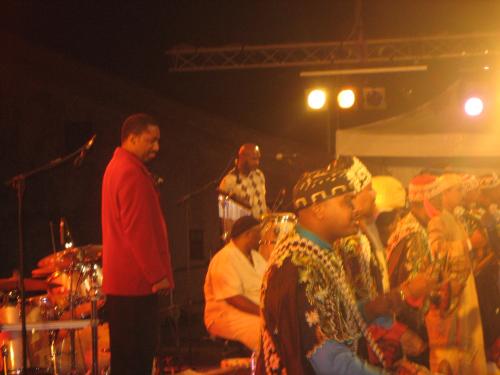
Donald Harrison (red jacket) and members of Congo Nation checking out the Gnawa set that followed their opening set, preceding the collaboration.

Posted in General Discussion | 1 Comment

Ain’t But a Few of Us: Black jazz writers tell their story pt4

Part four in our ongoing series of conversations with black jazz writers is with our first colleague from below the Mason-Dixon Line — Ron Wynn.  An arts columnist and critic for the Nashville City Paper, Ron was also a frequent contributor to what now appears to be the regrettably late JazzTimes Magazine.  He contributes regularly to BookPage, emusic.com, American Songwriter, and Positively Green.  For JT he wrote on a variety of subjects, including a penetrating piece on the issue of race in the music.  Ron is also a fellow radio programmer, co-hosting the arts & politics talk show Freestyle since ’02 at WFSK 88.1FM, the Fisk University Radio station.


What motivated you to write about serious music?


I was introduced to jazz through piano lessons as a youngster.  There was also a police officer in Knoxville, TN who used to host a Sunday afternoon jazz show on the AM station that James Brown owned.  I’ve forgotten his name but I remember that he was a big fan of Eddie Harris and Les McCann and was constantly playing things from their catalog as well as "Cold Duck Time" from Swiss Movement.  Later, after reading Amiri Baraka’s Blues People and A.B. Spellman’s Black Music, plus Langston Hughes’ essays, I was really interested in learning more about jazz and indeed all forms of music.


I really didn’t realize for a long time just how little interest there was in jazz generally, and even less among African Americans my age, until I went to college.  There, thanks to the five-college program in the UMass-Amherst area, I got a chance to take classes taught by Max Roach, Archie Shepp, and Ken McIntyre, plus also hear a ton of great concerts over that four-year period (1970-74).


These were reasonably attended by black students, but didn’t attract many community residents.  But when talking with friends, visiting and seeing what was in their collections, there weren’t that many who had any jazz albums, nor much interest in the music.  So I decided to try and see if I could generate any response and drum up some interest by writing about it.  I’ve been trying to do that ever since and have encountered countless problems over the years in different media outlets.


When you started on this quest were you aware of the dearth of African Americans writing about serious music?


I was incredibly naive in the beginning.  I remember walking into the Boston Phoenix office in 1978 and asking to see Joe C, aka Joe McEwen, the great soul music writer.  They let me go upstairs and I looked around the newsroom and didn’t see anything except white people, so I just assumed he wasn’t in.  I subsequently found out I’d been looking right at him for 15 minutes and didn’t know it because he was a tall white guy.  He turned out to be a great guy and is still a friend of mine, along with many other wonderful writers like Peter Guralnick and Chet Flippo, but the point is that I can count on both hands the number of black jazz writers I’ve met over the last 31 years, and sadly half of them are now either dead, retired, or inactive.


The late Phyl Garland was one of the first black writers I used to read all the time in what was then Stereo Review.  I met former DownBeat writer Bill Cole while attending Amherst College.  Ron Wellburn used to do what I guess you’d call now a fanzine called the Grackle.  I also used to read Vernon Gibbs’ columns and reviews on black pop in various magazines.


Almost all the new young African American writers, like Toure or Kelefa Sannea in the New Yorker, are into hip-hop or R&B.  I love soul, blues and gospel as well, plus my son plays guitar in Public Enemy’s backup band, but it does pain me that there seems to be so little interest in jazz or serious music among younger African Americans.  It makes an enormous difference because there are many blacks of all ages who truly don’t think there are any black jazz musicians around today under the age of 50, other than smooth jazz types.


Why do you suppose that’s still such a glaring disparity — where you have a significant number of black musicians making serious music but so few black media commentators?


I think the lack of black media commentators reflects the general lack of diversity within the print media, something that’s maybe worse today than it was when I started.  Between the demise of print newspapers, the cutbacks in arts coverage everywhere, and the seeming lack of interest in the music, the dismal state of affairs regarding black jazz doesn’t seem to be getting any better.


Do you thiink that disparity or dearth of African American writers contributes to how the music is covered?


Unquestionably, the disparity and lack of black writers has contributed to the situation.  This doesn’t mean that every white person covering jazz is some type of racist or insensitive, but that as a whole many publications and editors simply don’t see this as that important an issue.


Since you’ve been writing about serious music, have you ever found yourself questioning why some musicians may be elevated over others and is it your sense that has anything to do with the lack of cultural diversity among the writers covering this music?


This is such a subjective thing, but in some cases I do wonder and in other areas I do think there’s a cultural reason for it.  I very much enjoy Medeski Martin and Wood, and The Bad Plus.  But I have seen far more coverage for them than their records merit, particularly in the mainstream press.


But I must say that one other problem, at least on my end, concerns the inability to get copies of releases from small labels.  I once did a cover story on David Murray at Bonnaroo and had to jump through hoops to justify it.  I’d love to write more about those types of artists, but many times I don’t get the records that I see reviewed in places like Cadence and other small publications, and I’d really love a chance to publicize those players.


What’s your sense of the indifference of so many African American-oriented publications towards serious music, despite the fact that so many African American artists continue to create serious music?


My sense is that these publications (Ebony and Jet for example) are so strapped for advertising and so close to perishing that they just can’t afford to take a shot at writing about and publicizing musicians whose work isn’t getting played in their target markets and whose audiences for the most part haven’t heard of and aren’t supporting.  That’s a sad and ugly reality, but it seems to be the case, at least in places like Nashville.


How would you react to the contention that the way and tone of how serious music is covered has something to do with who is writing about it?


I don’t think there’s any question that this is an accurate contention, one that’s applicable to any sort of arts and the type of coverage that it gets.  I don’t necessarily think that’s good or bad, just the nature of the process; but the results can certainly be negative in terms of this issue.


But I would also add the impact of demographics (or as they now call it in the newspaper business, "analytics") has a ton to do with it as well.  Far too much of what anyone who does arts coverage these days gets assigned is done on that basis, and the degree of interest by many magazines and newspapers in jazz dips even further when the research department trots out the demographic breakdowns and the coverage gets based on that.


In your experience writing about serious music what have been some of your most rewarding encounters?


The opportunity to interview David Murray, Sonny Rollins, Art Blakey, Max Roach, Ornette Coleman, and Wynton Marsalis and put these stories in newspapers and/or magazines that don’t ordinarily cover this type of musician or music has been without a doubt the most rewarding thing that’s happened to me over the years.


The chance to talk about this issue in JazzTimes and also in your publication is another thrill.  I’ve been fortunate to do some other noteworthy things.  These include the opportunity to have on my radio show in Connecticut in the 80s Gary Giddins, and both Charlie Lourie and Michael Cuscuna of Mosaic and Blue Note fame in the studio (sadly no tape exists of those shows).


I didn’t get to write about it, but the chance to see Duke Ellington before he died, and premier concerts by The Art Ensemble of Chicago, Alice Coltrane with Pharoah Sanders, Herbie Hancock and his electric ensemble, the last great Charles Mingus group with George Adams and Don Pullen, and Sun Ra were also great opportunities; things that still influence me to this day.  Plus meeting Sam Rivers as a college student had a major impact.  He talked about the concept of black music being a river with all different types of streams, and was very interested in many idioms, even though he was considered an "avant-garde" jazz musician.


Encountering Sam Rivers (soprano sax) as a college student had a major impact on Ron Wynn


What obstacles have you run up against — besides difficult editors and indifferent publications — in your efforts at covering serious music?


Probably the inability to get regular servicing on non-major label jazz records has been the toughest obstacle I’ve faced since returning to the South fulltime in 1988.  Except for the two years I worked in Michigan, I’ve been working in Memphis and Nashville, and the small labels just don’t seem to feel there’s anyone around these parts interested in writing about their music.


There was a time when I would do all types of buying (it was mail-order back then) but today, with the recession in full tilt and money tight all around, I just can’t do that much buying anymore.  It’s too bad because every time I pick up a copy of Signal To Noise or The Wire I see all types of great records that I can’t afford to buy.


If you were pressed to list several musicians who may be somewhat bubbling under the surface or just about to break through as far as wider spread public consciousness, who might they be and why?


I’m a huge fan of Ari Brown and almost everyone on the Delmark label.  James Carter is a great musician, even though some of the Verve Records don’t knock me out.  Anything that David Murray releases is first-rate.  Why he’s not on a major label is a crime.  Nicholas Payton is outstanding.  Hyena is another small label that makes fine releases.  There are many, many others but since I’m doing this at work, away from all my resource material, I’m trying to think of people and companies off the top of my head and probably not doing that great a job.


Therer are also a lot of outstanding African American female musicians besides vocalists.  My inability to cite any other than Esperanza Spalding is due to the fact that I’m juggling a bunch of things as I write this.


As we’re into the second half of 2009, what have for you been the most intriguing records released so far this year?


I would prefer to defer my answer on that one to some extent, because there are certainly some great records that have come out that I’m not recalling.


But one CD I heard last week by the ensemble Burnt Sugar is for me an example of what jazz has to do in the 21st century.  These are improvising musicians able to operate in both the popular and experimental sphere.  Writer/musician Greg Tate is fulfillng the "conduction" role that Butch Morris has previously done so well on past sessions.  The roster of performers can vary from 4 to 40, and there’s equal emphasis on solos and accompaniment, melody and harmony, with rhythmic variety and excellent musicianship.  That’s one of the best and most ambitious releases I’ve heard so far this year.


Burnt Sugar’s "Making Love to the Dark Ages" is a worthy 2009 record pick for Ron Wynn


One thing that I hope happens in my lifetime is the establishment of a fulltime magazine (both print and online) devoted to jazz that’s published, owned and operated by African Americans.  That was once a dream of mine, but financial realities indicate that it won’t be coming from me unless something drastic happens.  Before he became a right-wing convert, Stanley Crouch used to do some great jazz columns in Players magazine.  A magazine that could do full-service coverage, with reviews, interviews, features, etc., but with a focus and emphasis on the black community would be fantastic.


Editor’s note: As far as 21st century black owned & operated jazz publications, seek out Pure Jazz (based in Brooklyn, NY and pubished by Joanne Cheatham: purejazzmagazine@aol.com) and African Jazz (based in South Africa and published by Sam Rampa: subscription@africanjazmag.com).


You can reach Ron Wynn either at Nashville City Paper or via his Linkedin page.

Posted in General Discussion, That's What They Heard | Leave a comment