The Independent Ear

Randy Weston & Billy Harper on The Roots of the Blues

RW & Billy

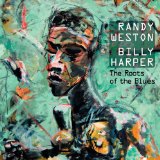
Randy Weston and Billy Harper‘s long partnership has culminated in their first duo recording, The Roots of the Blues, recorded by French producer Jean-Phillippe Allard for Universal and recently released stateside by the Sunnyside label. Ace producer Allard has been at the console for such Weston record dates as Spirit! The Power of Music Verve/Gitanes 1999), Earth Birth (Verve/Gitanes 1995), Khepera (Verve/Gitanes 1998), Saga (Verve/Gitanes 1995), Volcano Blues (Verve/Gitanes 1993), Marrakech in the Cool of the Evening (Verve/Gitanes 1992), The Splendid Master Gnawa Musicians (Verve 1992), and the classic The Spirits of Our Ancestors (Verve 1991). The latter featured three distinctive, spiritually adept tenor men – Pharoah Sanders, Dewey Redman (the tenor exchange between those two on an extended version of “African Cookbook” is worth the price of the CD alone), and Harper. But the Weston/Harper hook-up goes back further than that auspicious record date.

In 1971, as part of his overall plan to develop an African cultural beachhead in Tangier, Morocco that would serve as a hub for African and African Diaspora culture, while continuing to operate his African Rhythms Club in the northernmost African city, Weston began planning a grand festival – which would eventually become the first primarily jazz festival in Africa. As part of his planning he recruited his boyhood friend Max Roach and arts activist Mary Jo Johnson as his US-based liaisons to secure and arrange travel for the US artists Randy planned to bring to the festival. The idea was to produce a festival that would find US and African artists collaborating creatively. The US artists who committed to playing the festival, which commenced September 1-3, 1972, included Mandrill, Pucho & the Latin Soul Brothers, Odetta, Hubert Laws, Ahmed Abdul-Malik, and Max Roach’s Quartet, with Cecil Bridgewater on trumpet, Juney Booth on bass, and Billy Harper. However for some then-unexplained reason Max was not on the flight! Additionally, Dexter Gordon and trumpeter Richard “Notes” Williams joined the lineup from Europe.

Randy puzzled over Max’s absence for years, not learning until after Roach’s passing that the reason he didn’t make the flight was to maintain marital bliss, Max’s wife being very much pregnant at the time. Come festival time – at a grand outdoor venue that was actually a converted bull ring stadium, a setting Weston described as fraught with the usual logistical nightmares of a short-funded start-up (the Moroccan government fell short of its promised financial support), Max’s band soldiered on without him, Harper even taking to the traps for part of the performance, which he also did handily for Hubert Laws set. Though clearly an artistic success, the festival dug such a deep hole for Weston that he was forced to padlock his African Rhythms Club and return home to Brooklyn to recoup. Obviously Billy Harper left a major impression on Weston, such that in recent years whenever a performance calls for or affords him the option of having a tenor player in his band, Weston calls on Harper.

In preparing the liner notes for The Roots of The Blues, I interviewed both Weston and Harper on the project, starting with Weston, with whom I had the advantage of a 10-year head start from writing his autobiography African Rhythms.
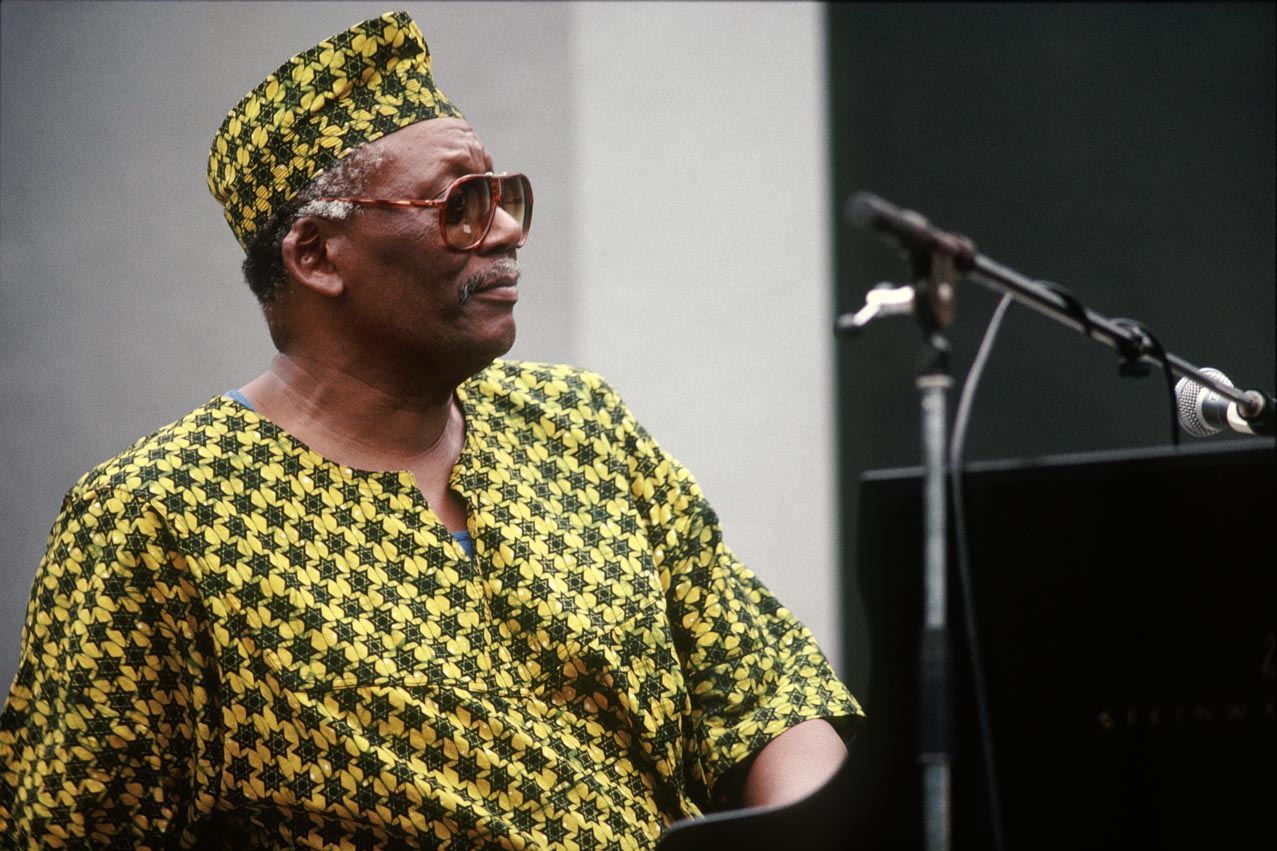
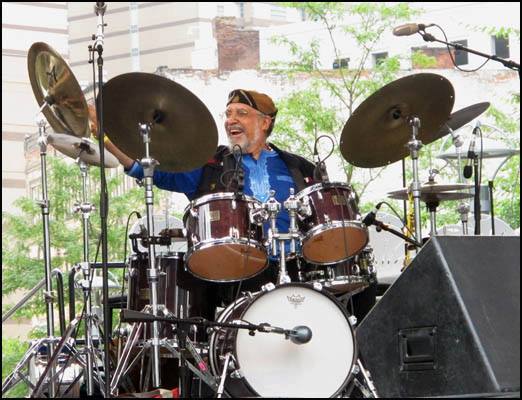
Randy Weston, Prospect Park Bandshell, Brooklyn, NY September 19
Photo by Alan Nahigian

From my recollection of your discography, The Roots of The Blues must be your first duo record?

Randy Weston: Yes, I always love the sound and imagination of Billy Harper. For a long time I wanted to record in duo with Billy. I first played with Billy in Tangier, Morocco when he came over for my festival with Max Roach’s group. I heard the sound I like, that Texas sound, and [Harper] being from Texas he’s a great blues player. When Billy plays the tenor its like an orchestra – the call & response is always there; I always hear the black church in his playing; he’s always singing through his horn. As far as why we work well together, it’s the magic, that big, black sound he gets. Billy’s sound (he has Somali roots) comes straight out of Africa, but it’s a universal sound – that cry, it reaches your soul. He plays that modern saxophone but it’s very poetic. You listen to his solos and it’s a full composition, you hear the whole history of the tenor.

Talk about some of the compositions on this recording.

RW: “The Healers” is one for our ancient ancestors that came out of the Nile Valley civilization; they are the foundation of what we do today. We have to remember those ancient people that created the music we play today.

I definitely hear some of your low end theory, that depth that is characteristic of your lower register playing on “Blues to Africa”.

RW: [Laughs] Only on the Bosendorfer! The lower register represents the earth, the elephant and the way the elephant strides inspires that lower register on “Blues to Africa.” The way [elephants] walk [laughs], maybe it’s because I’m big too! I love the sound of that lower piano register – and you get that only on the Bosendorfer!

“Take the A Train” is symbolic because coming up in Brooklyn the A train gave us the opportunity to get to Manhattan more directly, and [A Train] was written by one of my idols, Billy Strayhorn. [Editor’s note: Weston played piano at Strayhorn’s funeral.] Like the old blues players Billy tried to capture the sound of the train with that piece. It’s a great composition and the A train gave us in Brooklyn an opportunity to get up to Harlem much quicker.

“How High the Moon”: Musicians started playing that a lot in the 40s and 50s; it was the first piece I heard Lucky Thompson play and I loved it. I played with Lucky once in Brooklyn; what an honor!

“Body & Soul”: Coleman Hawkins, obviously. [Editor’s note: In African Rhythms Weston tells the story of how as a 12-year old in 1938 when Hawkins recorded his monumental version of “Body & Soul,” he ran out and copped three copies of the single with an allowance advance, playing two copies endlessly at home, with his record player on blast, tilted out his bedroom window to entertain the neighborhood, wrapping up the third copy for safe keeping.] What I do is in the beginning I play a melody based on the bridge of the piece before Billy comes in, which I call “Soul and Body.”

“Congolese Children”: Some of my early listening to African music came up in the Berkshires. I heard some music from the region around Lake Kivu [one of the African great lakes, which borders the Congo and Rwanda] in the Congo. That’s when I began to incorporate rhythms and harmonies of Africa in my music.

“Blues to Senegal”: The first time I took my band to Africa was in 1967, and our first concert was in Dakar. I heard Dou Dou N’Diaye Rose, the great master drummer who inspired me. My son Azzedine created a rhythm based on a Senegalese drum pattern that fit with this melody.

“Carnival”: Inspired by Bobby Benson [musician and owner of the Lagos nightclub Caban Bamboo], just being in his club in Lagos, it was like a carnival. The first time I recorded this was in Montreux; Billy [Harper] was there with Gil Evans, and Don Moye was there with the Art Ensemble of Chicago; they’re both on the record.

“Timbuktu” was inspired by several things: my father talked about Timbuktu as one of the great ancient civilizations and I always wanted to visit there. This piece is a combination of a prayer and the greatness of Timbuktu in the ancient times. The piece deals with sadness, love, history and dreams.

“Roots of the Nile” depicts the beginning of the Nile Valley civilization; it’s a tribute to the ancient people of the Nile Valley civilization.

“Cleanhead Blues”: I played two weeks with Eddie “Cleanhead” Vinson up in Albany and it was quite an honor. Not only was he a great blues singer, he was a great saxophonist as well.

Billy Harper on The Roots of the Blues:
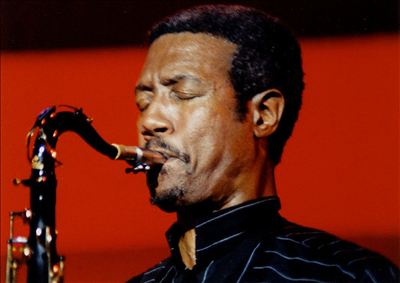
Billy Harper
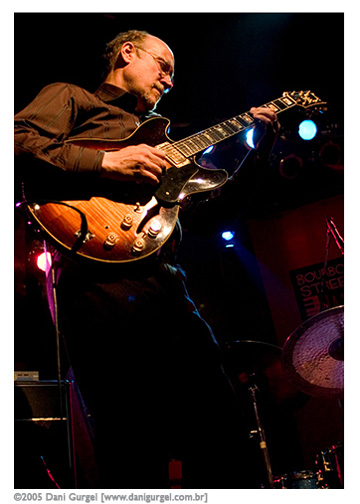
Billy Harper by Greg Turner

How did you meet Randy and what’s been your overall experience knowing and playing with him down through the years?

Billy Harper: I met Randy Weston during a European tour that I was doing with Gil Evans; this was in the 70s. We immediately joined our musical forces together and recorded an album called Carnival, a live performance at one of the main festivals in Switzerland. But the first genuine meeting was in Africa. I was invited as part of the Max Roach Quartet to perform at Randy’s festival in Tangier, Morocco. Although I did perform on saxophone – Max had sent the band ahead of time, but when the event started there was still no Max – so I played drums a bit; one such occasion was behind Dexter Gordon, and also Hubert Laws.

There are so many stories to be told in relating to the saga that involves the overall experience of knowing and performing with “Chief” Randy Weston, that probably the most significant one highlights the direction and values that are emphasized in the truth of understanding the history and origins of so much of Western culture, via the true birthplace of us all – Africa. As this awareness was passed down from Randy’s father, through the understanding of Randy, it has also been passed down to us – meaning all of the musicians, or for that matter all persons who have come in contact with Randy Weston – the supreme speaker and teacher of the “flame of truth” – whether the focus of the moment is the music that we play as “jazz musicians”, or the history that we live as “human beings” in this world. Our humanity is connected to music, and vice-versa.

What made you decide to play your piece “IF One Could Only See” as your solo saxophone contribution to The Roots of the Blues?

BH: It was at the request of Randy Weston himself that I decided to contribute my composition. This is a song that I played as a solo when Randy and I performed in duet recently in Japan at a spiritual shrine. This song was given to me, in a dream. In this dream, I was walking down Seventh Avenue in Manhattan and I was carrying an empty tape recorder. As I strolled along not really paying attention to anything, this humongous hand reached down from the heavens and there was a cassette tape in it! So I accepted the tape, placed it in the empty cassette player… and one of the most beautiful melodies was played. I woke up immediately and played what I had heard. I named it “If One Could Only See.” The philosophical meaning of the title is so vast that it explores the possibilities of the goal of perceiving truth (real truth) in all that we see, whether it relates to truth in life, love, history, events that are denied or distorted, events that have occurred and were thwarted, all those things that mankind has a tendency to hide. The truth can be seen through our hearts… if we can learn to use our hearts… if one could only really see.

African Rhythms cover

Posted in General Discussion | 5 Comments

Ancient/Future Radio playlist for 11/27/13

Ancient/Future Radio is heard Wednesday evenings 10-midnight on WPFW 89.3FM in the Washington, DC metro area; streaming live and archived for two weeks at http://www.wpfwfm.org.

ARTIST/TUNE/ALBUM TITLE/LABEL
Kevin Mahogany, In the Evening (opening theme)
Tulivu-Donna Cumberbatch, Give Thanks, Daughters of the Nile, Ki
Stanley Cowell, Thank You My People, Regeneration, Strata East
Roy Haynes, Thank You Thank You, (same), Galaxy
Eddie Jefferson, Thank You, Things Are Getting Better, Muse
Global Noize, Thank You, Sly Reimagined, Zoho
Larry Willis, Thank You Lord, Sanctuary, Mapleshade
Alphonze Mouzon, Thank You Lord, The Essence of Mystery, Blue Note
Joe Lovano, Thanksgiving, Landmarks, Blue Note
WHAT’S NEW/THE NEW RELEASE HOUR
Leron Thomas, Fool’s Paradise, Whatever
Kristine Key, Takes My Breath Away, Nice As Can Be
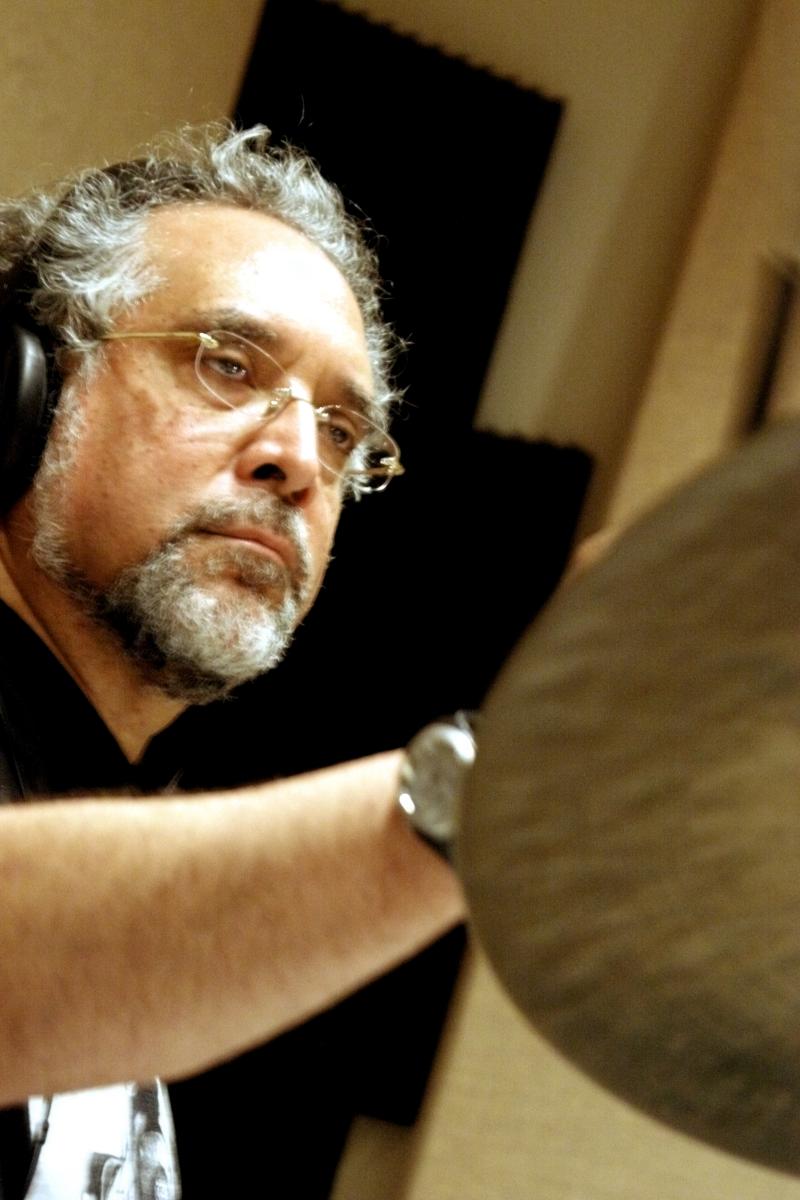
Steve Gadd, the Windup, Gadditude, BFM
Sons of Kemet, Going Home, Burn, Naim
Outer Bridge Ensemble, New Beginning, Determined, Outer Bridge
Sons of Kemet, The Itis, Burn, Naim
Kenny Burrell, Sunset and the Mockingbird, Special Request, HighNote
Joey DeFrancesco, Budo, One for Rudy, HighNote
Sons of Kemet, All Will Surely Burn, Burn, Naim

contact: willard@openskyjazz.com

Posted in General Discussion | Leave a comment

Major shift for Tri-C JazzFest

TCJF
In celebration of our 35th anniversary, Tri-C JazzFest (TCJF), Cleveland’s signature annual jazz event, is making a paradigm shift in its format, from April to summertime. Long known by the moniker “America’s premier educational jazz festival,” TCJF was founded 34 years ago as a means of developing a jazz studies program for Cuyahoga Community College (Tri-C). My late friend and colleague Dr. Reginald Buckner, in residence at Tri-C at the time while on sabbatical from the University of Minnesota, caucused with Tri-C music professor Dr. Thomas Horning about building a jazz festival at Tri-C. At the time the Cleveland area was bereft of any semblance of a jazz festival and the time was ripe. Enhancing that atmosphere was the development of Cleveland’s Playhouse Square Foundation.

Some years prior four classic old movie houses in downtown Cleveland were in danger of being destroyed in favor of parking lot and other assorted potential downtown development. Long story short, at the 11th hour before the wrecking ball forever changed the face of that sector of downtown Cleveland, a movement spearheaded by the late U.S. Senator Howard Metzenbaum led to the creation of the not-for-profit Playhouse Square Foundation to develop and manage these conjoined theaters. Tri-C became the education partner of the Playhouse Square Foundation, whose theaters (the 14th Street, Allen, Hanna, Ohio, Palace, and State, which range in seating capacity from 277 seats to 3,194) now rank as the second most active (next to the Kennedy Center) performing arts theater complex in the country. So in addition to Tri-C’s campus auditoriums, the Playhouse Square theaters were the initial venue hubs for Tri-C JazzFest.

During the planning stages of TCJF, Buckner and Horning put together an organizing committee that included two of the founding members of the Northeast Ohio Jazz Society – at the time Cleveland’s most active jazz concert presenter – Dr. Larry Simpson (currently VP at Berklee College of Music) and myself. The prevailing idea of the plan was for the festival to be education-based and secondarily to build Tri-C’s jazz studies program. The core of the festival became several days of high school jazz band adjudications by visiting artists-in-residence, augmented by a strong evening concerts component. The festival continued to grow, from a weekend activity to a 10-day event with high school jazz band adjudications, clinics and masterclasses with visiting professionals by day, and evening concert presentations. Along the way Tri-C JazzFest has presented every major jazz artist – including many of the immortals – and introduced countless new, young & emerging artists to our audiences, in both ticketed and free events at a broad array of venues both on-campus and in Playhouse Square theaters, as well as across Cuyahoga County – including numerous presentations at sites in Cleveland’s traditional African American communities.

Seventeen years ago, after professional opportunities found my career migrating first to the Twin Cities in ’84 then Washington, DC in ’89, I happily accepted an opportunity to serve as Tri-C JazzFest’s artistic director. As our festival continued to develop in its annual April sequence, it felt more like a robust concert series than a traditional jazz festival design. And that 10-day format began to get a bit gray around the edges as the years progressed, the sheer length of the event somewhat taxing our potential audience; not to mention the fact that April in Cleveland doesn’t exactly beckon festival travelers the way summertime festivals do. So under the current leadership of festival managing director Terri Pontremoli, and with the blessing of Tri-C’s new president, Dr. Alex Johnson (after years of very active and robust support from Tri-C President emeritus Dr. Jerry Sue Thornton), we are actualizing a plan to shift Tri-C JazzFest to more of a compact, multi-stage, simultaneous performances, summer event with a developing outdoor component, during a time when Cleveland’s weather is quite agreeable.

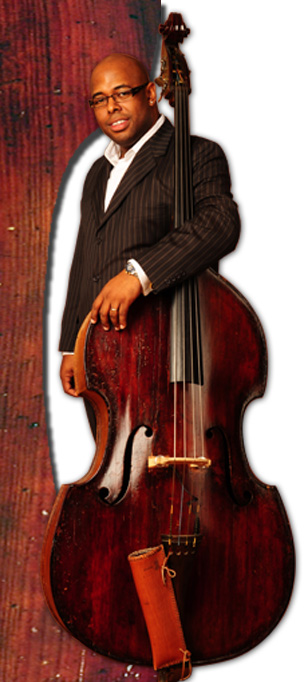
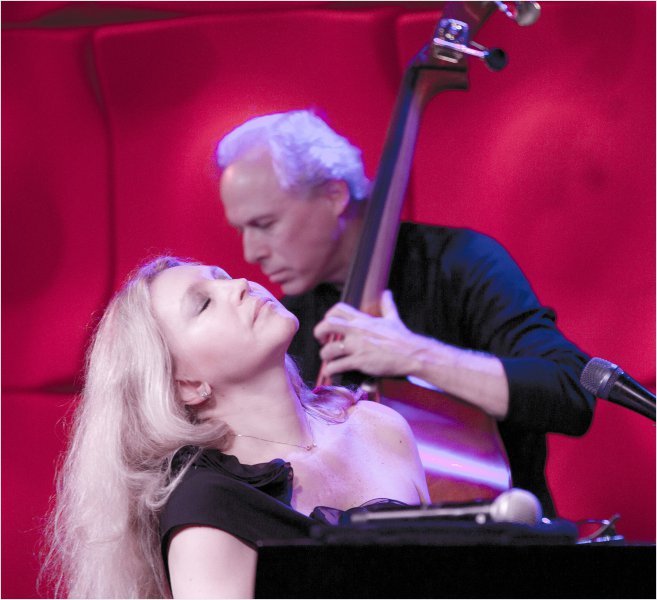
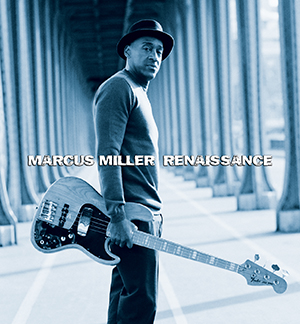
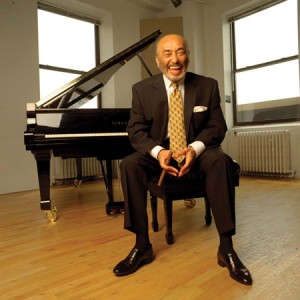
So mark your calendars for the weekend of June 26-28, 2014 as the beginning of a new day for Tri-C JazzFest. We’ll be utilizing several of the Playhouse Square theater stages, including their new outdoor stage on Euclid Avenue, with performances throughout those days and evenings. Our annual jazz education days will continue to be in April (10 & 11) and the great bassist Christian McBride will be our artist-in-residence, including performances by his Trio and his big band charts during our June sequence. We’ve assembled a strong lineup for June 26-28, which besides Christian McBride includes the following great artists and more (all pictured below): Terri Lyne Carrington, the Cleveland Jazz Orchestra (playing the music of Christian McBride), Eliane Elias, Ernie Krivda’s Fat Tuesday Big Band (playing a program of the Oliver Nelson charts for Jimmy Smith), Jamey Haddad’s Global Drum, Dave Holland PRISM, the Sean Jones Quartet, Dave Koz, Raul Midon, Marcus Miller Band, Eddie Palmieri’s Latin Jazz Orchestra, Gregory Porter, John Scofield Uberjam, Trombone Shorty and more tba. As they used to say in ancient times, be there or be square!

For complete Tri-C JazzFest information, including venues, show times and ticket information please visit http://www.tri-cjazzfest.com or call 216/987-4049 and ask about our new Festival Pass – 12 concerts for $250 – a limited time offer available through December 31, 2013.

Don’t miss these great artists at Tri-C JazzFest ’14…
Christian McBride
TLC
Eliane Elias
Ernie Krivda
Jamey Hadad
Dave Holland
Sean Jones
Dave Koz
Raul Midon
Marcus Miller
Eddie Palmieri
Gregory Porter
John Scofield
Trombone Shorty

Posted in General Discussion | Leave a comment

Francisco Mora-Catlett’s Afro Horn

Blessed with a spiritual quality reminiscent of the vibrant 60s/70s African American cultural consciousness scenes, and indelibly linked to Afro-Caribbean folkloric elements, percussionist Francisco Mora-Catlett has made two exceptional recordings over the last two years; these have included 2012’s striking Afro Horn MX and Francisco’s 2013 successor AfroHorn Rare Metal releases. Based on this year’s powerful followup, clearly Francisco is plumbing a deep well of distinctive thematic music.

I first met Francisco Mora-Catlett in Detroit back in my Great Lakes Arts Alliance and later Arts Midwest days of providing service to the jazz community of the Great Midwest. Back in those days Detroit and Chicago ran neck-and-neck in terms of activist communities of self-determining musicians, and Francisco was right there in the Motor City, working with such stalwarts as our mutual friend the late pianist-composer Kenn Cox. Some may recall Kenn Cox from the old Kenny Cox Contemporary Jazz Quintet that made two rare recordings for the Blue Note label. It had been more than a minute since I’d seen or heard Francisco Mora-Catlett, so the arrival of last year’s Afro Horn MX was a welcome sound. Immediately the mind drifted back to some of my undergrad African American studies courses at Kent State and my personal discovery of Henry Dumas’ powerful short story “Will The Circle Be Unbroken?” which is the thematic underpinning from which Francisco launched that first MX recording.

Now with his 2013 followup AfroHorn Rare Metal, clearly some measure of catching up with and inquisition of Francisco was in order. But first, I wanted Independent Ear readers to get to know a bit about Francisco Mora-Catlett’s background, particularly since he derives his hyphenated surname from renowned artist-parents.

Francisco Mora-Catlett

Born in Washington, D.C. and raised in Mexico City (where I started studying music), my parents are African-American sculptress Elizabeth Catlett and Mexican painter Francisco Mora. I was a session musician at Capitol Records’ Mexican division. In 1970, I earned a grant from the Mexican government to attend Berklee College of Music in Boston, where I studied composition, and drum set with Alan Dawson at the Center for Afro American Artists Elma Lewis School, and African percussion with legendary Nigerian drummer Babatunde Olatunji.

From 1973 to 1980, I was a member of the internationally renowned Sun Ra Arkestra. Later I settled in Detroit working, touring and recording with outstanding musicians such as Kenny Cox, Roy Brooks, Harold McKinney, Donald Walden, Ali Jackson, Wendell Harrison, Sherman Mitchell and Marcus Belgrave. In 1986, I made my first album as bandleader: “Mora!” a progressive Afro-Jazz project. Thanks to a grant from the National Endowment for the Arts, I was able to study with Max Roach in New York City, performing as a member of Roach’s advanced all-percussion ensemble, “M’Boom”. I played on two of Mr. Roach’s Blue Moon albums: “To the Max” (1990) and “Live at S.O.B.’s New York” (1992).

In 1993, I was appointed a Visiting Minority Associate Professor in the School of Music at Michigan State University, where for 10 years I taught students: “percussion that derives from the concepts and traditions of the African presence in the Americas.” In Detroit I played drums and percussion on “Bug in the Bassbin,” the 1996 debut single by Detroit techno producer Carl Craig‘s groundbreaking jazz/electronica fusion project “Innerzone Orchestra”. I also appeared on the 1999 release of Innerzone Orchestra’s “Programmed.” Later that year, I launched my second album, “World Trade Music”, with fellow Innerzone artists Craig Taborn and Rodney Whitaker. In 1999, my contributions to the music world were recognized in Britain’s “Straight No Chaser” magazine*(1): “Like the most elegant hand-tooled walnut dashboard on the flight-deck of a Space Shuttle, is the sound of Francisco Mora Catlett.” My parting contribution to Detroit’s music scene was the creation of The Outerzone Band, featuring Marshall Allen and Craig Taborn.

Since relocating in New York City in 2002, I co-founded the Oyu Oro Afro-Cuban Dance Ensemble with my wife, Afro-Cuban dancer and choreographer Danys “La Mora” Perez Prades. With new recordings in New York City, my work as a percussionist and composer has been featured on two CDs for the Freedom Jazz Trio: New Under The Sun, featuring Francesco Tristano, and Live At The Bronx Museum; and Outer Zone 2010 Andromeda M-31, both with Craig Taborn.

In 2012, I released Afro Horn MX with an outstanding lineup of musicians: John “JD” Allen, Vincent Bowens, Alex Harding, Aruán Ortiz, Rashaan Carter and Roman Díaz. Writing in New York’s Downtown Music Gallery, Bruce Lee Gallanter described Afro Horn MX as being “Like the Art Ensemble of Chicago, Francisco Mora Catlett’s septet blends the ancient and modern as well as the African and Latin streams into a most delectable blend. … One of this year’s best.”

I’ve fortunately received significant acclaim for our new 2013 AfroHORN CD release Rare Metal, featuring Sam Newsome, soprano saxophone; Salim Washington, tenor saxophone, flute, oboe; Alex Harding, baritone saxophone, bass clarinet; Aruán Ortiz, piano; Rashaan Carter, acoustic, electric bass; Roman Díaz, percussion, vocals; Andrew Daniels, percussion; Danys “La Mora” Perez, Meredith Wright, Liethis Hechavarria, Sandra D. Harper, vocals.
AfroHorn Rare Metal
How did your distinguished artist parents inspire your music?
They were always part and a crucial aspect in my development as a musician and a serious artist. Early in my commercial work in Mexico City I was consistently reminded by my father about not performing the classics and by my mother of not playing the blues. Encouraged to study composition with their uncompromising support, I was able to create a solid foundation in my early musical formation.

How did this AfroHORN project originate?
I joined Sun Ra and his Arkestra in Mexico City and, under his mentorship, came to the US. It was in Sun Ra’s house in Philadelphia where I was introduced to the writings of Henry Dumas, and where I read his short story “Will the Circle Be Unbroken?” I was so impressed by this work that I wanted to be part of an Afro Horn Jazz Band, so I put together the first Afro Horn band in Detroit in the early 1980’s. The idea of a mythical, cosmic, musical instrument, originated in powerful traditions, that link the universal criteria of the African Presence in the Americas, and that defies shallow interpretation and definition of its manifestation, while clearing egoism and self rewarding pursuit, fascinated me.

For those who may not be familiar with Dumas’ story, what exactly is the legend of the Afro Horn?
My interpretation of the Afro Horn in the musical context, as stated by Henry Dumas in his short story “Will the Circle Be Unbroken?” is highly descriptive and profoundly linked to the ceremonial and ritual musical traditions of the African Spiritual practices as they have evolved in the Americas; while first healing and raising the living condition of the communities that come from these traditions and later, because of its ties to a universal community… Henry Dumas wrote, “There are only three Afro-Horns in the world. They were forged from a rare metal found only in Africa and South America.” Is this a myth or true phenomena? That is the elusive and indefinable nature that characterizes the music derived from the African Heritage in the Americas.

Talk about the Afro-Caribbean folkloric quality to AfroHORN; how did you come to that as a central element of your music?
African-American folklore, Afro-Caribbean folklore and African-American music traditions are all elements, resources and an integral part of my work. I lived in Detroit in an African-American Community and I lived this experience. I have spent a lot of time in Cuba and I have researched the migrations and exodus of African derived people throughout the Caribbean, and how they arrived in New Orleans. The importance of Congo Square, as early as the 1800’s, to an already African American population, and among others the initial writings of Louis Moreau Gottschalk in such works as “Bamboula”, based on the music he heard in Louisiana. Those are valued manifestations of African elements in an already American Music. In my work, the African identity of the music that is called Jazz (that I prefer to think of as an American Classical Music) is extremely important, regarding its own nature, its elusiveness, and defying definition, while contributing and enriching to the universal freedom of the human spirit…

How did you assemble the musicians who play this music?
The musicians that work on my projects arrive from a similar state of mind and unconventional musical principles. What I offer the musicians is a blue print of the intended direction; with strong respect for each other’s creativity we all decide collectively where the music goes. I started working with Alex Harding in Detroit back in the late 80’s; we have always being strong supporters of each other’s work, and we have develop a language of communication. Sam Newsome, I met in New York City and instantly we decided we had to work together sometime soon. Salim Washington was always very supportive of the Afro Horn project, offering his home for rehearsals and participating in the early concerts in New York City. Roman Diaz has known my wife at the Afro Cuban Folklore Movement in Cuba, since she was 11 years old, and we work together on her Afro Cuban Folklore dance company OYU ORO in New York. Rashaan Carter loves the music, comes from Washington DC and he was introduced to me by Aruán Ortiz who comes from Santiago de Cuba where my wife is from. These musicians have a family and a community feeling for what we’re doing with the Afro Horn project. They are all unique in their sound and in their contribution. They are real sound with a wonderful sonic concept. I believe that working together with these musicians is one of my greatest and most unique experiences.
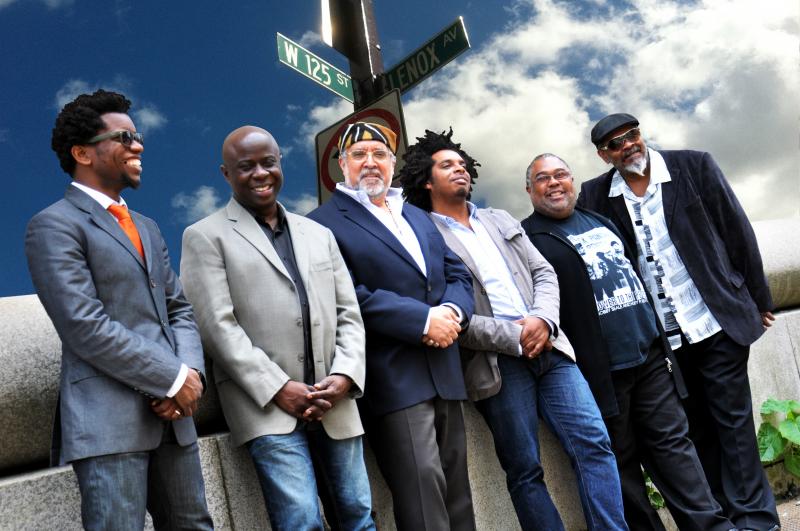
AfroHorn
The AfroHorn crew; left to right: Aruan Ortiz, Sam Newsome, Francisco, Rashaan Carter, Alex Harding, Roman Diaz
What’s next for this AfroHORN project and do you see it continuing for the foreseeable future?
I truly believe in the idea of a music project that grows and has a relationship, in concept and direction, with another art form, literary in this case. They jointly represent an identity that in principle is always evolving, in continuity, around the need to express and manifest the freedom of the human spirit and that has longevity and a powerful future. Having the great fortune to work with giants like Sun Ra and Max Roach has taught me that cultural continuity, vision and perseverance, are essential to maintain the expressivity of an Artistic form.

FRANCISCO_MORA-CATLETT 1

Posted in General Discussion | Leave a comment

Jamie Baum is In This Life

JamieBaum
Flutist Jamie Baum has always struck me as a very thoughtful artist with a lot on her musical mind. We met several years ago at a conference and she’s been pleasantly persistent in updating her career developments ever since. A Connecticut native who is a New England Conservatory jazz composition grad, Jamie has worked with and been influenced by an impressive range of artists; in the jazz spectrum that has ranged from Randy Brecker and Kenny Barron to George Russell and Wadada Leo Smith. Deeply invested in a philosophy of achieving a better integration of the flute in the jazz ensemble, the last time we reported on Jamie’s work it was as part of the ensemble Yard Byard, dedicated to the music of the neglected genius pianist-composer Jaki Byard; a passion for upholding Byard’s legacy she shares with another of his successful students, pianist Jason Moran.

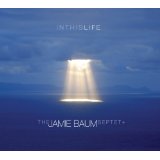
Several months ago, uplifted by her latest project and eager to share it, Jamie sent me an advance disc of her recently released project, In This Life (Sunnyside), performed by her septet+. The depth and breadth of particularly her composition and arrangement work on this new disc was immediately apparent, as was her continued growth on her instrument and as a selfless bandleader. Clearly some questions were in order…

Judging from your growing discography and culminating with your latest release In This Life, its clear that you are a musician who places paramount value on the overall sound and blend of an ensemble. I base that impression in part on the fact that you’ve recorded largely in sextet and now septet+ configurations. Is that an accurate sense of where you’re coming from?
I have a few answers to that question. The first, is that I have always been involved in different projects/bands at the same time where one may be a quartet working with standards, another a duo working with free structures and another, for example, with the music of Jaki Byard…and so the Septet, which was formed in 1999, has always been about my compositions. It has been a great vehicle for me to explore new ideas. I started the septet when preparing for my master’s degree recital at Manhattan School of Music in jazz composition, and since then the band has recorded 3 CDs, the third of which is In This Life, my second for Sunnyside Records. For this recording the group was expanded to an Octet and I also added special guests Dan Weiss on tabla and Samuel Torres on congas. Having this band has given me the chance to workshop a lot of concepts relating to form, orchestration, meters, structures for improvisation, etc., as well as the opportunity to see how I can take influences from other genres of music to expand jazz formats for composition and improvisation.

As is with most jazz improvisers, I enjoy playing standards and blowing several choruses over the form however, I have felt that this isn’t always as interesting to the listener as it is to the player. Sometimes I will go hear bands play several choruses over a 12, 16 or 32 bar tune, one soloist after the next, and find that the thread of the composition is lost. That has inspired me to find ways of integrating the soloing and composition through extracting and developing parts of the melodic and rhythmic motifs into a variety of relevant sections for improvisation. I also try to keep each piece and the overall CD interesting by considering all of the possible pairings and color options available from the different instruments as they relate to the vibe or expressive quality I’m going for. So as they say, “the devil is in the details”, and that attention to those details can really help create a mood and perhaps inspire the soloist to improvise in a way that is more relevant to the composition. I also think it is important to not only give attention to the shape of each piece but to the overall set, whether for a performance or recording.

When you plan a recording date, how do you go about matching as closely as possible the intentions of your compositions with the players you select to play those compositions?
Well, first and most importantly, I have been very lucky to have great players work with me who understand what I am going for and who really bring their own unique interpretation to the music. I have had many of the same musicians play in the band for several years at a time, including great players like Ralph Alessi, George Colligan, Doug Yates, Jeff Hirshfield… and knowing who you are writing for is a gift. I have to say that the music wouldn’t be what it is without them and so it is important to choose the right musicians….players who don’t need to be told too much. There is a fine balance you have to find as a leader, knowing how much and what to say in order to be able to get what you want but to not inhibit all of the wonderful ideas, spontaneity and expressiveness that the band brings to “the table”. I do, however, think carefully about who I choose to solo on which compositions and in which sections in the composition. I also consider who I give the melody to at any given time in order to achieve the color, energy or intensity I feel the piece needs. I have to say though, those things are usually figured out well before going into the studio to record since we generally perform the music quite a bit before then. By the time we record, I will have a good sense of what I want to happen in that way. With that said, I try to be as flexible and “in the moment” as possible in the studio. If one of the band members or producers has an idea they want to try, I’m all for it because you never know what kind of magic you will end up with… which is what we all are hoping for anyway.
>CSC_0731
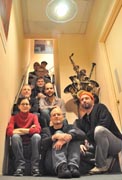
Jamie & her In This Life crew

The flute is not a standard member of most big band woodwind sections; usually it is included as a saxophonist doubling to provide the ensemble with a different color based on the composition. It strikes me that somewhere down the road you’ll be compelled to place your compositions before a large ensemble or big band. What precedents can you think of from your observations of a flutist writing for and leading a large ensemble?
Good question. I’m not sure I know of any flutist who has actually composed compositions for big band as well as played on them… doesn’t mean that there aren’t any, it’s just that none are coming to mind at this moment. I’m sure there are saxophone doublers who have and who have had an affinity and understanding of how to use flute and its doubles effectively. There were several recordings that did use a lot of flute in ensembles that inspired me early on, including Herbie’s Speak Like a Child, Hubert Laws’ The Rite of Spring and In The Beginning, Gil Evans’ recordings, and ensembles that used interesting instrumentation and formats like Kenny Wheeler and George Russell‘s early works. I have been asked several times to write for big band and/or orchestrate my music for big band… its not that I’m not interested in doing it, it is a matter of finding the time and making it a priority….

You also appear on your fellow flutist Ali Ryerson’s big band recording with a full ensemble of flutes (Game Changer, Capri Records). What was that like and did you carry anything away from that experience that you might think about for your future endeavors?
When Ali first formed the band 10 years ago, she asked me to play in it. I think most jazz flute players at one point or another have “big band envy”. I think that at some point we all would have liked the opportunity to be involved in a big band; the chance to be a part of an ensemble where you can learn so much about blending, articulation, intonation, jazz phrasing, playing in different styles, be pushed to do your best due to its competitive nature, camaraderie, learning from being around your peers, play so much of that great repertoire, etc.…. I’ve often thought that not having those opportunities can put the aspiring jazz flutist at a disadvantage. Playing in Ali’s big band has been a fun experience for some of the reasons I mentioned, particularly since all of the players are on a high level and the arrangements are tastefully and thoughtfully done. Being in the middle of the sound and colors of all of those flutes is certainly a unique experience. I’m not sure though how that might affect my future endeavors, but then you don’t necessarily know how experiences are going to present themselves in your music further down the road.

What’s next on your horizon?
I’m looking forward to the many upcoming CD release gigs in November, including the Firehouse 12 in New Haven on 11/15 and the Jazz Standard in NYC on 11/19 [see Jamie’s current full schedule of CD release gigs below] and I’ll be doing a 10-day tour in Canada with Jane Bunnett at the end of November. More CD release performances in the coming months with the Septet+, including one at Blues Alley in DC in February, a new CD coming out by Yard Byard: The Jaki Byard Project, some duo gigs with pianist Richie Beirach in February, some writing projects, etc. Lots to look forward to!

InThisLife
Jamie Baum’s In This Life CD Release Tour Dates

Nov 14 – Springfield, MA
Pioneer Valley Jazz
Nov 15 – New Haven, CT Firehouse 12
Nov 16 – Old Lyme, CT The Side Door
Nov 19 – New York, NY Jazz Standard
Nov 23 – Waterloo, ON TheJazzRoom
Nov 27 – Toronto, ON Hugh’s Room
Nov 28/ 29- Quebec Bar Sainte Angele
Nov 30 – Ottawa, ON The GigSpace
Dec 1 – Kingston, ON Kingston Jazz Society

*Nov 23 through Dec 1 dates will feature special guest Jane Bunnett

Posted in General Discussion | Leave a comment