The Independent Ear

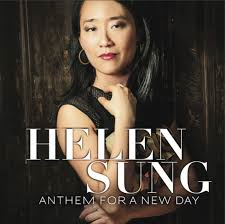
Helen Sung’s new day anthem

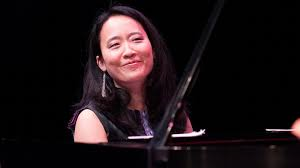
Pianist Helen Sung, besides her growing prodigious piano abilities, is one of the truly bright people in this music. Blessed with a fine wit and a palpable joy of playing, when you see Helen perform you cannot help coming away refreshed by the total package of her skills. The first time I saw Helen Sung was as a finalist for the Thelonious Monk Competition, and I quickly marked her down as someone to watch. Several years later we had her onstage at East Cleveland Public Library’s performing arts center as part of our Tri-C JazzFest young artist Debut Series. That typically adoring audience certainly came away impressed and sold on Helen Sung, from her obvious playing skills to her ability to truly communicate and connect with an audience.

Anthem for a New Day, which sounds like something of a career declaration, is her first prominent label recording. Anthem for a New Day also sounds like the declaration of a new level of composition and playing – which it decidedly is. Time to pose some questions to the Houston-born pianist.
Helen 1

This is your Concord Records debut. What’s your sense of this being your first prominent label release?
Well it’s certainly an honor and a great opportunity to release a recording on a prominent label like Concord Records, which has a strong platform in place to help promote and support the album and music. Everybody I’ve met at the label is amazing: excellent at what they do and a pleasure to work with. So it’s been a terrific experience – I’ve learned a lot, and I’m excited to share my music with a wider audience. That the recording happened to be Anthem For A New Day is great timing also, as I feel this album more completely represents who I am, what I’ve been working on/living with, and where I’m headed, as an artist.

Talk about your background and what brought you to this point.
I was born & raised in Houston, TX, and started classical piano & violin at age 5, more to give me something to do vs. my parents having any grand hopes for me to be a star musician. In fact, they were not happy when I announced I wanted to study classical music for a career. For most of my formative teenage years I studied with a teacher of the Russian school who had strong views about what was “real” music – I remember her saying classical music was the only music worth listening to. Like a dutiful first-generation child (oldest of 4) of Chinese immigrants, I revered this teacher and pretty much followed her ways & ideas lock-step. Looking back, I wonder why I didn’t rebel just a little…well, I did sneak off with friends to listen to Michael Jackson, Madonna, etc. so I guess that was a bit of dissent. It wasn’t until I was almost finished with my undergraduate studies in classical piano at the University of Texas at Austin when I was finally exposed to jazz music – at a Harry Connick Jr. concert. My friend lured me there with promises that I’d love “this cute singer” but in the middle of the concert with his big band, he sat down and played some solo piano. I remember being thunderstruck – here was someone playing the piano in a way I had been taught never to do – banging, attacking it in a way that made me want to jump out of my skin.

The music I was hearing was so alive, the rhythms irresistible…I just had to find out more. I felt like a whole new world had opened up before me. Soon after, I enrolled in a beginning jazz piano class, went to the music library to listen to & read whatever I could get my hands on, begged the UT Jazz Piano Professor for lessons, started playing in combos, etc. When I was accepted into the inaugural class of the Thelonious Monk Institute of Jazz Performance at the New England Conservatory – that sealed the deal for me. I missed the chance to get into jazz while in high school at HSPVA (High School for the Performing & Visual Arts in Houston), where I spent 4 years right across the hall from the Jazz Department and never had one musical interaction…unbelievable. I’m very glad I didn’t miss this second chance!

How is it that there seems to be such a strong core of significant musicians among your peers from Houston?
I credit the director (now retired) of the jazz department at HSPVA – Dr. Robert Morgan. Talking with those musicians now (folks like Robert Glasper, Jason Moran, Eric Harland, etc.), “Doc” (as they called him) basically gave them an undergraduate level experience in high school. They were gigging, playing in combos & big bands at school – by the time they came to NYC they were ready to make their mark, and boy have they done that! It’s also exciting to see the current director, Warren Sneed continuing this amazing tradition and graduating amazing young jazz musicians year after year.

Anthem For a New Day sounds like your most fully realized record release. Would you agree and how did you go about planning the date?
Anthem
I don’t know if it’s my most fully realized release – perhaps it has come at a time when I am more comfortable with and confident about who I am (and where I’m headed) as an artist. Not that the searching, experimenting, and growing ever end, but to date, the music on this album does capture ideas and concepts I’ve been living with for the past few years. I see it as both a culmination of sorts and a look ahead into the future. I had been work-shopping this music for the past year or so with most of the musicians on the recording; that they were all available for the date, including the special guests, is a huge blessing I couldn’t have planned. Timing, both planned and unplanned, was crucial to this project, and I’m happy it worked out as well as it did.

Talk about the musicians who helped you make this record.
They are all artists I’ve had the chance to work with or share the stage with, and I love not only how they play in general, but also how they play my music – they bring the project to life! The rhythm section with Reuben Rogers (bass) and Obed Calvaire (drums) – such a swingin’, soulful unit, versatile and flexible, open to experimenting with different grooves and various concepts I have that are more classically based (involving elements like timbre, texture, instrumentation, etc.) – it’s absolutely fantastic and crucial to have this foundation. Then with the added percussion of Samuel Torres – this is my 3rd record that he’s played on and he’s fabulous: knowing exactly what a piece needs and not playing too much or too little: that is masterful musicianship. It was also fun featuring him more front-and-center on the arrangement of “Armando’s Rhumba,” which is basically just him, Paquito D’Rivera (on clarinet), and myself, and some overdubbed hand/foot percussion. And then front line of saxophonist Seamus Blake & Ingrid Jensen – I like calling them my “Canadian Contingent” – what more can I say, I’m sure one can hear how wonderful they are! Finally to have Paquito and violinist Regina Carter guest on the recording – what a privilege and extra-special treat.

I see that your CD release tour is being sponsored by North Coast Brewing Company. Tell us about that support relationship and what it has meant for this release.
North Coast Brewing Company is run by folks I truly admire and respect: if all companies were run with such integrity and compassion our world (and economies) would be in a much better place. Part of their overall mission is to bring commerce and the arts together to build up the local community and from there the world. When their brew-master Mark Ruedrich decided to craft a Belgian Ale, the project was dubbed “Monk” since Trappist monks have traditionally made this type of ale. When it came time for them to name the ale itself, one of their employees said while in Catholic school she called the teachers “Brother John” or “Brother Peter” etc., so “Brother Thelonious” was born. The NCBC folks are also big jazz fans, and VP of Sales & Distribution Doug Moody (in fact, he also had a career as a jazz radio DJ) reached out to the Monk Institute, letting them know they wanted to donate a portion of “Brother Thelonious” sales to them each year to support jazz education programs, and what a success that has been: by April/May of this year, their total contribution will exceed $1 million!

In 2006 I first met Doug Moody (& his wife Deborah) when I played with T.S.Monk’s Sextet for the official launch of “Brother Thelonious” on the East Coast. After that, I would run into the Moodys at various Monk Institute events, and one night at Jazz at Lincoln Center, Doug asked me to write the theme song for “Brother Thelonious” for a recording he would produce. That was a great experience, and when I was recording Anthem I decided to do an updated version which ended up being the lead-off track. NCBC has supported several musical/performing initiatives and I’m thrilled they were interested in partnering for the CD Release Tour for Anthem For A New Day. A cool side-note is most of the venues we will play serve Brother Thelonious – it’s great to see folks becoming new fans of the ale! I’m not a big drinker but I have tried the ale and can make it to 6-7 healthy-sized sips, which is amazing for me (haha!). Having NCBC support this release has significantly reduced the stress associated with the business side of things, making it possible me to hire the musicians I would like for the shows and allowing me to focus on the music. I am so grateful and always ready to tell anyone who’s interested what a great company North Coast Brewing Company is!
Posted in General Discussion | 2 Comments

Rufus Reid pays homage to Elizabeth Catlett

Look up the word mellifluous and when it comes to bass playing, the name Rufus Reid certainly applies. The man plays the instrument with a dexterous sense of time and lower end gravity that is complimentary to whatever setting he is called to enhance. A native of Atlanta who grew up in Sacramento, Rufus Reid’s professional career commenced largely in Chicago. For some their earliest sightings of Rufus may have been as a member of Dexter Gordon’s robust 1980s quartet. His affiliations also range from Nancy Wilson, Stan Getz and the Thad Jones-Mel Lewis Orchestra to Jack DeJohnette, Andrew Hill and Henry Threadgill. That sampling alone gives you a sense of the versatility of this sturdily built bassman with the distinguished head of gray hair, ready smile, and eminently approachable demeanor.

Rufus Reid’s current recorded endeavor is the just-released Quiet Pride (Motema), subtitled The Elizabeth Catlett Project, in honor of the late, great visual artist whose artistry obviously had a profound effect on Rufus Reid somewhere along his journey. To find out where this distinguished bassist-composer’s artistic sensibilities intersected with Ms. Catlett’s renowned work, we had a few Independent Ear questions for Rufus Reid. But first, you may recall our dialogue with drummer-bandleader Francisco Mora-Catlett (Archives: November ’13) on his latest recorded enterprise, AfroHorn Rare Metal. As a prelude to our dialogue with Rufus Reid on his new project I wanted to circle back to Francisco to get his sense of this superb tribute to his late mother, Elizabeth Catlett.
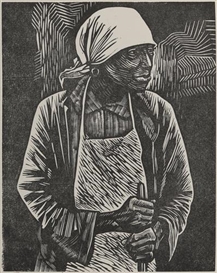
Elizabeth Catlett

ON RUFUS REID QUIET PRIDE
In our African traditions and in the work with strong African Identity the relationship between diverse Art Forms is always fundamental and more than feeding on each other it complements and magnifies the context in which originally is created. Rufus Reid’s “QUIET PRIDE” a set of compositions inspired in the work of Elizabeth Catlett, in my own interpretation; successfully emphasizes the creative relation between art forms that surge from the traditions of an African identity and its continuity. Dance moves to music, inspired in the spoken word, song tells the literary story, and visual art illustrates it. I became aware of this work some years back, when trumpeter Cecil Bridgewater told me that Rufus Reid had written pieces inspired on my mother’s sculpture work. I remember distinctly my mother asking me, is he playing somewhere? lets go hear him. We did, Rufus Reid was working in a Jazz club in the Village and he was so impressed that Elizabeth Catlett had gone to hear him play; she invited him and his wife Doris to come to Mexico to visit in her Home-Studio in Cuernavaca as to become familiar with the process and way she worked. There are similitudes in the the way you solve an esthetical problem in form and shape as you carve wood or orchestrate music, and sometimes is the wood or the music that establishes the direction in which the work tends or has to go.

My mother always accompanied her work with her music, specially during the last part of her life. You could walk into her studio and hear from Mahalia Jackson, Otis Redding, Louis Armstrong, to Aretha Franklin or Miles Davis while she was working. Rufus Reid’s Quiet Pride brings closer the relationship and the inspiration that we draw from all art.

Quiet Pride is such an inspirational work; the compositions are fabulous, the arrangements are rich, lavish orchestrations with surprising vocal melody effects, and a great choice of master musicians that delivers beauty in these renditions; it is an epic marvelous work inspired by great American Art.
Thank you Rufus, I know my mother loves the work…
— Francisco Mora Catlett, January 30th 2014
Elizabeth Catlett 1

Elizabeth Catlett 2
The artistry of Elizabeth Catlett

Independent Ear: Quiet Pride” strikes me as a work that at least in part is a realization of a dream of yours. Is that an accurate characterization?
Rufus Reid: Actually, you are quite correct, this project has been a dream of mine that is finally happening! A huge part of the dream was to have the music rendered by some of the best and seasoned players around taking the music beyond my wildest dreams. This is my very first professional commercial recording of my large ensemble writing. This is very exciting for me to experience at this stage of my career.

How has Elizabeth Catlett inspired you to write this large-scale work?
Over twenty-five years ago, I acquired a book about her life and her various types art works. To be honest, at that time I knew nothing about her, whatsoever. I did enjoy and frequently did go to art museums, but I didn’t really know much about it at all. I do remember, at the outset, this book about Elizabeth Catlett was impressive. However, that was it. In 2006, I became aware of the Dr. Raymond and Beverly Sackler Commission Competition Prize administered through the University of Connecticut at Storrs from my participating in the BMI Composers Workshop! The main emphasis of BMI Composers Workshop environment was to assist the composers to step outside their “box,” meaning his or her comfort zone. That year was the very first time this commission was offered to the Jazz community. In order to apply, you had to propose what you wanted to write. I had nothing to lose, so I proposed to write music inspired by Elizabeth Catlett’s sculptures. After all, I had this incredible book in my possession. After checking out this book with much more interest, I became more aware of her creativity and totally in awe of her beautiful art. I knew I wanted to create something that would make people more aware of her and her art. At the same time, I wanted people who knew about her to become more aware of the art of Jazz, me, and my music. The challenge for me was to make the music rise to the high level of her art. This was only the beginning of this incredible journey I am on.
Rufus Recording_DavidAppelPhoto
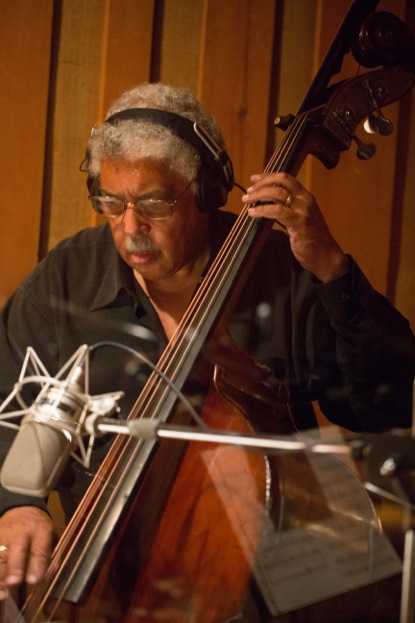
Rufus Reid at the Quiet Pride recording session

So often, unfortunately large-scale works like this become purely recording projects because the cost to stage them is too prohibitive. Do you have anything in the works to stage this work?
Yes, the size of this ensemble does require a lot of money, interest and work to perform the music live, but it can be done. I am happy to announce the CD release performance will be March 12, 2014, at the Jazz Standard Club in New York City. A great deal of energy is being put forward in developing and contacting appropriate venues to have more performances. In addition, another important aspect is that colleges and universities across the country are being contacted to have their music, art, women’s studies departments, and the community at large to collaborate by interacting with one another. In these cases, I would conduct the music and give lectures, etc. So far we have had very successful events at the University of Connecticut/Storrs, the Manship Theater in the Shaw Center For The Arts which is affiliated with the Louisiana State University, and at Bucknell University. The first two venues exhibited selected art works of Elizabeth Catlett coinciding with my concert performances.

I’ve gotten the sense that in the last decade or so you’ve really begun to dig deep and concentrate quite a bit on composing. Is that an accurate assessment?
Yes, you are very correct, indeed. I have always been intrigued about composition. I have had the great fortune to be associated closely with some incredible composers throughout my career. Fourteen years ago, I began to make a concerted effort to learn more about composition and what is necessary to become a real composer. I have never studied composition academically speaking. I just ask question and buy books on the subject. I am totally smitten with the mere process of composition.

When composition becomes such a central quest, is there any sense that your actual playing may take a back seat?
Eventually, one day, I suppose, my playing may take a back seat to composition, but that will not happen for a while. That being said, I do feel a direct impact on my playing has occurred. I now think very differently about “how” I begin, develop, and end my improvised solos like never before. So, in some ways, my soloing has become more thoughtful and that has been a very good thing, in my opinion. My note choices and rhythmic placement have become more important to me than how many notes I can play, more than ever.

How did you go about selecting the musicians to make this work come to life?
Choosing the musicians for this project was easy and not so easy. I really didn’t want a fixed band to work with. I wanted a fresh set of seasoned players who understood the big band setting, but were open to a fresher approach. I wanted players I knew personally, who were focused, strong, and possessed an individual voice already established. I also wanted a mix of genders, ages, and experiences to pool together to become “one.” I was blessed with a group who brought their “A” game to this project. I could not be happier.

Any further reflections on this project?
Meeting and becoming friends with Elizabeth Catlett has truly enriched my life on many levels. Studying more about the art world has also been truly educational. I had no idea that this project, art inspired by art, would be so fulfilling. I have certainly been empowered to continue my path as a creative composer.
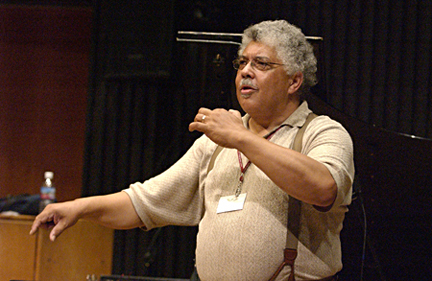
Rufus Reid
The master at work

www.rufusreid.com www.motema.com

Posted in General Discussion | 1 Comment

The Max Roach collection

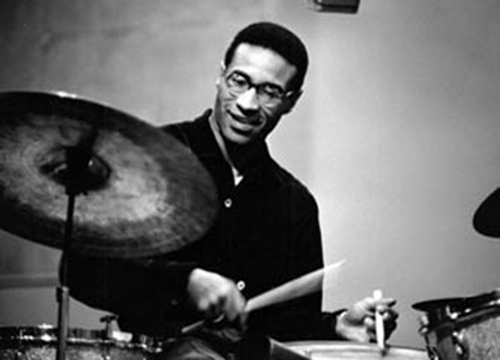
Max Roach1

Entering a second floor room of the Library of Congress’ Jefferson Building on January 27 I encountered scores of folks huddled around two long tables festooned with vivid memories from the life of one of the giants of this music we call jazz. Spotting Howard Dodson, curator of Howard University’s historic Spingarn Collection, eyes glued intently to one particular artifact, he informed me that he was reading a fascinating, deeply passionate handwritten letter from Maya Angelou to Max Roach in the sad aftermath of Malcolm X’s assassination. Adjacent to that letter was a vivid photo of Max picketing Carnegie Hall on behalf of the “Africa for Africans” cause that had famously disrupted a Miles Davis concert appearance. Nearby was a biting, handwritten letter from Charles Mingus bitterly admonishing Max over some perceived slight relative to their stormy Debut Records partnership, with the telling salutation “Hate” above Mingus’ signature. Elsewhere on display among the samples was one of Roach’s grade school report cards, with a ‘D’ mark by his music class. Other artifacts attested to a life very politically led, often on the cutting edge of various movements for African American justice in this country.

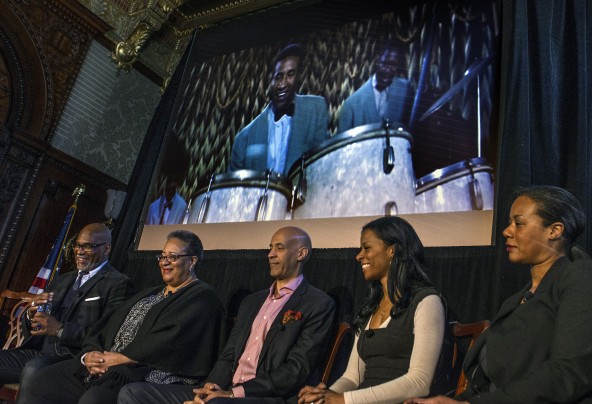
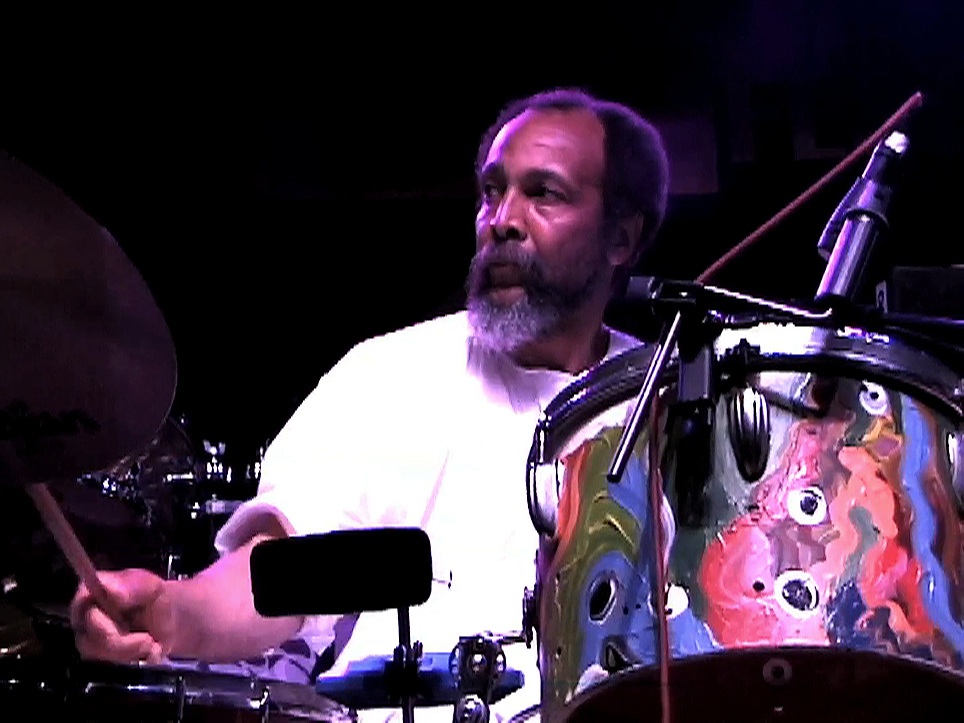
The legacy of NEA Jazz Master Max Roach goes way deeper than his stature as one of the signature drummers in American music history. That fact was driven home by a wonderful event last Monday at the Library of Congress, which introduced its acquisition of the Max Roach Collection. In the company of Max’s five children, LOC Senior Music Specialist and jazz curator Larry Appelbaum – one of my WPFW radio colleagues – interviewed the family and we were treated to their warm recollections of growing up with the great drummer, though as this collection clearly reveals, limiting him to his peerless drum and music legacy is selling him way short, Max Roach was a renaissance man of the first order.

Prior to eliciting his children’s recollections of Max Roach the father, Appelbaum screened several rare video clips, including one of Roach telling a Library of Congress audience his vivid remembrance of first climbing onto Sonny Greer‘s prodigious drumset at age 17 to play with the Duke Ellington Orchestra. Also included was a clip from the classic film “Carmen Jones,” with Max set up on a bar drumming while Pearl Bailey sang and dancers acted out a joyous scene; and what might be characterized as an early music video from Max’s classic drum & voice mash-up of his solo and Dr. Martin Luther King Jr.’s historic “I Have a Dream” speech from Roach’s Chatahoochie Red album (Columbia Records), replete with animated drawings of Roach and King. Later son Raoul Roach recalled being in the room as Max patiently explained his request to use King’s speech in his music context by telephone to Coretta Scott King.

Max Roach family
Max Roach’s children: left to right Daryl, Maxine, Raoul, Dara and Ayo at Monday’s Library of Congress event (photo: Washington Post)

Appelbaum also previewed several of the audio treasures in the Roach collection, including a rarest of rare living room recording of the late and somewhat mysterious Philadelphia piano master Hassan Ibn Ali, whom Max had famously introduced on the pianist’s heretofore only known recording as The Legendary Hassan on their Atlantic Records trio date with Art Davis on bass. Also among the audio Appelbaum previewed at the event was a clip from an Ossie Davis/Ruby Dee theatrical documentary with Max on drums and Billy Taylor on piano. Our collective appetites whetted for all things Max, Larry’s conversation with the master’s children provided further insights into this complex man.

We so often think of these giants as somehow larger than life, beyond reproach even. To his children he was just “Dad”, no matter if Miles Davis was sitting across from them at dinner as he often was, or Dizzy Gillespie was in the house playing chess, Harry Belafonte dropped by to chew the fat, or countless other notables were at the house enjoying Max’s company, some perhaps imploring his participation in one human rights campaign or another. As Maxine Roach, the violist and leader of the Uptown String Quartet (and lone musician among Max’s children) remarked “Our family is thrilled that our father’s rich legacy has found a home at the Library of Congress. Our father had a sense of his place in the history of America’s original music and for decades he collected testaments to his mastery in the form of recorded sounds, video, photos, papers, letters, awards, collaborations, gifts, honors, struggles and friendships. All will be on display at this very great and prestigious institution.”

Max’s meticulousness in preserving his legacy was driven home several times at Monday’s event. During his presentation Appelbaum remarked that elements in Max’s collection mark the beginning of what he envisions as a new research phase in jazz history, provided by access to musicians’ official business papers, as opposed to the anecdotal and often sketchy recollections of business dealings in the music’s historic days. Indeed, among the sample artifacts on display at Monday’s event were a couple of Max’s performance contracts, including one from the New Orleans Jazz & Heritage Festival.

In addition to a couple of interview opportunities, I had the good fortune of being in Max Roach’s company on several occasions, including a long afternoon spent in the home of a mutual friend in Cleveland at which he invited a visit next time we were in New York. In town for a festival, along with good friend and pianist Eric Gould (current Jazz Composition Chair at Berklee College of Music), we took him up on that invitation and stopped by his Central Park West apartment. We were greeted warmly and spent a great afternoon being regaled, Max holding court with the added bonus of Amiri Baraka in the house working with Max on his memoirs – the manuscript of which is now part of the Library of Congress Max Roach Collection.

During Monday’s program the mind drifted back to the many interviews with Randy Weston for our book African Rhythms (Duke University Press) when Randy would recount his great times growing up with Max in their Bedford-Stuyvesant neighborhood; about how he first met Dizzy Gillespie at Max’s house, with George Russell sketching out “Cubana Be, Cubana Bop” as he recovered from tuberculosis. Or how one day he dropped by Max’s and there was Charlie Parker, whereby Max insisted that Randy immediately play some of his compositions for Bird. That Max Roach was a pivotal figure of 21st century world culture is certainly clarified by the enormity and importance of his artifacts now lovingly stored and in preservation at the Library of Congress.

This enormous Max Roach Collection includes over 100,000 items, approximately 80,000 of which are manuscripts and papers, and hundreds of sound and video recordings, including unreleased recordings of Max and Abbey Lincoln in concert in Iran, and a duet recording with Cecil Taylor in Italy. The Max Roach Collection will be available to researchers in the Library’s Performing Arts Reading Room in their Madison Building, located on the opposite corner from the U.S. Capital Building on Pennsylvania Avenue. For more information on this collection as well as the LOC’s holdings in music, theater and dance go online to www.loc.gov/rr/perform/.

Posted in General Discussion | 2 Comments

Ancient/Future Playlist for 1/29/2014

ARTIST/TRACK/ALBUM TITLE/LABEL
theme: Ernestine Anderson, In the Evening
Kuumba Heath, Dunia, Kawaida, Trip
Albert Heath, Dr. Jeh, Kwanza, Muse
Wes Montgomery, Gone With the Wind, The Incredible Jazz Guitar, Riverside
Yusef Lateef, Russell and Elliott, Detroit, Atlantic
Herbie Hancock, The Prisoner, The Prisoner, Blue Note
Tootie Heath-Ethan Iverson-Ben Street, Out of Nowhere, Smalls Live
Tootie Heath-Ethan Iverson-Ben Street, Tootie’s Tempo, Tootie’s Tempo, Smalls
Tootie Heath-Ethan Iverson-Ben Street, Fire Waltz, Tootie’s Tempo, Smalls
WHAT’S NEW/THE NEW RELEASE HOUR
theme: Louis Armstrong/Oscar Peterson, What’s New
Vanessa Rubin/Don Braden, I Can’t Wait, Full Circle, Creative
T.K. Blue, Once Loved, A Warm Embrace, BluJazz
Helen Sung, It Don’t Mean a Thing, Anthem for a New Day, Concord
The 3 Cohens, Black, Tightrope, Anzic
Mimi Jones, Patriot, Balance, Hot Tone
Pete Rodriguez, Shut Up and Play Your Horn, Caminando con Papi, Destiny
wpfwLogo
Ancient/Future hosted by Willard Jenkins airs Wednesday nights 10-midnight on WPFW 89.3FM in the DC area; streaming live at http://www.wpfwfm.org

contact: willard@openskyjazz.com

Posted in General Discussion | Leave a comment

A new jazz film debuts at LOC series

The Breath Courses Through Us is a provocative new jazz film that will have its premiere on Friday, January 31. For this year’s edition of his annual Library of Congress Jazz Film Fridays series, produced by Larry Appelbaum. The Breath Courses Through it will be part of a double feature of Alan Roth films, and admission is free (call 202/707-5502 to reserve yours). As always Appelbaum’s always-intriguing film series will play in the LOC’s cozy Mary Pickford Theatre in the James Madison Building, 101 Independence Avenue S.E. in one of the more classy examples of your tax dollars at work.

Both The Breath Courses Through Us and the double-feature Inside Out in the Open focus on the left side of the jazz spectrum; the former focusing on The New York Art Quartet (John Tchicai, Roswell Rudd, Milford Graves, and Reggie Workman. While Inside Out in the Open features such fearless explorers as Marion Brown, Baikida Carroll, Burton Greene, Joseph Jarman, Rudd, Alan Silva, Tchicai, Daniel Carter, William Parker, Susie Ibarra and Matthew Shipp. A major bonus of The Breath Courses Through Us will be an appearance by the great poet-author Amiri Baraka, who ascended to ancestry earlier this month. The films will be introduced by bassist and WPFW programmer Luke Stewart.

In an email exchange with filmmaker Alan Roth I was delighted to learn that we are fellow Clevelanders. Clearly some questions were in order, particularly regarding the premiere of The Breath Courses Through Us, his 2013 feature.
Alan Roth
Film maker ALAN ROTH

What has been your experience as a filmmaker?
My filmmaking actually began when I was in high school, when I made my first super-8 film, a study of hands. I made other work, much of it very political, over the next couple of years, then, I lost my camera! My political, social and labor activism took precedence for many years to come.

After an almost 19-year career in the U.S. Postal Service in my hometown of Cleveland, Ohio, I came back to the moving image with video, and fell in love with filmmaking again. In the early 90s, I made a major decision to leave my guaranteed life-time job to be a filmmaker. In 2001, I released my first documentary film Inside Out In The Open, which was my first examination of the music known as free jazz.

Besides my longer work, I was documenting events in New York City during the time of 9/11, some of which became part of the collective film Seven Days in September, shown in theatres and on A&E. I also co-directed a short film used in the campaign for marriage equality in New Jersey.

A major work I am very proud of was my participation in a project Womens Power Against HIV/AIDS. This was an innovative approach, begun in 2006, to use soap opera stories delivered on cellphones as a means to change the sexual/social behavior of African-American women, who made up a significant percentage of new HIV cases. It was a very sensitive approach based on the real stories of women. This study was funded by the National Institutes of Health.

I am now beginning a new work in Mexico City about two indigenous folkloric dancers, their struggle to raise a family (they are a married couple), their daily work and culture, and the relevance of traditional dance in contemporary Mexican society. I hope to finish that film in early 2015.

What was the genesis of this film The Breath Courses Through Us?
My first film, Inside Out In The Open, included among the interviews both John Tchicai and Roswell Rudd, and their formation of the New York Art Quartet. During my editing of the ‘rough cut’ of the film, which became my master’s thesis at the New School for Social Research, I was informed by Tchicai about the reunion. I thought “what a perfect follow-up” and gained permission from the rest of the musicians to document the reunion. I was privileged to work with cinematographer Ronald Gray, who at the time was teaching cinematography at the New York University film school graduate program. This footage is the core of The Breath Courses Through Us.
Alan Roth film 1
Stalwart drummer MILFORD GRAVES from the New York Art Quartet reunion

I still had my first film to complete and I focused on that, adding segments that were needed in light of the negativity about these musicians and other historical omisions in the last section of Ken Burn’s Jazz. Little by little, I kept working on the new film, but again, with my full-time attention on the Women’s Project work, it took many extra years to complete the new film. It was totally coincidental that my film and the Triplepoint Records 5 vinyl boxset of the lost recordings of the New York Art Quartet were released within one month of each other, and now, being premiered during the 50th anniversary of the founding of the group.

The title of this film is rather provocative; how did you pair this title with the subject matter?
During the soundcheck for the 1999 reunion concert, the musicians were improvising, merely to allow the tech people to set levels. Baraka read some poetry from memory, including the beginning of his poem “X.” There is a line in the poem “the blood courses through us,” and mistakenly or not, he said “the breath courses through us.” I chose to use that version as my title as a metaphor for the continuity of the living breath of African-American musical tradition and the creative life among these artists. In an early scene in the film, Baraka, at that soundcheck, says “everything you don’t understand is explained in art,” the opening lines of that poem. The film is as much about the present tense in the lives of these artists, along with their individual personalities, with the formation of the group, their own entries into the musical life, and the lifeline of creative music.

What did you find most compelling about the music and the musicians you feature in this film?
Both my parents loved jazz. They told me about going to see Art Tatum play in Cleveland, and as I grew up, I listened to a wide variety of music, including music from other countries in the world and more experimental electronic music and John Cage. I learned to play classical piano as a child, but in my teen years, when my parents decided to hire a jazz pianist to teach me, I had much trouble handling the new language. It was easier to learn to read charts and improv with pop music.

My listening, though, generally leaned towards the more progressive side of music, which included more chance and improvisation. This was the reason I decided many years later to do my first film on this music, not as a dry historical film, but rather one that lets the musicians tell their story, and emphasize those personalities as integral to the creative process. They think it is important to emotionally connected to one’s creative work and perhaps do the same for one’s audiences.

Like many other lovers of this music, I find the music inspirational and transportive, but also challenging. To quote the late Marion Brown from my first film, “ya got to make them think!” Films should engage the audience, involve them actively, challenge them, and hopefully give them reason to walk out of the theater with questions and the urge to learn more. For that reason, my films are not a clear ABC of explanation, but rather a quilt of information that I try to sew together lyrically with its own thrust forward in time.

I sincerely hope that these two films will become part of the repertory of films that give props to the musicians and new African-American musical traditions that emerged from this period in New York City in 1964, which also sprung up in Chicago, St. Louis and so many other places. I think they had more of an impact on music that they have ever been given credit for.

Beyond this Library of Congress premier when and where will this film be available for viewing?
The Breath Courses Through Us is just beginning to be seen around the world. It will continue to be seen in film festivals, and more alternative spaces. I hope it could be included in jazz and music festivals as well. Eventually, it will be available for the public as a DVD or download.

The New York City premiere is scheduled for April, and that should be an important event with the musicians present. The loss of John Tchicai 15 months ago, and now Amiri Baraka were very difficult to take. I am happy to say that Tchicai saw a rough cut of the film, and Baraka had seen the final version. We are losing many in that generation, but I felt good that this film can allow them to continue to speak and perform for the world.

Posted in General Discussion | 3 Comments