The Independent Ear

Celebrating Harlem & U Street jazz… with a side order of go-go

The historic Harlem community of New York City and U Street of Washington, DC are two of the most storied crossroads of the black experience in America. And there is more than a little shared history and more than a few common personalities that link the two communities. That was precisely the sentiment of Houston-born Jason Moran, the 20+ year Harlem resident pianist-composer and artistic advisor to jazz at the Kennedy Center. Through his sharp curatorial mind, the Kennedy Center and the Apollo Theatre have partnered for this Mother’s Day weekend of what are bound to be two exceptional nights of music. Yes, you read that right… in this age of artistic collaboration, a partnership between the Apollo and the Kennedy Center!

Tonight, Saturday, May 9 this richly promising program – curated by Moran and co-music directed by he and DC-native pianist Marc Cary (who’ll bring the go-go element, along with several vets of the form) – launches at the Apollo Theatre. The following night, Sunday, May 10 (and what a Mother’s Day gift this could be!) the entire caravan will touch down at the Kennedy Center for a free program at 6:00pm on the Millennium Stage and a ticketed blow-out upstairs on the Terrace level in the Crossroads Club.

I was honored to have been commissioned by the Apollo to do an onstage interview with Moran some weeks back at the Apollo Cafe, and subsequently write the program notes for both venues. For those who cannot make either evening, the program notes are here courtesy of the Independent Ear. Hopefully these notes shed some light on the clear artistic connections between Harlem and U Street. Harlem has historically been the more celebrated and well-chronicled of these two crossroads of black America. An excellent source of further illustration of the glories of DC’s U Street environs can be found in the book Washington’s U Street (A biography) by Blair Ruble (Woodrow Wilson Center Press/The Johns Hopkins University Press).
Apollo

Celebrating the rich Harlem & U Street Jazz traditions
By Willard Jenkins

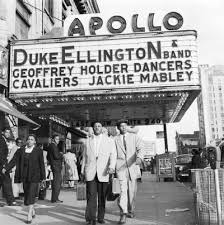
The Harlem Nights/U Street Lights project – a collaboration of the Apollo Theater and the Kennedy Center – represents a beautiful synergy. This project being curated by pianist-composer Jason Moran, a Harlem resident and Artistic Advisor for Jazz at the Kennedy Center is apropos on many levels. There is such a rich history of interchange between these two crossroads of African American history that enriches this presentation in myriad respects. The simpatico between these two communities – Harlem and DC’s U Street corridor – represents linkages dating back to the early 20th century.

The Apollo evening, Saturday, May 9, which will be followed on Sunday, May 10 at the Kennedy Center, is part of the historic 81-year old theater’s annual Harlem Jazz Shrines partnership with Harlem Stage, Jazzmobile, and Columbia University. This celebration of venues and crossroads important to the development of jazz music recognizes the deep jazz history of the Harlem community. The Harlem/U Street links, which include the legendary “chittlin’ circuit” connections between the Apollo Theater and DC’s Howard Theatre, cut across African American history beyond the music.

The Harlem Renaissance was the socio-cultural, artistic flowering that ignited Harlem and the black world from the end of World War 1 to the mid-1930s. That fabled period was a creative hothouse for a legion of black men and women of arts & letters. This era and beyond also saw the development of both the Harlem and U Street communities as essential centers of jazz advancements, including the fabled Harlem stride piano sounds of Fats Waller, Willie “The Lion” Smith, and DC native son Duke Ellington.
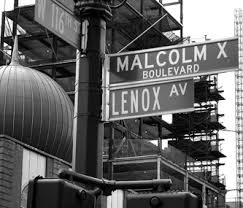
Harlem crossroads
Alain Locke, the first African American Rhodes scholar, in 1912 took an assistant professorship at Howard University, which looms a stone’s throw north of the U Street corridor in the Shaw neighborhood of DC. It was Locke, along with literary artists Georgia Douglas Johnson, Jean Toomer, Langston Hughes, and Horace Gregory who plotted the Harlem Renaissance in Shaw environs around Howard. Other leading figures of that cultural revolution included poet Angelika Grimke, a DC public school teacher, and Howard University librarian Edward Christopher Williams, who had written critical, anonymous screeds detailing the foibles of DC’s “talented tenth” and their exclusive community around U Street.

The U Street community, which thrived across the 20s, 30s and 40s as a center of black life in DC, grew such a bustling nightlife that it was bestowed the grand sobriquet “Black Broadway” during the period, frequented by a diverse cross-section of the populace. Much like Harlem, U Street is where all of DC’s first-class black entertainment – whether of the theatrical variety, or that found in cabarets and nightclubs – found welcome stages and vibrant audiences, from the Howard, Dunbar, Republic and Lincoln theaters, to the Lincoln Colonnade (located in the lower level of the Lincoln Theater), and the Crystal Caverns. The Lincoln Colonnade, along with the Scottish Rite Temple down on R St., and the Murray Palace Casino were the home of DC’s happy feet, much akin to the high times of the Savoy Ballroom. However, like Harlem, one need only venture a block or two away from the U Street highlife to experience the deprivation of scant opportunity and sheer poverty. High times on U Street abruptly gave way to urban flight, boarded-up storefronts and decay following the outrage and insurrection that filled U Street in reaction to Martin Luther King’s 1968 assassination.

Proto jazz pioneer bandleader James Reese Europe, born in Mobile, AL in 1881, moved with his family to DC at age 10, attending public school and beginning his music lessons in the city. Towards the end of 1904 he relocated to New York. There he founded the Clef Club, a precursor to the black musicians union locals. In 1917 Europe organized the 369th Infantry Regiment military band for the war effort, a band that became known as the “Harlem Hellfighters.” Post-war many of the Harlem Hellfighters, black men from across the U.S. and Puerto Rico, continued their careers in Harlem. Members of that band included composer-lyricist and drum major Noble Sissle and pianist Eubie Blake, who together produced Broadway’s first African American musical, “Shuffle Along.” Many other veterans of Europe’s campaign became regulars at Harlem’s swing & dance shrine the Savoy Ballroom.
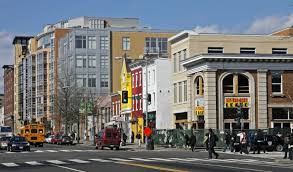
U Street
HISTORIC U STREET

The U Street entertainment hub, the fabled Howard Theatre, which preceded the Apollo by 23 years, staged plays by Alain Locke’s Howard University Players. Duke Ellington, who became one of the jazz kings of Harlem when he relocated to New York, made some of his earliest appearances as leader of his Serenaders at Howard Theatre band competitions. In 1923 young Ellington made the move to New York City on the advice of Fats Waller, along with banjoist Elmer Snowden’s Washingtonians band. Not long after the move the band grew restless over scarcity of gigs, ousted Snowden and installed Duke as their leader.
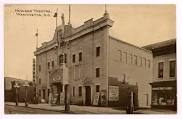
Howard Theater then
THE HOWARD THEATER THEN
Howard Theater now
THE HOWARD THEATER NOW

Among the Washingtonians band members who also made the move from the U Street highlife to New York were saxophonist Otto “Toby” Hardwick, Ellington’s original drummer, Sonny Greer, who had played in the Howard Theatre Orchestra before joining Duke in 1919, and trumpeter Arthur Whetsol; all were part of Duke’s first New York recording, for the Victor label. Eventually Duke settled in Harlem’s fabled “Sugar Hill,” After establishing his band and sound in New York, the Duke Ellington Orchestra became king of the historic Harlem shrine at the corner of Lenox Avenue and 142nd Street, the Cotton Club. Another who made a similar move, only from the clubs of Harlem to the U Street hothouse in 1935, was New Orleans self-designated “inventor” of jazz, pianist Jelly Roll Morton. Morton established residence at the Jungle Inn at 1211 U Street.

In later years, post-Harlem Renaissance and U Street’s 1930s-40s Black Broadway heydays, DC and Harlem musicians regularly traded licks and cut heads at such uptown modern jazz shrines as Minton’s Playhouse and Monroe’s Uptown House, and U Street’s Club Crystal Cavern, which later became the Bohemian Caverns. These included the erudite pianist Dr. Billy Taylor, DC native, Harlem broadcaster, founder of Harlem’s longest-enduring jazz institution Jazzmobile, and the catalyst behind Jazz at the Kennedy Center. Bohemian Caverns, thriving today as U Street’s jazz pillar was, in its Crystal Caverns days, home to many of the same artists who brought the modern jazz sounds to the Apollo stage, including Ramsey Lewis, Cannonball Adderley, Les McCann, Nancy Wilson, Oscar Brown, Jr., Miles Davis, and John Coltrane.

Fast forward to 2015 and the vibrant Harlem Nights/U Street Lights and its brilliant cast of artists and we find further synergy, with Harlemites, Harlem transplants (including the curator and the music director), artists who’ve graced Harlem and U Street stages, and some of DC’s finest. For project curator Jason Moran, that relationship begins with two of what he characterizes as “pivotal pianists: Duke Ellington and his relationship between DC and Harlem, Billy Taylor and his relationship between DC and especially [his founding] Jazzmobile [as] a way to keep the music in the “community”, and now with Marc Cary and Ben Williams being in Harlem [while] continuing to represent their relative DC generations. These [Harlem and U Street] neighborhoods still strive to keep the music embedded in the community. So why not put together some of the great musicians from the local scenes in DC and Harlem, and think about our sonic histories,” Moran muses. “It’s really a party about two neighborhoods, and how the music helps us tell these stories.”
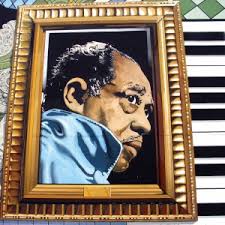
U Street Duke
COURTESY OF THIS MURAL THE DISTINCTIVE VISAGE OF DUKE ELLINGTON IS A PERMANENT FIXTURE ON U STREET

Music director, pianist-keyboardist Marc Cary, will bring the distinctive funk dynamic of go-go rhythms to the project. A Duke Ellington School for the Arts grad, Cary grew up playing on DC’s go-go scene, a sound so ubiquitous in mid-70s through 80s Washington that you could hear it from dancehalls and clubs in DC’s black community, to buskers regaling Metro stations. Cary will honor that sound and the late, esteemed DC bandleader Chuck Brown, the Godfather of go-go. “Chuck Brown taught us jazz songs through go-go music,” as Marc tells it. “Brown educated an entire generation of audience members through his choice of jazz standards,” says Moran, standards into which Brown injected new energy through go-go rhythms. In addition to Cary, the go-go tradition will be royally represented by two of the rhythm kings of that sound – hand drummer Milton “Go Go Mickey” Freeman, and drummer Kenneth “Kwick” Gross.

A born and raised Harlemite, saxophonist Bill Saxton, known as “Harlem’s Jazz King,” is proprietor of Bill’s Place, located in a former speakeasy on “Swing Street,” a stretch of 133rd Street between Lenox and Seventh Avenues. What is now Bill’s Place was once a nightlife haunt of Ellington, Fats Waller, and Langston Hughes, dating back to the Harlem Renaissance. Another saxophonist on the program is DC native Brian Settles. An Ellington School grad, Settles studied in NYC at the New School as well as at Howard, and is currently one of Washington’s most advanced players.

Harlem Nights/U Street Lights vocalists include Howard University’s renowned Afro Blue; Queen Esther, who has lately been featured at the refurbished Minton’s; and Brianna Thomas. Ms. Thomas won the Jazzmobile Competition and was a Betty Carter Jazz Ahead student at the Kennedy Center.

Duke Ellington School grads trumpeter Donvonte McCoy and bassist Ben Williams, will join seasoned pianist Bertha Hope – whose late husband Elmo Hope caressed the ivories in Harlem shrines – pianist Gerald Clayton, saxophonist Lakecia Benjamin, who crosses freely between jazz, hip hop and neo soul, pianist Federico Pena, and special guest trumpeter Roy Hargrove. Rounding out this auspicious cast on drums is NEA Jazz Master and DC native Jimmy Cobb in what promises to be the jazz weekend of the season!
Posted in General Discussion | Leave a comment

Femi on Jazz

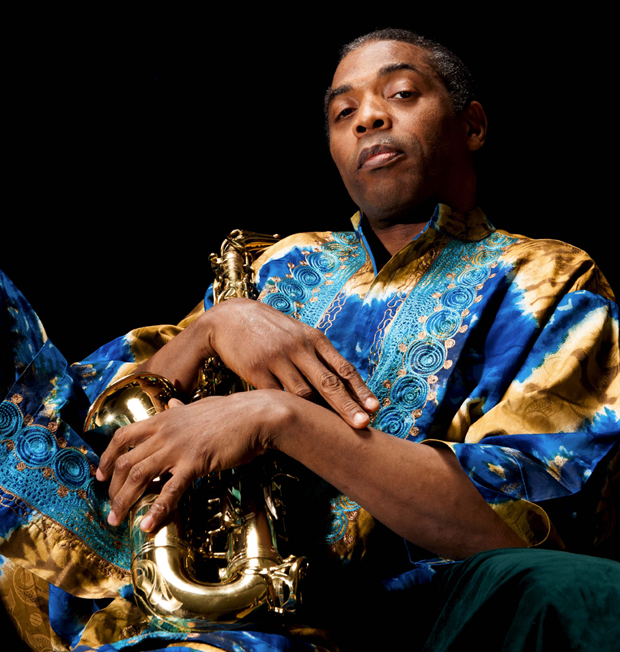
Femi

If you’ve been keeping up you know that one of the upcoming (June 10-16) DC Jazz Festival highlight evenings is certain to be Saturday, June 13. On that evening, at the beautiful riverfront park known as the Yards, in the Navy Yard area adjacent to National’s Park, DCJF will present a highly anticipated quadruple bill of Common, Esperanza Spalding, Femi Kuti & the Positive Force, and saxophonist Marshall Keys‘ band. Our intrepid DCJF social media coordinator (and proprietor of Jazzcorner.com), Lois Gilbert, captured the following impressions on jazz from Femi Kuti (son of the late, great king of Afro-funk and erstwhile Broadway show subject Fela Kuti):

“Jazz was the successful revolution that finally brought about change of freedom and respect for African Americans and AFRICA. Jazz was [a] formidable weapon that showed incredible dexterity and improvisation that showed the world boundless possibilities the human race could achieve. Not just through music, Jazz inspired all sectors of professionalism consciously and unconsciously that spread all over the world.”
– Femi Kuti, March 2015

WWW.DCJAZZFEST.ORG

Posted in General Discussion | Leave a comment

NEAJM postscript & DCJF Jazz in the ‘Hoods

A Grand Night for Mastery
The annual National Endowment for the Arts Jazz Masters awards concert is always a grand night on the annual jazz calendar. Peculiar to this art form, jazz remains both nostalgic and forever questing in forward motion. But on this night we pause to honor the greats, including the year’s newly-minted class of NEAJMs and those past Masters in the audience; and therein lies one of the charms of these events, gazing around the hall and witnessing the pride and delight which the assembled Masters seem to take in this honor and this event. This year the NEA Jazz Masters evening shifted from its longtime January calendar slot to one conducive to April’s Jazz Appreciation Month designation. Despite the date shift the evening maintained its brilliance. For one thing its always interesting to glance around the room – in this case the NEA Jazz Masters event’s home for the last several years, Jazz at Lincoln Center – and gauge the assembled Masters in the house and their collective and individual responses to the acceptance speeches and subsequent performances of their peers. Just over the railing where we were situated I caught one of my mentors, NEAJM Randy Weston at rapt attention as the young heart/old soul vocalist Cecile McLorin Salvant brought new depth to the timeless “Motherless Child” in tribute to the ancestor NEAJM Jimmy Scott. As she completed her performance a cappella, you could feel the rapt attention in the room poised to explode with applause. Hers was one of several house band serenades to the Masters, including the tasteful touch of their performing as the audience was being seated, which immediately elevated the collective attention span for the honors to come. Otherwise the performance component belonged to the new NEA Jazz Masters and friends.

Carla Bley gave a gracious, thoroughly selfless acceptance speech that was the start of a common thread in the acceptance remarks of the other two musicians – saxophonists George Coleman and Charles Lloyd – each of whom assured the audience in their individual parlance that theirs is a never-ending quest to truly learn this music; each conveying the sense that while graciously accepting this singular honor, none is ready to rest on these laurels. George Coleman, a bit halting of gait but forever brawny of tenor saxophone, teamed up with one of his acolytes, Eric Alexander, for a tenor tet-a-tet mini-set that sparkled particularly in the up tempo. Charles Lloyd brought the spiritual component with an extended performance of “Lark” from his new recording Wild Man Dance, his first for Blue Note.

This year’s NEA Jazz Masters A.B. Spellman recipient for advocacy went to the indomitable Joe Segal of Chicago’s enduring Jazz Showcase club. NEAJM Jimmy Heath introduced Segal with his usual puckish humor, then brought out his soprano sax to join Chicago’s own Ira Sullivan on alto for a squarely in the pocket tribute performance.

Word has it that the 2016 NEA Jazz Masters event will be held in DC; stay tuned… Here are some photos from this lovely evening, all courtesy of the keen eye of photographer Michael G. Stewart.

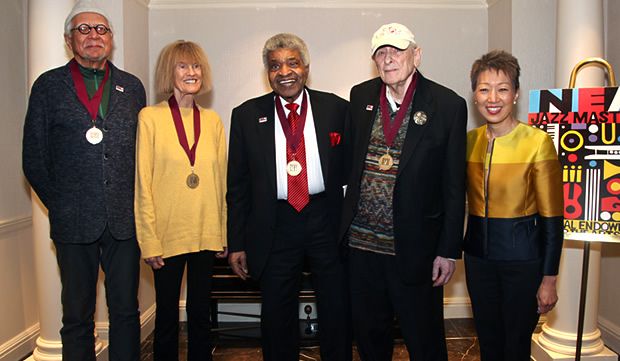
NEAJM 15 class
NEA JAZZ MASTERS CLASS OF 2015: l-to-r CHARLES LLOYD, CARLA BLEY, GEORGE COLEMAN, JOE SEGAL WITH NEA CHAIRMAN JANE CHU

NEAJM 15 Cecile
CECILE MCLORIN SALVANT GAVE A SPELLBINDING READING OF “MOTHERLESS CHILD”

NEAJM 15 George Coleman
GEORGE COLEMAN WAS COMMANDING ON TENOR WITH ONE OF HIS ERSTWHILE STUDENTS, ERIC ALEXANDER, AND HAROLD MABERN ON PIANO

NEAJM 15 Charles Lloyd
CHARLES LLOYD W/GERALD CLAYTON, JOE SANDERS, ERIC HARLAND, AND SOKRATOS SINOPOUOLOS

NEAJM 15 Heath & Sullivan
JIMMY HEATH & IRA SULLIVAN PROVING ONCE AGAIN THAT “BEBOP IS THE MUSIC OF THE FUTURE”, AS NEAJM DEXTER GORDON SAID

NEAJM 15 house band
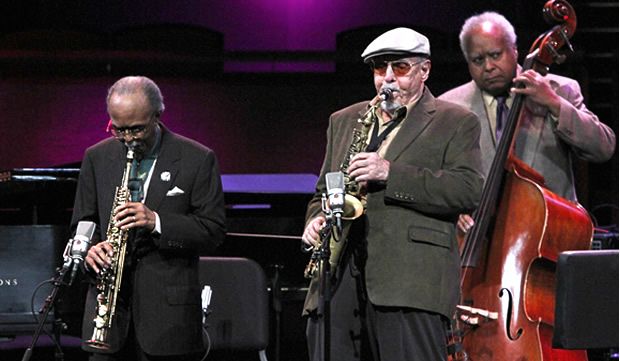
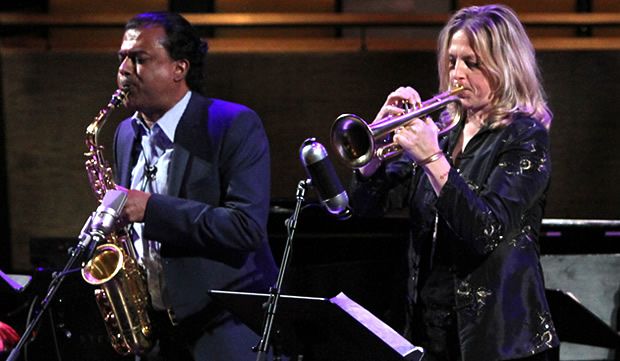
THE HOUSE BAND FRONTLINE INCLUDED RUDRESH MAHANTHAPPA ON ALTO, INGRID JENSEN ON TRUMPET, HELEN SUNG ON PIANO, RUDY ROYSTON ON DRUMS

………………………………………………………………………………………………………………………………………………………………………………………….

DC Jazz Festival Announces Lineup for
Jazz in the ‘Hoods Presented by Events DC
Neighborhood Venues Host More Than 80 Performances Citywide

One of the hallmarks of the annual DC Jazz Festival (full disclosure: your correspondent, Willard Jenkins is Artistic Director of DCJF) is its big tent component known as Jazz in the ‘Hoods. This annual celebration of the broad spectrum of jazz in our Nation’s Capital (a significant percentage of which is presented free of charge) is a vibrant component that includes venues and jazz producers from every quadrant of our city (Northeast, Northwest, Southeast, Southwest), including jazz presented in neighborhoods that are generally deprived of live opportunities to experience this art of the improvisers, such as east of the Anacostia River. Here’s the 411 on our Jazz in the ‘Hoods component for 2016. For complete DC Jazz Festival information visit www.dcjazzgest.org

WASHINGTON, April 20, 2015 — The DC Jazz Festival is thrilled to announce the schedule for Jazz in the ‘Hoods Presented by Events DC. Jazz in the ‘Hoods is a major feature of the DC Jazz Festival (June 10-16) that highlights the city as a vibrant cultural capital, and brings jazz to all four quadrants of the nation’s capital – NE/NW/SE/SW. Over 80 performances at more than 40 neighborhood venues will entertain Washington, DC residents and visitors across the city.

”The DC Jazz Festival has grown into the largest music festival in the District of Columbia and as a supporter of the DC Jazz Festival for the last seven years, we are proud to be associated with the overall growth of the festival and in particular, Jazz in the ‘Hoods,” said Erik A. Moses, managing director of Events DC’s Sports and Entertainment Division. “The Jazz in the ‘Hoods series brings people together to enjoy great jazz in a variety of DC’s coolest neighborhood venues.”

Jazz in the ‘Hoods Presented by Events DC represents an exciting partnership with local clubs, restaurants, hotels and galleries in celebration of jazz in our nation’s capital. Jazz in the ‘Hoods takes place in over 40 DC venues with more than 80 performances in 21 neighborhoods throughout the city, presenting a mix of local and nationally recognized artists in an attempt to recognize and celebrate the genre. It has a tradition of attracting large, varied audiences of DC residents and tourists of great diversity.
For the fifth consecutive year, Jazz in the ‘Hoods will include CapitalBop’s DC Jazz Loft Series. A partnership of DC Jazz Festival and CapitalBop, DC Jazz Loft Series will present young, boundary breaking musicians as well as DC-based artists all grounded in the tradition of jazz and its extensions, often performing in unusual or pop-up venues. This is a “pay-what-you-can” series designed to attract the broadest spectrum of attendees, including young, first-time audiences.

The EAST RIVER JazzFEST returns for its 4th year. In collaboration with East River Jazz, a “festival within a festival” will present free jazz performances and programs to thousands of residents, at theaters, museums, places of worship, libraries and senior centers east of the Anacostia River. All EAST RIVER JazzFEST performances will celebrate American composer Billy Strayhorn, Duke Ellington’s chief collaborator

With a variety of free and ticketed performances in 21 neighborhoods, including Adams Morgan, Capitol Hill, Chinatown, Downtown, Dupont Circle, Foggy Bottom, Georgetown, Mount Pleasant, the H Street Corridor, Southeast, Southwest, Takoma Park, the U Street Corridor and Woodley Park, Jazz in the ‘Hoods annually attracts a vibrant audience of thousands of music enthusiasts.

New in 2015: the University of the District of Columbia is partnering with DC JazzFest on music and education programs, including a Bossa Nova exhibition from the Felix E. Grant Jazz Archives, launching in June and running the entire summer. The Kennedy Center’s Millennium Stage will host the Discovery Series, five free concerts highlighting up-and-coming young artists. And, Transparent Productions, the DC area’s purveyor of cutting edge performances, will bring their unique flavor to the Festival.

Participating venue partners include Bohemian Caverns, Twins Jazz, Sixth & I Historic Synagogue, Kennedy Center Millennium Stage, Atlas Performing Arts Center, and Gallery on H, and National Gallery of Arts Sculpture Garden, among others. Jazz in the ‘Hoods also features CapitalBop’s D.C. Jazz Loft Series at the Hecht’s Warehouse, THEARC and the EAST RIVER JazzFEST Series.

“Jazz in the Hoods is a classic manifestation of the DC Jazz Festival’s diverse, ‘big tent’ offerings, partnering with vibrant spaces and adventurous presenters around town to bring exciting artistry to our community,” said Willard Jenkins, the DCJF’s Artistic Director.

Jazz in the ‘Hoods showcases a virtual cornucopia of nationally and internationally acclaimed artists and numerous outstanding D.C.-based jazz groups. The schedule to date includes:

Anacostia Arts Center (1231 Good Hope Rd, SE)
June 13, 10:00 AM, The Lovejoy Group; Saturday Morning Jazz Brunch

Atlas Performing Arts Center (1333 H St, NE)
June 11, 8:00 PM, Brad Linde’s BIG OL’ ENSEMBLE feat. Elliot Hughes
June 14, 6:00 PM & 8:30 PM, In Jazz We Trust: Music in Motion/ The Princess Mhoon Dance Project

Bistrot Lepic & Wine Bar (1736 Wisconsin Ave, NW)
June 10, Jazz in the Wine Room
June 15, Jazz in the Wine Room

Bohemian Caverns (2001 11th St, NW)
June 10, 7:30 PM & 9:30 PM, Braxton Cook
June 11, 7:30 & 9:30 PM, Gretchen Parlato / Lionel Loueke Duo
June 12. 8:00 PM & 10:00 PM, Gretchen Parlato / Lionel Loueke Duo
June 13, 8:00 PM & 10:00 PM, Nicholas Payton
June 14, 4:30 PM, AfroHORN (a Transparent Production)
June 14, 7:00 PM & 9:00 PM, Nicholas Payton
June 15, 8:00 PM & 10:00 PM, Bohemian Caverns Jazz Orchestra (with Special Guest Oliver Lake)
June 16, 7:30 PM & 9:30PM, Artist in Residence: Christie Dashiell

Children’s National (111 Michigan Ave, NW)
June 16, 12:30 PM, Charles Rahmat Woods
June 16, 2:30 PM, Laura Sperling

Dorothy I. Heights Benning Neighborhood Library (3935 Benning Rd, NE)
June 15, 2:00 PM, Iva Jean Ambush and Jazz Abuscade: Billy Strayhorn and Lena Horne/They’re Together Again

Dukem Jazz (1114-1118 U St, NW)
June 11, 9:00 PM & 10:30 PM, Mark Meadows Quartet

Francis A. Gregory Neighborhood Library (3660 Alabama Ave, SE)
June 12, 1:00 – 3:00 PM, Janelle Gill Ensemble: Exploring Strayhorn
June 13, 2:00 – 4:30 PM, Christylez Bacon: Strayhorn from a Hip-Hop Perspective

Gallery On H (1354 H St, NE)
June 12, 8:00 – 11:00 PM, Music in the Courtyard
June 13, 7:00 – 11:00 PM, Jazz Circus in the Courtyard
June 14, 2:00 – 7:00 PM, Music in the Courtyard

Haydee’s Restaurant (3102 Mt Pleasant St, NW)
June 11, 7:00 PM, Rock Creek jazz
June 12, 9:00 PM, Little Red & The Renegades
June 13, 7:00 PM, D-6 Jazz Band

CapitalBop’s DC Jazz Loft Series at Hecht Warehouse (1401 New York Avenue, NE)
June 11, 8;00 PM, Trio of Trios: Gary Thomas / Warren Wolf / Young Lions
June 12, 9:30 PM, Thundercat / Sam Prather‘s Groove Orchestra
June 13, 8:00 PM – 12:00 AM, AACM at 50: Ernest Dawkins, Nicole Mitchell, Mike Reed, Tomeka Reid

Hill Center at the Old Naval Hospital (921 Pennsylvania Ave, SE)
June 14, 5:00 PM, CapitalBop’s Hot 5 at Hill Center, feat. Fred Foss

Honfleur Gallery (1241 Good Hope Rd, SE)
June 14, 1:00 – 3:30 PM, Reginald Cyntje Ensemble: Strayhorn, Caribean Interpretations

Japan Information and Cultural Center (1150 18th St, NW)
June 11, 6:30 PM, Nobuki Takamen

Jojo’s Restaurant and Grill (1515 U St, NW)
June 10 & 11, 7:30 – 11:30 PM, Live Jazz, Blues & R&B
June 12, 10:00 PM – 2:30 AM, Late Night Live Jazz, Blues & R&B
June 14 – 16, 7:30 – 11:30 PM, Live Jazz, Blues & R&B

Kenilworth Aquatic Gardens (1550 Anacostia Ave, NE)
June 14, 10:00 AM, Herman Burney/ Reginald Cyntje: Sunday Morning Strayhorn Duet

Kennedy Center Millennium Stage (2700 F St, NW)
DC Jazz Festival “Discovery Series”
June 8, 6:00 PM, Elijah Jamal Balbed Jo-Go Project
June 10, 6:00 PM, Sweet Lu Olutosin
June 12, 6:00 PM, Alison Crockett
June 13, 6:00 PM, Sine Qua Non
June 14, 6:00 PM, Crush Funk Brass

National Gallery of Art Sculpture Garden (7th St & Constitution Avenue, NW)
June 12, 5:00 – 8:30 PM, George V. Johnson, Jr.

NYU/DC Abramson Family Auditorium (1307 L St, NW)
June 12, 12:00 PM, Meet the Artist: Edmar Casteñeda
June 13, 12:00 PM, Meet the Artist: NEA Jazz Master Jack DeJohnette

Renaissance Downtown DC (999 9th St, NW)
June 10, 5:00 – 8:00 PM, David Schulman and Quite Life Motel
June 12, 5:00 – 8:00 PM, Kenny Nunn-Trio

Renaissance DuPont Circle (1443 New Hampshire Ave, NW)
June 11, 5:00 – 8:oo PM, Eliot Seppa Trio
June 12, 5:00 PM – 8:00 PM, Colin Chambers Trio

Rumba Café (2443 18th St, NW)
June 10, “La Trifulca” Live Tango Music, Emmanuel Trifilio in Bandoneon
June 11, 9:00 PM, Martin Zuniga Quartet, Afro Peruvian Music
June 12, 11:00 PM, Joe Falero’s Band, Latin Jazz, Boleros, Rumba
June 13, 11:00 PM, Kique’s Band, South American Rock Pop Acoustic
June 14, 9:00 PM, Pavel Urkiza” Cuban Troubadour – Ibero American World Music

Sixth & I Historic Synagogue (600 I St, NW)
June 14, 2:00 PM, Meet the Artist: Billy Hart of The Cookers
June 14, 8:00 PM, The Cookers feat. George Cables, Billy Harper, Donald Harrison, Billy Hart, Eddie Henderson, Cecil McBee, and David Weiss (including post-concert Meet the Artist Q&A)

Takoma Station Tavern (6914 4th St, NW)
June 10, 7:00 PM, Brilliant Corners featuring T. Sharron
June 11, 7:00 PM, Dial 251
June 16, 7:00 PM, Bill Freed with First and Third (Jam Session)

Town Hall Education Arts Recreation Campus (THEARC) (1901 Mississippi Ave, SE)
June 9, 10:30 AM, Jazz Meets Hip Hop: The W.E.S. Group – Free-registration required

Tryst (2459 18th St, NW)
June 12, 9:00 PM, Pocket Funk
June 15, 8:00 PM, Electric Trio
June 16, 8:00 PM, Wytold – Cello Soloist

Tudor Place Historic House and Garden (1644 31st St, NW)
June 10, 6:00 PM, James King String DUO with Donato Soviero

Twins Jazz (1344 U Street, NW)
June 11, 8:00 & 10:00 PM, Sasha Elliot
June 12, 9:00 & 11:00 PM, Michael Thomas Quintet
June 13, 9:00 & 11;00 PM, Michael Thomas Quintet
June 14, 8:00 & 10:00 PM, Marty Nau

Uniontown Bar and Grill (2200 Martin Luther King Junior Ave, SE)
June 13, 8:00 PM, Greg Hatza’s Organ Blues Band: Blues – Strayhorn – Blues

UDC Felix E. Grant Jazz Archives: Learning Resources Division (Library Building 41, Level-A) (4200 Connecticut Ave, NW)
Summer 2015, Mon-Sat, Library Hours, Exhibition: Bringing Bossa Nova to the United States

UDC: Recital Hall (Performing Arts Building 46-West) (4200 Connecticut Ave, NW)
June 9, 7:00 PM, JAZZforum: Muneer Nasser-UpWrite Bass: The Musical Life and Legacy of Jamil Nasser

UDC Amphitheatre (4200 Connecticut Ave, NW)
June 15, 7:00 PM, JAZZAlive in the Hood: Bruce Williams with Allyn Johnson and the UDC JAZZtet

We Act Radio (1918 Martin Luther King Junior Ave, SE)
June 14, 1:00 PM, Various Children Essays & Videos: A Strayhorn-Inspired Historical Collage Pop-Up
June 14, 4:00 – 7:00 PM, Pepe Gonzalez Afro-Cuban/Latin Jazz Ensemble: Strayhorn inspired Afro-Cuban Jazz

The 2015 DC Jazz Festival will be held June 10-16. For a complete schedule and more information, visit www.dcjazzfest.org.
Keep up with the DCJF:
• Twitter: twitter.com/dcjazzfest
• Facebook: facebook.com/dcjazzfest
• Instagram: instagram.com/dcjazzfest
• Flickr: flickr.com/photos/dcjazzfest
• Foursquare: foursquare.com/dcjazzfest

About DC Jazz Festival® (DCJF)
With more than 125 performances in nearly 60 venues across the city, the DC JazzFest is one of the largest music festivals in the country. A 501(c)(3) non-profit organization, the DCJF has experienced spectacular year-by-year growth. As the fastest-growing jazz festival in the U.S., the DCJF celebrates America’s unique original art form during this international event that attracts jazz lovers from around the world to the nation’s capital. The DCJF also presents year-round programs with performances featuring local, nationally and internationally acclaimed artists. The DCJF’s mission is to promote music, particularly jazz, education programs and actively support community outreach to expand and diversify its audience of jazz enthusiasts. The 2015 DC JazzFest will take place June 10-16. For more information about the DCJF and its activities, visit www.dcjazzfest.org.

About Events DC
Events DC, the official convention and sports authority for the District of Columbia, delivers premier event services and flexible venues across the nation’s capital. Leveraging the power of a world-class destination and creating amazing attendee experiences, Events DC generates economic and community benefits through the attraction and promotion of business, athletic, entertainment and cultural activities. Events DC oversees the Walter E. Washington Convention Center, an anchor of the District’s hospitality and tourism economy that generates over $400 million annually in total economic impact, and the historic Carnegie Library at Mt. Vernon Square. Events DC manages the Stadium-Armory campus, which includes Robert F. Kennedy Memorial Stadium and surrounding Festival Grounds, the non-military functions of the DC Armory and Maloof Skate Park at RFK Stadium. Events DC also built and now serves as landlord for Nationals Park, the first LEED-certified major professional sports stadium in the United States. For more information, please visit www.eventsdc.com.

Proud major sponsors of the DC JazzFest, to date, include: Events DC; Forest City Washington, Capitol Riverfront Business Improvement District, The Washington Post; ABC7/WJLA-TV and News Channel 8; Squire Patton Boggs, LLP; LCG, Sage Communications; Clyde’s Restaurant Group and Hamilton Live; Renaissance Hotels, Destination DC; WHUR; the Washington City Paper; Linda and Michael Sonnenreich; Amtrak; WMATA; The Washington Informer; WAMU, Washington Parent, WPFW, and Hipnotic Records.
The DC Jazz Festival®, a 501(c)(3) non-profit service organization, is made possible, in part, with major grants from the Government of the District of Columbia, Muriel Bowser, Mayor; and, in part, by major grants from the Anne and Ronald J. Abramson Family Foundation, Morris and Gwendolyn Cafritz Foundation, Mayo Charitable Foundation, Venable Foundation, NEA Foundation, CrossCurrents Foundation, New Music USA; and with a grant from the National Endowment for the Arts and the DC Commission on the Arts and Humanities, an agency supported in part by the National Endowment for the Arts; and by the City Fund, administered by The Community Foundation for the National Capital Region. ©2015 DC Jazz Festival. All rights reserved.

Complete information: WWW.DCJAZZFEST.ORG

Posted in General Discussion | 1 Comment

The Keen Eye of Keter Betts

Keter Betts exhibit
So what is it about playing the bass and developing a keen eye for photography? Remember those three superb coffee table photography books by one of the great jazz bass pioneers, Milt Hinton (“Bass Line”, “Over Time”, and “Playing the Changes”)? And what a gracious, storytelling man he was! One can absolutely feel the stories poring forth from the roving photographic eye of Milt Hinton in his on-the-road chronicles of the jazz life in those pages. I fondly recall one agreeable afternoon in Fano, Italy, a lovely beach town on the Adriatic Sea coast where Umbria Jazz producers had come to extend the abundant charms of their festival from the Etruscan hillside charms of Perugia to the “Italian Riviera”. As we sampled an amazing array of seafood at a large roundtable with fellow journalists, Milt regaled us with tales of early jazz lore. At one point his gracious wife Mona piped up “…he can remember what happened in 1925, but can’t remember what he had for breakfast this morning!” As always, Milt was strapped with his trusty camera, but I never got to ask him how he came to be not only one of the finest exponents of his instrument, but also such a keen photographic chronicler of his age.

A few years later came an assignment from the Smithsonian to conduct an oral history interview with bassist Keter Betts at his Silver Spring, MD home. You remember Keter, right?
Keter Betts
THE EVER-EBULLIENT KETER BETTS
Keter was the steady bulwark behind so much of Ella Fitzgerald‘s small group work; with a fat sound and warm-heart, the ebony-hued presence of Keter, with his quick smile at some inside bandstand joke, the presence who gave lift to Ella’s girlish, scat-tastic flights. During our interview I asked him about the Billie Holiday contention that the most important musician in her ensemble was always the bass player. He responded that for his place on Ella’s bandstand, he always strategically planted himself directly behind Ms. Fitzgerald and aimed his bass at a figurative bullseye he’d paint directly in the small of her back; that was one key to their long partnership.

Keter Betts shot
ONE OF KETER’S IMAGES OF THE FANS

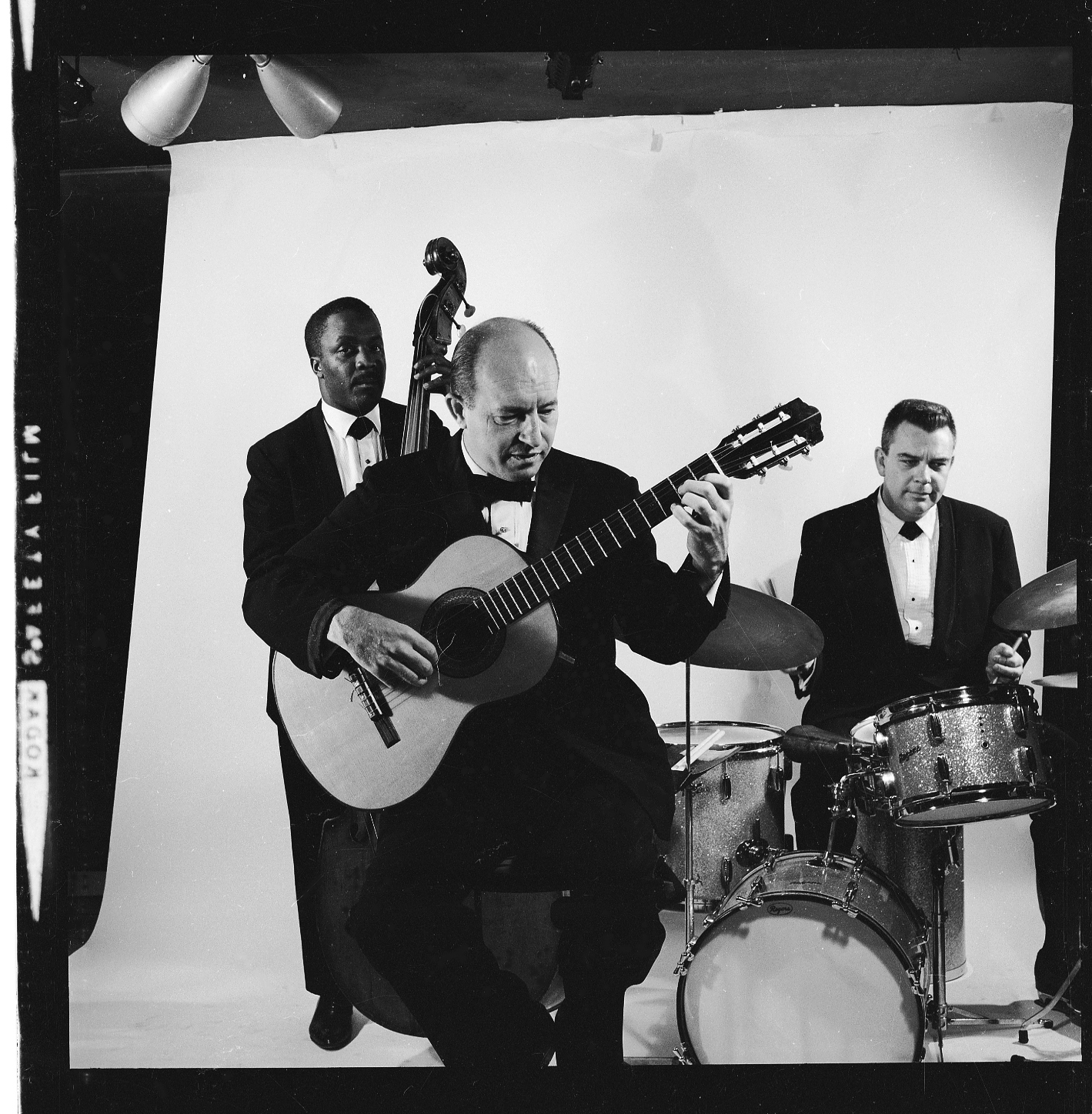
Another major bullet point in Keter Betts’ career was his lengthy stint with another of the DC area’s musical pillars, guitarist Charlie Byrd. Though the modest Keter spoke about it with no apparent rancor, fact is the development of the 60s bossa nova craze might not have been quite the same without the bassist. Ahead of Byrd, and certainly ahead of Stan Getz – the biggest commercial beneficiary of all – it was Keter Betts who visited Brazil and carried home the compatible idea of jazz and bossa nova, hipping Byrd to the possibilities and leading to the historic Jazz Samba recording session at DC’s All Souls Church on 16th Street, just up the hill from the capital’s storied U Street (“Black Broadway”) district.

keter betts kbcpress
A KETER BETTS PRESS PHOTO SHOOT OF THE CHARLIE BYRD TRIO, KETER ON BASS

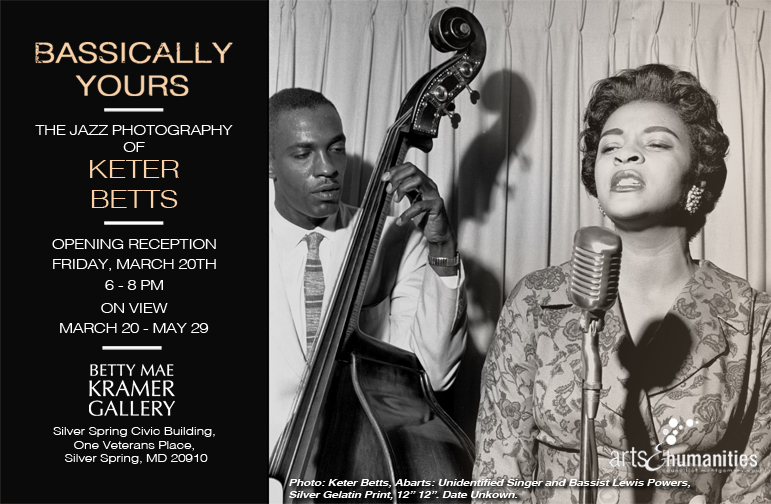
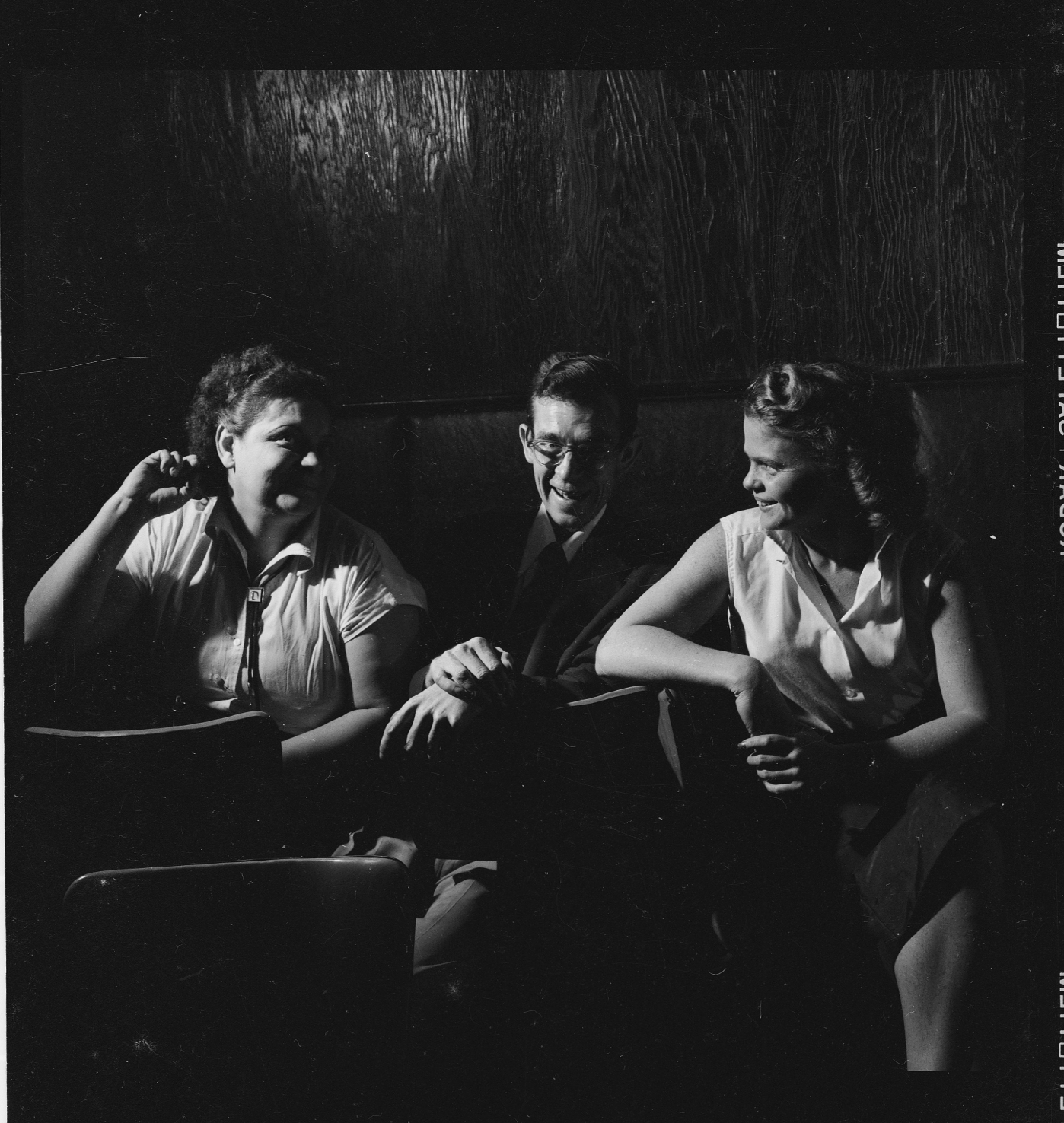
Betts was also bitten by the shutterbug. A significant sidebar to his career was capturing visual moments for posterity, particularly around the DC scene. Encountering musicians along the way who needed publicity shots, Betts even grew a side business of accommodating those self-marketing requirements of the trade, becoming an adept headshot hunter. Now, nearly 10 years after his ’05 passing on to ancestry, the Arts & Humanities Council of Montgomery County (MD) has mounted a wonderful exhibit of Keter Betts’ photographic artistry. (Full disclosure: Suzan Jenkins is the CEO of the AHCMC.) Curated by Amina Cooper, from the collection of Keter’s daughter Jennifer Betts come images that tell stories of U Street jazz lore, capture delicious slices of the arc of DC’s understated master chanteuse Shirley Horn, Byrd and other stalwarts like fellow bassist Wilbur Little, bringing to life several angles on the DC scene and the broader world as Mr. Betts experienced it. An additional treat, courtesy of the longtime Silver Spring, MD-based monthly JazzTimes, is a wall dedicated to the masterful work of ace JT photog Jimmy Katz.

Keter exhibit
A FAN VIEWING THE CURRENT EXHIBIT

So just what is it about bass players and the art of photography? Both Milt Hinton and Keter Betts are lavishly credited with mentoring another highly-skilled contemporary bassist, DC’s own Herman Burney. Tall, bespectacled and professorial in bearing, the affable Burney brings ample bottom and gravitational lift to whatever bandstand has the good taste to engage him. Spend enough time around Herman Burney and your image is likely to be captured by his trusty, ever-present camera. A major component of “Bassically Yours,” the current Keter Betts photo exhibit, is three free programs featuring Herman Burney, including a conversation that promises to explore this whole bass player/photographer equation.

Keter exhibit-Jennifer
KETER BETTS DAUGHTER JENNIFER BETTS AT THE OPENING

Important Dates:
Friday, March 20 2015, 6pm – 8pm
The Betty Mae Kramer Gallery & Music Room Silver Spring Civic Building, One Veterans Place Sliver Spring, Maryland 20910
Monday-Friday, 9 AM – 6 PM

Exhibition Tour with Curator Amina Cooper
Thursday, April 16, 2015 at 12:00pm

Bass Choir Performance and Panel Discussion with Herman Burney, Kris Funn, & Victor Dvoskin Thursday, April 16, 2015 6:00pm – 8:00pm

A Special Performance of The Herman Burney Trio
featuring Herman Burney, Reginald Cyntje and Harold Summey Thursday, April 30, 2015 at 6pm

Exhibition Lecture – Bassist Herman Burney in Conversation with Willard Jenkins
Thursday, May 14, 2015 6:00pm – 8:00pm

Website: www.creativemoco.com/BassicallyYours

Posted in General Discussion | Leave a comment

Artists’ responsibilities: notes from a keen observer

My WPFW colleague, scholar, educator and all-around jazz stalwart around town, Rusty Hassan recently posted an interesting post-concert observation in Facebook that struck a chord. Anyone who has read the Independent Ear knows that as a frequent jazz performance audience member, as well as a presenter of the music, I’ve often written on the seemingly lost art of jazz artists connecting with their audience – many failing to make even minimal efforts at doing so. These attitudes do little to build the audience for the music, as Rusty has keenly observed. Musicians: don’t sleep this responsibility, lest you some day find yourselves only playing for your peers, and that ain’t no way to make a living!

Rusty Hassan
RUSTY HASSAN AMIDST SOME OF HIS TREASURES

The Artists’ Responsibility
by Rusty Hassan

The Mid-Atlantic Jazz Festival had a panel discussion moderated by your partner, Suzan Jenkins, that intrigued me. It was titled “Is Jazz Education Killing The Jazz Audience” and featured prominent musicians who were also educators, Paul Carr, Delfeayo Marsalis, Connaitre Miller and Rufus Reid. As often happens at festivals with overlapping performances and and the opportunity to engage musicians in conversations, I missed the beginning of the session. I had been talking with James Carter about Leo Parker and Art Blakey–great excuse! When I entered the room it was evident that the provocative title related to a topic I had been concerned about for years, musicians relating to their audiences.

Each of the panelists related instances of young musicians, products of some of the best jazz education programs, giving performances where they had little or nothing to say to the audience.
The point of the forum was to emphasize how jazz education programs are producing musicians who are talented and proficient on their instruments but are unwilling to relate to their audiences beyond the performance. The attitude among younger artists coming out of the programs seems to be the performance should speak for itself and if Miles, Monk and Trane didn’t talk from the stage, why should I. The panelists all stressed that at a time when audience development is imperative for the music, musicians should communicate something about their music to the audience.

A couple of weeks after the Festival I attended a concert at the Clarice Smith Performing Arts Center at the University of Maryland. It featured Tigran Hamasyan on piano with Sam Minaie on electric bass and Arthur Hnatek on drums. I took a friend who was visiting from out of town and is a casual jazz fan. Shortly after the performance I posted the following on Facebook: “A few weeks ago at the Mid-Atlantic Jazz Festival Suzan Jenkins conducted a forum with Paul Carr, Delfeayo Marsalis, Rufus Reid and Connaitre Miller about the importance of younger musicians connecting with their audience.

Tigran
TIGRAN HAMASYAN

On Friday I saw Tigran Hamasyan give a fascinating performance at the Clarice Smith Center. Tigran, originally from Armenia and a winner of the Monk Competition, obviously drew upon his Armenian musical heritage in his performance. Halfway through the concert he said something like, “Yo Maryland, was up? On bass, Sam Minaie. Arthur Hnatek on drums. I’ll now play one of my compositions, Out of the Grid.” That was all he said to the audience.

The program for the concert included a bio by Guardian writer John Lewis which includes a discussion of how Tigran incorporates Armenian themes in his music and Tigran’s liner notes to his album
MOCKROOT. It would have been helpful if Tigran told us the names of the compositions he was performing and a little bit about his music. When you are incorporating Armenian and classical themes into original compositions, the music doesn’t necessarily speak for itself. An object lesson of what Jenkins, Carr, Reid, Miller and Marsalis were emphasizing about connecting to the audience. I did enjoy the performance.”

That FB post generated considerable discussion with insightful comments from Paul Carr and Larry Appelbaum. My favorite was a brief one from Bobby Watsond. He said, “People like to hear the artist speak. Not my idea. This was told to me.” I saw Bobby perform a number of times with Art Blakey and the Jazz Messengers in the 1970s where he would
announce the tunes for the band. But at some point before the end of the set Art would always get up from behind the drum set and address the audience. I suspect it was Mr. Blakey who told Bobby Watson that people like to hear the artist speak.

Tigran’s performance was in the smaller cafe style auditorium at the center. The audience consisted mostly of students with a few of us older folks in the mix. I imagine there were a number of music students who had participated in his workshop. Perhaps he felt that he had talked with most of the audience already. The program notes contained his illuminating discussion of the tracks
on his latest album which I presume were among the compositions he played. I’m perplexed as to why he didn’t convey some of this information to the audience without assuming everyone would read the entire program. At least he could have told us the names of the compositions so that we could read about them later. My friend who accompanied me to the concert commented that he felt Tigran’s performance lacked soul. Perhaps some explanation to the audience along the lines of what he wrote would have given my friend some insight into his Armenian soul.

I saw another pianist a few weeks later that was very much in contrast to Tigran in how he related to the audience. Wade Beach is a Washington area pianist who spent twenty years with the Airmen of Note. He currently performs with Andrew White. That particular evening he performed as part of a series of solo piano recitals at the Arts Club of Washington. The series features area pianists such as Allyn Johnson, Lafayette Gilchrest and Janelle Gill performing original material.
Wade Beach
WADE BEACH

Wade seems to be somewhat shy and humble but is an incredible pianist. He mixed in a few standards with his original compositions. He announced each tune with a few words of explanation about what went into the composition. He joked about academic jargon while explaining what a contrafact is musically, mentioning that Ornithology is based on the chords of How High The Moon. He related to the audience members so that they could relate to the complexity of his music. The audience at the Arts Club skewed older than that at Clarice Smith, probably mostly casual jazz fans like
my friend who had gone to see Tigarn with me or members of the Club.

In my conversations afterward folks told me they not only enjoyed the performance but they appreciated Wade’s commentary. This is not to say the audience did not appreciate Tigran’s performance; they obviously did, applauding for an encore. But I think Tigran may have lost one potential fan by not relating verbally to the audience.

Artists who feel that their artistry is such that they don’t have to talk to their audience often cite Miles Davis as someone who felt that the music should speak for itself. Well, he was Miles Davis. I’ll never forget taking my daughter Kenja to see Miles at Constitution Hall when she was in high school in 1985. He had large signs made up with the names of the musicians in his band. When Kenny Garrett soloed Miles would hold up the sign with Kenny’s name on it.

Miles related to the audience while demonstrating a sense of humor mocking his reputation as someone who would not communicate to his fans. My daughter got the joke. A few years later I took her and a Princeton classmate to hear Dizzy Gillespie at Blues Alley. While I was groaning at the jokes I had heard countless times, the audience was cracking up. They, of course, hadn’t heard those jokes before. Dizzy drew them into his music and made them fans.

Miles & Kenny
MILES & KENNY GARRETT DURING THE ERA OF MD’S BAND INTRO PLACARDS

Jazz has always had a “hipper than thou” syndrome. It’s part of the culture and most of of us who are part of the music revel in it. I certainly do. We love a genre that’s not the popular music of mass consumption. We’ll dis an artist who becomes popular as a sellout. If we love a particular artist, it is frequently at the expense of another. Jazz musicians are, of course, fans of the music as well as performers and have been the essential participants in this culture of cool from the beginning. This has certainly impacted the size of the audienceBut now the music needs listeners more than ever. I’m not talking about the death of jazz here. It will certainly survive. But musicians should be more inclusive in reaching out to the folks who come out to their performances.

I’m also not advocating the watering down of the artistry of the music. I’ve been to concerts by artists such as Anthony Braxton and Cecil Taylor where they have talked with the audience about the titles of their compositions and thanked them for coming out. On a positive note with the younger musicians, I saw Braxton Cook, a young saxophonist who studied with Paul Carr before going on to Julliard, relate very well to those who came out to the Bohemian Caverns to hear his group. He clearly absorbed the lessons Paul Carr imparted about stage presence. If only his young peers would do the same. Jazz is indeed a bit of a mystery to many who come out to hear the music and you want those who feel that way to feel welcomed, ultimately to come back and hear more.

Braxton Cook
BRAXTON COOK

Posted in General Discussion | 5 Comments