The Independent Ear

JJA Marches On

 Monday, June 14 marked the annual Jazz Journalists Association Jazz (JJA) Awards event.  The venue City Winery proved to be quite the ambient locale for what has become a jazz community tradition.  As the tribes gathered to schmooze, catch-up on news, hugs and air kisses, and just generally revel in the greatness of jazz music (and the auspicious list of jazz greats on hand), I was reminded not so much of the actual birth of the JJA as it’s conception. 

JJA was actually conceived at A Jazz Media Symposium, May 20-22 at the University of Illinois-Chicago.  The symposium was produced by Arts Midwest, co-sponsored by DownBeat magazine, and at the time I was Jazz Program Coordinator at that Arts Midwest, a regional arts rganization (a relationship I’ve happily renewed more recently with my work as coordinator of the NEA Jazz Masters Live project for Arts Midwest via the National Endowment for the Arts).  As Wayne Self, a fellow writer who at the time was also on staff at Arts Midwest, and I hammered out the details for the symposium our primary goal was the development of a jazz writer’s association and a concurrent jazz radio programmers association; the former proved much more successful (i.e. the JJA), while the latter remains in the we’ll-see category.  There have been various collectives of jazz radio stations and programmers, but nothing approaching the success or longevity of the JJA; and for that the primary thanks goes to the JJA’s tireless and longtime Pres. Howard Mandel. 

Our symposium featured general sessions on "Record Companies & the Media"; "The Future of Jazz: Hope or Hype?"; and jazz writer-specific sessions on "Plugging into Outlets: Jazz Writing Opportunities Today & Tomorrow"; "Jazz Journalism: Responsibility & Function;" and a Day 1 closing general session on "Musicians & the Jazz Media: A Dialogue" between writers, programmers and musicians.  Our closing general sessions on Sunday included separate feasibility studies on "Establishing an American jazz radio network and a jazz writer’s guild" — thus the eventual birth of the Jazz Journalists Association, whose first president was writer Art Lange, who at the time was concluding a stint as editor of DB.

On the writer side the panelists for those sessions included Mandel and Lange, Paul Baker, Leslie Gourse, the late Gene Lees, Bill Millkowski, Don Palmer, Neil Tesser (who wore both his writer and radio hats for the occasion), and Kevin Whitehead (Stanley Crouch, scheduled to appear, stiffed — another story/another time).  Other symposium participants included musicians Bunky Green, Ernie Krivda, Ben Sidran (also wearing his radio syndication hat), Bill Smith (ditto his Coda magazine hat), and Douglas Ewart.  Radio folks included the late Oscar Treadwell ("An Oscar for Treadwell"), Bob Porter (also wearing his writer hat), Sandy Ratley (NPR at the time), and Linda Yohn.  The record industry was repped by such panelists as Terri Hinte, Don Lucoff (pre-DL Media), and Ricky Schultz.  The evening hits were provided by the annual UIC Jazz Festival, including Dizzy Gillespie, and the Count Basie Orchestra, and of course the ever-lively Chicago jazz scene.

And a productive time was had by all, particularly the assembled journalists.  So there you have the conception of the JJA.  For membership, complete details on this year’s Jazz Awards, and other timely & useful jazz news & views, be sure to visit (and bookmark) WWW.JAZZHOUSE.ORG.

— Willard Jenkins, Founding Member, Jazz Journalists Association


Posted in General Discussion | 1 Comment

The Legacy of Freddie Hubbard

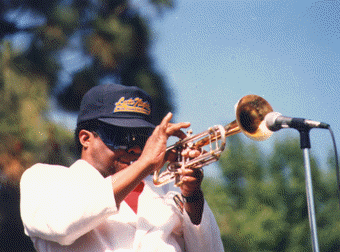
 The attitude pendulum towards creative artists most often swings most heavily — as it should — to the enormity of their gifts with the passage of time for those whose careers were marked by questionable behavior.  Our collective memory tends to soften towards those guilty of even the most egregious behavioral lapses after they’ve passed on to ancestry, and as time allows us the opportunity to ponder what they left here for us to learn; their respective human frailties are dealt with a relative shrug or even softened into outright humor.  Such seems increasingly the case with one of the greatest trumpeters in the history of American music, Frederick Dewayne Hubbard, bka Freddie Hubbard. Freddie has been an increasing topic of conversation and artistic re-examination recently, at least in my travels.  And let’s face it, though nowhere near joining any sort of rogues gallery of jazz, Freddie Hubbard was guilty of his share of knucklehead behavior and judgment lapses during his time.  

On the offstage occasions when I encountered Hubbard at the peak of his powers, either for an interview or in the capacity of a presenter, he was at best a bit mercurial.  At once supremely confident in his own brilliance, he sometimes appeared to labor under the withering glare of Miles Davis — who was often hypercritical of Hubbard, seemingly in the manner of a disappointed dad.  The fusion successes of peers Herbie Hancock and Chick Corea seemed to raise some jealousy issues; he tried in vain to emulate their crossover success and in so doing found himself instead falling out of favor with the cognoscenti, who dismissed out of hand his late period CTI and smoothie Columbia albums.  Hold on a minute Mr. Hardcore, those first few CTI releases were grits & gravy for this college undergrad, they burned up more than a few dorm room turntables. 

Then we come to the troubling matter of his sad last few years of diminshed capacity.  Until the real story of his overblowing lip ailments were revealed in DownBeat, more than a few of us wondered why his playing was suddenly so weak and had almost completely diminshed the roaring flame that had stoked his playing through several different incarnations, from Open Sesame (Blue Note) through the early CTI releases when he was a pillar of jazz trumpet excellence.  (Come to think of it, perhaps Miles was irked that Hubbard’s physical powers outstripped his introverted charms.)  Even in his “smooth” moments on those otherwise forgettable Columbia releases, the majesty of Freddie Hubbard was still available in glimpses. 

Hubbard’s last decade or so was another story.  Missing his majestic horn, I recall discussing his diminshed capacity with more than a few musicians.  I vividly remember Jackie McLean shaking his head at Freddie’s failure to heed sage advice about getting his chops back together by working with the man known as an ace trumpet “doctor” of sorts, educator William Fielder.  Instead of taking a much-needed break and working diligently at rebuilding his embochure, it seems Freddie foolishly soldiered on until his capacity was but a dim flame from the roaring bonfire he’d once been.  Let’s call this knucklehead behavior to be kind.

Freddie has been popping up a bit in my consciousness most recently through a series of recollections.  The first came a few weeks ago when the National Jazz Museum in Harlem held one of its Tuesday evening Jazz for Curious Listeners forums at their Visitor’s Center on 126th Street in East Harlem.  That evening, with bassist and museum co-director Christian McBride holding court, the subject was the legacy of Art Blakey’s Jazz Messengers.  The informants were two latter-day Messengers, tenor man Javon Jackson and trumpeter Brian Lynch.  The conversation inevitably turned to Hubbard because McBride and Jackson had been part of Freddie’s late-period ensembles, and being of the generation that came of age in the 1980s and 90s, as a trumpeter and a Messenger Lynch was indelibly influenced by Hubbard.  For their generation Hubbard and Lee Morgan were  pillars of trumpet expression; the Hubbard v.s. Morgan argument rages on as to who was the more powerful exponent of his instrument.  On this evening Hubbard was the unquestioned champion, at least for these three gentlemen.

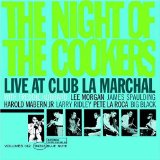
Then recently, as part of my ongoing investigation into the Lost Jazz Shrines of Brooklyn being fostered by the Weeksville Heritage Center (see an earlier Independent Ear post for details), I had the great pleasure of interviewing bassist (and Hubbard’s Indianapolis homeboy) Larry Ridley and pianist Harold Mabern.  The subject was that classic example of hard bop trumpet playing, the April 9 & 10, 1965 performances at Brooklyn’s Club La Marchal that yielded the aptly titled Blue Note two volume recordings The Night of The Cookers

Ridley and Mabern were at the time regular members of Hubbard’s quintet (along with another Naptowner on alto, James Spaulding, and drummer Pete LaRoca).  They fondly recalled that seminal moment in jazz, when Hubbard and Morgan battled it out for trumpet supremacy, each a player of enormous chops and physical stamina; Morgan that evening was a guest of Hubbard.  Lee’s sad demise a mere seven years later, at the hand of a jilted lover — Frankie & Johnny writ large –on a gig night at Slugs no less, is the stuff of jazz lore.  At the museum conversation McBride suggested that Morgan, the slickster from Philly, had once teased Hubbard as a bumpkin on the latter’s New York arrival.  It was obviously serious business on The Night of The Cookers as Freddie had clearly proven himself a more than worthy contender by that juncture.
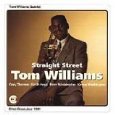
Saturday, April 10, three days after the anniversary of Freddie’s birth, the Smithsonian Jazz Masterworks Orchestra presented a program titled “Hub-Tones”, The Life of Freddie Hubbard.  Skillfully navigated by one of the DC area’s finest, trumpeter and obvious Hubbard acolyte, Tom Williams (who is also a worthy drummer), the program was an accurate (if somewhat incomplete) shapshot of Freddie Hubbard, particularly for those in attendance who were familiarizing themselves with this seminal trumpeter.  Piloting a band including the fiery alto saxophonist Antonio Parker, big-toned tenor man Tedd Baker, trombonist Bill Holmes (whose contributions gave the ensembles a nice heft), pianist Harry Appelman, ace bassist James King, and SJMO executive producer Ken Kimery at the tubs, Williams built a comprehensive program of Hub-Tones.  Williams reached back to Freddie’s debut release Open Sesame, and pulled up Tina Brooks’ “Gypsy Blue” for his opener.  Included also were such gems from Freddie’s experience as Wayne Shorter’s “This is For Albert,” from the Jazz Messengers book, and an “Up Jumped Spring” gem that brought out Williams buttery flugelhorn, where his attack most succinctly recalled Hubbard. 

The Red Clay date, an obvious favorite of Williams, yielded its two diamonds, “Red Clay” and “Intrepid Fox.”  The former groove orientation driving the combustible altoist Antonio Parker, who is one of the real comers on his instrument.  Williams tied Hubbard’s career together through a series of between tunes narratives, though for my money he brushed off Hubbard’s forays into free jazz territory, offering not one selection from those explorations.  Granted, sampling something from Coltrane’s Ascensions, or Ornette Coleman’s Free Jazz, both with liberal Hubbard contributions, may have been a bit heavy for the occasion.  But surely Williams could have comfortably included a selection from Freddie’s contributions to Eric Dolphy’s seminal Out To Lunch, or the overlooked anti-war disc Hubbard made with synthesist Ilhan Mimaroglu Sing Me a Song of Songmy.  On the other hand, let’s not pick nits with what wasn’t on the program;,simply chalk it up to mild omission.
A friend seated in my row at Baird Auditorium on this evening recalled what may have been his last time seeing Freddie, when the trumpeter kicked his drummer’s kit offstage in a childish fit of anger.  As I said, knucklehead-ism sometimes got the best of Freddie.  But history will be kind to the enormity of his skills, and the lovely pallet of colors in his book.  I’m just happy Mr. Hubbard was able to enjoy some of the fruits towards the end, receiving a well-deserved NEA Jazz Masters award, followed up in March 2007 by a Kennedy Center jazz master designation.  Long live Hub-Tones!!!

Posted in General Discussion | 13 Comments

Ancient Future radio program 3/25/10

Ancient Future, hosted & produced by Willard Jenkins, airs over WPFW 89.3 FM, Pacifica Radio in Washington, DC.


ARTIST    TUNE    ALBUM    LABEL

Lee Morgan    Mid Town Blues    Lee-Way    Blue Note

Dakota Staton    The Late, Late Show    (same)    Capitol

Freddie Hubbard    Blue Frenzy    Breaking Point    Blue Note

Randy Weston    F-E-W Blues    Mosaic Select    Mosaic

Yusef Lateef    In The Evening    Every Village Has a Song    Rhino/Atlantic

John Coltrane    Crescent    Crescent    Impulse!

McCoy Tyner    His Blessings    Extension    Blue Note

Buckshot LeFonque    I Know Why Caged Bird Sings    Buckshot LeFonque    Columbia

Miles Davis    Miles Runs the Voodoo Down    Bitches Brew    Columbia

Gwendolyn Brooks    We Real Cool    Our Souls Have Grown Deep Like the Rivers    Rhino

Soundviews

Rufus Reid    Dona Maria    Out Front    Motema

Rufus Reid    Ebony    Out Front    Motema

Rufus Reid    If You Could See Me Now    Out Front    Motema

What’s New

Allison Miller    Intermission    Boom Tic Boom    Foxhaven

Myra Melford’s Be Bread    Through That Gate    The Whole Tree    Firehouse 12

Champian Fulton    Say It Isn’t So    The Breeze and I    Gut String

Tineke Postma    The Traveller    (same)    Etcetera

Arturo Stable Quintet    Call    (same)    Origen

Kurt Rosenwinkel    Fall    Standards Trio    WOM

Somi    Enganjyami    If the Rains Come First    Obliq Sound


contact: Open Sky    5268-G Nicholson Lane    #281    Kensington, MD 20895                             

Posted in General Discussion | Leave a comment

Broadening the Jazz Journalists Association

JJA Prez Howard Mandel

In light of recent postings in our ongoing series Ain’t But a Few of Us: Black music writers telling their stories, friend and colleague Howard Mandel, President of the Jazz Journalists Association (JJA www.jazzhouse.org) wrote the following open letter to stress the organization’s diversity mandate.

Dear Willard,

Thanks for your column "Ain’t But a Few of Us", highlighting jazz journalists who are of African-American heritage.  In a recent posting you mentioned the Jazz Journalists Association’s "Clarence Atkins Fellowships," a mentoring program for emerging music journalists from minority backgrounds, saying it was "short-lived."  However, that program basically continues, although it has evolved from principally "mentoring" (which sounds pretty paternalistic) to an initiative more along the lines of collaborations with equal professionals, which is what the people in the original Atkins group — several of whom you’ve featured [editor’s note: Ain’t But a Few of Us contributors Bridget Arnwine, Robin James, and Rahsaan Clark Morris] — have become.

As it has been since you first convened and co-founded the organization in the mid 1980s, the JJA is still on the lookout for and welcomes music journalists interested in jazz of all ancestry.  The organization doesn’t currently have the funds to sponsor journalists to five-day conferences in Los Angeles, as we were able to do in 2005, thanks in great part to sponsorship funds from BET Jazz that helped produce that year’s JJA Jazz Awards, also 2005 was the first and only year the National Critics Conference was produced, by a coalition including the JJA, the Music Critics Association of North America, the Dance Critics Association, the American Theater Critics Association, and the US chapter of the International Association of Arts Critics.  However, the JJA in September 2007 welcomed K. Leander Williams, Greg Tate, Stanley Crouch, Ashante Infantry, Ron Scott, and 28 other jazz journalists from around the world to participate in "Jazz in the Global Imagination," a day-long symposium at Columbia University, produced by that school’s Center for Jazz Studies (directed by George E. Lewis).  

The JJA’s January 2010 conference, five days of programming during the annual convention of the Association of Performing Arts Presenters included John Murph, Greg Thomas, Bridget Arnwine, Ron Scott, Norm Harris, Sheila Anderson, Martin Johnson, bassist Melvin Gibbs, and yourself as participants in town hall-style meetings, attendees at our party and guests at a luncheon prepared by the National Endowment for the Arts (where Farah Jasmine Griffin was one of three speakers).  I am in occasional correspondence with Atkins fellows Rahsaan Clark Morris, Michele Drayton, Laylah Amatullah Barrayn, and Robin James.  The JJA seems to have lost track of Sharony Green [author of the Grant Green biography] — the last I knew she was at University of Chicago getting an advanced degree [drop us a line Sharony!].

Forrest Bryant (who first came to a JJA program at an International Association of Jazz Education conference) is a JJA board member and arts director of Jazz Notes [the JJA publication].  Though she’s not a journalist, the JJA has encouraged Meghan Stabile’s "Revive da Live" music productions, featuring her artists who cross jazz and hip hop at the 2008 Jazz Awards.  Ms. Stabile, Greg Tate, and Robert Glasper were panelists at one of the Jazz Matters meetings held at the New School (we’ve revived those meetings as of March 9 after a hiatus of two years).  Reuben Jackson, a former JJA board member, W.A. Brower, and Ron Scott are among the members who have been on our panels and their writings (as well as Bridget Arnwine’s) in the pages of Jazz Notes or on www.Jazzhouse.org

Working with the folks at WBGO is not exactly helping "emerging" journalists, it’s just collaborating with fine broadcasters, and the JJA has a history of doing that with many other broadcasters from elsewhere — Bobby Jackson, Richard Steele, Eric Jackson, Clifford Brown Jr., and Mark Ruffin come to mind.  Photographers, including Chuck Stewart and Javet Kimble, are highly regarded friends of the JJA (as are A.B. Spellman and James Jordan from the world of arts funders).  The JJA has issued standing invitations to officially join us to many other black journalists who cover jazz among other things and have contributed to association projects.

But to get back to my original point, the struggle continues!  Some progress has been made in identifying and collaborating with the many (at least, more than a "few") journalists and jazz-identified activists (don’t forget the JJA’s A Team Awards recipients) of African-American heritage.

These details are meant to be informative, as you may not know how the association’s work has spread.  Whenever you run into a black writer, photographer, broadcaster, or new media professional who would benefit from JJA contact, I hope you will point them our way.  Same goes for any Asian, Hispanic, or Caucasion man or woman or LBGT person who wants to work on jazz/blues journalism, but the JJA is especially alert to identifying and encouraging African-American journalists or hopefuls.

The Jazz Journalists Association is right now consolidating its membership list, creating a new web platform, restructuring our journal Jazz Notes as a JJA news feed, and applying for funds for a January 2011 jazz journalism conference.  We’re producing the 14th annual JJA Jazz Awards next June; fundraising and ballot distribution is also on deck.  I offered arts presenters at the APAP conference JJA assistance in identifying and inviting appropriate jazz journalists in their local areas to come into their spaces to present enhancement programs during April Jazz Appreciation Month, and we seem to have a couple of takers on that project.  As you know, there’s much useful work to be done!  Thanks for your efforts on jazz journalism’s behalf, and best regards.

Howard Mandel, President, Jazz Journalists Association 

Posted in General Discussion | 1 Comment

Ain’t But a Few of Us #13 (from the Bay Area)

Our series Ain’t But a Few of Us, black music writers telling their story continues with a voice from the San Francisco Bay Area.  I first met Eric Arnold in 2003 on a magical journalist junket to Morocco to cover the Fes Festival of World Sacred Music, then down to the coast for the Gnaoua & World Music Festival in Essaouira.  Eric represents the new breed of black music writers who are conversant on black music from hip hop to jazz and beyond. 

According to Arnold, "I’m not really a "jazz writer," though of course I have written about it; I tend to cover music of the diaspora, which is black music, Latin music, Caribbean music, African music, hip-hop, soul/funk, and various hybridized and fusionistic forms thereof.  It’s hard for me to separate music into "serious" and "non-serious" categories; I tend to look at it as a whole.  I think the seriousness comes from how folks approach the subject — to me, the recent album of jazz-funk covers of Wu-Tang songs was as serious as, say, the last Joshua Redman album."

What motivated you to write about music in the first place?

When I was in college I read LeRoi Jones’ "Blues People" in my African American Music course, taught by Nate Mackey, a professor who was also a jazz DJ.  At that time I was also DJing, on the college radio station.  I started writing for the school paper and just went from there.

When you first started writing about music were you aware of the dearth of African Americans writing about this music?

Not really. That became obvious later on.

Why do you suppose that’s still such a glaring disparity — where you have a significant number of black musicians but so few black media commentators on the music?

That’s a big question.  I think there’s always been a certain amount of cultural appropriation going on with respect to black music; you can look at Baraka’s essay "Jazz and the white critic" for a historical reference.  There are so few black-owned media outlets — that’s one reason.  And for most white editors who want to cover black music, I don’t think they really see a problem with having non-black writers do it, because they’re not really aware of the cultural nuances.  Cultural appropriation is not really somethiing white people take seriously; there’s no impetus or motivation to be culturally authentic.

Do you think that disparity or dearth of African American jazz writers contributes to how the music is covered?

Absolutely.  A lot of times, the whole notion of race as it relates to music is de-emphasized or tokenized.  I think this extends past jazz, into all genres of black music.

Since you’ve been writing about this music, have you ever found yourself questioning why some musicians may be elevated over others, and is it your sense that has anything to do with the lack of cultural diversity among writers covering the music?

That’s kind of a leading question.  You’d have to be more specific about who gets "elevated."  In general, the lack of cultural diversity among music writers affects a lot of aspects of how music is perceived, what can be said — and what isn’t said.

What’s your sense of the indifference of so many African American-oriented publications towards this music, despite the fact that so many African American artists continue to create this music?

The easy answer is, they’re all sellouts who chase the economic bottom line and don’t really have an investment in their own cultural traditions.

How would you react to the contention that the way and tone of how this music is covered has something to do with who is writing about it?

Well, I don’t think that’s contention but fact. Let’s just say something gets lost in translation culturally.

In your experience writing about this music what have been some of your most rewarding encounters?

Hmmm, good one.  Hearing Oumou Sangare jam with a bunch of folks in a small club in Morocco was pretty special [Editor: Indeed!].

What obstacles have you encountered — besides difficult editors and indifferent publications — in your efforts at covering this music?

The worst is when you pitch a story to a newspaper and they pass on it, and then some time later one of their white staff writers writes a story [on the same or a similar topic] that’s not as good as what you could have done.  This happens a lot.

What have been the most intriguing records you’ve heard over the last several months?

 Ironically, I’d say Quantic and His Combo Barbaro.  Quantic is a white guy from England who went to Columbia and recorded a bunch of native musicians; that album is really good.  I like some of the Afrofunk stuff that’s come out lately — Sila & the Afrofunk Experience’s Black Presient is really good.  The Mulatu Astake — Ethiopian jazz guy — anthology is amazing.  Iike the Amadou + Maryam album, and Sister Fa — she’s a female MC from Senegal. 

Posted in General Discussion | Leave a comment