The Independent Ear

Let’s go to MOROCCO!

FESTIVAL PERFORMANCES

JOIN
Willard and Suzan Jenkins
celebrating the
GNAOUA & WORLD MUSIC FESTIVAL

MOROCCO
Marrakech * Essaouria
JUNE 12 – JUNE 23, 2011

DEPARTURE CITY
New York – JFK $3,895.00 per person double occupancy
$510.00 single supplement

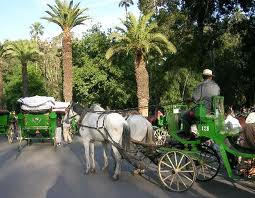
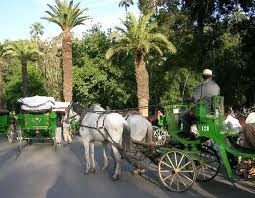
The magical city of Marrakech

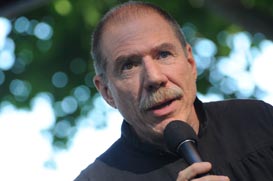
WILLARD & SUZAN JENKINS
Willard and Suzan Jenkins are distinguished and well-known members of the international arts community. They have been outstandingly original, creative and productive, recognized for their unique and innovative approach to projects.
Willard is an independent arts consultant & producer, and writer under his Open Sky (www.openskyjazz.com) banner. Willard’s current activity includes concert, festival, and concert series planning/development, artistic direction, consulting, music journalism, teaching, and broadcast work. Jenkins is a successful and widely recognized workshop, symposium, conference facilitator, and speaker at universities, conventions, and arts conferences across the country and internationally. He has facilitated long-range planning processes and written subsequent long-range plans for the Cleveland Orchestra, Greater Hartford Festival of Jazz, and the Cleveland Education Fund. Willard Jenkins has taught on the university level at Cleveland State University, Open U, and currently teaches at Kent State University.
“African Rhythms”; the as-told-to autobiography of NEA Jazz Master Randy Weston, composed by Randy Weston, arranged by Willard Jenkins, is now available. Randy Weston lived in Morocco in the late 1960s-early 1970s, introduced Willard to all things Morocco and, among other things, established a historic club called African Rhythms in Tangier, Morocco,
Suzan is a visionary CEO with a knack for leading cultural initiatives. She has over 20 years extensive experience spearheading organizational and programmatic development in the non-profit arts and culture sector. Suzan is a strategic, agile thinker and team builder who develops innovative projects that respond to and cultivate communities. She is ingenious at crafting policy and forging partnerships and collaborations in the global marketplace.
Suzan received a Peabody Award for her role as Conceptual Producer of the series Let the Good Times Roll produced for Public Radio International; an Outstanding Leadership Award from Jazz Alliance International; is Certified in Leadership by the National Leadership Institute; is Certified by the School of Economics, Hong Kong Polytechnic University and School of Economics, Renmin University of China.Her past Board service includes Berklee School of Music Board of Visitors, The Rhythm and Blues Foundation and the World Music Institute; she has served as a consultant for the Fes Festival of World Sacred Music and Jazz at Lincoln Center’s Armstrong Curriculum Program.
Suzan Jenkins has taught at Loyola University (New Orleans), and American University in Washington, D.C.

THE GNAOUA
The Gnaoua lineage bears ancestral ties to the lineage of African Americans. The Gnaoua are black Moroccans who come from the same ancestral roots as the majority of African American ancestry. At the same time — and from the same geographic regions of Africa – as the majority of African Americans’ ancestors were shipped in captivity on the Middle Passage, Gnaoua ancestors were sold and trekked across the Sahara in bondage to North African destinations, the greatest concentrations in Morocco.
The Gnaoua originated from North and West Africa, to be precise the Ancient Ghanaian Empire of Ouagadougou, who came together to establish brotherhoods throughout Morocco. Despite being Muslim, the Gnaoua blend African and Arabo-Berber customs to create their unique music-based rituals. These rituals are based on djinn – or spirits – that come straight from the African concept of possession. Their most important ceremony is Lila during which the maalem – or musicians – call upon the saints and supernatural entities to take possession of their followers. The followers and listeners of the music then fall into trances, the ceremony itself is said to be therapeutic.

THE FESTIVAL
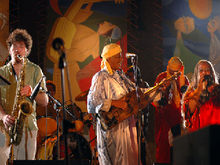
The Essaouira Gnaoua & World Music Festival is at its core a celebration of the rich music tradition of the Gnaoua (or Gnawa) spirit music brotherhood of north Africa, primarily Morocco.
The Gnaoua have evolved a rich music tradition that is the core of this festival. The festival – which annually attracts nearly a half-million participants to the beautiful seaside town of Essaouira – features Gnaoua ensembles from across Morocco and other parts of North Africa such as Tunisia. Also invited are musicians from the west and from sub-Saharan Africa, to collaborate with the Gnaoua. Essaouira was a prime vacation town or hangout for the counter-culture of the late 1960s-early 1970s, when such notables as Jimi Hendrix, members of the Rolling Stones and Led Zeppelin, and assorted others vacationed in the town. Legend has it that Jimi Hendrix wrote his song “Castles Made of Sand” based on such a structure in Essaouira. Orson Welles filmed his version of “Othello” in Essaouira; subsequently there is a statue of Orson Welles in one of the town squares.
The city of Essaouira comes alive with the hums, beats, and dancing of thousands of music lovers uniting under one sky.

ESSAOUIRA
Essaouira is a beachside city which stays pleasant all the year round. The city has well planned streets and the place has rich culture with a blend of English, Carthaginian, French and Portuguese. The famous festival – Essaouira Gnaoua World Music Festival – is popular worldwide and artists from around the globe gather to display their musical talents and styles. A vast genre of music like rock, pop, jazz, acoustic and many other forms of world music are played by artists from various backgrounds. Music and art lovers come here to witness this amazing festival.

MARRAKECH
Marrakesh is not only a fabulous place to visit, but also a true symbol of ancient Morocco. Founded by the Almoravids, Marrakesh remained a political, economic and cultural center for a long period. Its influence was felt throughout the western Muslim world. For centuries, the city has been known for its popular seven saints. The festival devoted to the seven saints was founded by Abu Ali al-Hassan al-Yusi, during the reign of Moulay Ismail. The tombs of several renowned figures were moved to Marrakesh, in order to attract pilgrims and visitors, and the seven saints became a firmly
established institution. Djemaa el Fna, which is one of the busiest squares in Africa and the world, always bustles with acrobats, story-tellers, water sellers, dancers and musicians. The Menara Gardens is considered to be the most romantic place in the city. The city tour includes all principal sites of Marrakesh. View the towering Koutoubia Minaret, then visit the Dar Si Said Museum, Menara Gardens, and Saadian Tombs. Continue to Djemaa El Fna Square, where street performers, storytellers, snake charmers, and magicians create a spectacle to behold. Explore the souks and medina of the old city.
Directly north of Djemaâ El Fna square, the Souks quarter is made up of ancient souks (markets) that are divided into craft guilds, which have retained their location on the square for centuries. This is probably the most touristy quarter of the medina, with its numerous surrounding riads and its maze of little alleyways, which are full of shops and always crowded with pedestrians. In the center of it all, you’ll find the shadowed kissarias (covered souks) area.
Morocco is a shopper’s paradise!!

Included Features
Scheduled Round-Trip Air Transportation – USA/Morocco/USA * Accommodations at Luxury Hotels * Transfers between Airports and Hotels * Breakfast and Dinner * City Tour of Essaouira * City Tour of Marrakech / Lunch included * Attend performances at the Gnaoua and World Music Festival *Baggage Handling between Airports and Hotels * All USA and Morocco Airport Taxes Included * And much more!

Contact Information
Willard & Suzan Jenkins YourWorld Consultant Group, Inc.
Open Sky Jazz www.yourworldgroup.com willard@openskyjazz.com info@yourworldgroup.com
suzan@openskyjazz.com Phone Toll-Free 1-888-535-3536
www.openskyjazz.com
301-816-2976
Reservation Application

GNAOUA & WORLD MUSIC FESTIVAL
MOROCCO
JUNE 13 – JUNE 23, 2011
Name and Date of Birth MUST match in Passport and Air Ticket.
Name(Last) ________________________ (First) _________________________
Middle Int._____
Address__________________________________________________________
Apt. No._____________
City_____________________________State/Prov.____________
Zip/PC______________Country___________
Date of Birth ___________________________________________
Telephone(Home)_______________________(Office)______________________
e-mail____________________________________________________________
Male__________Female_________Smoking__________Non-Smoking___________
Special Assistance_______________________________________
Single Supplement ___ Roommate ____________________________
Enclosed is a deposit in the amount of____________
(Minimum deposits $250.00 – Check or Money Order Only)
Balance payments accepted with Visa or MasterCard
Create your very own payment plan. Minimum payments $300.00
Final Payment due 45 days prior to departure
Make checks payable to: YourWorld Consultant Group, Inc.
Send payment to:
YourWorld Consultant Group, Inc.
P.O. Box 2526
Laurel, MD 20709-2526

Posted in General Discussion | 1 Comment

Remembering THE Jazz Ambassador: Billy Taylor

On Monday, January 10 Dr. Billy Taylor was given a rich, warm send-off totally befitting one of the classiest musicians and people jazz music has ever produced. Dave Brubeck wrote of “The Real Ambassadors”, Dr. Billy Taylor was the most REAL Ambassador of all. Here’s a man responsible for introducing the beauties and wonders of jazz music to the masses, through his media work and on various and sundry stages. There is no better concert exemplar of how to de-mystify jazz and make it friendly to the new or relatively uninitiated audience than his peerless series of Kennedy Center concerts recorded for the NPR series “Billy Taylor’s Jazz at the Kennedy Center.

For those unfamiliar with this series, the format was Billy’s trio (Chip Jackson on bass, Winard Harper on drums) plus a guest soloist. They’d play some of Billy’s music, some of the guest’s music, some common music, and talk about the nuts & bolts of the tune and the guest’s career in the music in between; followed by the audience being invited to pose questions about what they’d heard. Having attended numerous of those concerts, I can attest to the delight of those audiences and how obvious it was that previously-locked doors to the inherent mysteries of jazz music and how it is made, had been unlocked for many. Some of the most poignant remarks at Billy’s service at the auspicious Riverside Church in upper Manhattan, were delivered by the director of Jazz at the Kennedy Center, Kevin Struthers. Throughout the busy 4th quarter of Billy Taylor’s rich and full life he and Kevin worked tirelessly to make jazz a cornerstone of our nation’s cultural center, the Kennedy Center; and indeed they have succeeded royally. I asked Kevin if The Independent Ear could re-produce his farewell to Billy remarks and he graciously consented.
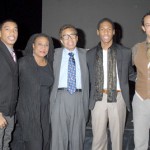

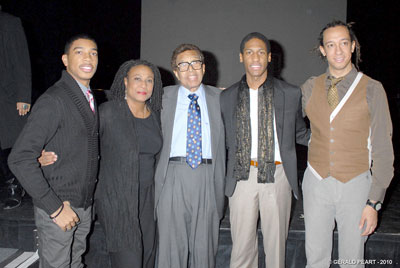
Billy Taylor in his usual nurturing mode with some of his pianistic “children”: Geri Allen, Jonathan Batiste, and Gerald Clayton

Mrs.Taylor. Kim. Anthony. Rudy. Members of the Taylor Family. Friends. I am Kevin Struthers, Director of Jazz Programming at the John F. Kennedy Center for the Performing Arts, Washington, DC – the United States’ National Center for the Performing Arts.

I am deeply honored to be invited to speak to you today about the gentle giant of jazz, Dr. Billy Taylor. Husband. Father. Brother. Son. Pianist. Composer. Educator. Recording Artist. Broadcaster. Esteemed colleague. Mentor. Friend.

For the past 14 years, I had the distinct privilege of working with Dr. Taylor at the Kennedy Center– where, since his appointment in 1994, he served as Artistic Director for Jazz.

TAYLOR MADE was the name of one of Billy’s music companies, he established years ago. TAYLOR MADE is also an apropos description of jazz programming today at Kennedy Center. Since opening its doors in 1971, the Kennedy Center has annually presented jazz from its many stages. However, prior to his appointment in 1994, there was little structure – no thoughtful, big picture approach to the programming befitting the music as one our country’s most important indigenous art forms – or as Dr. Taylor coined it – America’s Classical Music.

The season before his appointment, for example, the Center presented just four jazz concerts. Sixteen seasons later, the annual concerts number in the hundreds. And not just ticketed events – but free programs – allowing access to hundreds of thousands to experience live jazz music and performance, at their best, both at the Center and online.

You can imagine the list of performers, too. His friends and colleagues….many of whom are here, today. These are the world’s premiere jazz talents, who have graced our stages annually.

He opened a new Kennedy Center Jazz Club, which remains our most popular venue for jazz performance at Kennedy Center.

He opened the Kennedy Center’s doors to jazz performances for children from across the metro-DC region, including students from the Shaw neighborhood of Washington, where a young Billy Taylor – and Frank Wess – grew up and learned to play the piano.

He initiated local – and national – educational programs – including free satellite and internet-based television broadcasts, which he often hosted – appropriately combining his skills as a performer, educator and broadcaster.

TAYLOR MADE, indeed. Upon his death, the front page Washington Post obituary and tribute CITED Dr. Taylor as making Washington’s Kennedy Center “one of the nation’s premier concert venues for jazz.”

The Kennedy Center’s jazz programming reflects his personal passions, including education – and – granting opportunities for performance by the world’s many talented female jazz artists, particularly instrumentalists – who Dr. Taylor felt often didn’t get the attention they deserved, or opportunities to perform. In 1996 – to counter this – he founded the Kennedy Center’s Mary Lou Williams Jazz Festival. With his intended effect, sixteen years later, the Festival has spawned other, similar events across the United States, greatly enhancing opportunities for women to perform – and helping to nationally raise the profile of many of the most talented artists, who just happen to be women. He often laughed and told the story that when he suggested the Kennedy Center present the Mary Lou Williams Festival, someone at Kennedy Center replied “are there enough women to perform an entire concert?”

Following his many years on New York’s WLIB, he was one of a small group of people who came together to help form National Public Radio. He eventually became one its most active and recognized jazz hosts and performers.

Following the popular NPR series JAZZ ALIVE, which he hosted, it was another radio show – BILLY TAYLOR’s JAZZ AT THE KENNEDY CENTER- that cemented Dr Taylor’s role as Kennedy Center’s Artistic Director. For seven years on NPR, Billy would talk some, then play some, with a special guest artist – and Billy’s superb trio – recorded in live concert at Kennedy Center. As a young man, I – as the front-line presenter for these concerts and radio tapings – I learned so much about jazz at the foot of the master interviewer. So, too, did the millions of listeners from around the country.

Kennedy Center’s connection with NPR remains, today, with our annual Piano Jazz Christmas and New Year’s Eve broadcasts – and our active partnership with ‘JAZZ SET with DEE DEE BRIDGEWATER’. You think jazz on the radio airwaves is limited, today – imagine if jazz had not had the eloquent, articulate, passionate advocate Billy Taylor on the radio all of these years! Where would it be?

A few days ago I was sharing memories with Dr. Taylor’s dear friend – Marian McPartland. Unable to be with us, today, Ms. McPartland recalled meeting Dr. Taylor when he was but in his twenties, at Birdland. She said he was just “a young, skinny kid” – and they immediately became fast friends. As we discussed our great sorrow at his passing, she said – with her best British understatement – that he was “Greatly loved. Talented. Brilliant. A decent and most likable fellow.”

When Dr. Taylor arrived as a young man on the scene in NY, his talent as a musician was recognized by the then, current generation of masters – who taught, counseled, and advised the young pianist about the music and the business. Inherent to the music is the tradition of passing on knowledge from master to novice, generation to generation. Dr. Taylor’s experience – was paid forward – and his commitment to passing on to the next generation has never waivered, whether at his Jazz in July program in Massachusetts, or at the Kennedy Center, where he invited Betty Carter to bring her JAZZ AHEAD program, to foster the careers – the training – of young composer-musicians.

Walk onstage with purpose, he’d say. Dress for respect. Address the audience directly, articulately. Respect the audience. Connect with your audience. Engage them. Give them something they can take away with them. Find your own voice, he’d say. Your own unique delivery that makes you – well, you! Then, you will succeed.

Behind the scenes throughout his career – away from the public eye – what many don’t know about are his tireless – selfless – efforts to assist other musicians. Connecting the dots. Connecting artists with other artists; connecting artists with presenters and promoters; to use his leverage as a public figure to foster the careers of so many – on the radio, on television, in New York, around the world. To help out a musician down on his luck, in need of a job. To bring attention to those who deserved greater recognition. Many of the beneficiaries of these acts of selflessness are sitting in this sanctuary today. We will never know how many artists would not be successful if it weren’t for the efforts of Dr. Billy Taylor. And that is the way he wanted it. Without recognition. All behind the scenes – these efforts were not about Billy Taylor….No, they were for the benefit of the MUSIC – for the benefit of OTHERS.

I’ve been with Dr. Taylor in so many different contexts over the years……and his thoughtful, gentlemanly demeanor never waivered. Whether it was in the White House, on the streets of Washington – or in the halls of the Kennedy Center speaking with patrons – wherever – he always spoke in the same, measured tone of respect for everyone he met. When he spoke to anybody – stranger or friend – he would make you feel like you were the only person in the world.

I heard him speak numerous times about his most widely recognized compostion – among the hundreds he created – “I Wish I Knew How It Would Feel to Be Free.” Penned in just fifteen minutes to teach his daughter, Kim, a bit about the swingin’ offbeat rhythms of her African-American heritage. He told me once how when he was involved with Dr. King and the Movement in the 60s, that there was a large gathering in Birmingham, AL, at which Dr. Taylor was performing. A number of people were onstage – when suddenly a portion of the stage collapsed. Amidst the immediate confusion and tumult that followed, Dr. King turned to Dr. Taylor and said – play that song! And just like that, Dr. Taylor started with “I Wish I Knew…..,” and the crowd calmed down.

Following his stroke a few years back, our relationship grew ever stronger. With our many common references, we would have long conversations – although he sometimes was unable to say exactly what he was thinking. I understood exactly what he was talking about, and wonder if anybody listening to us would have the foggiest idea what we were discussing. Looking back, I cherish those talks. It was during this time that he would end our conversations by not saying ‘Good-bye,’ but rather he’d say ‘STRAIGHT AHEAD.’

I think that ‘STRAIGHT AHEAD’ was a testament to his positive energy – always looking ahead – looking forward.

It is impossible to truly gauge – to measure – the impact Dr. Billy Taylor has had on the music. Quite simply, Dr. Taylor was the world’s most articulate and prominent educator for HIS music, HIS love. And although he is no longer with us in person, his recordings and books, and telecasts and music and compositions, will live on, forever….forever sustaining the future of jazz.

Truly, without the least bit of cliché I tell you that I am certain that Dr. Taylor truly knows – NOW – how it feels to be free. For the past couple of weeks, I’m positive that he has been sitting in Heaven at a Steinway, with an entire crowd surrounding him, as he performs knock-out concerts with his fingers flying, the heads of the fellow angels boppin’ – the Heaven’s above, swingin’.

Husband. Father. Son. Brother to but a few. Pianist. Composer. Educator. Recording Artist. Broadcaster to millions. My esteemed colleague. My mentor. My friend.

You were a gentle giant of jazz – Billy Taylor – and you will be missed tremendously.

STRAIGHT AHEAD
Kevin Struthers
Jazz at the Kennedy Center

Posted in General Discussion | Leave a comment

Moody’s From Heaven


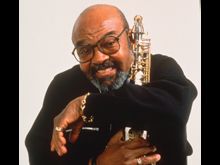
Anyone who has experienced the joy of hearing the great NEA Jazz Master James Moody’s hilarious turnaround on the old Tin Pan Alley tune “Pennie’s From Heaven,” which he re-cast as “Bennie’s From Heaven” can appreciate that this fabulous man has ascended on a one-way ticket to heaven. While it is with great sorrow that we contemplate a world without James Moody, we can certainly re-live the joy he gave so many of us during his all-too-short 85 years on this planet and turn sorrow to joy. James Moody was without question one of a kind — superb saxophonist, exquisite flutist, one of the funniest vocalists you’ve ever heard, and a man who spread joy with such abundance he always made you feel good when you encountered him. And if you were fortunate enough to have spent any time with him away from the bandstand you were deeply rewarded by the experience.

I recall the first time I interviewed Moody. It was back in the early 80s and I was working for Arts Midwest in Minneapolis. Moody came north to perform at a local club for the weekend so I set up an interview with him for the City Pages alternative weekly. Moody didn’t hesitate to invite me to his modest hotel room for our chat. When he opened the door, with that infectious smile planted on his jolly mug, the first thing I noticed was an incredible array of seemingly every imaginable vitamin supplement spread across his dresser. Then and there I knew this was a man who took care of himself, and indeed he did live a long and rich life, finally succumbing to the demon cancer last week at the ripe young age of 85. Despite those 85 years, Moody seemed forever ageless; maybe it was that perpetually sunny disposition and the fact that I never heard him utter a discouraging word — though if a musician didn’t come correct in the jazz tradition Moody respected, he was quick to call it; but never in a mean-spirited or egotistical way.

A warm encounter with James Moody always yielded a big hug; thereafter anyone who knew the deal knew you’d been in Moody’s company and been enveloped by one of his warm bearhugs. You see Moody was forever bathed in what we used to call in high school “smell good.” Moody had his own formulaic cologne which he had made specifically for himself, and he luxuriated in that wonderful oil. I used to tease him about giving up the formula whenever I encountered he and his sweet & lovely bride Linda. Until lo and behold one afternoon I went to the mailbox, opened a padded envelope from James & Linda (have you ever met two people who were such a true pair in every sense of the word?) and there was my very own vial of that inimitable oil. So now when I conjure up James Moody and seek some vicarious joy, I can pop on one of his fine recordings, re-hash our numerous encounters, and take an olfactory hit of that “smell good.” Yes indeed, Moody’s really from Heaven now! Rest easy my friend…

Posted in General Discussion | Leave a comment

From Timbuktu to the Mississippi Delta pt. 2

Guitarist-educator-author-jazz club impressario Pascal Bokar Thiam, who is of Senegalese descent, continues our conversation on the origins of blues & jazz and how that story has been distorted down through history.

What was your ultimate mission in writing the book “From Timbuktu to the Mississippi Delta”?

To share with the African American community that we are all Africans, that we have a history of our own, that we come from a great civilization; that we have settled this land here in the U.S. against all odds; that we have indeed high standards of aesthetics; that these standards of aesthetics gave America a unique sense of identity away from the civilizational canons of Europe; and that God put us on this Earth with a mission and that mission is to improve the daily lives of the whole of humanity. Africans began humanity. Africans started the concept of civilization. All races emanate from the African source and as such we have always had a positive destiny. We have had great challenges and great victories as a people but the struggle against evil is fierce and it comes in all shapes and skin tones, and the most complex issue is to recognize who our allies are in this daily human struggle for a better world, and not to be blindsided by the narrow concepts of race. Race is a trick that God played on humans to see if they had developed the intelligence of the heart, because ultimately moral authority always comes from inclusion.

Writing this book obviously must have taken you on some rewarding travels; talk about some of the things you learned from writing this book.

I was fortunate to have grown up in Senegal and Mali and traveled throughout West Africa to Morocco, etc. But the reflection it took to write the book from my journey as a man of multi-cultural experiences is ultimately what crystallized my convictions. What I have learned is that we are one humanity, living on one planet capable of the greatest achievements and the greatest horrors and that only through education can we collectively make the right decisions so that our people, our nation, our children and the children of all races can reach for a better tomorrow; everyday is a path toward this attainment. Only education is the path to a more just and peaceful world.

The book helped me focus the real priorities of life as I pondered the economic realities and reasons behind the Atlantic slave trade, the deafening silence of the Christian Church, and the abuses of mankind perpetrated and generated by the induced educational silence of an academia enslaved by business interests onto the masses.

The book helped me understand and refocus the mechanisms of societies and the frictions that are inherently born out of greed. Greed and the notions of business led to the Atlantic slave trade. Greed led to the abuses of human beings in the plantations of the South.

Once your book is out there, how do you foresee all of your pursuits intersecting and interacting — teaching, playing, operating a club, and your author responsibilities?

I’m going to need a lot of help and I can see the challenges. I have to learn to pace myself, which I am not very good at, so this will be a learning process. Learning takes time and there is no substitute for time, but it’s ultimately an awful price to pay for learning because time is the only thing that we are all short of.

I am a big fan of the poetic flow, which is why I am amazed daily at the true King of Rock n’ Roll Chuck Berry’s accomplishments. He owns a club. He has left us a legacy so wide and deep that we still cannot appreciate its magnitude. He drove the biggest imperialist nation in the world (i.e. England) to forget about its own music and embrace the Blues of the African American communities of the South (i.e. the Rolling Stones, Beatles, Clapton, the Who, Yardbirds, Led Zeppelin, etc.). And so when you talk about an achievement of monumental proportions, there you have it.

Pascal Bokar Thiam is President of Savanna Jazz in San Francisco, CA; he is on the Performing Arts Department faculty at the University of San Francisco, and the French American International School. And he is a working guitarist.

Posted in General Discussion | Leave a comment

Listening Party with Randy Weston & Willard Jenkins/African Rhythms & The Storyteller

As part of Ken Druker’s excellent series of interviews and conversations, Randy Weston and I participated in one of his Jazz at Lincoln Center Listening Parties before a very attentive audience on Tuesday, December 7 at JALC’s Ertegun Jazz Hall of Fame space. We talked African Rhythms and Randy’s brand new disc The Storyteller (Motema). Here’s the full story…

Posted in General Discussion | 2 Comments