The Independent Ear

Modern Jazz at the Apollo Theater

A couple of years back, in celebration of the 75th anniversary of the legendary Apollo Theater, I had the great pleasure of contributing two chapters to the lovely commemorative book Ain’t Nothing Like The Real Thing (“How the Apollo Theater shaped American Entertainment”). Researching for this piece meant spending many hours at the Smithsonian Archives Center digging through the collection of the somewhat prickly owner of the Apollo, Frank Schiffman. One of Schiffman’s more useful practices was typing out 5 X 7 index cards for every Apollo performer, with meticulous notes on such elements as how much they earned for the theater, the audience response to their performance, and his often pointed review of their performances. Modern jazz did indeed thrive during the golden era of the Apollo Theater. Read on…
Modern Jazz at the Apollo: 1950s-1960s
By Willard Jenkins
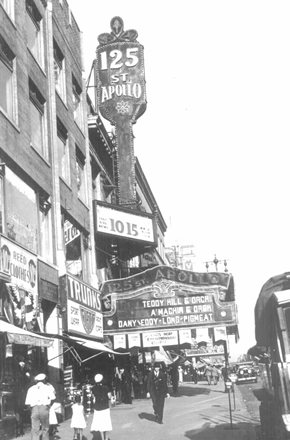
When the Apollo Theatre opened the doors for its inaugural show on Friday, January 26, 1934, the trendsetting variety bill included the great jazzman Benny Carter and his orchestra. The big band, or so-called Swing Era was in full flower and these swinging 17-piece behemoths, sparkplugs of the happy feet crowd at historic Harlem haunts like the Savoy Ballroom, soon found a welcoming home at the Apollo. Such great big bands as those of Duke Ellington, Chick Webb, Fletcher Henderson, Coleman Hawkins, Cab Calloway, Earl Hines, Benny Goodman, Lionel Hampton and others were a core element of the Apollo’s salad days in the 30s and 40s. They paved the way towards the Apollo accommodating the modern jazz combos of succeeding years. It was in those wonderful big bands that ignited the 125th street entertainment palace that so many of the original vanguard of the modern jazz movement prepped.

The early 40s proto-bebop Earl Hines Orchestra was a classic example. That band was a veritable prep school for modernists, including two of the pacesetters of the small group jazz also known as bebop, trumpeter Dizzy Gillespie and alto saxophonist Charlie “Yardbird” Parker. As writer Ted Fox recounts in his valuable book Showtime at the Apollo, “The Apollo led the way to exposing bebop to a larger audience. It was Frank Schiffman who first booked the experimental bop band of Earl Hines early in 1943 – with Dizzy Gillespie, Charlie Parker, and [trumpeter] Little Benny Harris.” Significantly that Hines band featured the voices of Billy Eckstine and Sarah Vaughan, who also doubled as the band’s second pianist.

In ’44 when Eckstine formed his own band, one that took further steps into the modern era, he not only took Vaughan (who at 18 won the Apollo’s famed Amateur Night) with him, but Mr. B also opened up his trumpet section to Gillespie, Fats Navarro, and younger firebreathers like Kenny Dorham and Miles Davis. The saxophone section was equally prodigious, including Bird, Leo Parker, Gene Ammons, Dexter Gordon, and Lucky Thompson. The rhythm section included bassist Tommy Potter, drummer Art Blakey, and pianist John Malachi.

Apollo Theatre impresario and major domo Frank Schiffman was no moldy fig, he was said to be quite supportive of the new, modern jazz sound. This new sound developed almost out of rebellion against the strictures of big band playing in favor of a sound that afforded freer flights of improvisation, plus more intricate rhythms and a broader harmonic universe. Although bebop grew out of the jazz atmosphere that encouraged social dancing, its various advancements limited dancing to this new music to only the most skilled terpsichorean hipsters. Ironically it was only natural that this music which seemingly required more of a listening commitment on the part of its audience, would find a place on the Apollo stage shows. It’s safe to say that some of the first modern jazz theatre performances took place on 125th Street.

The two Harlem haunts which served as the most famous modern jazz laboratories were Minton’s Playhouse at 210 W. 118th St., and Monroe’s Uptown House at 198 W. 134th St., with the Apollo roughly equidistant between them. At Minton’s the man later dubbed the High Priest of Bebop, pianist Thelonious Monk, held court at the nightly jam sessions with drummer Kenny “Klook” Clarke, trumpeter Joe Guy, and bassist Nick Fenton. Those sessions, conducted on the downlow beyond the prying eyes of musicians’ union officials who had banned jam sessions (though Minton’s had a leg up in part because its owner was an ex-union official), were particularly combustible on Monday nights. Bandleader Teddy Hill, the manager of Minton’s who controlled the music policy, hosted Monday night buffet dinners for Apollo performers on their night off. This savvy move ensured that the cream of the crop would show up on Mondays to jam, some of the club’s greatest sessions evolved from those buffets.

As Dizzy Gillespie remarked in his memoirs, To Be or Not to Bop, “On Monday nights we used to have a ball. Everybody from the Apollo on Monday nights was a guest at Minton’s, the whole band. We had a big jam session. There was always some food there for you. I was with the [big] bands at the time, and I would come in and out of town. When I was in the city, we were appearing at the Apollo… After the last show we’d go to Minton’s and sit and listen to some of the guys play.” Gillespie met his wife Lorraine at the Apollo, where she was a dancer in the chorus line.
Dizzy Gillespie, who unlike so many of his bop cohorts still had a lingering taste for the big band format, brought his pioneering bebop orchestra into the Apollo on several occasions, most notably in January, 1947 and for two stints in 1949. Performances from these gigs were captured for the film “Jivin’ in Bebop.” Charlie Parker’s dream was his series of Bird with Strings sessions, which for him were efforts at engaging the classical atmosphere he relished. The week of August 17, 1950 Parker’s peerless alto sax bathed in strings onstage at the Apollo, which was also a live radio broadcast. The record shows however that these Parker efforts on the “legit” side came up short of the ever-demanding Apollo audience expectations and were met with a lukewarm response.

Ever the iconoclast, apparently Thelonious Monk brought a different vision to 125th Street. According to Fox in Showtime at the Apollo, “…when the continually inventive pianist and one of the jazz world’s great eccentrics played the Apollo in the late fifties he wore a pink sequined necktie – his one concession to the demands of show business.” Experiencing Monk onstage at the Apollo amidst comics and dancers must’ve been quite the vision. Accessing Frank Schiffman’s meticulous 5 X 8 typed artist ratings index cards in the Smithsonian collection reveals the following Monk notation: “3/13/59 Very exciting jazz group.” Later that year… “6/5/59 Not nearly as good as first time. No box office.” The following year Thelonious’ new band apparently righted the ship… “7/22/60 With quintet… very well received.”

As the forties evolved into the fifties and sixties jazz made further stylistic advancements; those developments were more frequently featured on the stage of the Apollo than bebop, particularly in the early ‘60s. By this time bebop had evolved into post- or hard bop, a sound characterized by more extended lines imbued with bluesy qualities that were labeled as funky or soul jazz as the next generation of jazz musicians expanded on the examples of Monk, Gillespie, Parker and their cohorts.

Concurrently, particularly in the late 1950s and early 1960s rhythm & blues, an Apollo staple, began giving way to its natural progression, what came to be labeled “soul music.” As a result the Schiffmans opened up their shows to more jazz attractions. The more song oriented, and the bluesiest of the hard boppers who had that sanctified sound were the most frequent modern jazzers then booked into the Apollo: Horace Silver, Art Blakey’s Jazz Messengers, Cannonball Adderley, Jimmy Smith and the like. Popular white jazz artists of the day also found a welcome Apollo stage, including Dave Brubeck, Stan Getz, Buddy Rich, and Maynard Ferguson. The singers were an essential element of these shows, particularly to balance out the more innovative types, like Miles Davis, Monk, and John Coltrane. According to Lionel Hampton: “I saw Coltrane play the Apollo one time. The place was packed when he went in there. When he left, there wasn’t but a handful of people in there. He was playing his piece “My Favorite Things” [his 1960 hit recording] and he played that piece for about half an hour.”

Reflecting the fact that this was a period when the Apollo opened up to various radio deejay-produced extravaganzas, on the jazz side such radio show hosts as Symphony Sid (“the all night, all frantic one”) and Mort Fega brought shows to the Harlem stage. On March 30, 1962 Symphony Sid hosted a power-packed lineup featuring John Coltrane, Herbie Mann, Betty Carter, Jimmy Smith, Barry Harris, and Oscar Brown Jr. And it was the Apollo stage that engaged Sid’s growing taste in Latin sounds as well; witness his June 22, 1962 show featuring Tito Puente, Thelonious Monk, Mongo Santamaria, Arthur Prysock, the Tommy Ray Steel Band, and dancers. Such a show was clearly in keeping with the Apollo policy of mixing genres, as with another 1962 show mixing Horace Silver, Aretha Franklin, sonero Tito Rodriguez, (comic) Timmie Rogers, Nigerian drummer Olatunji, and Herbie Mann – with this Schiffman notation: “…may keep [this show] 10 days…” The week of September 6, 1963 Mort Fega hosted Art Blakey’s Jazz Messengers (“Cooperative and probably the finest jazz group in the country,” according to Frank Schiffman’s rating card, “individually & collectively – but worn a bit thin in this house [attraction-wise]”), singer Teri Thornton, organist Jimmy McGriff, Flip Wilson, and Oscar Peterson.

“Symphony Sid’s Afro Jazz” brought Art Blakey (with guest Montego Joe), 3 dancers, Arthur Prysock, Mongo Santamaria, Eddie Palmieri, and Flip Wilson to the theatre. One notes a common thread through all of these jazz-laden shows – the presence of at least one singer and usually a comedian as well. Singers in particular were included because Schiffman, despite his support of and appreciation of modern jazz, always felt that his shows needed at least one singer to ensure box office success. One of the great singers who came to prominence in the 1960s was Nancy Wilson. Her longtime manager John Levy, former bassist and pioneering African American artist personal manager, produced several shows at the Apollo with the Schiffmans’ blessings. “I had a great working relationship with the Schiffmans, both Bobby and the old man [Frank],” Levy, 97 years young and sharp as a tack at publication time, exclaimed during a recent conversation.
The week of March 6, 1964 the Apollo hosted “John Levy presents Free Sounds of ‘64”, featuring Nancy Wilson, Cannonball Adderley, Ramsey Lewis, and comic Slappy White. A high point of the show came when Nancy sang her big hit of the day, “Guess Who I Saw Today,” and as she sang the big finish – “…I saw YOU…” she gestured stage left and the spotlight shone on a big white chair with Oscar Brown Jr. sitting with his back to the audience, whereupon Brown rose from his chair to the audience’s delight, intoning the signature line from one of his hits “…But I was cool!” Unlike jazz festival shows of today, these shows were not a matter of one full set following another. According to John Levy the entire cast would come on together to open the show, the duration of which was typically 90 minutes; “…one act introduced the other act,” says Levy. Then in typical Apollo tradition… 30 minute break… do it all over again. Showtime at the Apollo – on a jazz tip. “We got a great response, we sold the houses out… and I made money,” Levy concluded.
Posted in General Discussion | 1 Comment

Questions for a trombone ace: Meet Reginald Cyntje

One of the more impressive young musicians to arrive in DC in recent years is trombonist Reginald Cyntje. A native of the Virgin Islands, Cyntje is blessed with impressive facility and an immediacy of sound that, coupled with evident section blending proclivities, stands out in a crowd – a feat he has achieved admirably in several area big band stints (including the launch performance of the Mid-Atlantic Jazz Festival Orchestra last February). He is also blessed with the adroit flexibility necessary for a small ensemble team player, equipped with the skills to stand in bold relief when its his turn at bat. His current recording is “Freedom’s Children,” a DIY effort that among others boasts the quicksilver vocal skills of Christie Dashiell from that pride of Howard University, the vocal ensemble Afro Blue, and the prodigiously talented multi-instrumentalist Warren Wolf on vibes. Some questions for Reginald Cyntje (pron. Sin-chee) are in order.

What was your overall intent with “Freedom’s Children” (and talk about the subtitle “A Celebration”)?

The intent of the album was to heal and inspire using music. Each song contains a double meaning; one for community and the other for the individual. I feel we are all Freedom’s Children. Our ancestors have paid a great price for us to be here today. The subtitle “The Celebration” stands for where we can be if we achieve the goal of equality. As a community we have come a long way, but we still have not arrived at a place where social justice is the norm.

What part of the Virgin Islands are you from and how did you determine to play this creative music?

I was born on the island of Dominica and raised in the US Virgin Islands (USVI). I was introduced to jazz by drummer Amin Gumbs. We grew up together. We are the same age and we were born on the same day. While I was playing European classical music, he was exploring the music we call jazz with his cousin [bassist] Reuben Rogers. One day, he handed me a Miles Davis recording and I fell in love with the vibe of this creative music.

What role does your background play in how you express this music, and how do you filter your upbringing through this music?

The traditional music of the Virgin Islands contains an element of spontaneous composition. I remember hearing the music everywhere as a child. As I became comfortable with playing the trombone, I would imitate the way my mentors played festive USVI songs. When I began learning jazz standards, I would listen to elders play them with a Caribbean groove. It felt natural to express my musical voice illuminating the beauty of my USVI home. Depending on the setting, the Caribbean vibe can be subtle or obvious. I just do my best to be sincere.

Considering your contemporaries, musicians like Reuben Rogers, Ron Blake, Dion Parson (all from V.I.), Trinidad & Tobago’s Etienne Charles, Jonathan Schwartz-Bart (Guadeloupe) and yourelf, would you say there’s a new pipeline of Caribbean-born musicians of jazz orientation from islands other than Cuba and Puerto Rico?

Yes. I believe the jazz musicians coming out of the Caribbean today are celebrating their unique cultural heritage. Musicians like Ron Blake can clearly articulate the jazz lineage on his instrument but you can also hear that he is from the “islands.” In the early stages of jazz, many Caribbean musicians performed and inspired other musicians at Congo Square. Later on, Caribbean musicians, like Lord Kitchener, were influenced by great jazz musicians. Today’s Caribbean jazz-oriented musicians are the perfect marriage of the two worlds.

Who have you discovered for inspiration on your instrument, and what have these inspirations contributed to your own expression?

As a child, I was inspired by Christian Lindberg and J.J. Johnson. Christian Lindberg showed me that anything is possible on the trombone. When I first heard J.J. Johnson, I loved the clarity and tastefulness that came from his playing. I loved the way J.J. would edit lines and make clear statements. Later on I was inspired by Curtis Fuller, Slide Hampton, Steve Turre and Robin Eubanks. With Curtis Fuller, I loved his soulfulness. His playing on John Coltrane’s “Blue Train” made me an instant fan. Slide Hampton’s extended lines made me smile and gave me a lot of work in the shed. Steve Turre and Robin Eubanks opened the door for modern trombone playing. Steve’s harmonic sense opened my ears to fourths and fifths. I was fortunate to study with Steve Turre and gain a greater understanding of the trombone. Each of these great players expressed their unique personality in their music. To build on their legacy, I do my best to be tasteful, clear, expressive, knowledgeable and inspirational.

What have you got planned for your next release?

For the next album, I want to record songs that inspire the listener to be their best self. Focusing on self awareness and self respect, I want the title of the album to be “Love” and have each song elaborate on the principles of love. I feel that it is the responsibility of the artist to inspire the listener. I want to save lives with music.


www.reginaldcyntje.com

Posted in General Discussion | 1 Comment

Conversation with Randy Weston

The following conversation between Randy Weston and me was hosted by Wuyi Jacobs, a fellow Pacifica radio show host at WBAI 99.5 FM in New York City. Wuyi is the host of AfroBeatRadio, Saturdays at 4:00 p.m. on WBAI (streaming live at www.wbai.org). He is also the director of the New York Afrobeat Festival; this conversation was originally posted on the AfroBeat site at www.afrobeatjournal.org, definitely a site well worth investigating.

African Rhythms, Roots, Culture – Randy Weston in conversation with Willard Jenkins. from AfrobeatRadio on Vimeo.

Posted in General Discussion | Leave a comment

Anatomy of a recording session… “Standard Domain”

Last December, as saxophonist-educator Paul Carr and his wife Karmen Carr were busily locking down the forthcoming 3rd annual edition of their late winter Mid-Atlantic Jazz Festival, Paul invited this writer to a recording session for his summer 2012 release Standard Domain. Having worked with Paul and Karmen to develop the Mid-Atlantic Jazz Festival, which arose from the ashes of the late East Coast Jazz Festival, I was also eager to catch at least part of the recording session because this would be the same band Paul would lead at MAJF in February, featuring Lewis Nash on drums, Michael Bowie on bass, Terell Stafford on trumpet & flugelhorn, and pianist Joey Calderazzo… and also because friend and colleague Bret Primack – the erstwhile Jazz Video Guy – was in town to shoot the proceedings for his essential YouTube channel. Check Bret’s recording session video below, then read about the anatomy of Standard Domain.
— Willard Jenkins

Paul Carr
Standard Domain
(Summer 2012 release)

The scene: Blue House recording studio in Kensington, MD, suburban DC, on an unusually balmy December afternoon.

Arriving by the back door adjacent to drummer Lewis Nash’s isolation booth, Lewis is practicing; Bret Primack/The Jazz Video Guy is busily setting up his cameras in each room for his YouTube shoots; pianist Joey Calderazzo and trumpeter Terell Stafford casually shoot the breeze on the studio couch as the leader, saxophonist Paul Carr readies for the next take, which will be the title track, his original “Standard Domain”.

Terell Stafford: “This is my third Paul Carr record session. Paul Carr taught me everything I know. Just look at these musicians; he gets the greatest bands, the music is great… He was the very first jazz gig I had, when I was in grad school (Rutgers) getting my Masters in classical tpt I decided I wanted to play jazz. I called Paul Carr and said “I haven’t played jazz before, but can I come play at the jam session?” He said “sure,” and that’s where I started learning tunes, he taught me tunes, taught me about harmony, gave me lessons in the morning before I had to go back to grad school and finish my Masters… so he did everything. I was finishing my classical trumpet degree and Paul was gracious enough to have me come to Takoma Station every week; this was around 1989-90. He gave me my first opportunity. And from being at the jam session with Paul is where I met Bobby Watson.” Terell went on to become a core member of Watson’s vibrant Horizon band.

Michael Bowie: “This is [my] fourth [Paul Carr] session.” [What keeps you coming back?] [laughs] “By the grace of God, and Paul.” [What is it about Paul?] “I just love Paul’s music, and I love the varied-ness of the records; he throws me into different pools and I’ve gotta sink or swim and I love it! Paul has taught me a backstroke or two.”

Paul Carr: “I wanted to do some tunes that people have heard before, and then some tunes that maybe I felt needed more exposure; they’re standards or standards that jazz fans like, so that was the thing with the tunes that I picked.” [What about Standard Domain, your title piece?] “That tune is a combination of a lot of… the harmony on that tune is a combination of a lot of different standards that we play all the time; that set of changes, you could see that was the first time the guys ever played it, but the changes are so standard – you hear them all the time – so that’s what its like in the domain of standards; these are some options, and I put a little kind of Latin-free feel in it. All that is encompassed in the world of standards.”

[What about some of the other tunes that’ll be on the album, like “Dream Dancing,” “Warm Valley,” “Tetragon”…?] “That’s the same thing; “Dream Dancing” is a beautiful tune that is not played or sung enough in my opinion; it’s a beautiful Cole Porter tune. “Warm Valley” is another tune… there’s the Ellington-Mingus recording and a few other sources; I love that tune, it’s a beautiful melody, so I wanted to record that.” [“Tetragon” seems like a natural because I do hear some Joe Henderson in your tenor playing from time to time.] “I love Joe Henderson [PC has the tribute album Musically Yours: Remembering Joe Henderson in his discography], “I love that tune, and its another one that hasn’t been played a lot.”

Joey Calderazzo: [What compelled you to come up from your home in North Carolina and do this session?] “That big paycheck at the end of the day [laughs]. Branford [Marsalis, in whose quartet Calderazzo has performed for many years] and Paul are friends and I met Paul through Branford, we played some golf together and I dig him. And when I found out Lewis Nash was on the date – I’d never played with Lewis before, so count me in. I’ve wanted to play with Lewis, and Terell’s been my boy for 20-something years, I played with him in Bobby Watson’s [Horizon] band. I don’t get out much either, I don’t do many record dates anymore. I just choose not to do ‘em. I’ve been really busy, maybe it’s where I am – out of that New York loop.”

Lewis Nash: “This is the third session I’ve done with PC.” [What compelled you to come back?] “My previous experiences with Paul have been enjoyable and musical, so I didn’t see any reason NOT to come back again!” [How long have you been acquainted with Paul?] “Terell introduced us in ’07.”

PC: “The Joe Henderson session was when I first met [Lewis].”

Lewis: “That’s a testament to the fact that they’re all just a blast, all [sessions] with musicians that I hook up with in a way that’s fulfilling.” [This is the first time you and Joey have worked together.] “We’ve known each other through the years, we’ve ALMOST been on stuff, but this is the first time it actually happened.” [You just got off the plane from Japan. What were you there for?] “I did a couple of things: I co-led a big band called the USA/Japan All-Star Big Band with Terumasa Hino, the Japanese trumpet player; and we had 9 musicians from the States, 9 musicians from Japan; we did a 6-concert tour. Following that was a trio tour with Ron Carter and a Japanese guitarist named Takeishi Yamaguchi. I’m still a little jet lagged, but glad to be back here before the holidays.”

Engineer Jeff Gruber: [With a session like this, when you’ve got a quintet with two horns, what are your challenges?] “When the horn players want to be in separate rooms it makes it a little bit more challenging for them because they can’t see each other physically; so you want to make sure their mix is good enough so that they can HEAR each other and catch the nuances of each other’s playing. It’s kinda like the next best thing to being there, but jazz musicians really, really love the physical interaction of being close together. But for the best possible sound and to be able to fix mistakes, we have to have some kind of separation. So if somebody wants to do something over again… if Terell is in the room with Paul and one makes a mistake, you have to do the whole thing over again. There are also tuning issues, if somebody doesn’t feel like their intonation is that good at that particular moment, if they feel like they’re out of tune, then the other guy is stuck with that guy’s chocolate on their peanut butter. But when they’re separated they can always do their parts over as much as they want to, and perfect it. The separation is better for the player who wants second chances, and that’s a big deal for a record that you’re going to hear over and over again.”

Standard Domain is set for early summer 2012 release. To learn more visit www.paulcarrjazz.com. And learn more about Paul Carr’s annual Mid-Atlantic Jazz Festival at www.midatlanticjazzfestival.org.

Posted in General Discussion | 1 Comment

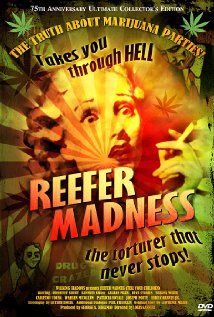
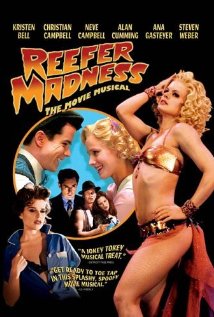
Reefer Madness strikes again…

In the spirit of April being not only Jazz Appreciation Month, and National Poetry Month, but also National Humor Month – a natural for a month kicked-off by April Fool’s Day – we present the following bit of reportage. Certainly one of the all-time cinematic hilarities is that ultra-cautionary tale “Reefer Madness.” I was recently doing some research at a favorite investigation source – the Institute of Jazz Studies at Rutgers University-Newark. Combing through their DownBeat magazine archives revealed the following piece, from the March 15, 1944 issue of DB (back when the mag was a weekly); reprinted by permission. We could all use a bit of comic relief…

MUSICIANS USED FOR WEED MEDICAL TEST (circa March 15, 1944)
By Frank Stacy

New York–The scientific world is finally paying some heed to the marijuana problem and attacking it from a musician’s viewpoint. According to reliable sources, research doctors attached to government prison-hospitals where drug addicts are confined for cure are currently working on a series of experiments with marijuana, using musicians as guinea pigs. The experiments are designed to find out the effect, if any, the weed has on the quality of a musician’s work and the medics and music-makers are locking themselves up in rooms then blowing their top – but scientifically.

Volunteers for the tests are being taken from among inmates with a musical background. A musical aptitude test is given each subject, both while he is in a normal condition and again while under the influence of marijuana. In this manner the doctors hope to determine why some musicians are attracted to the drug; whether it improves the quality of their playing and whether the whole idea is a bad kick.

Exaggerated Influence

It’s no secret that many musicians have been offenders against have been offenders against the Marijuana Tax Act. The records show this even though the facts have been over-stated to the point where the public believes all musicians and their friends live in a perpetual narcotic whirl.

Marijuana derives its name from a Mexican slang-word, meaning “Mary Jane.” In the United States the drug is known variously as tea, muggles, weed, dry gauge, reefers and hemp. The dried, crushed leaves of the plant are smoked heavily in Oriental countries, including India, Africa [ed’s note: you know, that “country” called Africa], Egypt [ed’s note: …which apparently Egypt is not a part of!], Syria, Greece and Arabia. In many sections of the United States, the plant is grown commercially for its hemp, used in manufacturing rope, hats, and paper. It can be cultivated easily. Due to its rapid spread as a stimulant, the Marijuana Tax Act was passed in 1937 and a curb put on the growing influence of the weed. [Ed’s note: well, they certainly put a cap on that demon weed, didn’t they?]

Problem Studied
Medical men and sociologists regard the drug as a stimulant, having the same physical and mental effects as alcohol. Unlike the pernicious drugs, such as cocaine and heroin, marijuana does not addict its user with an insatiable craving. Case histories of confirmed drug addicts disclose that many found their start with marijuana, which because of its availability and low price is within reach of everyone.

Stories and movies about marijuana users have misinterpreted the drug habit. Rather than the drug creating mental cases for the psychotic ward, the people who use marijuana are already emotionally unstable and turn to the drug as a refuge from life’s problems. [Ed’s note: Is that your excuse?] The basic problem with inveterate users involves a mental rehabilitation of the shattered mind drawn to drugs.

Posted in General Discussion | Leave a comment