The Independent Ear

Correction please… and the Churl strikes again


2012 NEA Jazz Master Jack DeJohnette, who completed a brilliant residency at Monterey Jazz Festival last weekend, graces the November ’12 issue of DB

In its coverage of the 2013 NEA Jazz Masters class (October 2012), the DownBeat magazine writer who contributed that bit of reportage fumbled the ball. One line read “President Obama’s 2012 federal budget proposed eliminating the Jazz Masters program altogether.” What an amazing misnomer – particularly glaring in an election year! Let’s examine that concept for a moment… Is the writer actually suggesting that the Prez 2012 budget proposal was so ingeniously micro-managed that the Commander in Chief actually proposed the specific elimination of this among the myriad NEA programs across the landscape of performing and visual arts they serve?

Roughly speaking, here’s a quick & dirty on how the budget process works: the Prez, in consultation with his economic advisors, proposes a budget and each department of government affected by said budget then takes that allocation and in its own sweet way determines exactly which programs or initiatives will feel the axe. So to suggest that the Prez zeroed in specifically on the NEA Jazz Masters program for elimination among the many programs and initiatives operated by the NEA is at best a ludicrous proposition.

Reality, as reported elsewhere, shows that the NEA Chairman proposed to Congress the elimination of the individual arts masters awards – the NEA Jazz Masters, Opera, Folk Arts, etc. Subsequently all those individual masters awards would – under the proposed plan – be folded into one kind of omnibus American Arts awards; which had the plan been adopted would have meant that perhaps one jazz master – along with masters from the other folded-in genres – would be honored annually. Reportedly Congress kicked it back, specifically citing the NEA Jazz Masters program as one which must remain intact. Subsequently for 2013 4, as opposed to the previous 6-8, NEA Jazz Masters have been named; additionally the annual NEAJM awards program, previously staged in grand style each January in conjunction with the Association of Performing Arts Presenters conference, has been scaled back from Rose Hall to a more modest evening at Dizzy’s Club.

Another example of how the writer in question drank the Kool-Aid came in his quoting the ever-churlish 2013 NEAJM Lou Donaldson on the subject. Donaldson, whose put-downs of practically anyone in jazz history have become a parody of his persona among musicians and anyone who’s heard his cock & bull pronouncements, summoned a wellspring of temerity and pronounced that with regard to past NEA Jazz Masters, “Some of the people that got in there couldn’t even be a sideman in my band. They got all these young guys just starting, and that’s ridiculous.” Is he suggesting that past NEA Jazz Masters couldn’t cut “Alligator Boogaloo”? As they say on ESPN’s NFL pre-game show ‘come on man!’, show some sense of grace for once! Fact is, prior to the 2011 honoring of the Marsalis Family – which still seems to chap some folks – (“young guys”?) Paquito D’Rivera was the “youngest” honoree, at the youthful age of 57! Get real, Lou Donaldson!

Posted in General Discussion | 1 Comment

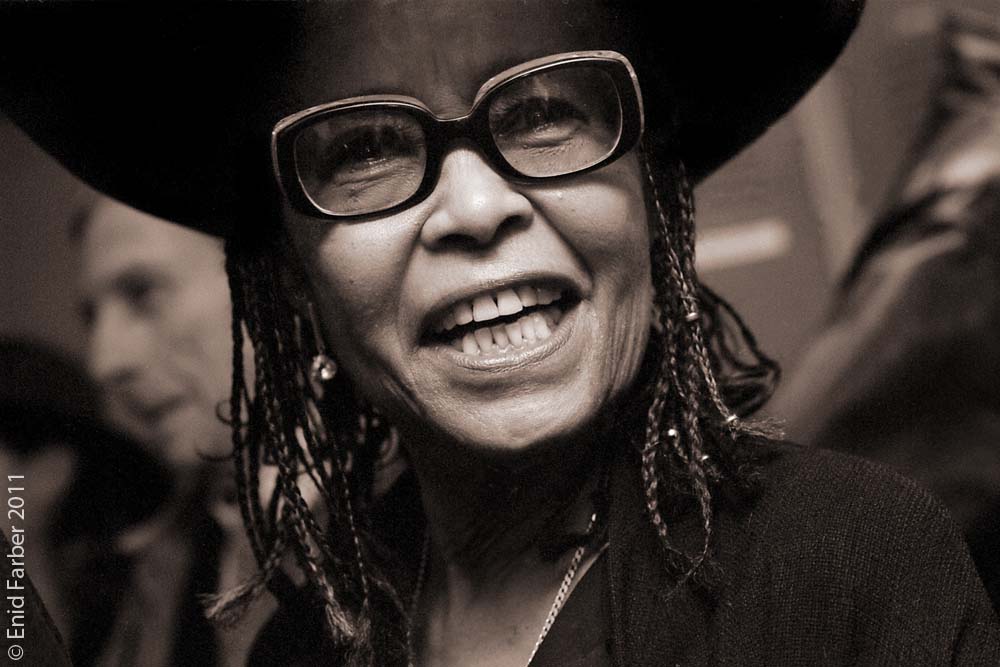
Woman’s perspective pt. 6 Enid Farber from behind the lens

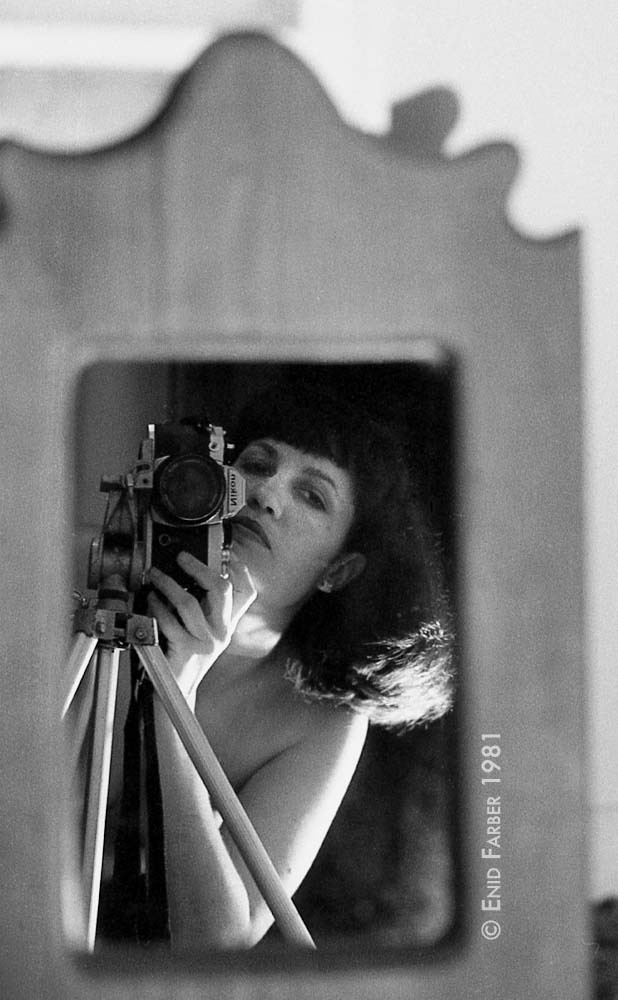
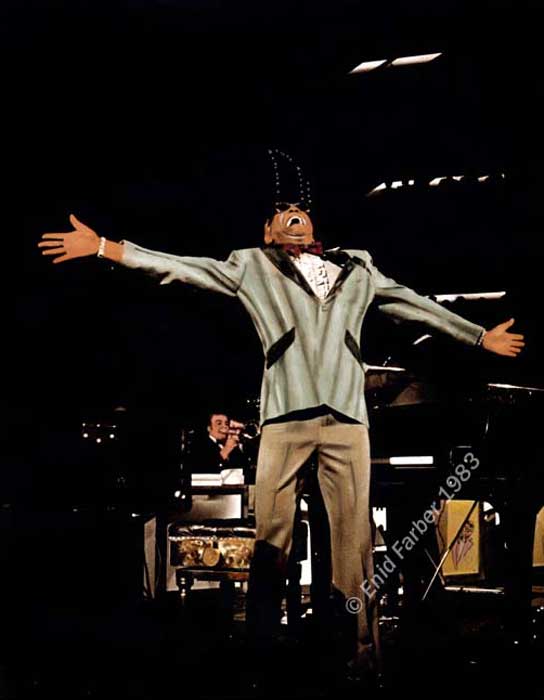
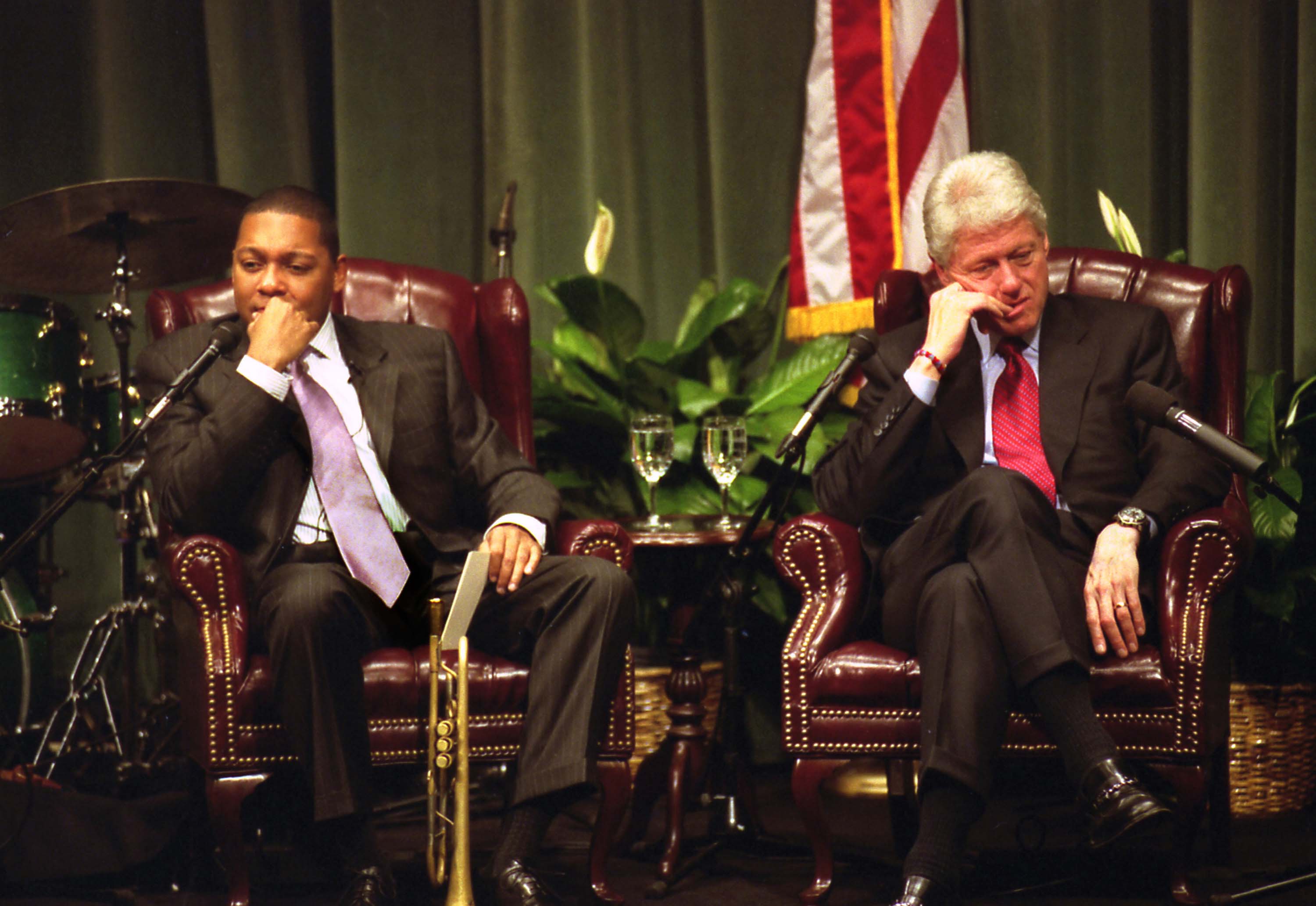
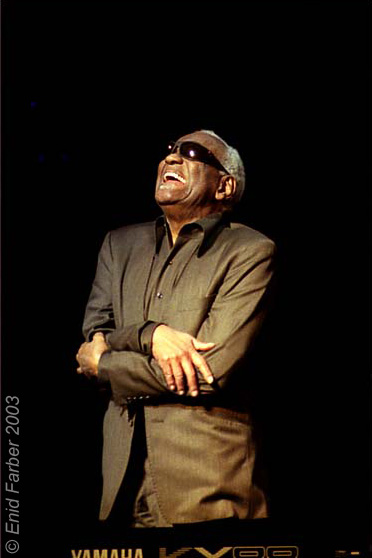
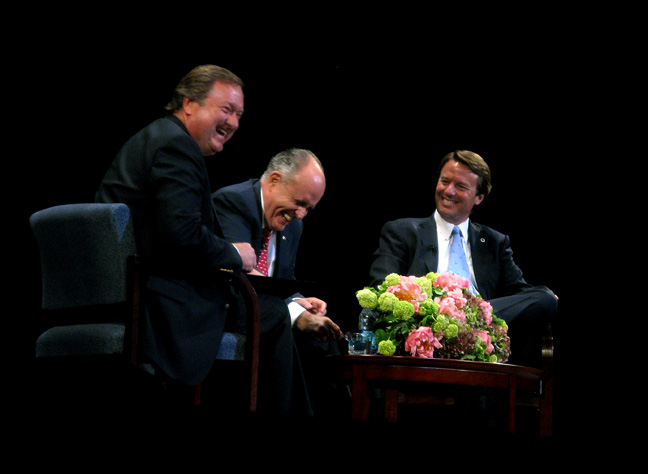
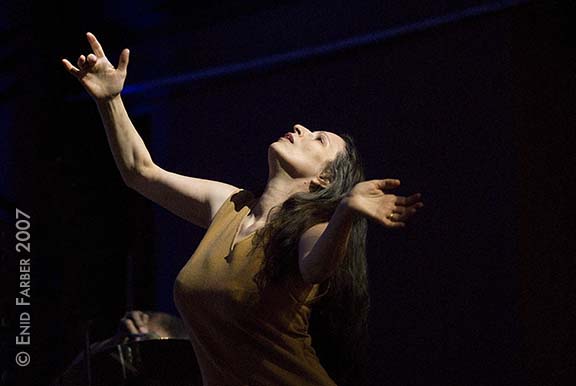
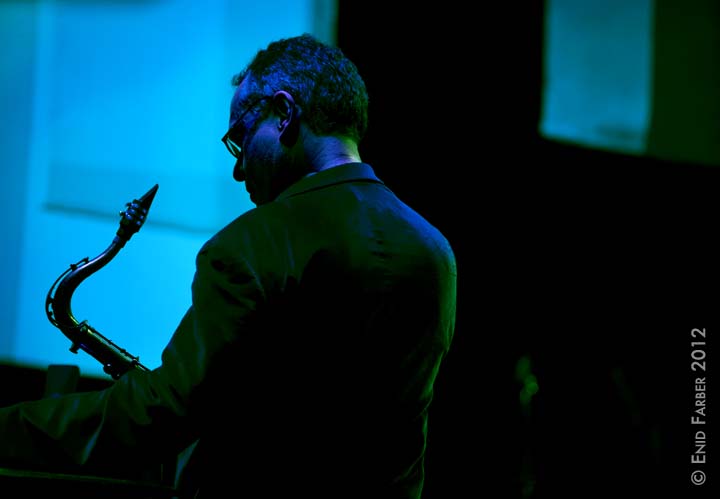
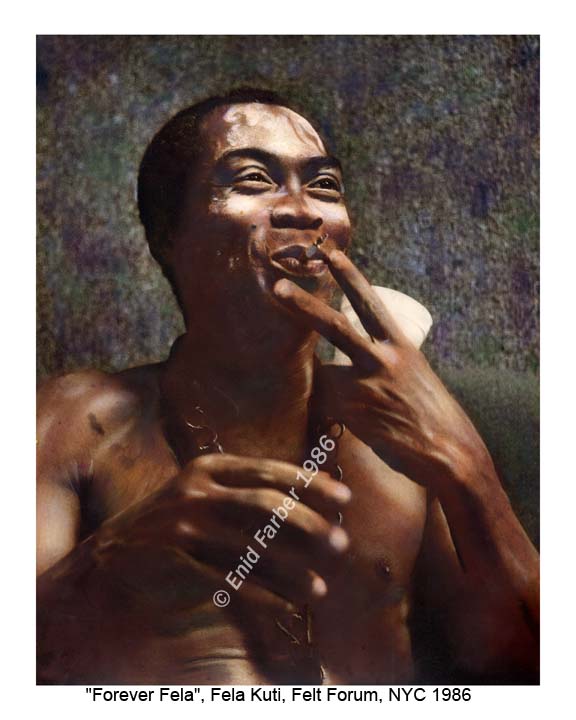
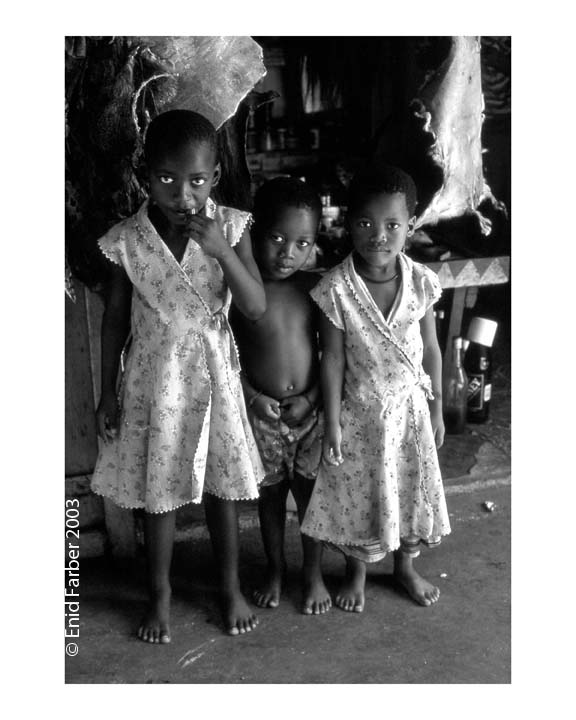
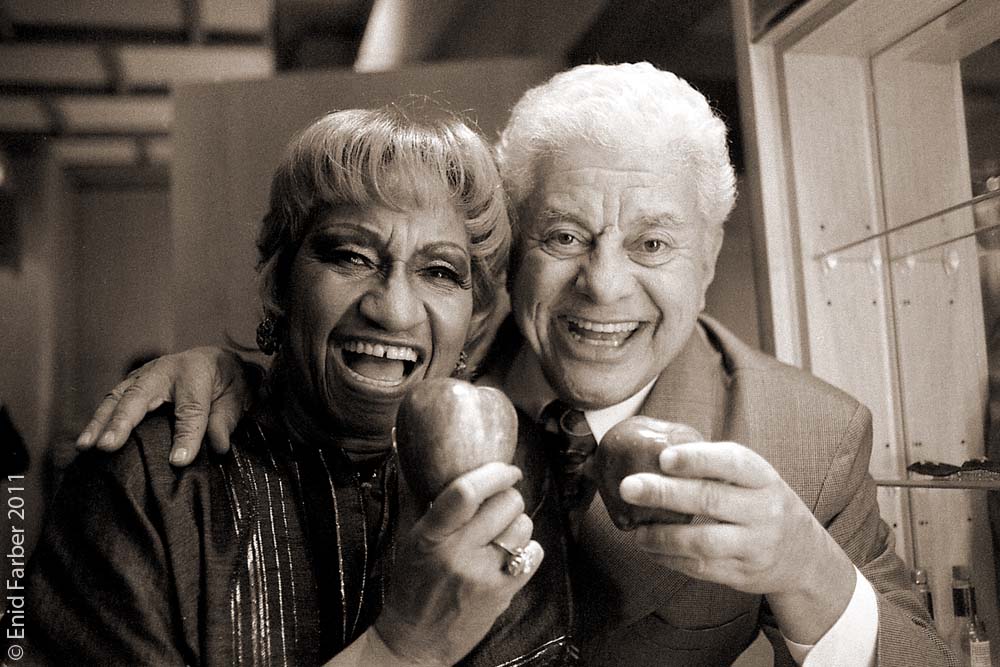
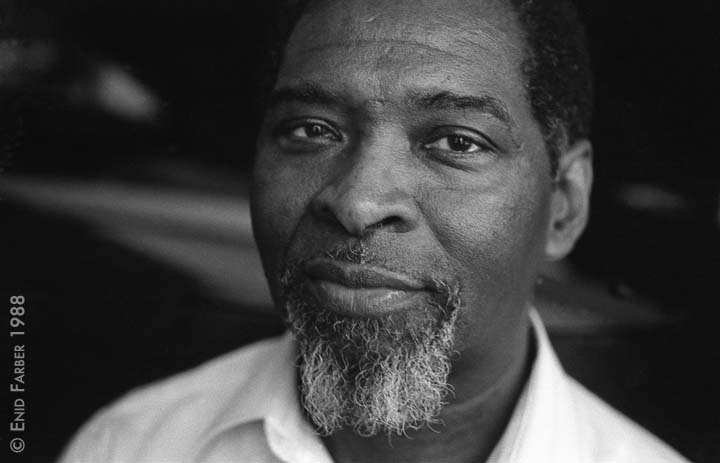
For Part 6 in our series of dialogues with women jazz writers we turn to a bit different perspective – from a woman photographer who has long documented jazz events among her other photographic pursuits. Throughout this piece are examples of the rich artistry of ENID FARBER, including a couple of wonderful Ray Charles images, Fela Kuti, Latin legends, politicians, rallies, media legends, man/woman/child on the streets, plus two NEA Jazz Masters at the end. And please keep Enid close in sending out positive karmic vibrations as she has been experiencing some health challenges lately.

JAZZ PHOTOGRAPHY: A Woman’s Perspective: Enid Farber

Self-portrait: Enid Farber

Please list your photography affiliations and any books or other projects you’re working on currently that you’d like to mention.

Currently I am working on a book entitled, “Legends Who Have Passed Through My Lens” (working title). I am also preparing for an exhibition in November at Baruch College on women in jazz. As well I am digitizing my archives for inclusion in an agency that represents fine art music photography for collectors.

What has been your experience photographing music in general jazz in particular?

It’s been a beautiful experience that has enabled me to be inextricably linked to a community that is precious and unfortunately under-appreciated in my home country. Although, the inherent financial struggle of choosing this particular niche of music, has affected my well being at times, and I have had to justify my reasons for going down this path as opposed to one that would have guaranteed more prosperity, I am grateful that I have been on the forefront of jazz visual history for over 30 years.

What was it about photographing music that attracted you to this pursuit initially?

The marriage of photography and music was a natural one for me. I grew up in a family in North Carolina very attuned to “great black music” in the 60’s and 70’s. When I went to college in Rhode Island in 1974 the first course I signed up for was “Jazz History”. I did not complete college at that time as I had creative wanderlust and lacked the funds, ambition and focus to continue. I obtained my first professional camera when I moved to Sarasota, Florida a couple of years later and at the same time met the legendary jazz programmer and D.J., Bob Seymour, who had a roommate who was a photographer. After Bob took me to a Phil Woods concert in Tampa, I delved right into his roommate’s darkroom at their home, and brought to life my first jazz photos, replete with dust and scratches, but I was hooked and I found my passion without ever turning back. That symbiotic relationship of jazz and the visual image marked me for life.

Would you describe your experiences photographing music as overall positive, and if so why or why not?

I would have to give that a 50/50. I have had amazing experiences and such joy and satisfaction behind the camera, feeling reciprocal joy from most of my subjects. Most musicians have responded to me with respect and enthusiasm and delight. But there have been some that have not responded positively to my style which verges on more emotion than some can handle. I have also not felt, nor received the respect I feel I’ve earned, from much of the industry. Perhaps I am just an overly sensitive Cancerian artist but there is a very notable difference from those who have embraced me and those who have either misunderstood me or again, do not like me stylistically.

Women occupy an interesting place in the jazz pantheon; on the one hand women instrumentalists are in the distinct minority, at least as far as prominence, and on the other hand women absolutely dominate the ranks of jazz singers. What’s your sense of that imbalance?

Really, the same reasons that I feel at a disadvantage in the overall industry is applicable to women musicians. I know that my work is as good as and as valuable to the pantheon of jazz history as any other being produced by men before or currently on the scene. I truly say that with the greatest humility although it clearly may ring differently to some ears. But I have been recently scanning and digitizing my vast archives, much of which was never previously seen or published, and there are many treasures in there of musicians and moments, long gone from the living world and many who I have documented from their beginnings. I have seen so many of those musicians flourish and some that never received their due.

This exercise has helped me validate my feelings of worth which are sometimes in question internally. I have survived this very tough environment through thick but mostly thin. But I still feel mostly forgotten, dismissed, ignored and under utilized. Although the industry is male centric, there have been many women as well that did not take me seriously. I have discovered that is in an innate flaw of many women, including myself, to somehow have more confidence in a man’s ability to get the job done, then in fellow women. And it is a definite that men are more comfortable with other men in the work place. Long term behaviors and conceptions are hard to eradicate.

Would you describe yourself as a music photographer and why?

Yes. I am primarily a music photojournalist but I am overall a photographer with a photojournalist’s eye and approach. I have been influenced by two major photographer’s, Henri Cartier Bresson, the great French street photographer and Jim Marshall, the great music photographer who covered rock, jazz and blues and whose each and every image I would qualify as one I would have loved to have shot. I am guided by Bresson’s “decisive moment” philosophy; onstage, backstage and in studio, that is the subtext of my mechanics.

Its been suggested that one of the real keys to solving the critical jazz audience development issue is that those who present the music must find creative ways to attract more women to their audiences; some wisdom suggesting that where more women go, men will follow. Is this an apt characterization of the jazz audience conundrum, and if so are there elements you might suggest to those who present jazz as to better attracting women audience members?

I really don’t have an informed opinion of this but I wonder if it’s a matter of economics. Women are still, perhaps, not proportionally in the highest income brackets and attending jazz concerts at clubs and in the main institutional venues, can be very expensive. How do the presenters and venues balance the need to maximize profit with the pride of sharing their great offerings with a more diverse audience? Is there a TDF for jazz concerts? I know someone who belongs to some kind of cheap tickets club for theater. She sees Broadway plays for as low as $3 a seat! I don’t know how that works but I suppose it is based on leftover tickets and the philosophy that they’d rather sell those seats at a loss and fill them rather them leave them empty which makes for a less lively audience and perception of success. Is there any such program for concerts? [Editor’s note: That’s a big NO; but there sure ought to be given the number of empty seats one is just as liable to experience at a jazz concert as what a theatergoer might encounter.]

Clearly photographing music, and particularly jazz, could well be characterized as “a man’s world.” Do you feel like that’s due more to the nature of the music or to some form(s) of overt exclusion from “the boy’s club”?

As I answered in [an earlier question], and I risk further alienation from the “boy’s club”, but the answer is an absolute affirmative. This does not mean that women don’t follow suit in many cases but once we get past our natural competitiveness and realize that we have experienced some of the same issues and treatment, we should and could bond together to create a stronger coalition but so far I have not seen that effort or desire. We clearly should work on that for we offer a fresh and unique perspective and we should also be proud of the emotional component to our work instead of being ashamed of anything that reflects that. Are we really still afraid of being associated with the outdated psychological conventional wisdom of the “hysterical female”? Personally, I react to jazz emotionally and enjoy jazz and all art that is more passionate and emotional than analytical and clinical and I attribute this to my double X chromosomes!

Have you ever found it more difficult to pursue photography about music due to gender issues? If so please detail some of your photography experiences that may have been fairly or unfairly colored by gender.

Yes indeed. I have not had the kind of dream assignments that many men have had such as being “the” house photographer for a club, a festival or traveling with musicians as their personal photographer. I have had less than my share of opportunities to do what I do best and although some of that is because I am not as comfortable with the hustle and the schmooze as others, male and female alike, I think I have been somewhat shunned. I risk saying all of this publicly but at this point in my career, if I never take another photo, which is not what my heart desires and would be personally tragic, I am quite proud of what I have contributed and will continue to find ways to make that work accessible and seen by those who share my love for it.

What can be done to encourage more women to photograph music in particular, jazz in general?

More women, including myself, need to be called upon to mentor other women. I would like to partner with other women in the industry who are more take charge than myself and who are better administratively in organizing groups and coalitions and think tanks and whatever else that could foster more participation from the next generations. I have an abundance of inspiration and passion to offer but I am admittedly, not the best at formulating and launching start ups.

What have been some of the most personally satisfying music performances you’ve either photographed or simply experienced over the last year?

Unfortunately the last year has been slow due to many factors, some health, others just the slowing down of the industry. Hell, maybe I’m just getting old!

But before I got sick recently, I was working with one of my favorite musicians ever, Ivo Perelman on his publicity and recording photos, some shot in concert, others in a studio, and even in a boxing gym with the fantastic Matthew Shipp. I’m always excited to shoot the annual Jazz Foundation’s “Great Night in Harlem” which was particularly fun this past year. The Winterfest, The Visions Fest, APAP and Rhythm in the Kitchen all yielded some very luscious photos this past year as they always do. Sadly because of a serious health problem, I missed the Charlie Parker festival this summer. I hope to be on the mend soon and to continue pointing my lenses at these precious jazz musicians, most of whom deserve much wider recognition themselves.

Posted in General Discussion | 4 Comments

Jazz writing: A woman’s perspective Pt. 5

For Part 5 in our series of dialogues with women jazz writers we turn to the Twin Cities of Minneapolis-St. Paul. I first met Pamela Espeland in the late 1980s while living in Minneapolis and working at Arts Midwest. At the time Pamela’s young son was a classmate of our daughter and we began conversing on our mutual passion for the music, though at the time she was an enthusiast who hadn’t yet begun writing on the subject. It was sometime after we relocated to DC in ’89 that Pamela, who was already a writer by training, added jazz reportage to her arsenal. Since then she’s been a feverish contributor on jazz in the Twin Cities community and beyond. This is her second Independent Ear contribution.
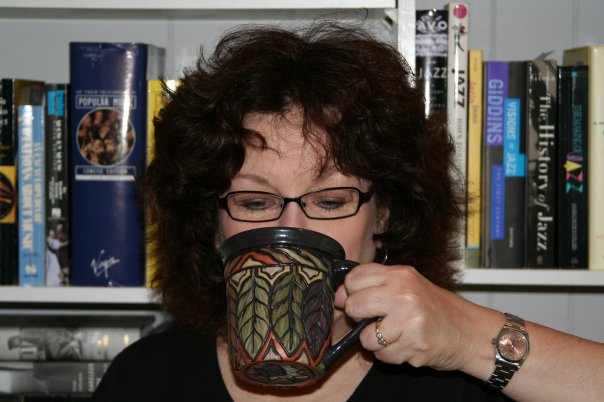

I write about jazz for my blog, bebopified.com; cover the arts (including jazz) for the Minnesota news and information website MinnPost.com; and write about jazz on occasion for the Minneapolis Star Tribune, NPR, and the Jazz Police website (jazzpolice.com). I’ve done some writing for Independent Ear. I wrote for Ted Gioa’s jazz.com when it was around. A lot of writers miss that website. I’ve done some jazz radio work with KBEM and KFAI in Minneapolis and have moderated a few pre-performance discussions with jazz musicians.

What has been your experience writing about music in general, jazz in particular and how did you get started down this road?

I’m a professional writer, and I write long hours for a living. So the very last thing I wanted to do was write about jazz. I just wanted to hear it and be around it. Jazz was my vacation from writing, my reward for getting my real work done. But then two things happened.

First, I went to a concert that moved me so profoundly I knew I’d want to revisit it, and I didn’t trust my memory. So I wrote about it. Then I asked a friend who runs a jazz website if he would publish my piece and he did. When that happened, my writing was out there, and that became the carrot that pulls the donkey along.

Second, I went to the Monterey Jazz Festival with a girlfriend and left my husband at home, which made me feel kind of guilty. I had such a great time at the festival that I wanted him to share the experience. So I wrote about it, for him. He still reads everything I write, and everything I write is, in part, a love letter to him. That may sound corny but it’s true.

Music has always been part of my life. I sang and played instruments as a child and through my teens. In my twenties, I took piano lessons, and returned to them again last year, mainly to learn the music theory I had avoided. In my freelance writing career, there was a time when I wrote a lot of music catalogs, so I picked up some terminology and also learned how to research and find answers to my questions. I built a library of books about music, heavy on jazz.

I wish I had started listening to jazz years earlier, but I didn’t. I was beginning to get really interested in jazz when a chance meeting led me to people who know a lot about jazz and were happy to share with a neophyte. Willard, I don’t have to tell you who those people were. I will always be grateful.

What was it about writing about jazz that attracted you to this pursuit initially?

Its absolute impossibility. This is the hardest writing I’ve ever attempted. Especially writing about live performance. How do you describe in words something so complex, intricate, passionate, and ephemeral? Jumping into the deep end, I started writing (or trying) about so-called free jazz early on. I love a steep learning curve. I never pretend to know something I don’t actually know, which leads to many opportunities to ask questions and engage in conversation with knowledgeable people.

Once I realized how much work this writing really is, I briefly thought about hanging it up, but the fact that so few women write about jazz (something I didn’t realize at first) kept me going. I don’t get to write as often as I would like, due to the demands of my freelance writing business and the need to earn a living. But I plan to keep writing as often and as long as I can. Jazz is my passion, and writing about it is a way to hear more of it, learn more about it, and (one hopes) generate more interest in this amazing music.

Would you describe your experiences writing about music as overall positive, and if so why or why not?

Overall positive, because I write what I want, when I want. That’s the reality of much writing today – no editors. I have often sought advice from those who know more about jazz than I do.

What’s frustrating is when I spend a long time on a CD review or an interview and it goes virtually unnoticed because I’m not writing for a jazz news site or print magazine. I wrote one of the earliest reviews of e.s.t.’s posthumous “301” http://www.bebopified.com/2012/05/last-words-of-est-301-cd-review.html – a thorough, knowledgeable review; I’ve been following this trio for years – and hardly anyone saw it. Ditto for my frank and lengthy interview with Kurt Elling earlier this year. http://www.bebopified.com/2012/02/kurt-elling-on-grammys-confidence-jazz.html

We write because we love the music, because we like to write, because we get to sit down and talk with jazz musicians – but also because we want to be read. So writing these days also involves a lot of self-promotion, which is not something I’m comfortable with.

Also frustrating is working so hard for little or no money, but everyone is talking about that and I have nothing new to add.

My most negative experiences to date have been with artists who disagree with something I’ve written. In general, I don’t write negative reviews, because I don’t have enough time to write all the good things I want to say about this music and its makers. And I’m not interested in the snotty, snarky writing that seems to attract a lot of readers. But once in a rare while, there’s something I really dislike for whatever reason. For example, a new CD by an artist whose music I usually enjoy, or a performance that goes south. In response, artists I once respected have turned into jerks, whining babies, name-calling bullies, and attack dogs. I moderate the comments on my blog, so most of the negative stuff never goes live. I don’t keep that kind of house.

I’ve been thinking a lot lately about a post Lyn Horton wrote for her blog, The Paradigm for Beauty. In it, she explains why she will no longer write for other jazz publications, only for her blog. http://lynhorton.blogspot.com/2012/05/renewal-starting-again-new-perspective.html

Women occupy an interesting place in the jazz pantheon; on the one hand women instrumentalists are in the distinct minority, at least as far as prominence, and on the other hand women absolutely dominate the ranks of jazz singers. What’s your sense of that imbalance?

Everyone should watch Judy Chaikin’s excellent documentary film “The Girls in the Band.” There’s a clip of Marian McPartland being interviewed by a TV host. He asks her if being a woman jazz pianist is a handicap, then says, “Now that I consider it myself, I think it’s a great advantage since you’re so decorative.” Women who play instruments aren’t especially decorative. They sweat, they assume unladylike positions, they blow out their cheeks. What we need are more men who are willing to play with women, and more women starting bands.

Would you describe yourself as a music critic or a music journalist and why?

Certainly not as a music critic. Maybe as a music journalist; I’m more comfortable with being called a journalist now that I’ve had several years of experience working for a news organization. But the term I’m most comfortable wearing is music writer. Or jazz writer. Sweet and simple.

It’s been suggested that one of the real keys to solving the critical jazz audience development issue is that those who present the music must find more creative ways to attract more women to their audiences; some wisdom suggesting that where more women go, men will surely follow. Is this an apt characterization of the jazz audience conundrum, and if so are there elements you might suggest to those who present jazz as to better attracting women audience members?

Many of the men I see at jazz shows have left their wives at home. There are some I ran into for years and got to know fairly well without ever realizing they were married. I’m not sure how to answer this question, though I will say that it’s a lot more pleasant to watch a band of well-dressed musicians than to see someone whose name I won’t mention in a dirty T-shirt, banging on the piano.

Clearly writing about music, and particularly writing about jazz, could well be characterized as “a man’s world.” Do you feel like that’s due more to the nature of the music or to some form(s) of overt exclusion from the “boy’s club”?

I don’t think this has anything to do with the nature of the music. I think it has more to do with stereotypes and discrimination, power and tradition. Most jazz musicians were and are men. There was a time when jazz was played in places respectable women couldn’t go. You can argue that journalism and publishing have been and still are men’s worlds/boys’ clubs. And what about jazz radio?

I’ve never thought of jazz in terms of men’s music/women’s music – though maybe I should, and see where that leads. Because jazz is so expressive, so full of emotion, are women better equipped to write about it than men?

How do your women friends and colleagues view you as a jazz writer?

Those inside the jazz world – as performers and audience members – think it’s great. Those outside the jazz world think I’m crazy for going out so often and staying up so late and hanging out with such scruffy characters.

Have you ever found it more difficult to pursue writing about music due to gender issues? If so please detail some of your writing challenges that may have been fairly or unfairly colored by gender.

I have not had personal experience of this – at least, not that I’ve been aware of. I don’t look for gender discrimination, and I’m not overly sensitive to it, so there are probably times when I don’t see it even when it’s there. I have written for at least one publication that has not, to my knowledge, published music writing by a woman until I came along. I knew that when I pitched them, but I didn’t make it a reason for hiring me or even mention it. I just brought them a good idea.

Any woman writer should read this article by Jillian Keenan, “How to pitch (stories) like a girl.” http://www.poynter.org/how-tos/newsgathering-storytelling/175528/how-to-pitch-stories-like-a-girl/

What can be done to encourage more women to write about music in particular, jazz in general?

Be a friend, be a mentor, invite them to jazz shows, introduce them to jazz musicians, talk with them about music and jazz, listen to what they have to say, point them toward good writing by women writers. Be confident and positive. Treat them seriously.

What have been some of the most personally satisfying music performances you’ve either written about or simply experienced over the last year?

Vijay Iyer at the Walker Art Center in Minneapolis. Two nights, six sets, including one with Wadada Leo Smith. The Three Cohens at the Village Vanguard. The Brian Blade Fellowship Band at Kuumbwa in Santa Cruz. Chick Corea and Bobby McFerrin at the Blue Note. The Bad Plus doing their annual Christmas show at the Dakota in Minneapolis. Kurt Elling at Orchestra Hall in Minneapolis. Theo Bleckmann at Macalester College in St. Paul. Bill Carrothers at the Monterey Jazz Festival. Helen Sung at Monterey. The singer Nancy Harms performing with pianist Jeremy Siskind and saxophonist Lucas Pino at Jazz Central in Minneapolis. The chamber group Accordo at Christ Church Lutheran in Minneapolis. I could go on.

Posted in General Discussion | 3 Comments

Taming the Weasel Horn

Several years ago we engaged the amazing veteran multi-instrumentalist Howard Johnson (tuba-flugelhorn-bari sax-pennywhistle, etc.) as one of our Tri-C JazzFest artists-in-residence. A major component of Howard’s residency was his participation in our concert “Slight Return”. This was our recreation of the Gil Evans charts for the music of Jimi Hendrix. One of Cleveland’s stalwart musician-educators, saxophonist Howie Smith, had approached me with the idea and I became immediately excited, being a devotee of both Gil and Jimi’s music and a fanatic about the RCA recording Gil made of his arrangements of Hendrix’ songs.

Howard Johnson had worked with Gil for many years, including the Hendrix recording, and had in fact taken to singing the vocal part to “Voodoo Chile” in Gil’s subsequent performances, some of which I’d been enthralled by during Gil’s week of midnight performances at the 1988 Umbria Jazz Festival. So Howie put together an ensemble to interpret Gil’s Hendrix charts, we brought Howard in to teach and play that gig, and imported Vernon Reid as guest guitarist. The result was a major blast, one of the highlights of 17 years curating Tri-C JazzFest. I’ve subsequently played pieces from that performance on my WPFW radio show, most recently during our July 4th daylong “Jazz Festival of the Air” broadcast.

That evening at TCJF Howard also served as MC, providing the audience with background on both his work with Gil and his love of Hendrix. He told a great story about living in the East Village in the neighborhood of the legendary Fillmore East when that joint was pumping. One New Year’s Eve, from a vantage point in the street nearby the Fillmore, Howard was amazed to hear Jimi, Billy Cox and Buddy Miles rehearsing and sound checking for what turned out to be the historic “Band of the Gypsys” live concert session. His description of the wall of sound that trio created was quite visceral and our audience ate it up. Anyway… Howard Johnson is a native Ohioan, having grown up in Massillon and played in Massillon High’s marching band at that noted high school football factory. Coincidentally Howard also had family in East Cleveland, OH. One day during Howard’s residency while driving him to visit his family we were idly listening to the car sound system when up popped some soprano saxophone playing. I could see that Howard was becoming visibly annoyed by the persistent, snake-charmer level soprano playing roiling out of the speakers; if there’d been pillows handy doubtless he would have covered his ears to escape the sonic ramblings of this particular perpetrator of tuneless sound. At a certain point Howard launched into what appeared to be a familiar diatribe against what he saw as the legion of chronically out-of-tune soprano players, the “weasel horn” as he dubbed it. Ever since I’ve been sensitive to out-of-tune soprano saxophone playing and I have to agree with Howard’s assessment: more often than not the great majority of musicians who generally double on soprano – being primarily either tenor or alto sax players – do indeed play that instrument off-key, captives of the weasel horn. Seems the soprano is an especially difficult horn to tame.

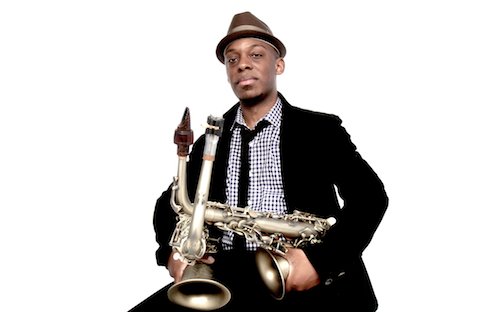
In the recent DownBeat magazine issue that highlighted its 2012 annual Critic’s Poll results (full disclosure: I’m a voting participant in that Critic’s Poll), there appeared an informative piece on this year’s Rising Star award recipient on the soprano saxophone, Marcus Strickland. It seems that his soprano saxophone has grown in prominence among his 3-sax arsenal and Marcus had some very intelligent things to say about his approach to the instrument. Following up on that DB piece I posed a question to Marcus about the difficulties of taming the soprano sax, using Howard Johnson’s “weasel horn” assessment as a touchstone. Here’s what Marcus Strickland has to say about wrestling the wild soprano.


That’s the main problem with the soprano saxophone, I concur with Howard. The reason that I and several other players such as Wayne Shorter, Branford Marsalis, Sam Newsome, Tim Ries, Kenny Garrett, Steve Wilson, Lucky Thompson, etc… play the instrument rather in tune and do not sound like a weasel is because we play the instrument just as often or even more than the rest of the saxophones. Through my studies I have found that the main reason most soprano saxophonists play out of tune is because of posture and lack of practice.

Many just use their soprano on occasional gigs, and therefore do not play it as often as alto, tenor or baritone. I have a genuine love for the soprano, so I write for and record with it as much as possible. As a result, many hire me to play both tenor and soprano.

On the technical side, many saxophonists tend to squeeze as they get in the higher range of the instrument. This action yields exaggerated results especially on the soprano. The trick is to realize that the execution of the high notes is manipulated by the airstream, not the emboucher. As the emboucher relaxes the reed vibrates more freely, and simultaneously the heightened arch of the tongue causes the airstream to accelerate – hence facilitating those extremely demanding high notes. That’s why Wayne has a warm (as opposed to shrill) cry in the high register of his soprano. Air, which is what my mentors have taught me about time and time again.

In short, I’m extremely mindful of intonation on all horns and constantly work at it.

Posted in General Discussion | Leave a comment

Jazz writing: A woman’s perspective Pt. 4

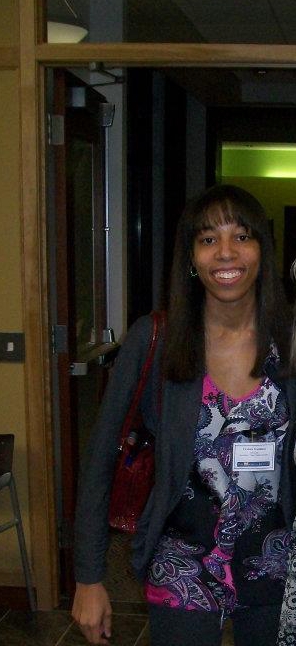
Part 4 in our series of dialogues with women jazz writers on their triumphs and challenges in the medium, and how gender may have influenced their experience, continues with a young woman in the early stages of her efforts at documenting the music in her community and beyond. Based in Detroit, one of the historic cauldrons of jazz history particularly as the birthplace of a raft of great musicians, Veronica Grandison was an early respondent to the beginning of this dialogue and we wanted to get a sense of the experience of someone relatively new to jazz journalism – and someone whose entry point was through web-based journalism, with particular interest in her story of how she became determined to write about jazz and other music.


VERONICA GRANDISON

I am currently a freelance writer for The Jazz Line, an online jazz news website. I write album and concert reviews, and also write feature articles on various jazz musicians. My work has appeared in Real Detroit Weekly, a metro Detroit entertainment publication, and Model D, an online Detroit based magazine. I also manage my own music blog called Roots, Rhythm, and Rhyme. I am in the process of starting an online magazine called ColorBlind, with two friends of mine. The magazine will be devoted to young, minority women ages 15-26, and will cover topics such as lifestyle, culture, politics, travel, and entertainment. The mission of the magazine is to present positive representations of women and celebrate their accomplishments. The magazine will be launched in Summer 2012.

What has been your experience writing about music in general jazz in particular?

My experience writing about music has been good so far. I am still in the very beginning stages of my career as a music writer, but I have received some great advice from other music critics and I am continuing to learn more about this remarkable art form. I love the idea of being able to express my opinion about music through the written word. People are always going to have opinions about topics such as music, politics, education, and so forth, but it is such an exhilarating feeling being able to share my opinion about something I am passionate about and allowing people from around the world to read my work.

What was it about writing about music that attracted you to this pursuit initially?

I have wanted to be a journalist ever since I was a sophomore in high school, and writing has been a passion of mine since I was very young. It was not until I reached college that I decided to fuse both my love for writing and music together. After taking a jazz music history course my freshman year of college, I became hooked on jazz and wanted to learn as much as I could about the music of artists such as Art Blakey, Benny Golson, Charlie Mingus, and all of these other brilliant musicians whom I had never heard of before. I wanted to inform everyone I knew about how important this music is to our culture, and how much of an impact it has had on American music itself. Once the class was over, I thought that one of the ways I could share my experience with jazz and encourage others to learn more about the music was to write about it. In addition to writing about jazz, I also find great pleasure in writing about the music that I grew up listening to like hip-hop and R&B. As a fan of music, I love the idea of being able to not only express my opinion about a particular song or musician, but being able to start social discussions that go beyond music. Society plays such an important role in shaping music and its rewarding knowing that one opinion could progress into something way beyond my expectations.

Would you describe your experiences writing about music as overall positive, and if so why or why not?

My experience writing about music has been overall positive. I have been able to connect with some great writers and learned so much about music writing from my mentor Charles Latimer, who is a jazz writer for the [Detroit-area] Metro Times. I have also been able to interview some incredible musicians that are continuing to elevate the standard of musical expression. Of course, there have been challenges along the way, mainly with me trying to make a name for myself in various music communities. When you are not well known, as in any field, that makes it more difficult to get published in magazines and journals. However, every time I see my work published, it just encourages me to continue to strive for excellence so that I can make a difference in the music journalism field.

Women occupy an interesting place in the jazz pantheon; on the one hand women instrumentalists are in the distinct minority, at least as far as prominence, and on the other hand women absolutely dominate the ranks of jazz singers. What’s your sense of that imbalance?

It is unfortunate that we have come so far as a country, both from a racial and gender related standpoint, and many female jazz instrumentalists are still not ranked on the same level as men professionally. I’m glad to see that there are a lot more female instrumentalists making a name for themselves, but when it comes to promotion and performances, sometimes the gender biases are still there. Take an artist like Esperanza Spalding for instance. She is a phenomenal bassist, but I believe it has been easier for her to claim the spotlight in jazz because of the fact that she is also a vocalist. Just like it was during the 30s, 40s, and 50s, the same is still true that it is much easier for women to get credit and take the spotlight in the jazz field if they are vocalists. But, I always think that just because many female jazz instrumentalists did not get credit during the heyday of jazz, it doesn’t mean that they were not around. For every Louis Armstrong there was a Melba Liston, and for every Count Basie, there was a Mary Lou Williams. The same thing remains true today. For every Branford Marsalis, there is a Tia Fuller, and for every Roy Haynes, there is a Terri Lynn Lyne Carrington.

Would you describe yourself as a music critic or a music journalist and why?

I see myself as both a music critic and music journalist. It is mainly a matter of what I am writing about and on what level. Coming from a news journalism background, I had gotten so used to reporting from an objective standpoint, so it took me a few years to get comfortable writing from a more biased perspective. As a music critic, I feel most effective because I do not have to sugarcoat anything and I can let my opinion speak for itself. However, I also feel that my voice can be heard as a music journalist because I can inform the public about various issues going on in the music business. I really have a lot of respect for music critics such as Amiri Baraka and Stanley Crouch, who were never afraid to voice their opinion about African American music, regardless of how unpopular their views may have been. They are critics who I aspire to be like.

Its been suggested that one of the real keys to solving the critical jazz audience development issue is that those who present the music must find creative ways to attract more women to their audiences; some wisdom suggesting that where more women go, men will follow. Is this an apt characterization of the jazz audience conundrum, and if so are there elements you might suggest to those who present jazz as to better attracting women audience members?

I don’t think it’s just mainly a matter of getting more women to attend jazz concerts, but how do we get more young people interested in the music and willing to come out to jazz concerts and festivals. I have attended plenty of concerts and seen many women there, but a majority of the women were older and either were with their husbands or were there alone.

I think the older you get, the less concerned you are with going to events with a group of people or having to be with someone when at a concert. I recently attended a jazz concert at a museum and there were more older women there than younger women and they were just as excited to be there as any other person.

I think social media has done a good job of promoting jazz events to the younger generation and it is an area that has helped to further bridge the gap between young and older jazz audiences. But, there can always be more done to encourage both women and our youth to be engaged in jazz.

I also believe that if female instrumentalists were promoted in the mainstream more often, then that could also help with attracting a larger female-based jazz audience. There have been times when I have gone to see Detroit based female jazz instrumentalists, and there have been more women in the room than men. But, if you are not really engaged in the jazz community or know female instrumentalists personally, then it is more difficult to find out when they are performing.

Clearly writing about music, and particularly writing about jazz, could well be characterized as “a man’s world.” Do you feel like that’s due more to the nature of the music or to some form(s) of overt exclusion from “the boy’s club”?

The music industry itself has always been viewed as a men’s club, and with writing it is no different. I do not necessarily believe it has a whole lot to do with the nature of the music, but mainly with who is in charge of things. Many magazines, or in particular music publications are run by men, and so that makes it more difficult for a women to move up the ranks if a man continues to hire other men in editorial and other managerial fields of the publication. In a perfect world, there would be an even balance of both men and women in management positions when it comes to the music industry or running a publication, and that would help with there being more female music writers as well as editors.

Have you ever found it more difficult to pursue writing about music due to gender issues? If so please detail some of your writing experiences that may have been fairly or unfairly colored by gender.

Thankfully, I have not yet come across any issues as a music writer where my gender has played a role in whether or not I get a writing gig. But, I can say just being a woman, and knowing that women are not in the majority when it comes to music criticism, that was somewhat of a discouraging feeling when I began to pursue a career in music journalism.

Most of the music writers whose work I read about in college and even to this day are men, and it has really taken some digging and searching to find many female music writers, particularly those who focus on jazz. So, when I read the work of writers such as Valerie Wilmer or Linda Dahl, it’s encouraging to know that they made it in spite of gender discrimination and that their struggles made it possible for me to achieve success as a music writer.

What can be done to encourage more women to write about music in particular, jazz in general?

There are a lot of female music writers out here and there is a growing number of female jazz writers. But, the reason why it’s hard to find them is because many are grouped into certain communities. If you are not active in the jazz community or read jazz magazines such as Downbeat or Jazz Times, then you wouldn’t know that many exist. I think it is important for writers, especially female writers to not be boxed into a particular category or to only associate themselves with one musical clique. I try not to label myself as only a jazz writer because I know that there are so many opportunities available in this field, and I want to take advantage of as much of it as I can. I hope that with the magazine I am starting, I will be able to give more young women the opportunity to write about music and pursue their passion in this field without having to go through a ton of steps before they have their articles published.

What have been some of the most personally satisfying music performances you’ve either written about or simply experienced over the last year?

Seeing saxophonist Benny Golson perform a few months ago was one of the highlights of my life. I have been a fan of his ever since I first heard him on Art Blakey’s Moanin album, and it was such a gratifying experience to not only see him perform classic tunes, but being able to write a review about his performance was also very rewarding. Robert Glasper is another artist who put on an incredible show this year. I thought his Black Radio album was a great collaborative effort, and it was cool to hear the entire album in a live concert setting. Some of my friends had not heard of Robert Glasper, so I was glad that my review of his concert and album encouraged them to want to listen to his music. I am really looking forward to the Detroit Jazz Festival, which takes place in a few weeks. I cannot wait to see Sonny Rollins and Wayne Shorter perform, who are both living jazz legends. I made it a mission to see a jazz legend whenever they come to town because I never know when they might come back to my city. Reviewing the festival performance of Rollins and Shorter will definitely be another highlight of my writing career as well.

Posted in General Discussion | 1 Comment