The Independent Ear

The Development of Jazz in South Africa – Pt. 2

This is part two of pianist-composer-educator Hotep Idris Galeta’s capsule chronicle of the history of jazz in South Africa.  Many agree, and Hotep confirms, that South Africa is arguably blessed with the broadest, richest history of jazz musicians and jazz expression this side of the music’s country of origin.  Last time (scroll down) Hotep left off with the destruction of the early jazz-powered dance hall scene in Sophiatown at the time of the draconian apartheid laws which destroyed several previously multi-racial communities in SA in favor of the enforced township exile of black citizens.


Part 2: THE DEVELOPMENT OF JAZZ IN SOUTH AFRICA

by Hotep Idris Galeta


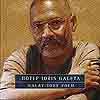
Cover of Hotep’s Malay Tone Poem release (Sheer Sound)
 

The 1950’s are remembered as the days of passive resistance against the Nationalist government’s institutionalized racism, but it is also remembered as a great age of Jazz development in South Africa.  A new strain of Jazz began to emerge which contained a greater American influence. This new strain was the result of the Bebop revolution in the U.S. Young emergent musicians such as Dollar Brand [later known as Abdullah Ibrahim], Chris McGregor, Johnny Gertse, Sammy Moritz, Makaya Ntoshoko Mra “Cristopher Columbus” Ngcukana, Jonas Gwangwa, Jimmy Adams, Early Mabuza, “Cups and Saucers” Nkanuka, Hugh Masekela, Kippie Moeketsie, Henry February, Anthony and Richard Schilder, Harold Japhta and this writer included took to this new exciting Jazz form from America like ducks to water.


The real milestone occurred when one of my future mentors to be, visiting American pianist and Jazz educator John Mehegan came to South Africa in the late 50’s on an American State Department sponsored tour.  After the tour he assembled a local group to record an album for Gallo Records entitled “Jazz in Africa”. Beside Mehegan on piano the group consisted of Hugh Masekela on Trumpet, Jonas Gwangwa on Trombone, Kiepie Moeketsie on Alto Saxophone, Gene Latimore on Drums and Claude Shange on Bass. When Mehegan departed for the U.S. Dollar Brand added Johnny Gertse on Bass and Makaya Ntoshoko  on Drums, creating a new rhythm section to which he added Masekela, Gwangwa and Moeketsie,  calling this new band “The Jazz Epistles”  One of the most dynamic and creative bands of the late 50’s. The band recorded two albums “The Jazz Epistles Vol. 1 and Vol. 2” played a few gigs around the country and disbanded when Masekela and Gwangwa left to study in the U.S. in 1960.


That unfortunately was the end of the line for that kind of American Jazz in South Africa. Many of the musicians who played it left the country because of the increasingly repressive political situation, this writer included. With the advent of the Avant Garde in the 60’s the “Blue Notes” led by Eastern Cape born pianist Chris McGregor together with saxophonist Dudu Pukwane, trumpeter Mongezi Feza, bassist Johnny Mbizo Dyani and drummer Louis Tebogo Moholo took up the banner and propelled the music in a new direction. They also had to leave the country but made a huge impact upon the European and British jazz scene with their fiery brand of South African Avant Garde Jazz. It is only Louis Tebogo Moholo that is alive today. The rest of them all died in exile before they could experience the freedom of democracy in the land of their birth. Many stayed and continued to produce creative music in a political environment that became increasingly oppressive and brutal.


In the province of the Western Cape in the city of Cape Town musicians such as Basil “Mannenberg” Coetzee, Robbie Jansen, Paul Abrahams, Chris Schilder, Gilbert Matthews, and many others too numerous to mention gave their commitment, time and creativity to the struggle for democracy. They used South African Jazz as a platform and became deeply involved in the struggle for democracy on a creative level using their music as a clarion call for liberation at United Democratic Front political rallies in the townships.


Today in a democratic South Africa jazz is thriving in an environment of freedom and racial reconciliation. At present there exists an up and coming core of extremely masterful young musicians, both black and white. Some of them are graduates from tertiary institutions here in South Africa with vibrant jazz education programs and some come from community jazz education programs.  Gloria Bosman, Judith Sephuma, Melanie Scholtz, Zim Ngqawana, Kevin Gibson, Andile Yenana, Lulu Gontsana, Mark Fransman , Eddie Jooste, Buddy Wells, Paul Hamner, Keshivan Naidoo, Dominic Peters , Andre Petersen, Victor Masondo, Marcus Wyatt, Herbie Tshoali, Themba Mkize and the late Moses Taiwa Molelekwa. These are just a few of some of the new innovative core of younger South African musicians who are responsible for taking the music into a new creative direction. Their vision and innovative approaches is creating a significant impact upon the South African jazz scene by the development of new concepts and ideas within the South African jazz genre. This bodes extremely well for the development of jazz in South African which like in Nazi Germany some sixty odd years ago had been suppressed and stifled during the turbulent apartheid era.


                             Copyright: by Hotep Idris Galeta            



Posted in General Discussion | 5 Comments

Tweet: Voice Your Choice!

Friend, colleague and veteran journalist-commentator Howard Mandel has launched a very clever and useful campaign in response to the dire jazz audience reportage that has been flying out here recently in response to the recently-released — and deeply flawed — National Endowment for the Arts audience survey, and subsequent teeth-gnashing of Ted Gioia in www.jazz.com and Terry Teachout in the Wall Street Journal.  Like many of us — including Nate Chinen in his follow-up piece in the New York Times, Howard is skeptical, feeling the survey was flawed in overlooking what he characterizes as "…a significant segment of the vital audience for live jazz today…"


The intrepid Howard Mandel: on the case for a truer picture of the jazz audience


In response he is advocating for the following social networking experiment which The Independent Ear wholeheartedly endorses; Howard writes…


A campaign has been launched on Twitter to prove there IS a large, vigorous audience for live jazz.  It’s not a promotional effort for upcoming events, but rather a shout-out about what music jazz people have just heard, WHO and WHERE with the hashtag #jazzlives (all within Twitter’s 140 character limit).  This is somewhat in response to the NEA’s 2008 data about diminishing and aging audience at live jazz events (and all other arts events), which I believe undercounted a significant segment of the populace, probably including those who use social networking media to stay in touch and energize each other around their entertainment preferences.  It’s also an experiment about the use of Twitter for jazz, whether such a campaign can go viral, maybe move to other social networking platforms, and whatever else may result.


So, if you Tweet (and Twitter accounts are free), please send a message that jazz lives!  Tell the world WHO you heard, WHERE [you heard them], and include #jazzlives in the message.  We ought to be able to work up a new metric (though it won’t be a certifiable statistic) demonstrating the energy and breadth of jazz listeners, especially in the US over the weeks starting with the Charlie Parker Fest in NYC this weekend, including Labor Day weekend’s jazz fests at Tanglewood, in Detroit, Chicago, LA (both the Angel City and Sweet & Hot Music Fest), Philly (Tony Williams Scholarship fest), Jazz Aspen Snowmass, Vail Jazz Party, Bumbershoot in Seattle, Getdown fest and campout, leading to the Monterey and BeanTown (Boston) fests.  It’s not ONLY about audiences at fests though — Tweet about jazz heard in stand-alone concerts, in clubs, in the streets and subways, anywhere jazz lives.  Jazz heard in live-broadcast on the radio or online counts!


The hashtag, by the way, is essential — it’s what enables us to see all the campaign’s Tweets together, to count them up.


A widget has been created to show the Tweets scrolling as they come out in real time — you can see this widget on my website — www.HowardMandel.com, and I hope soon at www.Jazzhouse.org — you can also embed this widget on your own website — get the code from Darcy James Argue’s Secret Society vkif, http://secretsociety.typepad.com/


If you aren’t on Twitter, you can advance this effort by mentioning it in blog postings, on broadcasts, to friends, through email…  I wonder if there are as many listeners who will Tweet they’ve heard live jazz in the next few weeks as there were people at Woodstock.


Write to tweetjazzlives@gmail.com for further info…

Posted in General Discussion | Leave a comment

Songs That Made the Phones Ring: July/August ’09

This new feature is in the spirit of one of the better people it’s been my pleasure to meet in this music, the late record producer and former jazz deejay Joel Dorn.  Joel, who had nine lives in this business, once produced an exceptional CD compilation of songs that made the studio phones light-up when he was on the air, this is the first in what I envision as a monthly listing of songs that made the phones ring on the Ancient Future radio program (scroll down for weekly playlists).  At WPFW we have an open listener contact policy where listeners are encouraged to call the on-air studio to make comments or seek further information on the music we’re playing.  So for the months of July & August 2009 these were the new/recent release songs that consistently drew positive listener calls and inquiries (listed in the following manner ARTIST-"TUNE"-ALBUM TITLE-LABEL in no particular order):


Oran Etkin

"New Dwelling"

Kelemia

Motema


Jack DeJohnette-Danilo Perez-John Patitucci

"Tango African"

Music We Are

Goldenbeams


Eddie Harris/Ellis Marsalis

"Out of This World"

Homecoming (reissue)

ELM


Lauren Dalrymple

"Stella By Starlight"

Copasetic

SoFF


Chris Potter

"Ultra-Hang"

Underground

ArtistShare


Jackie Ryan

"’Dat ‘Dere"

Doozy

Open Art


Babatunde Lea’s Umbo Weti

"Sun Song"

"The Creator Has a Master Plan"

Live at Yoshi’s: A Tribute to Leon Thomas

Motema


Kurt Elling

"It’s Easy to Remember"

"Nancy With the Laughing Face"

Dedicated to You

Concord


Abshalom Ben Schlomo

"We Need Peace"

Babylon Has Fallen

(unlabled)


Steve Lehman Octet

"Living In The World Today"

Travail, Transformation & Flow

Pi


Kevin Hays

"Cheryl"

You’ve Got a Friend

Jazzeyes


Melissa Walker

"The Other Woman"

"Forget Me"

In the Middle of It All

Sunnyside


contact:

Willard Jenkins

Open Sky

5268-G Nicholson Lane

#281

Kensington, MD 20895


Posted in Records | 1 Comment

Ancient Future – the radio program: 8/27/09 playlist

Ancient Future is produced-hosted by Willard Jenkins on WPFW 89.3 FM, Pacifica Radio in Washington, DC.


Celebrating the Lester Young Centennial

Lester Young

Lester Leaps In

Aladdin Sessions

Blue Note


Lester Young

These Foolish Things

Aladdin Sessions

Blue Note


Billie Holiday

He’s Funny That Way

Lady Day

Legacy


Lester Young

I Ain’t Got Nobody

Classic Columbia, Okeh, Vocalion

Mosaic


Lester Young

I Want to Be Happy

Complete Lester Young Studio Sessions

Verve


Billie Holiday

I Must Have That Man

Lady Day

Legacy


News break with Jonathan Miller


Lester Young

Indiana

Complete Lester Young Studio Sessions

Verve


Lester Young

You’re Getting to Be a Habit With Me

Complete Lester Young Studio Sessions

Verve


Lester Young

I Want to Be Happy

Complete Lester Young Studio Sessions

Verve


Wallace Roney @ Bohemian Caverns this weekend

DC Poetry Festival 8/28 @ Carter-Barron Amphitheatre

Wallace Roney

Ebo

Village

Warner Bros.


Gil Scott-Heron

Wiggy

Free Will

Flying Dutchman


Wallace Roney

Just My Imagination

Mystikal

HighNote


Wallace Roney

Let’s Stay Together

Prototype

HIghNote


Sekou Sundiata

Blink Your Eye

The Blue Oneness of Dreams

Mercury


Soundviews new release feature-of-the-week

Joe Locke-David Hazeltine Quartet

One for Reedy Ree

Mutual Admiration Society 2

Sharp Nine


Joe Locke-David Hazeltine Quartet

Pharoah Joy

Mutual Admiration Society 2

Sharp Nine


Joe Locke-David Hazeltine Quartet

The Peacocks

Mutual Admiration Society 2

Sharp Nine


Wallace Roney

Gone

Seth Air

Muse


What’s New?: the new release hour

Stefon Harris

Gone

Urban Us

Concord


John Surman

Kickback

Brewster’s Rooster

ECM


Melissa Walker

The Other Woman

In the Middle of It All

Sunnyside


Melissa Walker

Forget Me

In the Middle of It All

Sunnyside


Steve Lehman Octet

Living in the World Today

Travail, Transformation & Flow

Pi


Vijay Iyer

Big Brother

Historicity

ACT


Dizzy Gillespie All-Stars

If You Could See Me Now

I’m Beboppin’ Too

HalfNote


contact:

Willard Jenkins

Open Sky

5268-G Nicholson Lane

#281

Kensington, MD 20895

Posted in Records | Leave a comment

Careers in Jazz: The Wicked Humor of Bill Anschell

Pianist-composer and humorist Bill Anschell (Google this guy and that’s exactly the heading for his www.billanschell.com web site) recently posted perhaps his most comprehensively dark humor piece yet, at All About Jazz (www.allaboutjazz.com).  (It should be noted here that Bill Sent The Independent Ear a copy of the piece at the approximate time AAJ published it, so I had a fall-down-laughing preview.)  Titled "Careers in Jazz" the piece pokes fun at the various stages and characters who occupy this often circuitous jazz life, with a particularly wicked, no holds barred look at several tiers of the jazz musician’s life — from wedding band and incidental music jobbers to the relative elite who make records and tours. 


Bill Anschell: No doubt seeking the humorous chords in his keyboard


Bill’s piece comes at a particularly fortuitous time as the jazz community reels from the dire "…oh jazz, ‘po jazz, woe is jazz…" dissections of the recent and quite questionable National Endowmwent for the Arts audience survey, particularly those written by Terry Teachout in the Wall Street Journal and Ted Gioia in www.jazz.com; those sobering pieces were followed by Nate Chinen’s quite reasonable what’s all the fuss about? follow-up in the New York Times — which prompted drummer-percussionist-educator Bobby Sanabria waving the red flag in the Latin Jazz Group posts on Yahoo.


Perhaps certain folks’ emotions were a bit raw in response to the dark findings of that NEA survey about the eroding audience for jazz, but curiously some folks missed the humor in Anschell’s piece entirely, including at least one coward hiding behind a pseudonym.  (Come on people, when you make a comment in response to a by-lined piece whose author makes no bones about his/her identity, at least have the courage of your supposed convictions by using your real name for God’s sake!)  I’ve known Bill for many years, dating back to his days as an arts adminstrator first at the Association for Performing Arts Presenters, then the National Endowment for the Arts, and finally at Southern Arts Federation where he produced an outstanding series of compilation recordings spotlighting under-publicised jazz artists in the southeast region.  Some may not know it but Bill’s also a damn fine pianist in his own right, winner of a Golden Ear Award for Acoustic Jazz Ensemble of the Year in the Northwest, where he makes his Seattle home base.


But more to the point Bill Anschell is a first-class humorist.  You know how certain jazz musicians have cleverly diversified their audience reach (and subsequent presenter appeal) by making themselves available in myriad band contexts and projects?  I’m almost certain Bill Anschell could comfortably add a stand-up comedy routine to his serious trio performances and broaden his reach, the guy’s sense of humor is that impish.  In the past he has entertained his friends and fans with his series of humor-based newsletters; more recently his pieces have appeared in AAJ.  Bill and I "virtually" shook our heads in recent email exchanges about how certain respondents to his "Careers in Jazz" piece just didn’t seem to get it.  So I asked Bill for a short follow-up to "Careers in Jazz" for The Independent Ear.  Here’s what he wrote:


I was making fun of myself at least as much as I was pointing at anyone else.  I pretty much always do.  I’ve been several of these categories: Gig Whore (gotta take the high-paying gigs when they come along, and yes — the old cruise ship gig fits that profile too, though the money was lame), Career Professional (aka Arts Administrator), Educator (adjunct at Georgia State University), and Working Wife (we split the income burden about down the middle).  At best I’ve peripherally approached being a Chosen One through my touring with Nnenna [Freelon], and with my trio, and some nice concerts and recording sessions I do [in Seattle] from time to time, but there’s no way I qualify as being among the elite.  The people who have objected to the piece seem to think I see myself as above the fray, and it couldn’t be less true.  Almost all my stories are drawn from my real life experiences.


The online posts ragging on my story are written in a woe-is-me tone that reminds me of the people that used to sabotage jazz conference sessions by going on endlessly about the indignities they face as jazz artists.  I’m sure you know what I’m talking about.  The biggest irony of all is that my story’s premise is essentially that an uncaring world forces artists to take all these ridiculous career paths, and while I do make fun of the paths, it’s not with the loathing toward the artists that they seem to want to ascribe to me.  Jazz artists are my favorite group of people in the world.


From what I can tell, about 90% of the artists really enjoyed it (I’ve received more positive emails than I can keep track of), but the negative reaction from the other 10% blindsided me because I wasn’t expecting there to be any.  It just blows me away how people can be utterly unable to laugh at themselves.  That may be a widespread issue in the jazz world: People are so serious about the music (good) that they get equally serious about themselves (bad).

                            — Bill Anschell August 25, 2009


You can read more of Bill’s self-deprecating humor about himself and the jazz world at www.billanschell.com and look for his past contributions to All About Jazz as well at www.allaboutjazz.com.


Posted in Artist's P.O.V. | 3 Comments