The Independent Ear

Part 6: What musicians expect from music journalists & critics

Responding to the burning question:
WHEN YOU READ MUSIC JOURNALISM/CRITICISM WHAT QUALITIES ARE YOU LOOKING FOR IN THE WRITER AND THE WRITING?
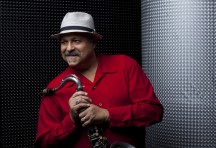
This installment: Joe Lovano & Jason Miles

JOE LOVANO:

The qualities I look for are: A Clear response to the music with Wisdom, Knowledge, Love, Passion and Honesty… The same qualities I look for from the musicians playing it…

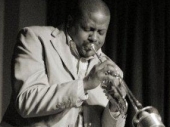
JASON MILES:

I look for someone who convinces me they are a legitimate writer and know their craft and has a sense of the subject they are writing about. Having a blog doesn’t make one an expert on the subject. I very much pay attention to who is writing as I want to know there is a true sense of legitimacy. I have chosen to do this and can take whatever is dished out but I am confident in what I do and know that not everybody is going to be onboard.

Posted in General Discussion | Leave a comment

NEA Jazz Masters program still hanging in…

NEA Jazz Masters Program Finds New Support for Federal Funding

The U.S. House of Representatives’ Committee on Appropriations recently insisted on the continuation of the 29-year-old Jazz Masters fellowship, which was recommended to be cut earlier in the year by the National Endowment of the Arts. The 2012 appropriations bill submitted by the Department of the Interior, Environment, and Related Agencies (which includes NEA appropriations) was approved by the Committee only under the stipulation that the Jazz Masters program continue.
The Appropriations Committee’s bill still awaits a full floor vote from the House of Representatives, review and approval by the Senate Appropriations Committee and the full Senate, and final enactment by President Barack Obama. This leaves a lot of room for amendment and adaptation.
Find more info at www.nea.gov/national/jazz.

CALL/WRITE YOUR CONGRESSPERSON AND SENATORS

Posted in General Discussion | Leave a comment

New book chronicles the life & times of NEA Jazz Master David Baker

New book celebrates David Baker’s career as jazz musician, composer and master teacher

BLOOMINGTON, Ind. — David Baker has received just about every honor imaginable in his 60-year career as a jazz musician and educator. The Distinguished Professor at the Indiana University Jacobs School of Music has recorded extensively, been acclaimed for his playing, writing and arranging, and done more than just about anyone to establish and shape college-level teaching of jazz.

He has been named a national Living Jazz Legend, an Indiana Living Legend and a NEA Jazz Master. And he is the author of countless books on jazz pedagogy, theory, improvisation and history.

Monika Herzig (left) with friend, mentor and book subject David Baker
Print-Quality Photo
But never has he been the subject of a book — until now. David Baker: A Legacy in Music, published by Indiana University Press and scheduled for release next week, celebrates Baker’s life and his work as a musician, composer, author, arts advocate and, especially, teacher and educator.

Monika Herzig, the book’s primary author and editor, is a professional jazz pianist and a lecturer in the Arts Management Program in IU School of Public and Environmental Affairs. When she learned that no one had produced a book about Baker, her mentor and friend, she decided to do the job herself.

“I owe him so much,” she said. “This is a very special thing to be able to do.”

The release of the book and a book launch concert and signing on Nov. 6 anticipate Baker’s upcoming 80th birthday. An official Jacobs School of Music birthday celebration will take place Jan. 21, 2012. Information will be posted at http://blogs.music.indiana.edu/bakercelebration/.

While it includes rich details about Baker’s life, David Baker: A Legacy in Music isn’t a biography but a tribute focusing on Baker’s work and career. It is accompanied by a full-length CD and includes a foreword by Quincy Jones and photographs from throughout Baker’s career, including pictures with music legends J.J. Johnson, Dizzy Gillespie, James Moody, Wes Montgomery and Josef Gingold.

Along with Herzig, seven other colleagues and former students contribute chapters on Baker’s early years in Indianapolis, his rise as a New York trombone star with the George Russell Sextet and other groups, his move from jazz clubs to the academy, his rigorous approach to teaching, the music he has produced with the Bloomington-based 21st Century Bebop Band and as leader of the Smithsonian Jazz Masterworks Orchestra, and his accomplishments as a composer and arts advocate.

Contributors include Jacobs School of Music faculty members Lissa May, David Ward-Steinmann and Brent Wallarab; University of Pittsburgh Director of Jazz Studies Nathan Davis; Smithsonian Institution Curator of American Music John Edward Hasse; promoter and author Willard Jenkins; and Thelonious Monk Institute Director of Education JB Dyas. The project is supported by a grant from the National Endowment for the Arts.

For his part, Baker says he is profoundly grateful for the appreciation shown by the project, and thankful that Herzig is the one who took it on. “She knows the music, she knows how to play the music, and she’s a composer and a recording artist,” he said. “I can’t think of anyone else I could have worked with on this.”

He is also grateful for his career, which he attributes to hard work rather than innate talent. And he is philosophical about the turns that it took. Complications from injuries suffered in a serious traffic accident forced Baker to stop playing trombone in the 1960s. He took up the cello, became proficient on the new and difficult instrument and redoubled his dedication to teaching, composition and arranging as a member of IU music faculty.

“If it hadn’t been for the accident, I’m not sure I would have ever become a teacher,” he said. “When one door closes, another door opens.”

Baker continues to work hard, chairing the Jazz Studies Department, directing a student jazz ensemble and teaching current classes on jazz history, bebop and improvisation. Despite having taught for decades, he prepares anew for classes and expects to learn as he teaches.

“It’s a constant learning process,” he said. “I can’t imagine there’s any reason to be an educator if you’re going to stand still.”

Related events

Also in connection with Baker’s birthday, WFIU radio’s “Night Lights” program will broadcast a two-part special Dec. 10 and 17 drawing on interviews for the book, host David Brent Johnson’s interviews with Baker and composer-music historian Gunther Schuller and featuring Baker’s jazz and “Third Stream” music. It will be archived at http:// indianapublicmedia.org/nightlights.

On Dec. 21, there will be a formal dinner and concert at the Columbia Club in Indianapolis, featuring the Buselli-Wallarab Jazz Orchestra playing Baker’s original music. VIP tickets are $150 and include dinner, drinks and a newly re-issued CD of the Buselli-Wallarab orchestra playing Baker’s music.

An IU Press audio podcast of an interview with Baker and Herzig can be heard at http://ht.ly/6Xu5j. Copies of David Baker: A Legacy in Music may be purchased online from IU Press. To speak with Herzig, contact Steve Hinnefeld at University Communications, 812-856-3488 or slhinnef@iu.edu.

Copyright © 2010 The Trustees of Indiana University | Copyright Complaints

Posted in General Discussion | 1 Comment

The Poetry of Walter Bishop, Jr.

Besides being one of the quintessential second generation bop pianists, the late Walter Bishop, Jr., who played with a broad range of masters, from Charlie Parker and Miles Davis to Archie Shepp and Makanda Ken McIntyre, was a man of letters, authoring two instructional books, and even doing some acting in his day. He was also a serious poet and member of the poetry society known as Poets Four. Special thanks to the gracious lady Valerie Bishop for sharing some of the unique poetic expressions of Walter Bishop, Jr. which the Independent Ear will share with you over the next few weeks.

Cover of Coral Keys (Black Jazz), one of Walter Bishop, Jr.’s essential recordings

Relaxin’ With Max, The Invincible Roach
by Walter Bishop, Jr.

There was a Roach named Maxwell. He was unusual in that he could fly, having been born with wings.
He also played the drums, of all things. From his home in South Carolina, he came to the Big City, via
Brooklyn. There he got hooked up with some other insects.

Let me see… there was a Yardbug that flew in from K.C. And man, he could play the blues on alto, like
you never heard. A Birks-bug from South Carolina, could play notes on the trumpet that would make
you Dizzy. There was The-Lonious-Bug from North Carolina, who played piano. To my mind, he was the
strangest bug of all! And they say he was born ‘Round Midnight. I don’t doubt that at all.

These, plus some other bugs got together and they created some of the damnedest music you ever
heard. Soon, the other insects spread the word. They proclaimed, “A New Music is Born.”

Be-Bop it was called. It spread like wildfire. Grasshoppers did the lindy to it. Even the jitterbugs
waltzed to it. All the insects wanted to learn it. But you couldn’t be jiving. You had to earn it.

Well, these creatures used to congregate at a spot in Harlem called the Bug House. Insects came from
far and wide. They came crawling, running and flying. Society got the word that the bugs and Roaches
were infesting Harlem with this new music, and decided to exterminate the creatures. They came with
insecticides, pesticides, DDT, Black Flag and others. They sprayed and sprayed and kept on spraying.

The creatures prayed and prayed and kept on playing. Do you dig what Ahm saying? Instead of dying,
they kept multiplying. Then, they brought in the big Rock to crush them.

Well, that did slow them down a bit. Because they all couldn’t survive it. It even left Max un poco loco.
They couldn’t kill Birks, they just made him stronger. The-Lonious, I’m told, is hidden away to last a little
longer. The Yardbug flew to the higher ground. But what he left will always be around. Remembrances,
too, to Buggs Dwyer. One of the lesser known creatures – not a flier.

Now Max is alive and well. Playing the song they couldn’t quell – Freedom Now.

Thank you, Max, for showing me the way.

Your friend, Walter Bishop, Jr.

Posted in General Discussion | 2 Comments

Part 5: What Jazz musicians expect from music journalists & critics

Part five of our ongoing dialogues with musicians where we ask the burning question:
When you read music journalism and criticism what qualities are you looking for in the writer and the writing?

This time we hear from trumpeter-bandleader-educator Sean Jones, a busy man these days what with his teaching assignments at Duquesne University in Pittsburgh, his artistic direction of the Cleveland Jazz Orchestra, leading his own band and putting in sideman work here and there. Sean’s latest recording is “No Need For Words” (Mack Avenue). And we travel west to the Bay Area of San Francisco to hear from pianist-bandleader Mark Levine, who in addition to leading his Latin Tinge band is one of the plaintiffs in a landmark lawsuit against the Grammy Awards for their recent draconian decision to summarily eliminate several awards categories – notably for Levine, the former Latin Jazz category – without so much as consulting membership. Mark’s latest recording is “Off & On – The Music of Moacir Santos”.

SEAN JONES

“If I am looking at a journalist’s work, I tend to research their credentials (i.e. music experience). After researching I then do my best to read the review or writing from what could be their perspective based on those credentials. But honestly, I do my best to avoid reviews as they are simply opinions based on one’s personal taste and what they believe is either good or bad.”

MARK LEVINE

“I generally don’t read jazz criticism, unless its a review of a gig or a CD of my own. To me, to quote Woody Allen (I think) “talking about music is like dancing to architecture.

“Jazz journalism is a different subject than criticism, of course. I’m enjoying the new book on Monk, and I’ve enjoyed a few other biographies and autobiographies. I’m still waiting for a good one on Coltrane. I’ve read and re-read the ones on Strayhorn, Mingus, the various ones on Duke, expecially the most recent one. I like biographies when they are written to show the context of their time, which means thoughtful and honest talk about the racism that colored (pardon the pun) the music biz at the time, and still is present in the jazz world, albeit thankfully much less than when I started playing.”

Posted in General Discussion | Leave a comment