The Independent Ear

The Opera House Arts/Deer Isle Jazz Festival story

As pert of my coordinator responsibilities with Arts Midwest for the National Endowment for the Arts Jazz Masters Live grant program, one of the more pleasant and revealing aspects is conducting the occasional site visit to funded activities. On the weekend of August 4-5 Opera House Arts, located in Stonington, Maine, presented its 12th annual Deer Isle Jazz Festival. The Opera House is located on Deer Isle in the town of Stonington (pop. 1500+), which is located on the coastal tip of central Maine. You get to Deer Isle, on Penobscot Bay, by flying into Bangor, Maine and driving 60+ miles down winding, multiple turns State Route 15 (follow the yellow line). On arrival, parking on the main street right across from one of the fishing docks on the bay, the renovated dark green Opera House beamed like a welcoming beacon, replete with a NEA Jazz Masters banner on its side. Inside is an acoustically-inviting 250-seat venue, with rows of vintage wooden theater seating, and a lively and inviting retail area in back; it should be noted here that the Opera House enables its patrons to partake of refreshments at their seats.

You can read our earlier Independent Ear dialogue with saxophonist Roy Nathanson on his experience in residence and performing on the festival by visiting our Archives. The second day of the festival featured the NEA Jazz Master pianist-composer-bandleader Kenny Barron. That Sunday afternoon featured Kenny in a public interview conducted by Deer Isle Jazz Festival curator (and 2012 JJA Awards Jazz Journalist of the Year) Larry Blumenfeld, followed by a remarkable Kenny Barron Trio performance in the evening. In between Larry’s interview and Kenny’s performance I cornered Opera House Arts founding executive director Linda Nelson for some background on this wonderful place. Ms. Nelson, a sharp, lively, quick to laugh woman proved quite insightful. The Opera House story is deeply instructive on the unique public benefits of arts funding, as well as the benefits of presenting what some consider a purely urban, big city phenomenon – namely jazz music – in a decidedly rural, small town setting. Larry had been telling me about this unique place for years, and he proved to be on the money!


Opera House Arts founding executive director LINDA NELSON

Linda Nelson: I’m the founding executive director of Opera House Arts, which we created to restore [Stonington Opera House] in 1999.

How does this whole jazz festival fit into your artistic schedule?

LN: It’s actually become a cornerstone of our schedule, which is really based on the quality of what we do here. We started it not knowing how it would be received and how jazz would play up here but it really quickly became something that the demand was there for it every year, and by working with Larry, and in collaboration with Haystack, we were really able to build a program that people have really responded to.

I think what they’ve responded to the most is… The improvisational aspect [of jazz] is really important for us in terms of how we think about creativity and performance; our whole thing about performance is what we do in everyday life and what we’re hoping to do here by having really excellent performances and getting people to participate in that and view it is to continually increase people’s everyday performance and how they are as citizens in our community, and therefore strengthen our community.

So the improvisational piece is how you create, how you collaborate with people, and how you listen to people is what jazz is so cool about, in terms of how the musicians play off of each other and listen to each other. Those are strengths we feel are really important to… people being in meetings, school boards and things like that. So that piece, the improvisational aspect of [jazz] – the different band members playing their parts, is really important to us; so that’s philosophically where that fits for us.

So you see a line running through what you present onstage and how people interact in everyday life?

LN: Yes, and that was kind of our belief in the beginning when we wanted to do the theater, that kind of broad notion of performance, and how that’s you & I talking here, its how we vote, how we do our jobs… its more obvious to folks like lawyers and preachers, teachers – people who really seem performative, but for everyone there’s an aspect of performance in what they do. We find that working with kids, and also working with adults, the more that we can strengthen some of those skills – especially listening, but also the ability to innovate and to improvise, it just makes stronger citizens.

Some might view a community like this as being a bit conservative, perhaps because of the vacationer aspect – it takes money to vacation or have a vacation home in a place like this… Clearly the program that you’ve established during the 12 years of this festival has been far from conservative.

LN: I hope so [laughs]. I think that what we’ve done well – and I like to quote Michael Kaiser on this (we have a partnership on this with the Kennedy Center) ; he has really said, especially with the recession and all, you don’t get anywhere by being conservative, you have to take risks, you have to keep making new stuff, otherwise people aren’t going to want to come to see you. So we’ve really kind of made a reputation of taking risks here… with the jazz but also with other things.

We had a concert a couple of months ago that kinda fell flat on its face. It was a brand new idea we were doing, and it just didn’t work spectacularly, but its not like people appreciated that we were trying to do something new with the schedule. It really is about that kind of risk-taking, and the community for the most part seems to appreciate.

Our Shakespeare piece this year had a live snake onstage and we started off with Cleopatra in the nude, which was set in our new venue, which is an 1870 former Baptist church. So there were all kinds of risks we were dealing with in terms of the community, and they all played beautifully. We were in dialogue with people, and I think people here feel like we respect them and even when we take risks there’s nothing disrespectful about what we do in those risks.

What’s your sense of the Opera House being awarded this NEA Jazz Masters Live grant for this Kenny Barron engagement?

LN: I’m the grant writer, as well as the executive director, so Larry and I worked on it together and I was just so honored that we could get somebody of Kenny’s caliber to come up and play in a 250 seat venue – at what we call ‘the end of the world’, because as you know its not that easy to get here – and all of the artists we’ve brought up… we had Charles Lloyd last year, we brought Jason Moran, and we’ve had a lot of great artists; they’ve been so giving and generous in their spirit, and its not easy for them, they’re traveling all the time. So we try to make it as easy as possible with the hospitality and everything… But the honor of being one of 12 [grant recipients] in the nation – we’re so small, we’re in a rural community, we don’t have a big catch pool and we don’t have a big theater – 250 people are going to see Kenny tonight, which is fantastic, but I think the word about that, and the trickling out from that, affects more than the 250 people that are here tonight, and I think that’s what’s important.

There’s a huge sense of pride in this community right now for what the Opera House does; they see the NEA banners on the side of the building, they read about us in the national press, and they’re kind of amazed that this humble 100-year old building is able to present this caliber of talent. This is a community which takes pride in what it does and we consider that we have the best and the most lobsters in this community and there’s just a lot of pride in the community, and the opera house is part of that – even when its bringing in someone they’ve never heard of before.

Bringing the arts to rural communities – and really into the heart of rural communities – instead of just to urban areas where people are kind of self-selecting, there’s audience there that knows about these guys; we do a lot of work to market these guys. It doesn’t seem like we’d have to because Kenny’s a Jazz Master, but up here where people don’t know that much about jazz… We actually used the NEA Jazz Masters thing a lot; we’ve told our audience ‘this is who Kenny Barron is, you come for the quality even if you don’t know his music, and be introduced to a whole new world of really amazing jazz.’

Its clear from last night’s audience for Roy Nathanson Sotto Voce that there’s a certain trust factor amongst your audience, that people will come because they’ve come to expect quality, even if they are not as familiar with an artist. I doubt if all of those people had heard of Roy Nathanson before last night.

LN: Exactly, that’s a very good point; more people have heard of Kenny than Roy, even though we had a good house for Roy. And again, even with the jazz sometimes we’ve stumbled. In fact last year we had the wonderful young pianist Matthew Shipp, who’s a real risk-taker. Roy is great for us because he engages with the audience so much, he’s so much about engagement and Matthew is a little bit less like that; so we got a little bit of flack… But they come back; they don’t say ‘well, you did that last year and I’m never coming back.’ They were all back for Roy.
Posted in General Discussion | 3 Comments

Jazz writing: A woman’s perspective Pt. 3

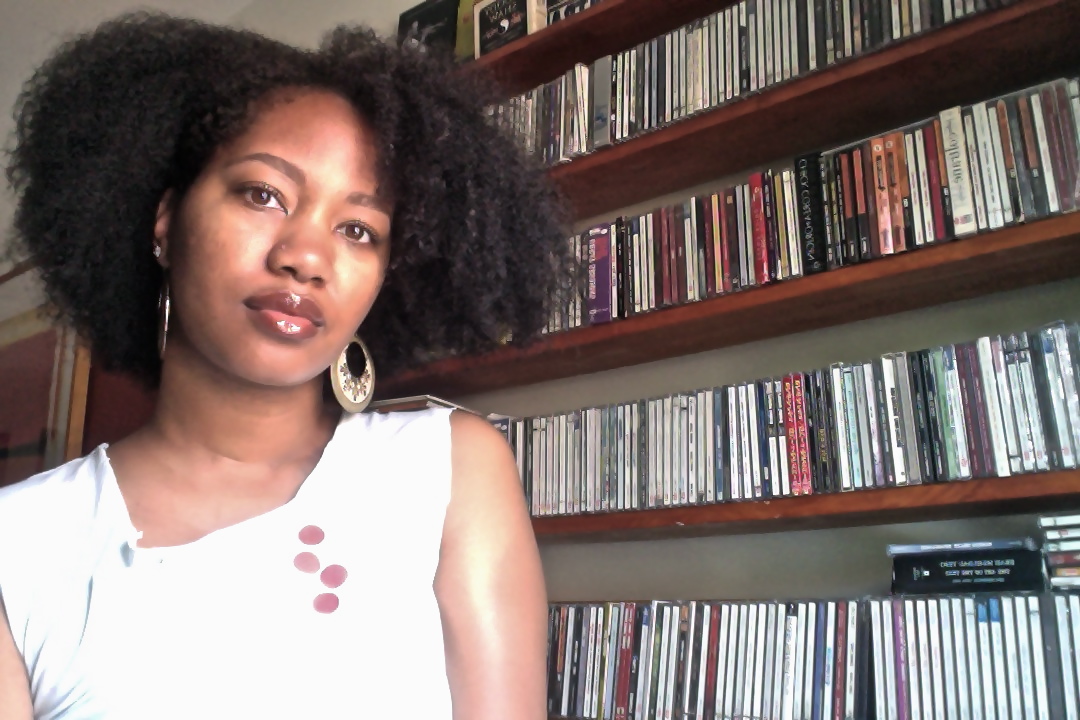
Over the last year or so one of the more impressive new voices in jazz writing has been the Brooklyn-based Angelika Beener. A past contributor to The Independent Ear as part of the series of dialogues with African American music writers, Ain’t But a Few of Us, Angelika has displayed a consistently thoughtful and informative way with words on music, displaying particularly pithy insights into musicians of her generation, folks who’ve come of age during the late 20th/early 21st century. She recently provided a sparkling partner to WBGO radio ace Josh Jackson as co-hosts of the 2012 JJA Awards program at the Blue Note. Angelika graciously consented to contribute Part 3 in our current series of dialogues with women jazz writers.


ANGELIKA BEENER

Angelika Beener is the creator of Alternate Takes, a blog geared toward discussing and exploring jazz within a myriad of cultural and social contexts. She is an award-winning producer and host. Having worked for Blue Note Records, Newark Public Radio- Jazz 88.3 FM, The Hit Factory, ASCAP and consulting for independent artists and non-profit organizations, she has won awards from The New York Association of Black Journalists and The Corporation for Public Broadcasting. The list of jazz artists with whom Ms. Beener has worked is long, distinguished and includes Andrew Hill, Randy Weston, Marcus Strickland, Aaron Parks, Dianne Reeves, Robert Glasper, Charles Tolliver, Kenny Burrell, Ron Carter, Steve Kuhn and more. Angelika is a member of the Jazz Journalists Association, and co-hosted the 2012 Jazz Journalists Association Awards. She is a staff writer for Nextbop.com and her work has also been featured in DownBeat and on NPR Music.

What has been your experience writing about music in general, jazz in particular and how did you get started down this road?

I started writing about jazz full-time about a year ago. However, prior to that, I had been in marketing and public relations in the music industry for about twelve years, and through these experiences I got to do a lot of writing about musicians, and I think that’s how I got “the bug”. I’ve always had a love and a knack for writing and a very deep love for jazz, so the inclination to put the two together was very organic.

My experience writing about jazz has been a really good one. I feel like my voice has been fully embraced, somewhat to my surprise, given the lens through which I write.

What was it about writing about jazz that attracted you to this pursuit initially?

In my career, I was always treated as an anomaly. I didn’t really fit the mold of what a jazz enthusiast “looked” like, and I really didn’t represent what someone working in the field professionally looked like. There was a lot of marginalizing and patronizing from certain White, male counterparts over the years. The music business is very ego driven, and I was a triple threat, so to speak, being young, Black and a woman. I endured a lot, and honestly, was frustrated by the limits put on my voice. So writing not only gave me an outlet, but it allowed me a platform to discuss pertinent issues within jazz that I felt were not being written about enough. I wanted my generation to be represented in journalism; I think that is extremely important. I also wanted my generation to be written about through the lens of someone within that generation, to give some balance and perspective to the journalistic spectrum.

Would you describe your experiences writing about music as overall positive, and if so why or why not?

Absolutely, and honestly, a bit to my surprise. My voice has really been welcomed in the community of journalism as it pertains to jazz. I think I had not really realized how much of a void my my writing would fill for a lot of people who were looking for this type of coverage. And even beyond my own generation, I’ve been embraced, evidenced by things like co-hosting this year’s JJA Awards. For people within the jazz community of a different generation to be interested in my work, and valuing what I bring to the table feels good and tends to make me optimistic about where things are headed in terms of inclusiveness and diversity.

Women occupy an interesting place in the jazz pantheon; on the one hand women instrumentalists are in the distinct minority, at least as far as prominence, and on the other hand women absolutely dominate the ranks of jazz singers. What’s your sense of that imbalance?

I think we’ve come a long way as a society, but have a very long way to go in terms of equality. Generally speaking, vocalists tend to be overlooked as serious musicians and are typically stereotyped as untrained. As a side note, I believe vocalists should train just as hard as instrumentalists to be the best possible artists. However, this will never eliminate the discrimination women will face in this male-dominated art form. And I think a lot of the discrimination happens in journalism; we’ve got to be especially aware of the marginalization that takes place in this industry and be vigilant about expanding the way women are perceived.

Would you describe yourself as a music critic or a music journalist and why?

I’d describe myself as a journalist. I’m not a critic… at least not of the music. My style of journalism is to give readers a window into who these musicians are as people. I’m about discussing what informs the music as much as I’m about discussing the music itself. My style is bridging the gap between culture and what I believe is the end result, which is the music. There has been a disconnect here, which has been detrimental to the Black audience and has misrepresented our contributions, and our genius. To be a critic is fairly easy, but to explore these other areas takes more thoughtfulness, a deeper understanding of the music and an ego which has been put aside; all things a critic should embody, anyway.

Its been suggested that one of the real keys to solving the critical jazz audience development issue is that those who present the music must find more creative ways to attract more women to their audiences; some wisdom suggesting that where more women go, men will surely follow. Is this an apt characterization of the jazz audience conundrum, and if so are there elements you might suggest to those who present jazz as to better attracting women audience members?

I think this is absolutely true. I’m not making any sweeping judgements, but I think the first problem is that often times musicians seem to be playing for other musicians — forget men or women. The music is not as accessible and inclusive as it once was. So we have a male dominated genre playing to a male dominated audience, which is not going to attract a strong female presence. Frankly, the music has gotten so heady, and lacks soul, and I think women are attracted to the depth (soul) of the music, and less interested in how many time signatures and key changes one song can have. In saying this, I am not marginalizing a woman’s capacity to grasp intricate musical concepts. Nor am I saying that intricacy and soul cannot co-exist, as there are too many artists and albums across decades of jazz music which would dispute such a theory. I am saying, however, that the jazz audience is waning in general because of a general self-inflicted (if unknowing) sense of exclusivity, which comes out in the music. I think once this is rectified from a creative standpoint, we can then address how to market to women, or any demographic.

Clearly writing about music, and particularly writing about jazz, could well be characterized as “a man’s world.” Do you feel like that’s due more to the nature of the music or to some form(s) of overt exclusion from the “boy’s club”?

This is a great question. I would have say it’s a combination of the two, stemming from overt exclusion. Having experienced this myself, I know what it is like to be in this position. I believe there is an intellectual element to the music that most men believe is over most women’s heads. The fact that I have perfect pitch, can sing solos, or can spell out chord changes continues to baffle most men. Liking the music and understanding the structure of the music are two different things, and it is in the understanding that the male ego is threatened because women are still not treated as equals mentally. We are still economically discriminated against, paid less for doing the same jobs, and society as a whole has yet to value our minds as much as our behinds. Ridiculously, I think we’re not expected to understand.

How do your women friends and colleagues view you as a jazz writer?

They are hugely supportive. Even my female friends who are not jazz enthusiasts or aficionados are devoted followers of the work. They find the stories interesting regardless of familiarity with the artists. I also have to say that I have a very strong readership of Black women.

Have you ever found it more difficult to pursue writing about music due to gender issues? If so please detail some of your writing challenges that may have been fairly or unfairly colored by gender.

I have not. I think when you know what you’re doing and boldly (not egotistically, but boldly) make your presence known, you’re on the right path. It’s an issue of confidence. A horrible critic can convince readers of his theories if he’s confident enough. Confidence matched with actual skillful and thoughtful journalism can’t be denied, either. Confidence is a big component. I’ve just always known that I have thoughts and theories that are just as interesting and warranted as any man’s. I refuse to be colored by gender. The discrimination exists, but it hasn’t deterred or derailed me. If anything, it has strengthened my platform.

What can be done to encourage more women to write about music in particular, jazz in general?

Largely, I think it has to come from us, as women. We have to be each other’s biggest supporters. I remember a well known critic posing a question about the lack of women writing critically about jazz. It was another writer — a Black woman — who made it a point to note me as one of them. We have to be our own and each other’s strongest advocates. We have to nurture each other’s talent and pull each other up along the way. I think has always been the most effective way to progress.

What have been some of the most personally satisfying music performances you’ve either written about or simply experienced over the last year?

I tend to write more about the music of my generation. I think this is an exciting time for jazz, and we can credit the younger generation for a lot of it. I think musicians are striving to grow away from the pack and find their own voices, regardless of criticism and that’s the way it was when this music was being invented. Artists were fearless back then. I see that same fearlessness in many of today’s artists. There are some true trailblazers in my peer group, and they are courageously being themselves despite judgements or pressures to fit a familiar mold. It’s inspiring to witness and really exciting to write about.

Posted in General Discussion | 2 Comments

Roy Nathanson – Poetic saxophonist

The annual August weekend jazz festival presented by the Stonington Opera House on Deer Isle, Maine always sounded like a sweet, kind of best-kept-secret event. My friend and colleague Larry Blumenfeld, veteran jazz writer for the likes of Jazziz magazine (where he served as editor), and more recently for the Village Voice and the Wall Street Journal, was the deserved recipient of this year’s JJA Award for Jazz Journalist of the Year. Larry and I spent some rewarding times traveling the World Sacred Music and Gnawa Festival circuit in Morocco and the wistful tone of his conversation when it turned to that weekend of jazz he has produced annually for the Stonington Opera House, for the last dozen years at this point, always sounded enticing.

As a presenter what was particularly intriguing to me was his description of the homey, acoustically-superb opera house and the true community nature of the weekend. Not only was the abundant lobster opportunity enticing, but hearing Larry wax on about the grassroots nature of the festival and the fact that artists were gladly and comfortably housed with patrons while on Deer Isle, this festival certainly sounded unusual. (Lacking much in the way of traditional hotel/motel space, most Deer Isle guests otherwise lodge in bed & breakfasts.) After all, how often will artists willingly submit to staying at private homes while on the road, privacy off the bandstand being of paramount importance? The range of artists Larry has imported to Deer Isle over the dozen years of the Stonington Opera House jazz weekend has been impressive – from Randy Weston and Charles Lloyd to William Parker to the Hot 8 Brass Band; each of whom have been lovingly and enthusiastically welcomed into the cozy, wood frame Opera House (capacity 250+) by generally SRO audiences.

So when the Stonington Opera House received a grant from the NEA Jazz Masters Live program to present NEA Jazz Master Charlie Haden, as part of my coordinating responsibilities for that program (which due to draconian government budget issues is currently either suspended or on hiatus, however one chooses to look at it) a site visit to this year’s Stonington event was in order. Unfortunately health matters forced Charlie to cancel his engagement, but Larry was able to skillfully recruit NEAJM Kenny Barron in Haden’s stead.

An August 4 flight to the closest airport, Bangor, Maine, was followed by a pleasant but twisty, winding, woodsy 65-mile road trip down Route 15 to Deer Isle (population 1500+) on a picture postcard bay. Locating a parking space just down the rise from the Stonington Opera House on one side, fishing docks on the other, while easing into my space Blumenfeld just happened to be strolling down the main drag on his way to that afternoon’s soundcheck. After settling in to an Opera House board member’s comfortable guest quarters, amidst clear blue skies and inviting warm temps I walked around the corner to the rustic 100-year old Stonington Opera House’s inviting portal, greeted by a NEA Jazz Masters banner festooned on the building, visions of lobster on my plate dancing in my head, a desire finely slaked the following afternoon in the pleasant dockside company of Blumenfeld and Kenny Barron, I’m happy to add.

That night’s featured artist, in addition to an enthusiastic group of area high school jazzers who kicked things off, was saxophonist Roy Nathanson’s Sotto Voce project. It had been a minute since I’d seen Roy, but my mission was Kenny Barron’s residency so I hadn’t paid particularly rapt attention to the full scope of that weekend’s program, but I was delighted to learn Nathanson was in the mix; intrigue heightened by spotting such challenge-ready musicians as trombonist Curtis Fowlkes and the human beatbox/vocalist Napoleon Maddox soundchecking with Sotto Voce. The mind quickly drifted back to initial encounters with Roy Nathanson and Curtis Fowlkes, when we presented their Jazz Passengers band (initial incarnation of the band including Bill Ware on vibes and Brad Jones on bass) at the first Lila Wallace-Reader’s Digest National Jazz Network conference showcase, and to our presentation of Napoleon’s Is What? collective at Tri-C JazzFest.

Roy’s skillful juggling of the seemingly disparate parts of Sotto Voce – including bassist Tim Kiah, violinist Sam Bardfeld, Fowlkes and Maddox (no drums!) – the group sensibility of the band’s shared vocals (you haven’t lived until you’ve heard Curtis Fowlkes’ falsetto the pop classic “Sunny”), Roy’s poetry and self-deprecating humor breathed an uncanny breath of fresh air. Larry Blumenfeld hesitated a bit when contemplating how his audience would react to the band, but their enthusiastic buy-in to Sotto Voce’s ouevre was inspiring. After a lovely post-concert group dinner, clearly some questions were in order for Roy Nathanson.

As the Jazz Passengers evolved the band began incorporating more of a vocal sensibility, including collaborations with folks like Debbie Harry (aka “Blondie”). Talk about that evolution.

Composition for me always felt like a form of storytelling and I kind of think that storytelling is the mother of theatre. At the beginning of the Passengers, Curtis and I put together what appeared to be opposite songs – or more like songs that inhabited two ends of a compositional spectrum. These songs covered a wide range of emotions and attitudes. Like on our first CD Broken Night/Red Light we had Indian Club Bombardment which was a multi meter thing that was a serious group improvisation around specific motifs next to a goofy version of “I’ll be Glad When You’re dead you rascal You.” The tension articulated some kind of story that mattered to us. Little by little I found I tried to work all these dispirit qualities into individual pieces and as my lyric writing got more serious I found the tension between the lyrics and the musical composition allowed for really complex stories to unfold. Also I worked with other great lyricists including Ray Dobbins, David Cale, Debbie Harry and Elvis Costello and the other members of the band, particularly [vibist] Bill Ware, who had such serious writing and orchestration skills, so the individual songs began to go in a lot of different directions.

When I saw you recently in Stonington, Maine you were up there for a residency which culminated in a concert by your most recent project, Sotto Voce. Talk about that residency and how that came about.

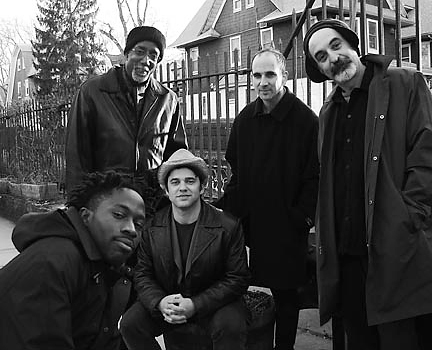
Roy Nathanson’s Sotto Voce band

Larry Blumenfeld has always been (thankfully) a big supporter of my work and he did a really nice article about me in the Wall Street Journal for my 60th birthday last year. In the process, he interviewed me and I got to know him a little bit and Larry has a great affection for and some serious history with the Stonington Opera House and the Haystack Mountain School of the Arts which are both wonderful institutions tucked away on a remote Maine Island. They are crazy beautiful institutions that exist solely form the passion of the people involved.

Larry has been the producer of the little jazz festival (The Deer Island Jazz Festival) there for the last 5 or 6 years and one artist that performs generally also does a residency at the two week session that occurs at that time at Haystack. People normally go there for craft/art stuff like sculpture or strange mixed things like 3D drawing and then the musician talks about music, etc. Like Matt Shipp and William Parker [who were past festival artists-in-residence]. But since I’ve been doing a lot of things which really connect communities together – especially with teenagers form different countries and professional musicians like in my Subway Moon project- Larry and the two great women who run the Opera House – Linda Nelson and Judith Jerome thought it would be cool if I put community members and Haystack artists together with my band to make a piece to celebrate the 100th anniversary of the Opera House. So I ended up putting stories by lobstermen and women to music. They were these wonderful stories that came from kids interviews on the island and we ended up with this cool concert of “Lobster Songs and Stories.” Then we had the concert you saw with just “Sotto Voce”. It was a wild wonderful weekend

With Sotto Voce you have unusual instrumentation in that you engage a beat boxer, violin, bass, and no drums; every member of the ensemble contributes vocally, plus sampled voices and sounds. What’s the inspiration behind your Sotto Voce project?

Like I said – I guess I’m always involved in trying to hone in on a kind of storytelling that bridges and uses all the sounds we have as people. Somehow I have this urge to make songs that bridge the gap between poetry, regular storytelling, instrumental improvisation and normal songs. Rap does this in some ways and opera of course but I’ve been coming to some kind of homemade way over the years. As I started studying poetry more seriously (I got an MFA in 2007 and put out my first poetry book in 2009) I started looking at ways to combine words and music with Tim Kiah, the Sotto Voce bassist, and Sam Bardfeld the Sotto Voce violinist. Because Tim is such a wonderful singer and the violin has both melodic and chordal possibilities we started to develop a palette that was working for me. By adding Curtis Fowlkes, my closest friend and a wonderful singer besides my favorite trombonist on earth I was able to use the language we have established as a sax/bone duo for years in the Passengers. The final piece was meeting Napoleon Maddox. His amazing mouth percussion sounds and his beautiful singing voice allow for a true bridge between the human voice and words that constitute accepted meanings in language.

So we had ourselves a killing band that’s like a ship on the water of language. Since I teach now and I’m older I haven’t had the wherewithal to get out there and work in America that much with the band but we play in Europe a lot and when I’m up there doing it I just can’t believe how good it feels.

Sotto Voce not only includes some of your poetry, but also various recollections from your life and work, some through samples. What was your thinking in engaging those particular elements in your presentation?

As I say, these are all aspects of storytelling and you can’t tell a story without having one. I can only tell about what I know so that generally comes from my own experience and I hope I can make it universal enough to effect people

There are a number of references in your work to your regular mode of transportation on the New York subway system. How did that seemingly mundane (for others perhaps) aspect of your life come to have a place of relative prominence in your verse and music?

I’m an old leftist who believes people’s everyday work and life is where the deepest beauty can be found. Only in struggle, everyday embarrassments and defeats can beauty really be earned. But I guess we all know it when we see it. I just try and celebrate those moments as best as I can. The subway is this amazing roaring metaphor where we push up against each other every morning, generally without speaking, but sharing everything about the night before and everything about that coming day in some tangential way. Also the crazy neon lighting and grinding of the tracks in this underground that feels like a collective brain is pretty cool too. It works for me….

Talk about your work as a schoolteacher, in subjects other than music, and how that affects your music.

I started composing for little kids in the early 90s with grants from Meet the Composer and put stories of mostly new Asian immigrant kids to music in Queens. Somehow that turned into a part time job that gave benefits and I loved being around the little ones. I loved (and still love) the line between music and noise. When Debbie Harry left the Passengers and my kid was still pretty little in 2005 I was given the opportunity to start a music department at this wonderful alternative 6-12 grade public school in New York called Institute for Collaborative Education. The principal was this working class hero named John Petinnato who had done all these amazing things with teenage boys that anyone else would have given up on and mixed that mission with creating an innovative school with kids from all kinds of class and race backgrounds; a really Utopian idea that worked more than it doesn’t. I was charmed and I needed some more steady income so I took it on while keeping my career going. It’s been a lot but the kids are so great and I’ve been teaching them my kind of songwriting and improvisation for 7 years now. The first group I taught since 6th grade graduated last year. They’re all at college now but have a great band called the Luddites and developed a city-wide multi genre improvisation group called Amplified Cactus Collective. I’ve brought groups to jazz festivals in Europe for 4 years now with Sotto Voce to collaborate with teenagers from other countries. It’s a lot of work but quite amazing.

What’s next Roy?

I’ve booked two weeks at the Stone Sept 18-30th coming up. It all revolves around combinations of words and music and I have 5 nights that I’m involved with of new projects. I’m working with a friend Lloyd Miller on a musical film version of a book by Paul Reyes called “Exiles in Eden.” His father trashes out foreclosures in Tampa which is the foreclosure capital and Paul works with his father telling stories from that perspective.

Florida is a particularly American mythological nightmare. I went there in high school when my family exploded and Lloyd grew up there too so we are putting that together and presenting some of the songs with Arturo O’Farrill on piano Sept 28th. Sept 22nd I’m doing a bunch of new Sotto Voce material with some of my favorite poets- Jeff Friedman, Gerald Stern, Judith Vollmer, Ross Gay an Anne Marie Marcari. On Sept. 19th I’m doing a show with Lloyd’s band the Deedle Deedle Dee’s and New York Times Poetry Editor David Orr at 8pm and then a duo with Marc Ribot at 10pm that involves poems I’ve written based on lyrics to standards like “All the Things Your Are”.. I’m hoping to use these two weeks to get these new projects off the ground and then hopefully not get too nuts from teaching everyday!

Posted in General Discussion | 4 Comments

Jazz writing: A woman’s perspective Pt. 2

Shortly after we began this series of dialogues with women jazz writers, in part focusing on the subject of their various challenges towards achieving bylines in the jazz prints, along came JazzTimes magazine’s September 2012 issue – The Women’s Issue. A short survey of the issue revealed eleven pieces of reportage and interview with women artists, which is certainly laudable. The major pieces in the issue are interviews with Anat Cohen, Cassandra Wilson, and Jenny Scheinman – two essentially emerging artists, one well-established. OK, lookin’ good so far JT.

Then the acid test, surveying the various bylines of writers who contributed to The Women’s Issue. Surprising from the perspective of the theme of this issue, but not surprising I suppose from the women writers out here striving mightily for bylines (including writers like our Pt. 1 contributor Bridget Arnwine, who was summarily turned down by one of the major jazz mags because supposedly they already had enough contributors – only to experience new male writers joining said publication’s contributors’ list AFTER she had made her pitch). of those eleven pieces on women in The Women’s Issue there is – wait for it – but one solitary woman contributor. The very thoughtful and brilliant flutist-composer Nicole Mitchell contributed the piece “Women in the Avant-Garde”… which wound up on the very last page of The Women’s Issue. As the world turns…

Our series continues with a contribution from Andrea Canter.

Andrea Canter

Please list your writing affiliations and any books or other projects you’re currently working on that you’d like mentioned in the introduction. Please also attach a jpeg photo of yourself, or whatever image you prefer to represent you, when you return your responses.

Writing Affiliations: JazzINK (www.jazzink.com); Jazz Police (www.jazzpolice.com); blog at www.jazzink.blogspot.com

Photography (in addition to above): Twin Cities Jazz Festival

What has been your experience writing about music in general, jazz in particular and how did you get started down this road?

I began writing about music/jazz by accident. A long-term jazz fan, after attending a local gig at the Artists Quarter (Craig Taborn, Anthony Cox and Dave King) in 2003, I found myself writing about it in an email to several friends, including Craig’s mom who passed it on to Craig. Craig told me “you should have your own website” to post my writings. My web and technical skills seemed to preclude that idea. But I started looking at jazz sites on the web and a few months later came across Jazz Police. Coincidentally it was the first day the site went live, and administrator Don Berryman was seeking material to post and writers to contribute. I sent him my review of Taborn et al as an example, and he posted it (three months after the fact). I became the Contributing Editor overnight. I retired from my long-time day job a few months later and this became my second career. So it was sort of spontaneous combustion.

What was it about writing about jazz that attracted you to this pursuit initially?

Initially it was just a way of communicating my feelings about the music to others, as a way of expressing what moved me about jazz in lay terms. Since I was not a musician myself, I wanted to make jazz come alive for others like me—more or less intelligent but untrained consumers. Too many people regard jazz as “ivory tower” music requiring extensive training to understand and appreciate. I wanted to write for a more generic but curious listener – it’s the only way jazz will expand its audience. Actually my motivation has not changed—this is still the audience I most want to reach. Jazz can still be “people’s music” as it was 100 years ago –it brings diverse people and cultures together, and that is the audience I hope will read my writings.

Would you describe your experiences writing about music as overall positive, and if so why or why not?

Because I have a good pension, I am not dependent on my writing or photography for survival, so my experience is different from someone who needs her work to be compensated to make ends meet. I make my own decisions about what I write about, how much I take on, and usually the timeline. Most of my experiences have been positive—I love the people I work with, the musicians I interview and promote, and the audience response that I receive is generally very positive. I only review something I like and want others to enjoy and recognize that we all have specific tastes in music or art generally, and if I don’t like something, it probably will appeal to someone else. My only really negative experience has come from a short stint writing assigned CD reviews for a publication that disregarded writers’ intents and perspectives in their editing process. When I read reviews in that publication now, I wonder whose opinions are actually expressed. It’s made me extra cautious in editing material submitted to my sites.

Women occupy an interesting place in the jazz pantheon; on the one hand women instrumentalists are in the distinct minority, at least as far as prominence, and on the other hand women absolutely dominate the ranks of jazz singers. What’s your sense of that imbalance?

I think it is the same imbalance we see in other professions – women dominate in the ranks of elementary school teachers while men still dominate (in most areas) in university teaching. Men used to dominate in professions that required advanced graduate school training like law and medicine, not so much now but historically men dominated our field of journalism and still do in some areas like sports and…jazz. Historically women have been encouraged to be singers in male dominated bands and discouraged from the “tough life” on the road of touring artists. One could also look at the collateral imbalance—not so many men in the ranks of prominent jazz singers, versus instrumentalists. Maybe singing has been considered womens’ work? Or men had a wider range of options? I think the imbalance is slowly changing as we see more and more women leading their own ensembles, rising in the ranks of composers and arrangers, represented in critics and readers polls in areas outside voice. And that shift is occurring outside jazz, outside music as well. It takes a while for at least some professions to catch up with general changes in society. Women today are not limiting themselves, or being limited by others, to follow professions with family-friendly hours. There are more role models for young women who play piano, horns, bass and drums so over the next generation I expect we will see more and more women instrumentalists in jazz. I doubt that means we will see fewer women vocalists. I think we will just see more women in jazz, period. But I wonder if we will also see more male vocalists?

Would you describe yourself as a music critic or a music journalist and why?

I consider myself a music journalist, but I believe that term encompasses criticism, or at least it could. My first priority is to promote jazz broadly — to inform readers about local and national artists, upcoming performances, material that will enhance their enjoyment of stars and rising stars, and introduce them to new artists and trends. Sometimes that will include my perspective on recent performances and recordings. I am not a musician and my “criticism” is not sophisticated in a technical sense, but I will share my reactions on music in an artistic and emotional sense that hopefully will resonate with listeners and potential listeners who make up the majority of audiences and the general jazz market. And typically I present my reactions as a means of promoting jazz, not knocking it down, so I generally publish about music and musicians I am trying to highlight. That does not mean I like everything, I don’t. I believe I listen and evaluate “critically” but what I choose to spend my time writing about is usually the music that moves me–the music I want to share. I think this precludes labeling myself a “critic” although I will participate in “critics polls.” I like that experience — considering favorites, the “best.” I’m glad we don’t try to come up with the “worst” of the year!

Its been suggested that one of the real keys to solving the critical jazz audience development issue is that those who present the music must find more creative ways to attract more women to their audiences; some wisdom suggesting that where more women go, men will surely follow. Is this an apt characterization of the jazz audience conundrum, and if so are there elements you might suggest to those who present jazz as to better attracting women audience members? Clearly writing about music, and particularly writing about jazz, could well be characterized as “a man’s world.” Do you feel like that’s due more to the nature of the music or to some form(s) of overt exclusion from the “boy’s club”?

Actually I think writing about most anything that is not traditionally viewed as “women’s work” can be described as coming from a “man’s world.” Women do not make up a large share of the writers about sports, science, arts in general, politics, etc. — nonfiction across the board. I don’t think the nature of the music has anything to do with it, but the nature of the music business has everything to do with it. As women become more prevalent as instrumental performers, publicists, producers and broadcasters of music, they will become more prevalent as critics and general writers. And certainly as women become more prevalent consumers of jazz, there will be more women writing about it.

How do your women friends and colleagues view you as a jazz writer?

I don’t see any gender differences in the reactions of friends and colleagues. I don’t think my women friends give the fact that I am a woman writing about jazz any thought at all – not that they mention anyway. They are generally encouraging and seem to find my writing useful, entertaining and credible. (Or else they are extremely tactful!)

Have you ever found it more difficult to pursue writing about music due to gender issues? If so please detail some of your writing challenges that may have been fairly or unfairly colored by gender.

I think print media tends to be a good ol’ boys club but not sure that is limited to jazz or music, it seems to be the general nature of journalism. It’s not easy to find a way into the major print journals as a writer, it seems easier as a photographer, although even at that it’s difficult to be “new”, male or female. I don’t know that I have been impeded directly by gender issues. My online experiences have been pretty gender-free; my main outlet is a site with a male administrator and I otherwise have my own sites. I’ve been invited to participate in other outlets by male and female writers and editors. Still, both writing and photography in jazz are still dominated by men as editors, staff writers, staff photographers. And perhaps there will have to be a big shift toward balance in instrumental musicians before we see more balance in terms of who is writing about them. But that goes two-ways. Maybe more women need to be in positions to promote jazz in order for more women to see jazz as a viable profession.

What can be done to encourage more women to write about music in particular, jazz in general?

My thoughts here are not limited to writing about music, but to writing (broadcasting, communicating) more generally. Women need to feel that their opinions are valued by men. Period. We’ll share our thoughts if we believe there’s an interested audience, an audience that finds us credible, knowledgeable, worth listening to. A lot of girls and young women participate in music in school through high school. A lot continue with music into college. Women generally are interested in music and surely have significant opinions and make up a significant share of the audience –even at jazz events. Women certainly have the language skills to articulate their opinions!

Women need to become more assertive in sharing their interests and opinions about music just as they have needed to be more assertive in other areas. Schools can do more to encourage young women to express themselves by providing role models, both on faculty and as visiting instructors. Are women teaching writing and journalism as well as music classes? Are schools bringing women journalists and musicians (especially jazz musicians) from the community into the schools to work with students—especially the young women? Are college journalism programs addressing arts journalism and encouraging participation from women students? Are music and general publications actively seeking women to participate as writers and reviewers? Are critics polls striving to have a more equitable gender balance of participants? Are print and online sources seeking women in editorial and management positions?

Those of us who are women writers in music and jazz need to actively mentor and encourage young women who show the slightest interest in joining “the club.” That starts with encouraging them to become an active part of the jazz audience. And that starts early. Moms and dads, bring your sons AND daughters to band concerts, jazz concerts. Download music for them to hear throughout the day. And encourage them to share their reactions to music with friends and family. Just talking about it is a great first step.

What have been some of the most personally satisfying music performances you’ve either written about or simply experienced over the last year?

In the past year – Writing about and particularly seeing/hearing live “Speak the Truth” with Angelique Kidjo, Dianne Reeves and Lizz Wright at the 2011 Detroit Jazz Festival; two live performances by newbie New York vocalist Nancy Harms, both in somewhat unusual configurations that truly use voice as a collaborative instrument – Double Bass/Double Voice (with vocalist Emily Braden and bassist Steve Whipple) and Finger Songwriter CD release tour with Jeremy Siskind (piano) and Lucas Pino (sax); Sheila Jordan, observing her master class and then her duo with bassist Cameron Brown at the Healdsburg Jazz Festival; Vijay Iyer’s two-night mini-festival at the Walker Art Center in Minneapolis where he performed two sets solo and sets in collaboration with his two trios (Tirtha and Vijay Iyer Trio) and in duets with Wadada Leo Smith and Mike Ladd; the Bad Plus with Joshua Redman at the Twin Cities Jazz Festival—the collaboration seemed to push both Redman and TBP to a new zone of music, even more interesting than what they have done on their own. Beyond those events, performances by students musicians, in their own ensembles and as guests with professional bands.

Posted in General Discussion | 5 Comments

Keeping the lamp lit in Baltimore: Todd Marcus

The city of Baltimore certainly has its share of a rich jazz legacy. On the contemporary scene there is increasing jazz performance activity in Baltimore, as well as a growing cadre of exceptional young musicians who are striving to contribute. These include such talented players as vibist-multi-instrumentalist Warren Wolf and alto saxophonist Tim Green. Another who fits that mold is bass clarinetist-composer-bandleader Todd Marcus, who is also contributing to the city’s social activism fabric.

Following his performance at the loft series component of the recent DC Jazz Festival, we caught up with Todd Marcus for some questions…

You’ve chosen to specialize in a somewhat unusual instrument, the bass clarinet. Who and what were your inspirations in making that choice?

I started out as a clarinetist for many years – all through elementary and high school. But when I got to college, I made a friend who started turning me on to modern jazz and gave me an Eric Dolphy record and when I heard Dolphy play bass clarinet I felt that the horn offered a lot more options than soprano clarinet. So in 1997 I got my hands on a bass clarinet and made the switch. And it was many years before I picked up my soprano clarinet again and started reincorporating it into my work.

There aren’t a lot of examples of bass clarinet being used exclusively in modern jazz though. It’s sort of like you have the older New Orleans style players, Dolphy, and then a lot of free avant-garde style players. But the other big inspiration for me was Don Byron because he was one of the only musicians focusing just on soprano and bass clarinet in a way that folks hadn’t really been doing.

It hasn’t been easy because of challenges the bass clarinet presents on sonic and mechanicals level and I’ve worked to present the horn as an equal to saxophones in a straight-ahead playing context. With so few examples of people playing bass clarinet in modern jazz though, I think it’s ended up being an opportunity for me to chart some new territory for the instrument.

In addition to your music career you’ve also chosen a sort of spiritual/social activism path through establishment of Newborn Holistic Ministries. How do these two facets of your life – your music and your social activism – intersect and how has your social and spiritual activism influenced your music, and vice versa?

Well I got a late start on jazz. I actually grew up playing band and classical music on clarinet and when I went to college I was studying political science rather than music. So around that time I started exploring jazz on the side and taught myself theory, harmony, to improvise, and composition. But while I was slowly plugging away on that journey, I had begun volunteering with Sandtown Habitat for Humanity on my Saturdays and that exposed me to Sandtown-Winchester, an African-American community in Baltimore City. During this time I also met a pastor named Elder C.W. Harris and got to learn a lot from him about the community. It was a great opportunity for me because I was a young kid passionate about jazz legends like Coltrane and Miles and a lot of the civil rights era African-American history around that time that was so much a part of the music. So the chance to learn from Elder Harris, a 60 year old life-long community resident who had stayed to fight for the neighborhood when so many others had left was a real blessing. It really helped me figure things out for myself and realize I didn’t see a path for myself in political science but did feel strongly about being part of a community where I could really get into ongoing issues related to ongoing race issues. So in 1997 I left college, moved into the Sandtown-Winchester community and began working with Elder Harris on developing Newborn Holistic Ministries which was a community based nonprofit he’d started to address poverty related issues in our community. And now 15 years later, we’ve made some notable progress by starting and running a program called Martha’s Place for our women overcoming drug addiction and homelessness, a program called Jubilee Arts which offers arts classes and cultural opportunities as alternatives to the drugs and violence our community faces, and turned a number of abandoned buildings and vacant lots into beautifully renovated spaces for these programs.

But all the while that we were cultivating Newborn Holistic Ministries I was still going home at the end of the day and dealing with my other full-time job – jazz and the bass clarinet. For many years I kept the two – my music and my community work – separate because I didn’t want people in either of those worlds to think I was just a part-time enthusiast rather than someone seriously dedicated to each. But over time as I’ve established myself in both, I’ve become comfortable merging these two worlds with people. And at this point I couldn’t see myself doing just one without the other. For me my music is my creative voice and an expression of who I am while my community work is a manifestation of my belief that we all have a responsibility to be engaged at some level in service whether it’s on local or global issues. Nowadays I even have opportunities to combine the two as I’ve held a number of concerts in my community which once had a rich history of jazz (on Baltimore’s Pennsylvania Avenue) and so I’m trying to keep that legacy alive.

Talk about your Todd Marcus Jazz Orchestra. When and how did you determine that you wanted to develop a larger ensemble, a broader canvas for your expressions?

Todd Marcus Nonet performing at the DC Jazz Festival

For me this came about as I was really getting into jazz when I was 19 or 20 and had the chance to hear a large group in NY at Smalls called the Jason Lindner Big Band. While I can’t say I’m a huge traditional big band aficionado, I was really taken with the Lindner Big Band because it had arrangements with rich modern harmonies and rhythms and would break down to soloing more like in a quartet with longer intense solos. So hearing that kind of writing really inspired me to start exploring my own writing and arranging for a larger ensemble. Also, hearing Joe Henderson’s Big Band album that came out around that time in the late 1990’s was also a group whose writing inspired me and gave me ideas.

What have been some of your recent Todd Marcus Jazz Orchestra activities, and do you have plans to record this unit?

The past year has been a good one for this band with a lot of performances. We received the Residency grant from Chamber Music America to do a year of clinics and concerts so that was a fun way to keep the band working while also engaging new audiences and younger musicians in the music through the clinics we did. The project actually just wrapped up in May when we did a concert in Baltimore and brought in Bennie Maupin as a featured guest. It was a really great show and even though he was playing the tenor sax part, he did bring his bass clarinet so for one selection we played one of his tunes and just he and I played bass clarinet along with the rhythm section. He sounded beautiful and it was a special moment for me to be able to play together with him since he is one of the important people to have given the bass clarinet a voice in jazz. I’m actually hoping we can do some more shows with him next year and then record. I’m looking into some grants now to try to make it happen.

On the musical side of things, I still slowly but steadily continue to write new music for the band. I say slowly because my pieces are often fairly complex with different movements and multiple themes and feels so I find it takes me more time to nurse a composition to fruition these days. Also, over the past couple years I’ve been doing a lot of incorporating Middle-Eastern influences in my writing. I’m half Egyptian so this has been something that I’ve been interested in and exploring a lot as a way to pull something unique from my culture and fuse it with my music. It’s been challenging because jazz and Middle-Eastern music are so different. While jazz uses a lot of rich harmony, Middle-Eastern music tends to be a lot of unison playing or over drones and if you try to add chords, it sort of takes away the Middle-Eastern feel of the music. So it’s taken a lot of experimenting to find ways to make this fusion of the two musics work and I think that lately it’s really been paying off with how my compositions have been progressing.

Has your Jazz Orchestra been more about your playing, or your composing aspirations?

I think it’s been slightly more about my composing and arranging but the playing is still a huge part. And with so many horn players, I have a lot of soloists to feature and try to get everyone heard during each show. Plus, I really like each soloist to really open up and dig in like we do in small group settings because that’s the kind of intensity that really excites me as a listener. But that said, this group has really been a setting for me to deeply explore my compositions in a way that can’t always be done with my quartet. There’s a fullness and range of options from having six horns that lets me do a lot of creative things with the music. And this really lets me tell a story with music by having different movements and chapters that evolve and grow and make the arrangements very rich.

Talk about your work with Barbara & Carl Grubbs and their Contemporary Arts Inc.

I’ve known the Carl and Barbara Grubbs for many years. Actually when I first started getting serious about jazz I took some lessons with Carl back in 1997. I remember I had been in an art store one day back in 1997 looking at jazz paintings and the owner started telling me about Carl and his connection to Coltrane by being Naima’s cousin. And he called Carl up on the spot and put me on the phone with Carl and we talked and set up a lesson. So that was my first introduction to not just Carl and Barbara but a chance to connect with an elder who had been part of the music as a performer and with many other important musicians.

Years later I got to know about the great jazz education work that the Grubbses do with their organization Contemporary Arts Inc. And it just so happened that we had both independently been trying to get grant support for our work from Chamber Music America which is an arts organization in NY that funds a lot of jazz programs. It was actually the staff at Chamber Music America that felt strongly about each our body of work and suggested that we partner together to apply for their Residency grant project. So we did that and got a major grant to do a year of clinics and concerts designed to engage new audiences in jazz.

The project was a ton of work in addition to the musical aspects because on an administrative level we had to setup about 24 clinics and concerts with multiple partners. But Barbara (who is the Executive Director of Contemporary Arts) and I really worked well together and created a project that reached thousands of people. Our clinics exposed students to jazz and actually got them playing my original music with my band. So it was very much geared towards engaging them directly in my music and having them play alongside professional musicians plus we covered topics like music business. I think it went pretty well overall and was a great model for any clinics I’d do in the future.

Any further thoughts or plans you’d like to talk about?

In addition to my jazz orchestra, I also do a lot with my quartet, trio, and duo and I actually have a new quartet album coming out this fall that I think came out really nice. The recording features my original compositions and arrangements of some jazz standards and uses two different quartets. One includes Xavier Davis on piano, Eric Wheeler on bass, and Eric Kennedy on drums and the other quartet uses George Colligan on piano, Eric Wheeler again on bass, and Warren Wolf. Plus, Don Byron plays clarinet on a few tracks so it is a very special recording for me. It’s on Hipnotic Records which is an indie label based in Washington, DC that has been very supportive of me. It’s looking like the record will be released in September so we’ll have CD release dates all throughout the fall and culminate with a performance at the Mid Atlantic Jazz Festival in February. Really looking forward to it all.

As for other info about me and what I’m up to, I always keep my website (www.toddmarcusjazz.com) up to date so that’s a good way to keep track of me. And for my community work, that website is www.newbornholisticministries.com.

Posted in General Discussion | 3 Comments