The Independent Ear

Ancient/Future radio 10/16/13 playlist

Ancient/Future radio is heard Wednesday evenings 10-midnight on WPFW 89.3 FM, Pacifica Radio for the Washington, DC metro region; streaming live at www.wpfw.org…

ARTIST/TUNE/ALBUM TITLE/LABEL
(opening theme) T-Bone Walker, In the Evening
Cedar
Cedar Walton, the composer:
Cedar Walton, Ugetsu, Plays Cedar Walton, Prestige
Cedar Walton, The Holy Land, The Trio, Red
Cedar Walton w/Abbey Lincoln, The Maestro, The Maestro, 32Jazz
Cedar Walton, Groove Passage, Composer, Astor Place
Eastern Rebellion, Firm Roots, Eastern Rebellion 3, Timeless
Cedar Walton, Halo, The Bouncer, HighNote
What’s New/The New Release Hour
(opening theme) Louis Armstrong/Oscar Peterson, What’s New
Brian Jackson & The New Midnight Band, Song of the Wind, Evolutionary Minded, Motema
Marquis Hill, Mary’s Intro, The Poet
Marquis Hill, The Poet, The Poet
Dave Holland PRISM, Empty Chair (for Clare), Prism, Dare2
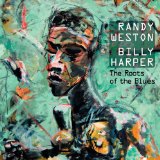
Randy Weston & Billy Harper, Blues to Africa, The Roots of the Blues, Universal/Sunnyside
RW & Billy
Dee Daniels, Willow Weep for Me, State of the Art, Criss Cross
Bill O’Connell + Latin Jazz All-Stars, Joshua, Zocato, Savant
Francisco Mora Catlet, 5 X Max, Rare Metal

Posted in General Discussion | Leave a comment

Hang-flying on the edge with Bill Shoemaker

Bill Shoemaker
As writers the craft of journalism & criticism demands objectivity, no matter what the genre. But we’re human, we all have certain favored areas of our particular pursuit. Writer Bill Shoemaker, publisher of the penetrating online journal Point of Departure (http://www.pointofdeparture.org) certainly respects the tradition and has a broad-based sense of the music, but in particular he has long expressed a never-ending curiosity for the edgy, the experimental, and the free.

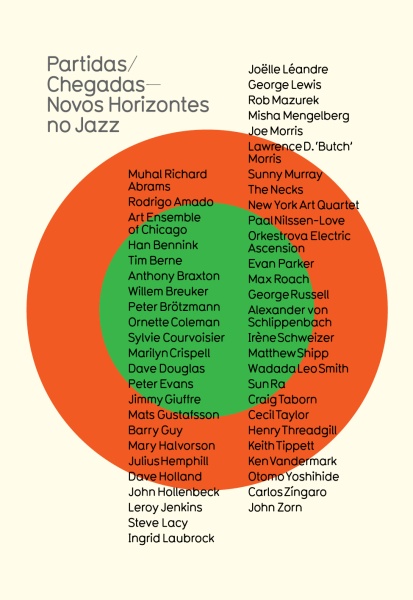
Last Labor Day Weekend as we sat in the unusually balmy clime of Chicago’s lakefront in Millenium Park awaiting another splendid night of the Chicago Jazz Festival, Bill laid a fresh copy of an intriguing new book on me of short critical essays, titled Arrivals/Departures – New Horizons in Jazz (pub. Calouste Gulbenkian Foundation), for which he served as one of three contributors. From the jump the list of names on the book’s cover revealed it as a chronicle of sorts of some of the true restless seekers in contemporary music. Clearly some questions were in order for Bill Shoemaker.
cover
It often happens that books like Arrivals/Departures – New Horizons in Jazz are published to fill at least a perceived void in the literature. Where do you see this book fitting as far as fulfilling a need for information on these artists? Would it be safe to say that this book is somewhat of an encyclopedia of some of the freer forms of modern jazz? Where/how is this book available to the public?
The book came about through unusual circumstances. Stuart Broomer and I were approached at the 2012 edition of Jazz em Agosto in Lisbon by the Calouste Gulbenkian Foundation, who produces the festival, to write a book coinciding with the 30th edition of the festival in ’13. At first, we thought they wanted an essay from each of us for a booklet, so were quite stunned when they proposed 100 essays on artists who had performed at the festival. This should have tipped us off that they were not really in touch with what it takes to write such a book.

We got them down to 50 – 25 at approximately 1,250 words; 25 at 750 – and then Stuart and I drew up a list of artists and divided them between us; it was like kids with baseball cards in a way. We then submitted a list, but we were overruled on some names. Randy Weston, for example, was nixed in favor of someone I refused to write about – another hint that trouble was ahead.

When we left the festival in mid-August, we basically had an agreement. Its finalization was held up for almost two months, which was potentially lethal given the short time we had to write. The administrator – Jose Pinto – took a lengthy holiday (he deserves them, he said in an email) and then, for weeks, he inexplicably could not confirm that Stuart and I were not subject to Portuguese income tax. Given that we had to deliver all the copy by the end of February, and that an unusual amount of other work came my way in the interim, I decided to sub out half of my work to Brian Morton. By this time, my relationship with Pinto was deteriorating – I think it was my suggestion that he just walk down the hall to the comptroller’s office on the tax issue.

We then had other issues: They dragged their feet on whether American or British English would be used (I’m used to Americanizing Brian’s writing, but at the 11th hour?); they insisted that Otomo Yoshihide be alphabetized as a Y name, even though Otomo is his family; we had to do all the line editing and page proofing; it went on and on. It was a stressful four or five months. The joke is that by spring I had a light case of The Shining. Then there is the cover, which looks like a middle school absence list on which a teacher placed his/her coffee cup. They managed to cram 50 names on the cover, but intentionally omitted ours – some nonsense about the current European protocol of academic volumes with multiple authors, they said – all of which brings me to their lack of marketing chops. True: jazz consumers are interested in the subjects of a book, but they are also interested in who wrote it. Many jazz fans use critics as barometers for better or worse, be it us, Stanley Crouch or Howard Mandel. Nobody seems to know the book’s list price. The ace kicker was that the Portuguese edition of the book was not ready at the start of the festival. BTW: The title is theirs, not ours.

I bring all this up not only to make it clear that writing a book is neat in theory, but something else altogether in practice, but to explain the somewhat inchoate state of the book. It’s not really an encyclopedia or a critical history. The book is 50 short essays about musicians who played at this particular festival over 30 years. It was an assignment; left to our devices and an appropriate production schedule, we would have come up with a more interesting template. Don’t get me wrong: for what it is, it is very solid. I’ve been contacted by a couple of the musicians included in the book, and their response has been very enthusiastic – that’s really my measure that we got it right.

I do think there remains a void in the literature about the avant-garde. It shrinks with each book that appears on the subject, including this one. I think we shed light on some newer artists – and some familiar, even iconic artists, as well. But, I do think the idea of a definitive text on the jazz avant-garde is increasingly elusive – the music is just evolving too rapidly. The idea that a definitive assessment can be made about an artist in their 30s or even 40s – say, Mary Halvorson – is wrong-headed. It is equivalent to saying Four Lives in the Bebop Business (a book I cherish) is the last word on Cecil Taylor. So, I think it’s a matter of having more books written by a more diverse population of writers – if that happens, then at least we have a detailed composite picture.

As to where or how to get the book: I have no idea.

Many of the artists featured in the book are identified with the so-called jazz avant garde. That’s always been a loaded term, but you know how it is with our collective need to categorize music and musicians. What’s your sense of that term avant garde and does it really fit these musicians featured in this book?
Almost any term in the discussion of jazz – including “jazz” itself – has been loaded at one time or another. In a way, it’s good that “avant-garde” still has some polarizing sting to it. I respond to the term “avant-garde” in two ways: as shorthand for envelope-pushing, non-commercial, too-original-for-words music; and as a historical marker when discussing the late ‘50s and ‘60s. I would say the term is fitting for the artists in the book, but not necessarily for the entirety of their output. I think Jimmy Giuffre is a good example of this. Perhaps it is partially our fault that, generally, we have not sufficiently educated our readers, but it remains a fact that most people have a much easier time with avant-garde visual art than with music – they can process Jackson Pollack better than they can Ornette Coleman. Mind you, we’re talking about art that’s 50 years old, so it shouldn’t be a stretch for an educated, upscale demo – but it is.

Arrivals/Departires – New Horizons in Jazz features a balance of U.S. and European improvisers. In terms of their training, experience, where they come from and their overall music perspective, what differences do you detect in the creative outlook of artists from the U.S. and those from Europe in terms of how they convey their music?
I was in the crossfire of the US v. Europe jazz controversy for years – Americans thought I was Eurocentric, while Europeans thought I was an American chauvinist. I think that speaks to the liability of being inclusive in your views. I always fall back on something my dad said about Europeans he met during WWII: They’re just like us, except they’re different. Certainly, the European social/cultural/political context is distinct from ours, but that doesn’t mean you can’t love something from a different context. There are few Americans who have taken Coltrane to heart as have Brits like Paul Dunmall, Evan Parker and the criminally neglected Art Themen. You would be hard-pressed to find someone with brighter insights into John Carter than Ab Baars. I really can’t think of an American currently who has that Big Sid Catlett swing [down] like Han Bennink – but that’s just part of what he does. Certainly, their individual aesthetic filters yield music that does not always bear much resemblance to American jazz; but if they did, there would be those who would say that they’re pale imitations. Conversely, there are American drummers who try to play like Paul Lovens, guitarists who try to approximate Derek Bailey; the list is long. So, I think the eggs are thoroughly scrambled.

Talk about your online journal Point of Departure and the perspective it chooses to deliver.
To paraphrase the old ESP slogan: It’s the writers who determine what you read in Point of Departure. I think saying PoD has an avant-garde-centric orientation is basically accurate, although the current issue has long pieces on Woody Shaw, Pee Wee Russell, Major Surgery (a British electric band from the ‘70s) and The Smithsonian Collection of Classic Jazz. BTW: Anyone who bemoans the death of long-form jazz journalism obviously hasn’t read PoD. We regularly run pieces of 3,000 words or more. I wish I had the time to continue the roundtables – they were always lively – but, otherwise, I’m OK with where we’re at in terms of content. I’m encouraged by the contributions of newer voices like Clifford Allen, Jason Bivins, Troy Collins (who is also an invaluable part of the production team), and Michael Rosenstein. Veterans like Brian, Stuart, Art Lange, Ed Hazell and Kevin Whitehead continue to motivate and educate me. Going from six issues a year to four was a necessary change – I’m amazed I haven’t completely burned out – and it now seems like a sustainable pace: writers have more time to write, readers have more time to read, and I actually have time to write fiction, shoot pool and hang out. The one thing I haven’t accomplished with PoD is completely squelching the idea that it is a blog, a term like “avant-garde” that is going to be there, regardless.

What’s forthcoming in P.O.D.?
The thing about PoD is that I only really don’t know what will be in the next issue until a couple weeks out from publication. Art rarely knows what he’ll be writing about until then; same with Brian, sometimes. I am continually amazed by their ability to produce incisive essays in a matter of a day or two. And, Art delivers absolutely immaculate copy to boot – I had to tease Art that Troy found two extra spaces when he formatted Art’s Pee Wee Russell piece. Obviously, record reviews have to be sorted out earlier in the cycle, but even then there are last minute additions – and crises that prevent delivery of a review or two. I think I’m writing about Jimmy Carter’s jazz picnic for the December issue, but that could change at any moment – really.

Just to give you a taste of what’s in store when you visit Bill Shoemaker’s online journal Point of Departure (http://www.pointofdeparture.org) here are the contents of the most recent issue:

Issue 44 – September 2013

Page One: a column by Bill Shoemaker

Gerald Cleaver: Surrendering to the Experience: an interview with Troy Collins

A Fickle Sonance: a column by Art Lange

Where’s Borderick?: by Kevin Whitehead

The Book Cooks:
Improvisation, Creativity and Consciousness:
jazz as template for music, education and society
by Edward W. Sarath
(State University of New York Press; Albany)

Far Cry: a column by Brian Morton

The Art of David Tudor: by Michael Rosenstein

Moment’s Notice: Reviews of Recent Recordings

Ezz-thetics: a column by Stuart Broomer

Travellin’ Light: Dominic Lash

Archive

Contacts

Publisher: Bill Shoemaker
Production: Robert Winkle, Troy Collins

Posted in General Discussion | 1 Comment

Ancient/Future 10/9/13

Here’s our playlist for the Wednesday, October 9 edition of Ancient/Future radio, heard Wednesday nights 10-midnight on WPFW 89.3FM in the DC metro area, and streaming live at http://www.wpfw.org.

ARTIST/TUNE/ALBUM/LABEL
Charles Brown, In the Evening, compilation
(Remembering Butch Warren)
Butch Warren, A Little Chippie (courtesy of Larry Appelbaum)
Thelonious Monk, Stuffy Turkey, Monk’s Miracles, Columbia
Thelonious Monk, Evidence, Monk in Tokyo, Columbia
Herbie Hancock, Three Bags Full, The Complete Blue Note Sessions, Blue Note
Jackie McLean, The Way I Feel (comp. Butch Warren), Vertigo, Blue Note
McCoy Tyner, Contemporary Focus, Today and Tomorrow, Impulse!
Hank Mobley, No Room for Squares, ditto, Blue Note
(What’s New/the New Release Hour)
Louis Armstrong/Oscar Peterson, What’s New
Rene Marie, Peel Me a Grape, I Wanna Be Evil, Motema
Jeri Brown, Echoes, ditto, Jongleur
Geri Allen (w/Marcus Belgrave), Space Odyssey, Grand River Crossings, Motema
Randy Weston & Billy Harper, Blues to Senegal, The Roots of the Blues, Universal/Sunnyside
Charnett Moffett, Lonely Woman, Spirit of Sound, Motema
Billy Bang, Law Years, Da Bang, Tum
Steve Khan, Blues Connotation, Parting Shot, Tone Center
Jamie Baum Septet, Nusrat, In This Life, Sunnyside

contact: willard@openskyjazz.com

Posted in General Discussion | Leave a comment

Ancient/Future 10/2/13

This year marks my 4th decade doing weekly jazz radio shows for community and public radio stations. Currently my Ancient/Future show airs Wednesday nights 10:00pm-midnight over WPFW 89.3 FM in the DC Metro area, and streaming live at http://www.wpfw.org; from 11:00pm-midnight is our weekly feature What’s New/The New Release Hour. Here’s the playlist for October 2, 2013:

ARTIST / TUNE / ALBUM TITLE / LABEL
Wynton Marsalis & Eric Clapton, Joe Turner’s Blues, Play The Blues, Warner Bros.
Duke Ellington, Daybreak Express, Duke Ellington Centennial, RCA
Duke Ellington, Across the Track Blues, Duke Ellington Centennial, RCA
Clifford Brown, Take the ‘A’ Train, Complete Emarcy Recordings, Emarcy
Jon Hendricks, Little Train of Iron, Salud Joao Gilberto, Reprise
John Coltrane, Blue Train, Blue Train, Blue Note
Christian McBride, Dream Train, People Music, Mack Avenue
Bobby McFerrin, He Ran for the Train, Vocabularies, Emarcy
What’s New/The New Release Hour
Roberto Fonseca, 7 Rayos, Yo, Concord
Ahmad Jamal, Silver, Saturday Morning, Jazz Village
Gregory Porter, Free, Liquid Spirit, Blue Note
Trilok Gurtu, Jack Johnson Black Saint, Spellbound, Sunnyside
Michele Rosewoman’s New Yor-Uba, Perdon, 30 Years, Advance
Wayne Wallace Latin Jazz Quintet, Melambo, Latin Jazz/Jazz Latin, Patois
Monsur Scott Harlem Quartet, Song for My Father, Come Over,

Host: Willard Jenkins

Posted in General Discussion | Leave a comment

Anthony Dean Harris: Ain’t But a Few of US

Ain’t But a Few of Us
Black music writers tell their story…
Anthony Dean-Harris
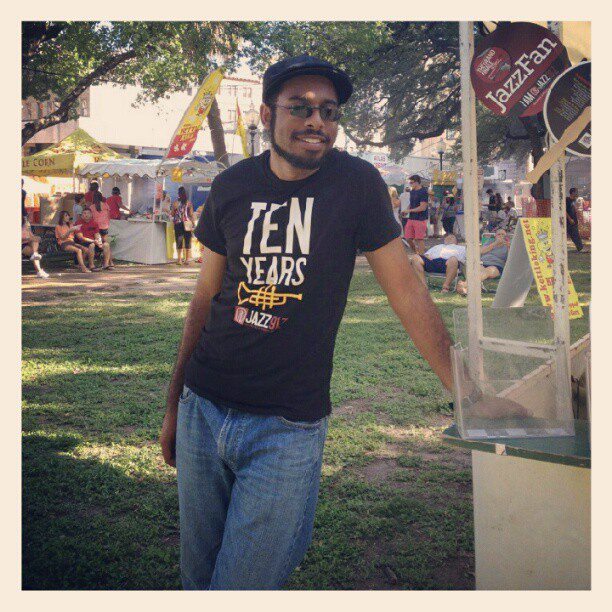
Anthony Dean-Harris
I first encountered the young writer Anthony Dean-Harris via his very active jazz-based blog at http://www.NEXTBOP.com. Just to give you a sense of where he’s been coming from with NEXTBOP, here’s how he characterizes the site: “The philosophy of Nextbop isn’t just about promoting jazz to jazz lovers. Nextbop is about appealing to everyone. It’s about promoting jazz to the world. It’s about showing the indie rock crowd, the punk rock crowd, the hip hop crowd, the R&B crowd, the bluegrass crowd, and so many other scenes that this kind of music is great and it’s not so far off from what you’re used to hearing.” Being all about jazz audience development here with the Independent Ear, and with my work in general, that philosophy certainly struck a chord with this editor!

As with any upwardly mobile, energetic young striver, change is afoot for Anthony Dean-Harris, news he conveyed recently. “I, in consultation with my partner Sebastien, have decided to end Nextbop at the end of this year in order to oversee the blog at The Art of Cool Project (http://www.theartofcoolproject.com), a non-profit organization that puts on jazz and jazz-related shows in Durham, NC,” with their first festival in the works for April 2014. “Starting [in October] posts for Nextbop will post simultaneously at Art of Cool so as to get folks comfortable, eventually heading there by next year and to grow its audience.”

Clearly Anthony Dean-Harris was a fresh new candidate for this latest installment in the “Ain’t But a Few of Us” series of dialogues with African American jazz writers…

WHAT MOTIVATED YOU TO WRITE ABOUT SERIOUS MUSIC IN THE FIRST PLACE?
I’ve always loved jazz and grew up around it and I knew I’ve wanted to be a writer since high school when I knew I wanted to go to Trinity University for college because of its jazz station, KRTU San Antonio. However, I didn’t get a scholarship to Trinity, though I did get one for Morehouse College. So I ended up going there and my family soon followed me up to support me, experience the American black mecca [Atlanta] themselves, and keep costs low (or at least as low as one can in an area with a significantly higher cost of living than San Antonio). When I graduated from Morehouse in 2008, the recession had just hit and my family decided that since I was done with school, we’d all head back from Atlanta to our hometown of San Antonio.

Once home, I got involved as a volunteer with a city council race and met the late Kathy Clay-Little, a columnist for the San Antonio Express-News and publisher of the community newspaper African-American Expressions. We were talking at the campaign office one day about her plans to put on a small jazz festival on Fathers’ Day and who she should try to book. When she learned of my love of jazz, she asked if I’d like to cover concerts for her paper. I gladly said yes and one of my first assignments was to attend the annual KRTU spring concert with her, including the opening VIP reception. It was there, before the evening’s performer Ramsey Lewis, that I met many of the folks who ran KRTU. Those folks said I should have a show there, especially since one of their hosts was leaving soon. Over the next few months, I eventually ended up taking over The Line-Up, posting the playlists to my personal blog.

It was around this time that I ran across sites like Nextbop and NPR’s jazz blog, A Blog Supreme. ABS’s editor, Patrick Jarenwattananon, posed a question to a few folks in the jazz scene, asking if they were to share ten albums of jazz music with a newcomer to the genre, which albums would they choose, however all the albums could only be from the last twenty years. Nextbop’s founders, Sebastien Helary and Justin Wee, had a great list and that’s when I was impressed by the site and its potential. I also put together a list unsolicited and sent it to Jarenwattananon, who graciously posted it to the site. That’s how Sebastien ran across my blog with its playlists from my radio show and my writing from college back when I was on the newspaper staff as opinions editor. Seb contacted me about writing for Nextbop and as time went by and we grew a rapport, and as he learned that my college journalism background was perfect training for managing and growing the site, I eventually ended up as Nextbop’s editor and my role as writing about jazz music pretty much cemented.

I can see God’s hand in a lot of this, leading me from one role to another and making me incredibly happy (though still pretty poor, but I get plenty of new music and see a lot of shows in support of this community, so it all works out).

WHEN YOU FIRST STARTED WRITING ABOUT MUSIC WERE YOU AWARE OF THE DEARTH OF AFRICAN AMERICANS WRITING ABOUT SERIOUS MUSIC?
I can’t say I was aware of the dearth of black writers on jazz music, but I can’t say I was too surprised by it. The genre has been growing and changing a lot over the century of its existence, and as it goes with pretty much anything, it’s all too common for blacks to be shut out or limited from telling our own stories, framing our own narratives, or just giving our own perspective built from our backgrounds. Fortunately, it’s a bit easier for us to change this as the internet has democratised access and ability to do so but the work continues.

WHY DO YOU SUPPOSE THAT’S STILL SUCH A GLARING DISPARITY WHERE YOU HAVE A SIGNIFICANT NUMBER OF BLACK MUSICIANS MAKING SERIOUS MUSIC BUT SO FEW BLACK MEDIA COMMENTATORS ON THE MUSIC?
I don’t like to think there are so many countervailing forces oppressing black journalists in this regard (there might be some who are indeed doing so maliciously, but I don’t want to cut wide swaths like that), but I do think that it could mostly be the public’s lack of familiarity with black voices. Much of my work focuses on contextualization– we are what we see everyday. We cannot know what we have not been exposed to and we’re experts on those things that surround us. There may very well be newspaper, magazine, and web editors who simply aren’t around voices of color who may be aware of black jazz (and R&B/hip hop/soul/etc) music and don’t even know that they don’t know this. In an increasingly nicheified musical landscape where people can read only the coverage they want to read, it may be getting easier to get our voices out there but difficult in entirely different ways to get work into disparate eyes.

DO YOU THINK THAT DISPARITY OR DEARTH OF AFRICAN AMERICAN JAZZ WRITERS CONTRIBUTES TO HOW THE MUSIC IS COVERED?
I definitely think this, largely because of contextualization. Take for example Kanye West‘s recent appearance on Late Night with Jimmy Fallon. The following day, there were many posts on music blogs linking to the performance– the standard web aggregation coverage of the day without much substance added to it other than “Watch this video!” It may have been noted that Charlie Wilson was present and singing, but a black voice well versed in Wilson’s body of work could have noted how many of Wilson’s trademark “shabba-dabba-tweet-tweet-tweet”s (and one or two “ooh’-weeEE’s) he ad-libbed. Of course, white writers who aren’t exposed to the back catalog of The Gap Band may not have even noticed this merited mentioning because they don’t know what they don’t know. This is how that added black perspective affects the discourse.

For black music to be, as it always has been, a crucial part of culture, informed people must also be part of the discourse about the music’s impact.

SINCE YOU’VE BEEN WRITING ABOUT SERIOUS MUSIC, HAVE YOU EVER FOUND YOURSELF QUESTIONING WHY SOME MUSICIANS MAY BE ELEVATED OVER OTHERS, AND IS IT YOUR SENSE THAT HAS ANYTHING TO DO WITH THE LACK OF CULTURAL DIVERSITY AMONG WRITERS COVERING THE MUSIC?
Since I’ve been writing about jazz, especially as I’ve run my own publication, I’ve come to realize essentially how this job and the attention given to some artists over others natually occurs. I’ve realized some of the seemingly trivial things like appealing album art determines whether or not I’ll devote attention to an album, or when an email hits my inbox at just the right time for me to care, or how important having a good press release and readily accessible songs to stream make spreading the word more appealing to me. Seeing the inner workings of music journalism like this helped me realize the whole industry functions like this to some degree, and this doesn’t even take into consideration how it all works in other genres or larger publications who may pay more attention to SEO optimization than merely discussing quality music and informing the masses of talent that needs a voice. The inner workings of the machine and its simple extension of how we as people pay attention to things explains so much about why music journalism is how it is.

So taking added diversity into account in this regard adjusts things a bit because it’s easy to assume people of different cultural backgrounds would have their respective attention drawn to different works. It’s the nature of the beast.

WHAT’S YOUR SENSE OF THE INDIFFERENCE OF SO MANY AFRICAN AMERICAN-ORIENTED PUBLICATIONS TOWARDS SERIOUS MUSIC, DESPITE THE FACT THAT SO MANY AFRICAN AMERICAN ARTISTS CONTINUE TO CREATE SERIOUS MUSIC?
When it comes to how black publications cover music of this sort, I don’t like to think of it too differently from how mainstream white publications cover mainstream pop music in comparison to other more sophisticated kinds of music. I’ve been so immersed in the world of jazz since I’ve been listening as a child, but especially since I’ve been involved in Nextbop and radio hosting at KRTU, that I have forgotten that this music does indeed have a tendency to be rather inaccessible. My listening to music for musicality, dynamism, quick decisions made on the spot, communalism between musicians, and other aspects that don’t bore me like simplicity does is distinctly different from how many others listen to music, searching for quick, visceral connection and catchiness. Every culture has this sort of dichotomy in its art and I’m loath to say black art may have this problem more than other cultures, though black culture’s influence on culture at large does shine a different sort of spotlight on the matter that is at times distressing.

HOW WOULD YOU REACT TO THE CONTENTION THAT THE WAY AND TONE OF HOW SERIOUS MUSIC IS COVERED HAS SOMETHING TO DO WITH WHO IS WRITING ABOUT IT?
I’d agree with this in much the same way writing about essentially anything is affected by who is doing the writing.

I’m a writer who loves not only music but also television and film. I’m one of those guys who uses the word “showrunner” a lot and cares about Aaron Sorkin’s oeuvre and things of that sort. When people ask me why I care about these sorts of things and how I remember details about television like I do, I tell them it’s all part of being a storyteller. In one’s family or circle of friends, there’s always some person at dinner — a guy back in college, that crazy uncle, a fellow bar patron — who tells stories in a way that makes people listen. Maybe the person describes things ornately, maybe s/he uses wild hand gestures, maybe s/he has a great voice. Whatever it is, the storyteller has attributes that makes his or her stories unique and appealing. A person tells a story in his or her own way that people remember, that causes them to come back for more. If a storyteller has a tendency to talk about interoffice relationships, or uses a camera to show the story, or uses the internet to talk about what happened at a jazz club in New York, these are all different ways to tell a story. I always try to understand that each medium lends itself to different strategies and means of performing the same function– there are people out there who want to hear what the storyteller has to say.

IN YOUR EXPERIENCE WRITING ABOUT SERIOUS MUSIC WHAT HAVE BEEN SOME OF YOUR MOST REWARDING ENCOUNTERS?
The most rewarding experience I’ve had since running Nextbop was putting together our first unofficial day party during the South By SouthWest festival in Austin, Texas, this last March. It was the first event I had ever organized and we had bands of renown local to Texas and throughout the world agree to play a little burger place built from a reformed car garage. It was humbling that such talented people like Australia’s Hiatus Kaiyote and Canada’s BADBADNOTGOOD would agree to play such an event for a clear novice like me at something like this, and moreso that it was attended as well as it was. I’m looking to put on another party this coming March without me being nearly as exasperated as I was the first time around, but after the dust cleared and everyone who was there had a great time, I could step back and marvel at just what happened. Writing is such a solitary act (and writers, like many artists, are often very critical of themselves to the point of self-loathing). So to throw an event where people actually show up and enjoy what it is that you do and are happy to say so is extremely satisfying.

Though lately, I’ve really enjoyed editing the work of others for Nextbop. There are essays like Jon Wertheim’s critique of trumpeter Nicholas Payton‘s contentious nature, or Ben Gray’s series looking at original versions of jazz songs and comparing them to cover versions, or just being blessed to post anything Angelika Beener writes that makes me immensely proud of Nextbop and what it has grown to be over these few years.

WHAT OBSTACLES HAVE YOU ENCOUNTERED – BESIDES DIFFICULT EDITORS AND INDIFFERENT PUBLICATIONS – IN YOUR EFFORTS AT COVERING SERIOUS MUSIC?
Since I’ve mostly been working as my own editor and manager since taking up music journalism, the most difficult part of all this is learning the ropes about all this on my own. Arranging interviews, obtaining press credentials for events, keeping in contact with publicists, and things of that sort is still a fish out of water thing for me. Another part of that, though, is figuring out how to make all this a viable business. Nextbop has been a labor of love for four years now and has yet to make money. I’ve been working on selling ad space to change that, but this, too, is one of those roles in the business that’s new to me. Running the whole business and learning the trade has been a lot to tackle, and though it’s been slow going, it’s sometimes a comfort to realize what I’ve picked up along the way in doing so.

10. WHAT HAVE BEEN THE MOST INTRIGUING RECORDS RELEASED SO FAR THIS YEAR?
Laura Mvula‘s Sing to the Moon
Thundercat‘s Apocalypse
Gerald Clayton‘s A Life Forum
The Stepkids‘ Troubadour
Butcher Brown‘s a & b-sides
Terence Blanchard‘s Magnetic
There’s definitely a lot more but I’ll get to that in the next few months around the time for year-end lists with the rest of the Nextbop staff.

Posted in General Discussion | Leave a comment