The Independent Ear

Jazz Writing: Women’s Perspectives Pt. 1

During 2010 and 2011 The Independent Ear fostered a refreshing dialogue with African American jazz writers that we dubbed “Ain’t But a Few of Us.” A few women writers participated in that dialogue and some of their responses were flavored with a sort of double-bind perspective of being not only African American writers but female as well, gender lending a slightly different tint to their sense of pursuit of the music writing craft.

Reading the jazz prints and blogs suggests an ever so slight increase in the number of women writing about this music, but still pretty much in the same decided minority numbers as African Americans writing about jazz in particular, music in general. (And if you’re wondering why we may seem to vacillate between referring to these writers as “jazz writers” and/or “music writers” its because few prefer to be pigeon-holed and indeed cover a variety of music genres; but all have at one time or another written about jazz music.)

Given the number of women who write about music it seemed another dialogue was in order for The Independent Ear. Apropos our first contributor is a woman who also contributed to “Ain’t But a Few of Us,” Bridget Arnwine. I first met Bridget years ago when the Jazz Journalists Association fostered a one-time mentorship effort for aspiring jazz writers. After the passing of my friend and colleague, the Harlem chief of the jazz prints Clarence Atkins, a Clarence Atkins fund was established that enabled a small coterie of African American writers to attend a journalist conference in California. One member of that crew was Bridget Arnwine, who I had first met when she approached me about writing in Cleveland. She got an opportunity to write program booklet content for the Tri-C JazzFest and has developed her craft from there, with increased opportunities coming her way since her job relocated her to the Washington, DC metro area where Bridget is currently based. Like many a young writer she has been a contributor to All About Jazz. Our conversation began with her current writing affiliations.
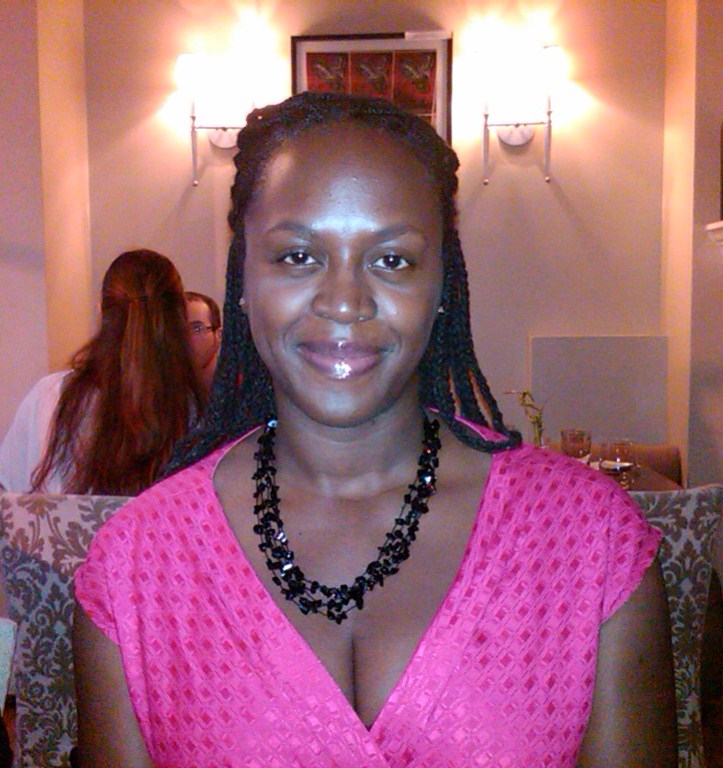

Bridget Arnwine

I am currently writing for examiner.com as the Washington, DC Jazz Music Examiner and the National Jazz Artists Examiner. I was recently added as a new contributor for Pure Jazz Magazine.

What has been your experience writing about music in general, jazz in particular and how did you get started down this road?

My experience writing about music has been mostly positive. I really enjoy it and I love the added responsibility of being my own photographer even more.

I started writing about music, because I first wanted to write a book. I wanted to interview jazz musicians about what they loved about the music and what inspired their paths, but I only landed one interview.

I reached out to every jazz musician I found contact info for, but they all turned me down. I eventually contacted Jazz at Lincoln Center to see if I could appeal to the musicians there, but their PR department turned me down too. After a while I was put in touch with someone who suggested that I reach out to Wynton Marsalis‘s right hand woman so that I might plead my case to her. I sent her an email and she responded. She told me in a nutshell that no one would talk to someone they didn’t know, so my task was to become known. She suggested that I join an organization and take on as many writing tasks as possible. That’s what I did. Within a week of that exchange, I found the Jazz Journalists Association (JJA) and allaboutjazz.com. Funny enough, my first assignment for the Jazz Journalists Association newsletter turned out to be a book review. It was for W. Royal Stokes’s book, “Growing Up With Jazz”– a book of interviews. I knew as soon as that book arrived in the mail that I was on the right path.

That was a little more than seven years ago. Thanks to Gen for the invaluable advice and thanks to Wynton for being the only musician to say yes.

As for other genres of music, I’ve written about country, R&B, opera and hip hop for as long as I’ve written about jazz, but I’ve never done anything with those reviews/articles. I started writing about heavy metal, because I saw a help wanted ad seeking contributors for an upstart heavy metal publication and I replied. I did that for a year and I loved it. It’s been almost four years since I’ve written non-jazz related articles, but I recently began receiving requests from metal bands and R&B acts. I’m considering trying it again.

What was it about writing about jazz that attracted you to this pursuit initially?

Initially, I was attracted to jazz because of my introduction to the music. To round out the details of my response to the previous question, my first jazz concert was a Wynton Marsalis performance back in 1995. I lived in Atlanta at the time and I was an intern in the office of then Congresswoman Cynthia McKinney. One of the summer interns tricked me into riding with her down to Augusta for a three-day weekend. Wynton Marsalis was in Augusta for a set of concert dates, and the plan was to register voters at his shows.

I was not a jazz fan at that time. The only reason I agreed to go was because the intern convinced me that taking the initiative to register voters in Augusta would really make a good impression on Congresswoman McKinney. I aspired to work in politics at the time, so I went along with it. Needless to say, I had a real bad attitude leading up to the first night’s show.

Most everything the intern told me about the trip was a lie. We weren’t invited to stay with one of Congresswoman McKinney’s staffers; we weren’t going to register voters at Wynton’s concerts (we were allowed to register voters at a Black Business Expo that happened to be going on the first day of our visit); heck, she hadn’t even secured permission for us to attend Wynton’s show. We were only allowed to go to the show because we arrived at the venue a few hours ahead of show time and the intern sent a “hello, I’m the girl who…” note backstage. To my surprise, one of the septet members happened to be there to receive the note and he remembered meeting her! We were told to meet the group in the lobby of their hotel and we’d walk to the venue together. It was then that I learned that we didn’t have a place to stay, so I ended up booking the last available room at the same hotel.

What changed for me was meeting the guys–Wycliffe Gordon, Eric Reed, Wess Anderson, Victor Goines, Wynton and a tour manager named John. I remember the first night; I was amazed by what I heard. They were fantastic. The intern was supposed to be the jazz fan, but I was the one excited about attending all of the shows that weekend. There’s no way I could walk away from an experience like that without trying to learn more about the music. I eventually became so enamored with the music that I felt I had to do something jazz related… I couldn’t play an instrument; nobody wants to hear me sing; I don’t like being around people enough to want to become a road manager, so I decided to write. Meeting them, and hearing them play, changed the course of my life forever and they don’t even know it.

Long story, I know, but I think of that weekend whenever I think about why I’m here.

Would you describe your experiences writing about music as overall positive, and if so why or why not?

My experiences have definitely been mostly positive. I love the music and I respect those who care enough to create it. Sometimes the demands of my day job present a few challenges to my life as a writer/photographer, but writing about the music and photographing what I see is what makes me feel most human. I’ll be doing this for the rest of my life.

Women occupy an interesting place in the jazz pantheon; on the one hand women instrumentalists are in the distinct minority, at least as far as prominence, and on the other hand women absolutely dominate the ranks of jazz singers. What’s your sense of that imbalance?

My two cents: audiences and the industry are just getting comfortable seeing women do more than sing.

Women in general have been placed in a box and expected to adhere to certain standards. We’re expected to interact with/engage people a certain way; we’re expected to dress and look a certain way; we’re expected to maintain traditional roles in relationships even if we thrive in non-traditional roles professionally; and we’re not supposed to put our interests ahead of anyone else’s. Now women are living by their own definitions of what it means to be a woman. One of those definitions is capable. Not capable for a woman, or capable compared to men, but capable in the fullest sense of the word.

Getting back to the music, Ingrid Jensen and Anat Cohen are constantly referenced as among the best on their instruments- male or female. Tia Fuller performs in 6 inch stilettos and body-conscious outfits and she manages to blow her face off every time she plays. How’s that for womanhood? Helen Sung, Geri Allen and Amina Figarova can conjure some of the most beautiful sounds out of the piano. Regina Carter is as close to flawless as I’ve ever heard. Esperanza Spalding‘s Grammy win has changed the game for female musicians. Cindy Blackman-Santana is my idol. Terri Lyne Carrington and Shirazette TinnenNicole MitchellClaire DailyBria SkonbergTineke PostmaMimi Jones… they’re all awesome.

The imbalance is slowly disappearing, because these talents won’t be denied.

Would you describe yourself as a music critic or a music journalist and why?

I use music journalist on my business cards, but in hindsight, I think music journalists are far more polished than I am. I’m definitely not a critic either. I would have described myself as a critic when I first started out, but not now. I think jazz writer sums me up. Jazz writer AND photographer.

It’s been suggested that one of the real keys to solving the critical jazz audience development issue is that those who present the music must find more creative ways to attract more women to their audiences; some wisdom suggesting that where more women go, men will surely follow. Is this an apt characterization of the jazz audience conundrum, and if so are there elements you might suggest to those who present jazz as to better attracting women audience members?

That’s an interesting question. I have noticed that I’m usually the only unattached woman at shows. I’ve seen single guys at shows, I’ve seen groups of guys, but rarely have I seen women without a male date. How do you get more men to “follow” if they’re already well represented in the audiences? I do think it’s possible that even more men would show up if more women were present at shows, but the same can be true in reverse– find a way to attract more men and women would show up.

That said, I have noticed that there’s no shortage of women in the audiences for jazz artists with crossover appeal. Roy Hargrove‘s shows are always crawling with women. Same thing is true for Robert Glasper and Esperanza Spalding. Roy Hargrove and Robert Glasper work with hip-hop and neo-soul artists. Esperanza Spalding was thrust into the spotlight. That’s earned them more media attention than many of their colleagues. I’ve not noticed a shortage of women in the audiences for the more popular genres either, so in my opinion it’s not a“where the ladies at?” issue as much as it’s a lack of media coverage issue.

I think if we find a way to get the major, mainstream publications interested in stories about jazz musicians who play jazz music, then audiences could change. I’m working on being a more active contributor, so I hope to do my part to help improve things.

Clearly writing about music, and particularly writing about jazz, could well be characterized as “a man’s world.” Do you feel like that’s due more to the nature of the music or to some form(s) of overt exclusion from the “boy’s club”?

Honestly speaking, you get out of this work what you put into it– man or woman. I haven’t always put a lot into it, because of the demands of my day job and a few other things, but the world seems to open itself up to me when I’m plugged in.

I have had a few “things that make you say, hmmm” moments as a writer that seem to definitely be “boys club” related, but I’ve learned not to care. One example that I’ve shared before, I’ve approached the same magazine on two separate occasions about contributing articles and I’ve been turned down and told that no new writers were being accepted. I was offered an opportunity to contribute free/unpaid work to their website, but I was told in no uncertain terms that I would not be accepted as a contributor to the magazine. That hurt a little, but it’s hard to be offended by “no new writers,” so I accepted it.

I do buy and read the magazines, so imagine my surprise when I saw new names, of guys I know, added to the list of contributing writers. So much for not accepting new writers. The first time I approached the magazine’s staff about contributing articles was at a JJA Jazz Awards event. I’m sure they’d never heard of me, so maybe my approach was a little too… I don’t know… I acknowledge that I can be a bit aggressive at times, so maybe I was too much. The second time I approached them, maybe they had read my work and decided that they didn’t like it. I have absolutely no idea what their reasons were for not accepting me, but I do know that they didn’t tell me the truth.

I didn’t begin writing about this music because of a publication. I’m here, because I love this music. I’ve found a way to create my own opportunities.

How do your women friends and colleagues view you as a jazz writer?

My friends are happy for me. They know what led me to this music, so they know how excited I am to have access to this world.

I don’t know what my colleagues think of me as a jazz writer or photographer. I’ve never had that conversation with anyone. All I can say is that I’m happy for every writer and/or photographer I’ve ever met. They seem to be accomplishing great things, and I’m pressing forward in hopes of accomplishing great things of my own.

Have you ever found it more difficult to pursue writing about music due to gender issues? If so please detail some of your writing challenges that may have been fairly or unfairly colored by gender.

Aside from what I detailed in one of my previous responses, I’d say not really.

The only real difficulty I have had is trying to maintain relationships with publicists and editors.

If an editor changes my work and I question why, it’s not always been received very well. I’m not opposed to having my work changed. In fact, I welcome input from anyone who can help me get better. But why can’t I ask why something’s been changed and why can’t you explain why your change is better? Now, I have to worry about if I’ve offended someone because I’ve asked questions. If a publicist tells me that he/she is going to arrange an interview and I question them about the status while receiving no response, what’s the publicist going to tell the artist about why the interview doesn’t happen? Is it my fault? If I am blamed, do I need to show the artist the unanswered emails I sent out or do I leave it alone? What about publicists from arts organizations who renege on press requests? Should I reply with a “that’s ok, I’ll try again next year,” or Whiskey Tango Foxtrot?! On the flip side, if I’m long overdue on a promise to deliver a review, do they hate me because of it?

These are definitely woman worries. At least they are some of this woman’s worries.

What can be done to encourage more women to write about music in particular, jazz in general?

I do think there are more women writers than we acknowledge. You know me, because of my involvement with JJA and the Clarence Atkins Fellowship, but, after seven plus years in the game, I’m still introducing and reintroducing myself to the same folks. Nobody knows me. Again, some of that is my fault. I could be doing so much more than I am doing; I’m taking steps to make that happen. I can’t imagine I’m the only woman going through this.

I see the JJA monthly members’ updates. There are a good number of women out there doing awesome things but I rarely hear of those things outside of the JJA. When I look at the number of articles women are contributing to major publications, the numbers are unimpressive but at least there’s a presence. I think just like the musicians, women writers and photographers are beginning to put themselves out there more. It’s only a matter of time before we make our presence felt.

What have been some of the most personally satisfying music performances you’ve either written about or simply experienced over the last year?

I’ve been fortunate enough to see and hear lots of great music during my time as a writer, but last year I realized that there were three artists I’d not yet seen that I really wanted to see: Roy Haynes, Sonny Rollins and Wayne Shorter. I can now say that I’ve seen them all!

Aside from those, I’ve attended a few cool festival performances by Esperanza Spalding, Terri Lyne Carrington, Amina Figarova, Winard Harper, Delfeayo Marsalis, Wycliffe Gordon, Ravi Coltrane and Regina Carter. In DC, the Ertegun Jazz Series [presented at the Turkish Embassy] has featured some really awesome performances by Orrin Evans, Helen Sung, Tia Fuller, Jonathan Batiste, Gretchen Parlato, Warren Wolf, Roy Hargrove and Marcus Strickland. And I can’t forget about that James Farm performance at the University of Maryland. They’re fun.

I have plans to increase my festival attendance next year, and I hope to spend more time traveling to NYC for some of those awesome Jazz at Lincoln Center concerts. Jason Moran just became the Artistic Advisor for Jazz at the Kennedy Center, so I’m beyond excited about 2013. I’m going to be all over the place. I can hardly wait!

Posted in General Discussion | 2 Comments

Jazz radio – endangered species

Those who’ve been around jazz, African American classical music, American classical music, creative music, BAM or whatever your preferred nomenclature for the art of the improvisors that is based upon the African experience in America and European concepts and instruments, have to know that the radio airways, even what precious little we’ve been able to experience over the last thirty years or so is an endangered species.

First the wolves of commerciality and bland, formulaic radio cleansed the commercial airways of jazz music. New York-area listeners back in the day remember the day former all-jazz radio WRVR went country music overnight. Until a group of brave, hearty souls gave birth to WBGO, that meant the New York metropolitan area, arguably the mecca for this music, was suddenly without a full-time jazz outlet. Like the proverbial domino effect jazz music soon became extinct on the commercial airways, with the Bay Area’s KJAZ’ demise signaling the turn out the lights the party’s over end of the music on the commercial airways as we knew it.

Ah, but then we just knew we had a safe new home on the public and community FM airways on the far left end of the dial in perpetuity, right? Not so fast ma’am, seems no ground is safe from assorted wolves who would rule this music not even commercial enough to ignite significant numbers of listener-supporters (but then try selling that false platitude to WBGO or SoCal’s KJZZ!). Seems the wolves this time come cloaked not in the flimsy garments of commerciality, this time they’ve got a seemingly unquenchable thirst for more, more, more news/talk & information. Forget the fact that 21st century radio is deeply over-sexed with news/talk & information formats, not to mention the fact that even those stations which purport to be music at their core seem compelled to squeeze in as much talking head babble as possible, we have non-commercial radio airways over-wrought with non-stop chatter.

The latest creative music bastion to fall victim to the false notion that music listeners won’t support stations with their membership drive largesse is Boston’s WGBH (check The Independent Ear for a recent editorial and subsequent petition drive on this latest sorry chapter in the erosion of non-commercial music from the public & community airways). To see stalwart creative music broadcasters like Eric Jackson and Steve Schwartz either neutered, kicked to the curb or outright expelled has indeed been a sorry saga. Once again the replacement programming is slated to be more news/talk & information. And this is happening in a great city that boasts perhaps more creative music students per capita than any other American city, including home to the leading contemporary music conservatory in the world, Berklee College of Music.

Likely the next radio station to face a similar fate is WPFW, Pacifica Radio in Washington, DC, at 89.3 FM and streaming live at www.wpfw.org. Founded in 1977 by a stalwart group of largely African Americans (in the days back before gentrification, when DC was truly “Chocolate City”), WPFW’s mission statement has jazz music front and center as a core broadcast element. WPFW has forever been viewed within the Pacifica Radio network as something of a stepchild for two reasons: its African American constituency and majority African American management and programming staff. Another factor that has long been WPFW’s “difference” even in the supposedly progressive ranks of Pacifica Radio (the last bastion of left-wing radio on the American airways) is the in-house Pacifica viewpoint that WPFW is “…that music station…” I’ve been a programmer at WPFW since 1989; first as the long time host of the Friday afternoon Drivetime Jazz slot (for years 4-7pm then cut to 4-6pm by management’s stated need for more news/talk & information), more recently as host of the Thursday Morning Drivetime Jazz slot 5-8am. In addition to jazz WPFW has also long been the DC area’s radio home for blues, old school R&B, Latin music, African music, and assorted Caribbean island music – certainly befitting a metropolitan area that boasts not only a large African American populace, but is also a world city with the largest Ethiopian populace outside of that nation, as well as robust African and Caribbean communities.

For many years the jazz/creative music sector of WPFW’s broadcast day has included M-F 5-8am, 1-3pm, 4-6pm, 8-10pm, and for the most part 11pm-5am. Though there is no jazz programming on Saturdays, when blues, old school R&B, Caribbean, and Haitian music rule, WPFW’s Sunday jazz programming sequence is robust and quite popular with listeners, running from 6am-6pm. Clearly this is one of the most robust jazz/creative music menus in the country. That too is threatened by what I have referred to as the NPR-ization of WPFW, rolling down the pike at a precipitous pace many of us fear. The first inkling of this runaway freight train came several months ago when an associate of station General Manager John Hughes’ gave a presentation at a station retreat that strongly suggested that jazz in the morning is not what listeners want to hear, they want to hear news/talk & information in the morning!

Since then WPFW has become burdened by a lack of creative fundraising that has resulted in a gross over-reliance on what has become a frayed old hat in the public and community radio world: the dreaded on-air listener plea known as the Pledge Drive. Frankly that method of fundraising has become hackneyed in the least; at worst over-reliance on on-air fundraising taxes its listeners and leads inevitably to listener fatigue. Take the pulse of the WPFW listening audience in Washington and a familiar refrain will go something like this: “…I get tired of ya’ll always pitching for pledges…” Where once WPFW listeners endured three seasonal pledge drives (Fall, Winter and Spring – where notably some public and community radio stations only endure two such drives annually) of two sometimes three weeks in duration, now listeners are tagged with intermittent “mini-drives” designed to make up for fundraising shortfalls that have inevitably increased the epidemic of WPFW listener/donor fatigue and subsequent tune-out.

Current WPFW management posture has been to give nice lip service about seeking fundraising alternatives, while the reality includes increased pledge drives as the bandaid towards station financial solvency. (It should be noted here that one of the fundamental precepts of Pacifica Radio is that its stations do not accept underwriting support from any corporations or businesses whatsoever. This is a precept designed to protect Pacifica stations from undue corporate or business influence and meddling. However its my contention that precept has become outmoded, particularly when one considers the fact that there are numerous progressive, socially-responsible entities in the community that would step up to the plate with underwriting support; witness the underwriting support that is the lifeblood of WWOZ in New Orleans and is all local business driven; Exxon, Shell, William & Morris, Haliburton, etc. need not apply.)

Now comes the wisdom lurking in the shadows that the jazz and creative music listening audience simply does not support the station in significant enough numbers to sustain WPFW (which currently touts itself as “Your station for Jazz & Justice”; and for its 30th anniversary gala honored Sonny Rollins and Amy Goodman, pillars of Jazz & Justice). The hungry wolves of more news/talk & information are baying at the door of WPFW and it is suspected that the programming changes hinted in a recent, veiled, typically passive-aggressive email to station programmers from GM John Hughes (with words to the effect that he’s going to bring in new, syndicated programming that will raise greater revenue for the station) will include a significant loss of jazz and creative music programming hours. As we say in radio… stay tuned. And if it is your pleasure to take the preemptive step of lodging a protest on the coming programming changes (September is the due date for these programming shifts) you can do so in several ways: communicate with station management via the website www.wpfw.org; by snail mail at WPFW, 2390 Champlain Street NW, Washington, DC 20009; by fax to 202/588-0561; by calling station GM John Hughes at 202/588-0999 and press 0 for the operator; or by calling in to his weekly General Manager’s Mailbag show on Friday mornings 9-9:30am at 202/588-0893.

Which brings me to another salient point: as jazz radio listener-supporters we are so often late to the party. Dr. Billy Taylor used to decry what a lax lot we are, how we are always too late to protest draconian changes and elimination of jazz formats. We moan & cry loud and long AFTER the axe has fallen – witness the anger and collective teeth gnashing of the Boston area jazz community AFTER WGBH emasculated its jazz programming hours. By then the genie is way out of the bottle and it is far too late; those programming changes have been set in stone. If you hear or see the warning signals on the horizon at your local jazz and creative music outlet, take preemptive protest strikes THEN, before those egregious changes have been instituted.

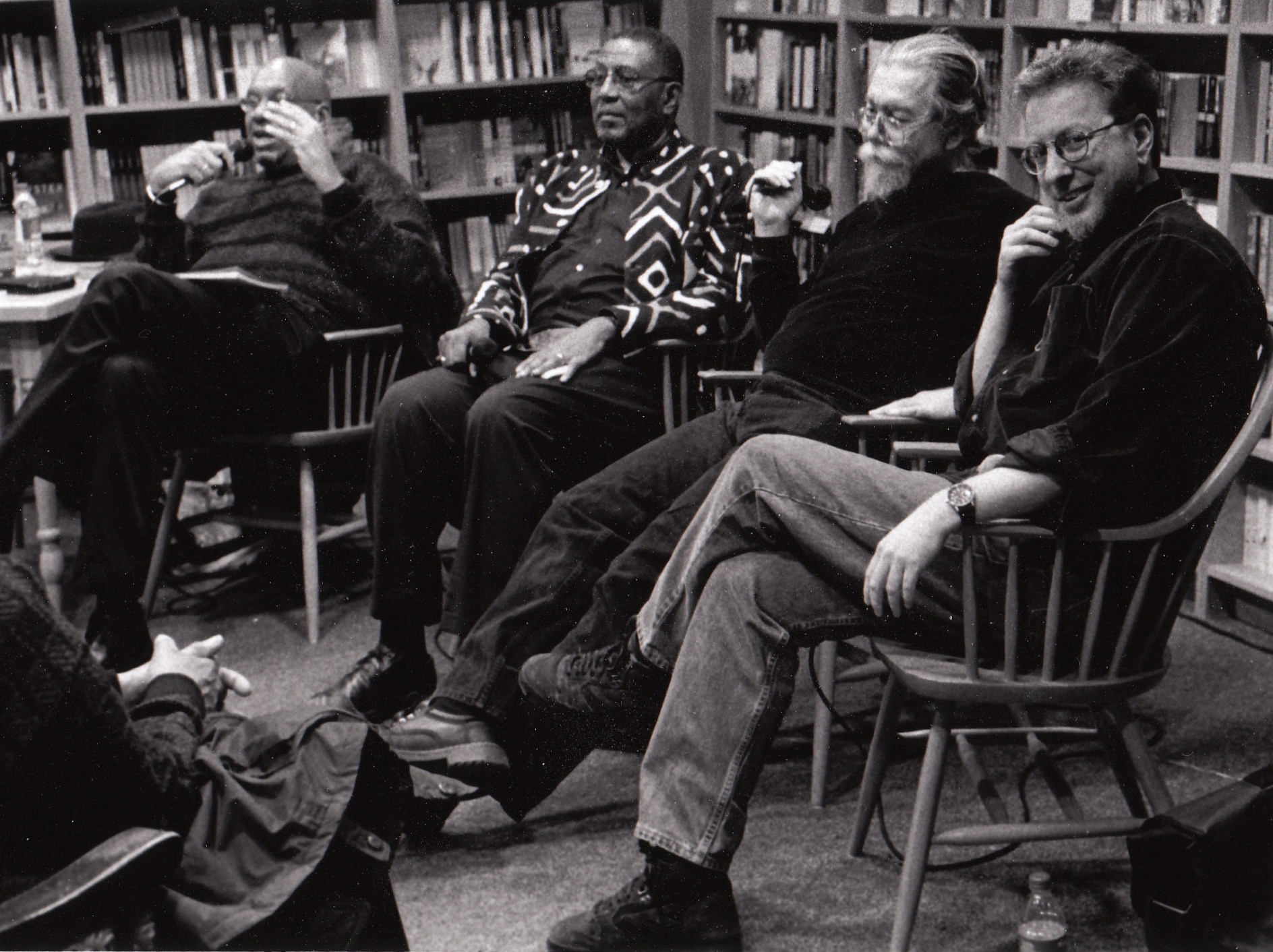
Four of WPFW’s veteran jazz programming crew: L to R – Willard Jenkins, Askia Muhammad, Rusty Hassan, Larry Appelbaum

Posted in General Discussion | 4 Comments

Jazzspace and the Pittsburgh legacy

As reported in these pages, I had the pleasure recently of returning to my birthplace of Pittsburgh, PA to moderate panel discussions and participate in a very rewarding commemorative weekend honoring the rich legacy of that city’s African American Musicians’ Union local. The city is rife with jazz history and has produced an incredible number of jazz masters. My experience that weekend suggested that Pittsburgh’s jazz legacy continues apace, at least as far as producing young musicians. One of the many people I met that weekend was Maggie Johnson, a bright young woman who is forging a unique effort on behalf of her city’s jazz musicians called Jazzspace. Some follow-up questions for Maggie Johnson were certainly in order.

Please tell us about Jazzspace and your emerging artist program.

The ultimate goal of JAZZSPACE is to become a space for jazz, participating and enhancing Pittsburgh’s East End Renaissance, and a place where emerging artists work, play, and live. The idea is multi-generational, with emerging professional artists in constant interaction with the Jazz Masters of the city as well as giving back to younger generations through masterclasses, workshops, performances, etc.

What was your motivation for starting Jazzspace?

I was literally praying for a way to combine my interests and skills in arts business, performing, education and mentoring, and my love for jazz. In the wee hours of one morning in 2008, JAZZSPACE just hit me and I started furiously typing out the mission and vision for the program. I’m pretty passionate about jazz and it’s special role in communicating truth, and God’s heart for community. That it was brought to the world through black culture, and all its unique gifts and trials, is no accident.

What activities have you fostered thus far with Jazzspace?

In this, our inaugural year, we’ve chosen (through juried online application) two spectacularly talented Resident Artists, Anqwenique Wingfield (vocalist) and Joe Sheehan (piano). You can read more about them at http://www.jazzspace.com/artists.php. They have each received $400 to support creative projects related to their music. In addition to promoting them generally, we are planning to highlight them in a special concert this summer, which as of right now is scheduled for August 17.

Vocalist Anqwenique Wingfield


Pianist Joe Sheehan

We are also taking applications for the 2012-2013 class of Resident Artists. The online application is here: http://www.jazzspace.com/apply.php. The program is currently focused on Pittsburgh and is therefore limited to residents of Allegheny County. But who knows that it might not serve as a model for a national program with satellites someday!

Who are some of the people involved with Jazzspace and what’s been the response to your efforts thus far?

In addition to our Resident Artists, we have a wonderful group of Advisors, who are all deeply committed to seeing the ultimate vision of JAZZSPACE come to pass. Some, like Dr. Harry Clark, who founded Pittsburgh’s Creative and Performing Arts High School and is a major player “behind the scenes” in several Pittsburgh jazz initiatives, lend both passion and management expertise. Others, like Etta Cox, who is one of Pittsburgh’s staple Jazz Masters, bring support directly from the artists’ perspective.

The overall response to JAZZSPACE has been extremely positive. Everyone welcomes the idea with open arms. However, time will tell whether the jazz community and other arts supporters will also embrace it with their pocketbooks! With some trepidation, I launched our first online fundraising campaign through IndieGoGo.com and our fiscal sponsor, Fractured Atlas.org, this past spring. While we didn’t hit the final goal, I was pleasantly surprised by the amount of “friendraising” it created and how many folks were willing to put their money behind the vision. As we focus more on fundraising in the coming year, we hope folks will continue to check us out online (http://www.jazzspace.com/support.php) and consider making a gift to help us keep moving forward.

How do you envision Jazzspace fostering activities which will move jazz music forward in Pittsburgh?

One of the biggest issues facing jazz in Pittsburgh (and almost everywhere) is the fact that young people have so relatively little exposure and real interaction with it, despite it playing such a key role in our cultural heritage as a city. I would love to see JAZZSPACE become a sort of hub for connecting generations of aspiring and established musicians with kids in our public schools or other established arts programs, specifically for the purpose of learning about jazz; its history as well as its constant role in changing and enhancing popular music.

Are your Jazzspace mission and activities things you can envision being duplicated in other cities? If so, what advice would you have for other like-minded individuals in other jazz communities?

Indeed! JAZZSPACE was influenced by artist residencies and other programs I’ve observed in my career (such as Betty Carter‘s Jazz Ahead at the Kennedy Center), and I hope that what we’re doing is pulling together the best elements of all-and some innovation of my own-to create a program that can be replicated, but also tailored to other communities. At this point, my advice to like-minded individuals would be to simply get in touch with me so we can brainstorm together! My email is maggie@jazzspace.com.

Posted in General Discussion | Leave a comment

A Force for good


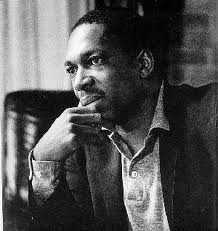
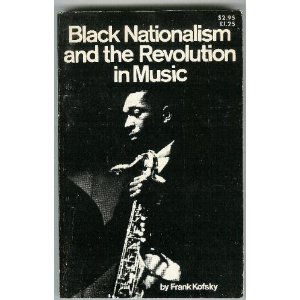
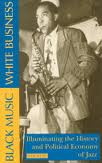
On this the 45th anniversary of the passing on to ancestry of the great John William Coltrane, my home radio station WPFW 89.3 FM (Pacifica Radio in the Washington, DC metro area, streaming live at www.wpfw.org) wisely chose to run Frank Kofsky’s November 1966 interview with Trane during today’s Freedom of Speech segment 3:00-4:00pm (go online and catch it in the station’s archives). For those not familiar, Frank Kofsky was an unabashed left wing music critic who wrote the manifesto Black Music, White Business and was a major contributor to the Jazz magazine, the last bastion of left wing jazz reportage. If you read any of Kofsky’s writings you approached that interview knowing that Kofsky was fully in the bag for whatever Trane might say; completely in the Amen Corner as it were.

One aspect I was struck by was John Coltrane’s matter-of-fact level of complete humility. This congenial, modest man was not given to deep philosophical pronouncements, no matter how much Kofsky strained for such pearls of wisdom. And Kofsky tried mightily, though not in a manner of goading, to wrench philosophy out of Trane. At one point he builds up a head of inquisitive steam relative to Trane’s then use of of various African percussion and assorted percussive “toys” to augment his music. Asked about the cosmic significance of that percussive augmentation to Coltrane’s music, the master (and here you can almost visualize Trane perhaps lowering his eyes a bit and shrugging his shoulders) responds to the effect that “…I don’t know man, it just happens…”

Throughout the interview Kofsky continues to push the old canard that was widely afoot back then that John Coltrane and his peers and cohorts were somehow part of some “New Thing” making “New Music.” Again, the gentle and patient Trane – a man not at all given to profuse pronouncements – doesn’t really buy into what had largely become marketing tools for Impulse! Records, the magazines and writers, trickling down to the music-buying public. From this view those terms “New Thing” and “New Music” are as specious as the term avant garde. As Muhal Richard Abrams used to say at those old NJSO board meetings, “…how many decades are we going to be avant garde?…”, the sense being that the search for new vistas was by now a lifetime pursuit that ceased many moons ago to be so-called avant garde.

The absolute summation of where John Coltrane was coming from and what he forever pursued was encapsulated in his simple response to Kofsky that “I want to be a force for good…” And that boys & girls is the essence of John William Coltrane.

If you wish to purchase a copy of Frank Kofsky’s November 1966 interview with John Coltrane go online to www.pacificaradioarchives.org.

Posted in General Discussion | Leave a comment

Catching up to the Ellis Marsalis Center for Music

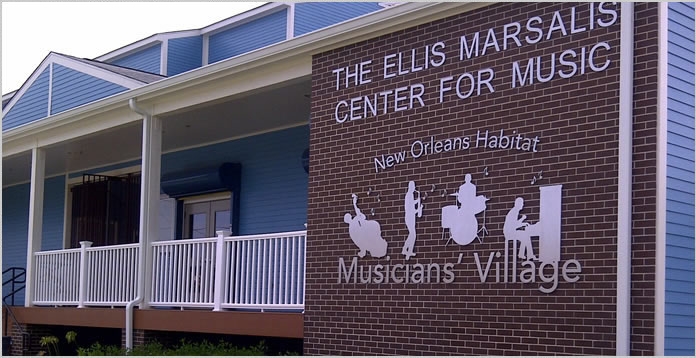
In the afterglow of another exceptional closing weekend at the 2012 New Orleans Jazz & Heritage Festival we took advantage of an opportunity to witness the progress of the Ellis Marsalis Center for Music the Monday after Jazzfest. Earlier that weekend we had chatted with Ann Marie Wilkins, the driven and industrious woman who manages Branford Marsalis, Harry Connick, Jr., the Marsalis Music record label, and most important to this conversation is board chair of the Ellis Marsalis Center for Music, a jewel of a 17,000 square foot facility.

You may recall this ambitious post-Hurricane Katrina, Ninth Ward redevelopment project. In the wake of the devastation of what New Orleans residents simply refer to as “The Storm”, Branford and Harry hatched a plan to salvage at least part of the storm’s Ground Zero, the Ninth Ward – the part of New Orleans with the highest storm-delivered misery index of all. Their idea was to develop the Musicians Village to house a percentage of the musicians who had been driven from the Crescent City in the horrific wake of the failure of the federal levees. Part of that development would be an arts-based community center to be named after Branford’s father and Harry’s mentor, Ellis Marsalis.

To get you up to speed on the Ellis Marsalis Center for Music, we followed-up our tour with some questions for the Center’s executive director Michele Jean-Pierre.

Please give a quick sense of the backstory behind the Ellis Marsalis Center for Music.
After Hurricane Katrina, Branford Marsalis and Harry Connick Jr. wanted to find a way to help musicians come back to New Orleans. They joined with New Orleans Area Habitat for Humanity to create the Musicians’ Village, a residential community primarily for musicians with a community center as its focal point. Ellis Marsalis, father of Branford and teacher of Harry, is also an internationally respected jazz musician and educator. The Center would appropriately be named the Ellis Marsalis Center for Music
to honor an individual they both love and respect.

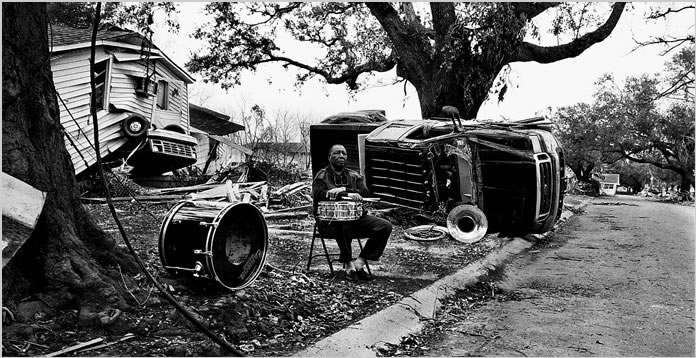
Much beloved New Orleans drummer and WWOZ radio show host Bob French sitting amidst the post-storm devastation in the Lower Ninth Ward. French was one of the initial residents of the subsequent Musicians Village development.

Who do you hope to serve with the Ellis Marsalis Center for Music, what is your core constituency?
The core constituency of the Center are the residents of the Musicians’ Village and the children who live in the 9th ward, the largest of the 17 wards of New Orleans. We will also make the Center available to other members of the New Orleans community on a space available basis.

What is Ellis’ ongoing relationship to the Center?
Ellis is the visionary behind our music education program and he advises our Director of Music Education, Daryl Dickerson. He is
actively involved with music instructor selection and guides us on matters related to curriculum and instruction.

What kinds of daily activities happen at the Center?
During the school year, we run an afterschool music education program Mondays through Thursdays. Students attend twice
a week for 3 hour blocks. Each enrolled student takes one hour of their selected instrument, one hour of Piano in our Piano
lab where Music Theory is being taught and reinforced through piano instruction and one hour of Homework Assistance and or
Computer Lab. Our Computer Lab work focuses on strengthening Music Theory lessons in a fun and interactive way.

We also offer vocal and dance classes.

We also feed the children an assortment of fresh cut seasonal fruits, yogurt, granola bars, raw veggies, multi grain crackers and
cheeses before they head to their first class. They also have the option of returning after their last class to obtain more snacks to keep them
until they go home.

On Saturdays, the focus is our Strings program. Children may register for Violin, Viola, Cello, Upright Bass and guitar classes.
On Wednesday evenings and Saturday mornings, we also offer an adult piano class. Classes start early so once again, we provide
healthy option breakfast foods.

We also have occasional master classes for our students held in our Performance Hall. Students have an opportunity to hear professional musicians, ask
questions and learn first- hand from them about their journeys in becoming professional musicians.

This summer, we will implement our Audio/Lighting/Video Production Intern Program. We have partnered with the City of New Orleans and the NOLA Works
Program and 14 youth between the ages of 15 – 18 will participate in this 6 week summer experience and receive a paycheck for their learning experience.
We will also offer our regular Music Education Program Mondays through Thursday to over 100 beginner and intermediate youth of the 9th ward. On Saturdays, we
will offer our regular Strings Program with the capacity to reach an additional 45 students.

How has the Center been funded thus far?
The Center has been supported through the generous donations of people throughout the world, who in the aftermath of Hurricane
Katrina and the near destruction of important institutions of learning, saw the importance of their continued donations of funds to assist
in the rebuilding efforts. Branford and Harry engaged people worldwide in their crusade to develop this Center and continue their untiring
efforts of enlisting the help of others to support the mission of the Center.
[Editor’s note: It should be added here that both Branford and Harry have contributed significant sweat equity and financial support – including concert fees – to this project; their respective involvement goes far deeper than simply lending their auspicious names to this project.]

How does the Center interface with the surrounding Musicians Village, and what’s been the response to the Center thus far of the occupants of the Musicians Village?
Prior to the completion of the construction of the Center, focus groups were conducted with residents to get their input of how the Center could best serve their needs.
The information from these focus group discussions played an important role in the planning for which services the residents identified as priorities. Currently, the
Center offers extended hours for the residents to use practice rooms, the computer lab, obtain administrative support, attend exercise classes as well as adult piano classes.

The Center will also provide facilities for Village residents to record CDs and plans to offer a Village resident performance series in the near future. Quarterly the Center
holds a public community event. These have included: Christmas children’s movie night and toy distribution by Santa, a Good Friday Fish Fry with outdoor activities
for the family and a visit from the Easter Bunny, and a special Night Out on Crime Event which included a community Barbeque and access to community resource information.

The residents response has been extremely positive. This is evidenced by the number of resident children who attend classes in our afterschool and Saturday programming at
the Center. The residents also enjoy accessing the classes offered at the Center.

When I visited there you and Ann Marie mentioned a project underway – or in the planning stages – to record the occupants of the Musicians Village; please tell us more about that project.

It is our intention to allow Village residents to record CDs at the Center – the Performance Hall was designed to double as a recording studio (Ellis Marsalis and Japanese Jazz Pianist,
Makoto Ozone recorded the first CD in the hall in May). Thanks for your inquiry about all of the current activities at the Center. We have just started on our journey but remain excited about the potential for growth of not only our students but the residents who choose to utilize the many offerings at the Center.


The beautiful concert hall at the Ellis Marsalis Center.

Posted in General Discussion | Leave a comment