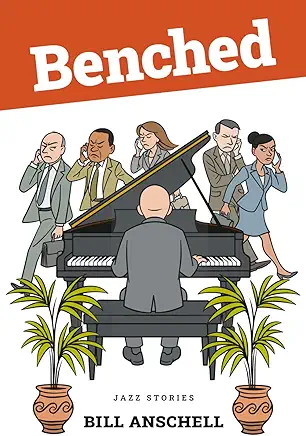
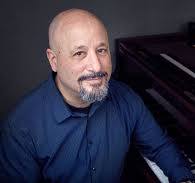
Bill Anschell spins cautionary, biting, and often hilarious tales of navigating the world as a jazz musicians…
Seattle-based pianist Bill Anschell is without question one of the wittiest of today’s jazz practitioners, an honored corner of the jazz community that streches back to such quick wits and downright comedic artists as Louis Armstrong, Fats Waller, and their spiritual son Dizzy Gillespie. A 2016 inductee into the Seattle Jazz Hall of Fame, Anschell matriculated at Oberlin Conservatory before decamping and concluding his degree work at Wesleyan Univsersity.
Bill and I first became acquainted during his days in arts administration when he moved to Atlanta to serve as Jazz Coordinator for the Southern Arts Federation (SAF; now South Arts), the regional arts organization for the Southeast states. While at SAF Bill established the valuable syndicated radio show Jazz South, which marvelously spotlighted a number of the southern states’ unsung jazz heroes. Meantime Bill kept his keyboard chops sharpperforming around the Atlanta area.
Obviously Bill Anschell has always been not only a swinging and productive pianist and bandleader, but a keen observer of the various precincts, happenstances, and pecularities of being an active jazz musician – particularly the various pecadillos faced by the legion of working, blue collar jazz musicians one might encounter striving mightily (or perhaps not much at all) at your favorite neighborhood hangout . Perhaps the earliest documented public pronouncements of Bill’s biting wit arrived in his series of columns under the moniker “Mr. PC” (no relation to Paul Chambers) via his website www.billanschell.com and subsequently published at allaboutjazz.com, and available via Facebook page. Bill detailed his comedic jazz writings for The Independent Ear in January 2017.
In late 2025 his jazz stories – including some reprised Mr. PC columns and anecdotes – arrived in the hilarious compilation Benched, published quite naturally by the entity Blow Hard Music! Its been nearly 10 years since our first Independent Ear encounter with Bill Anschelland clearly some questions were in order on the subject of Benched.
1) What compelled you to start your “Mr. P.C.” series of columns, and how many columns have you contributed to All About Jazz?
I can remember driving across Idaho on a duo tour with saxophonist Brent Jensen about 20 years ago, and describing my fledgling idea for the column to him. In the course of the tour, I came up with “Mr. P.C.’s Guide to Jazz Etiquette and Bandstand Decorum” as the full (now seldom-used) name. I liked it partly because it sounds like a 19th-century traveling circus or an elixir, but more than that because of the many meanings of P.C.: Paul Chambers and the Coltrane tune named for him; Political Correctness, which is at the core of Mr. P.C.’s over-the-top persona; and even Personal Consultant (along the lines of Dear Abby). Brent wound up submitting several questions over the years, always under a pseudonym, of course. You didn’t ask, but now it can be told: Many of the questions come from readers, but I throw in more than a few of my own.
As for how many columns I’ve written, I’d never thought to keep track until now, so it was a fun exercise. Here are the stats: 128 columns, with exactly 400 questions/responses. For Benched, I winnowed them down to the very best ones, so Mr. P.C. is presented at the height of his prowess, which is just slightly above sea level.
2) What was the overall response to your “Mr. P.C.” contributions, and how/when did it become apparent that your “Mr. P.C.” pieces warranted a book?
The column has a following on both a dedicated Facebook page and on allaboutjazz.com. But I got more encouragement from readers of my short stories than from readers of Mr. P.C., and the stories are probably more central to the book. A couple of those stories have had pretty huge readership: Michael Ricci told me that “Careers in Jazz”—the biggest one—has logged more than 700,000 reads over its 20 years on allaboutjazz.com. Both “Careers in Jazz” and “Jazz Jam Sessions: a First-Timer’s Guide” have been translated into multiple languages and posted on non-English websites. “Careers in Jazz” was even the centerpiece of a Wall Street Journal article on the disappearing jazz audience; WSJ said “Careers” was “being passed among economist-bloggers as a comic case study in market dysfunction.”
I think you probably remember the genesis of my whole story-writing sideline. It came about gradually: I used to send out a holiday newsletter to my friends—yourself included—and at some point, I started including short stories. Three of the eight stories in Benched first appeared in that newsletter. One of them was the jazz jam session piece; that was in the early days of email, and I started getting messages from friends saying, “Since you’re a jazz humor guy, you’ll probably like the attached piece.” The attachment was, in fact, an excerpt from my jazz jam session primer, retitled and with my name removed. It was kind of an early version of going viral (albeit anonymously), and at that point I thought, “Hey, maybe people actually like this stuff.”
When I made the decision to turn it all into a book, I spent a ton of time editing/expanding/rewriting all of the stories. While the original versions are still archived on allaboutjazz.com and other websites, I think the book versions are much improved, albeit in subtle ways.
3) Given your reputation as being an artist of sometimes sardonic humor, just how deeply was your tongue embedded in your cheek as you wrote this book?
Very deeply—my humor is satiric, for sure, and sometimes on the dark side. But my intention with all these pieces has been to give people laughs, especially jazz musicians and the greater jazz community; that’s 95% of what I’m going for. The other 5% is to give non-jazzers some insights into the singular, crazy jazz world whose practitioners navigate barriers—some funny, some serious—at every turn. It’s kind of the ultimate “thin line between tragedy and comedy” reality, and my stories try to capture that. I’ve lived in that world for more than four decades now, and I wouldn’t trade it for any other. Most of my best friends are jazz musicians, and I still practice for hours every day. But I would probably go crazy living a jazz musician’s life if I didn’t see the humor in it, along with the endless artistic challenge.
4) Since you’re a working jazz musician – and a former arts administrator – where do you see yourself fitting in your Jazz Caste Hierarchy?
I’m glad you asked that; you’re not the first. It’s said that you “write what you know,” and that is definitely the story with my pieces. I’ve had a really diverse career playing and supporting the music; at one time or another I’ve been most of the many career types described in “Careers in Jazz.” Even the ones I haven’t lived, I’ve been very close to, through musical friends and bandmates.
Having said all that, if I had to honestly pick a single “Careers in Jazz” label from Day One of my career to the present, I would probably call myself a Gig Whore. If you’ve read the story, you’ll know that’s less self-effacing than it sounds—there are Gig Whores, myself included, who are very serious about the music, practicing hard and having occasional breakthroughs. I’ve gotten to play with world-class musicians and been to parts of the planet I would never otherwise have seen. But I’ve also played an awful lot of background music gigs, and worse. For most of my career, there were three kinds of gigs I would take: gigs that promised great music, gigs that paid well, and gigs that would give me stories to tell.
5) Ultimately, how would you hope that your fellow musicians receive and react to Benched?
Tom Kranz featured me on his excellent “Type. Tune. Tint.” podcast, and I like his description of the book: “With cynicism and affection, Bill Anschell pulls back the bandstand curtain.” That’s pretty much right on the money. I hope my fellow musicians are able to feel the affection, brush off the cynicism, and above all, enjoy the humor. That, more than anything else, is why I wrote the book.
6) Should we expect a follow-up volume to Benched?
Absolutely not. At age 66, forty-some years into my career, my tales have now been told.
Bret Primack has had a remarkable evolution as an advocate for jazz – from nascent jazz journalist to stringer, to editor, to a short colorful time adopting a jazz community hangman’s posture as the infamous online snarkster known as The Pariah, to serious filmmaker, he has never lost his thirst or reverence for the art form. And for him that quest is at least in large part guided by his Northstar – John Coltrane. Bret’s 2025 book How John Coltrane Changed Me details that journey and how the depth of Coltrane’s shining example has been a constant guidepost in his quest. Clearly the Independent Ear had some questions for Bret Primack.
When and how did you determine that your immersion in John Coltrane’s music and his personna “changed” you and your own pursuit? I noticed the change in stages, not all at once. Early on, I listened for technique and innovation. I was a young journalist trying to understand what made Coltrane different from other saxophonists, what separated his harmonic approach from the bebop tradition he came out of. I studied the sheets changes, analyzed his solo construction, thanks to Andrew White, who transcribed many of Trane’s solos, and focused on what could be measured and explained.
Later, the music began to feel less theoretical and more personal. It stopped being about what he was doing and started being about what he was asking of me as a listener. The music began to feel demanding, even confrontational. It was no longer background or entertainment. It required presence, attention, a willingness to meet it halfway.
The turning point came when I spent sustained time with his late work, especially Ascension, Transition, Mediations, and Interstellar Space. The intensity forced a question I couldn’t avoid. Why was he willing to lose audience approval, commercial success, and critical favor in order to tell a deeper truth? He had achieved everything a jazz musician could want – Security. Respect. A devoted following. And he walked away from all of it to pursue something most people couldn’t hear or didn’t want to hear.
That willingness to risk everything, to choose artistic and spiritual integrity over comfort, shook something loose in me. It wasn’t just admiration anymore. It was recognition. I understood that he was showing me a template for how to approach a life in the arts, or really any life that demands something from you beyond the surface.At that point, Coltrane stopped functioning as a musician I admired from a distance. He became a model for how to live inside a calling, how to answer it even when the cost is high. Discipline, sacrifice, and total commitment moved from abstract ideas I talked about into daily practice, into decisions I had to make about my own work.
My own pursuit shifted after that. I stopped aiming primarily for polish or validation. I stopped worrying so much about whether the work would please an audience or fit into established categories. I started aiming forwhen they didn’t conform to what people expected from me.That shift has stayed with me for decades now. It shapes how I work, how I judge success, and how I measure growth. It’s why I can walk away from conventional publishing if the terms don’t honor the work. It’s why I can keep creating content without worrying whether it reaches millions or a few hundred people who actually care. It’s why I can live in Mexico, far from the industry centers, and still feel connected to the work that matters.
Coltrane taught me that the calling is the thing. Not the applause. Not the money. Not the recognition. The calling itself, pursued with full devotion, becomes the measure of a life. That’s the change he worked in me. And once you see it that clearly, you can’t unsee it.
Of all the artsts you’ve interacted with and been influenced by, how and why has John Coltrane withstood the test of time and remained such an enduring influence on your “jazz journey”? Many artists influenced me at specific moments over nearly fifty years in this music. They shaped taste, technique, or direction during particular phases of my development. Miles taught me about space and economy. Ornette showed me how to question structure. Monk revealed the power of deliberate awkwardness. Bill Evans demonstrated how to make beauty without sentiment.
Most of those influences faded once the problem they helped me solve was resolved. They became part of my foundation, essential but no longer active in my daily thinking. Coltrane endured because his work operates on multiple levels at once, and those levels don’t exhaust themselves. There is craft at the surface: harmonic sophistication, rhythmic invention, the sheer technical command of his instrument. There is discipline in the documented practice regimen, the relentless pursuit of mastery. There is historical importance as the bridge between bebop, modal jazz, and free improvisation. All of that would be enough to secure his legacy.
But underneath, woven through every phase of his evolution, there is an ethical and spiritual dimension that continues to ask something of the listener. His music poses questions that don’t have final answers. What does it mean to dedicate your life to something larger than yourself? How do you balance artistic ambition with spiritual humility? When do you honor tradition and when do you break from it? How much are you willing to sacrifice for truth? His music does not settle into comfort or nostalgia. Each return reveals a new demand. Greater honesty in my own work. Greater focus when the distractions multiply. Greater surrender to the work itself, even when the results don’t match the effort. I can listen to A Love Supreme for the hundredth time and still hear something I missed, still feel challenged by what it’s asking of me.
Other artists expanded my vocabulary. They gave me new words, new concepts, new ways of hearing. Coltrane reshaped my values. He changed what I thought art was for, what a creative life could demand, what success actually means when measured against inner necessity rather than external validation. He framed jazz not as a style or a career path but as a lifelong practice, something closer to a spiritual discipline than a profession.
That distinction matters more now than it did when I was younger. In my twenties and thirties, I was building a career, establishing credibility, trying to make a name. Coltrane was important then, but so were many others. In my forties and fifties, as I weathered industry upheavals and had to reinvent how I worked, Coltrane became more essential. His example of walking away from commercial success to pursue a deeper calling gave me permission to do the same.
Now, in my seventies, having written a book about how his music changed my life, I understand that he never was just an influence in the conventional sense. He was and remains a moral anchor, a reminder of what matters when everything else falls away. He helps me distinguish between what I want and what I’m called to do. Between work that satisfies ego and work that serves something larger.
That is why he remains central to my jazz journey and to my life beyond jazz. He is not a reference point from the past, not a chapter I’ve moved beyond. He functions as a compass I still check when I’m uncertain, when the path forward isn’t clear, when I need to remember why I’m doing this work in the first place. His music still asks: Are you being honest? Are you going deep enough? Are you willing to lose approval in order to find truth? Those questions don’t expire. And as long as they remain alive in me, Coltrane remains the enduring influence.
If there was one “aha”moment in your study of John Coltrane, what would that be and why? The aha moment arrived with A Love Supreme, but not on first hearing. I had listened to that album dozens of times over the years, moved by its beauty, impressed by its architecture. But the transformation came later, when I read Coltrane’s handwritten notes and letters alongside the music, when I understood what he was actually trying to do.
The music stopped sounding like artistic expression and started sounding like spiritual obligation. This wasn’t a man showing off his abilities or trying to impress an audience. This was a man fulfilling a vow, keeping a promise made in a moment of desperation and grace. He had nearly destroyed himself with heroin and alcohol. He found a way out, or was shown a way out, and A Love Supreme was his response. His thank you. His testimony. Coltrane treated music as service, not self-expression. Practice served truth, not technique. Performance served something larger than ego, audience, or career advancement. Every decision, every note choice, every structural innovation answered a single question: Does this move the work closer to honesty? Does this honor what I’ve been given?
From that point forward, the entire arc of his music felt unified in a way I hadn’t grasped before. The lush ballads from the early sixties, the sheets of sound from the late fifties, the free improvisation of his final years, the almost unbearable intensity of records that drove away half his audience, all of it pointed in the same direction. The surface changed constantly. The modes shifted. The band personnel evolved. But the underlying commitment never wavered. He was always asking: How close can I get to the thing itself? How much of the truth can I bear to tell?
That realization clarified my own path in ways I’m still discovering decades later. Jazz stopped being primarily about style or mastery or belonging to a tradition. Those things still mattered, but they became secondary. Jazz became a discipline with ethical weight, a practice that demanded more than skill. It demanded integrity. It demanded that you keep going even when the work got harder, even when the audience thinned, even when the industry stopped paying attention.
I understood then why Coltrane kept pushing into more difficult, more uncompromising territory in his final years. He wasn’t being perverse or self-indulgent. He was following the logic of his commitment to its inevitable conclusion. If music is service, if the work serves truth, then you go wherever truth leads, regardless of consequences. You don’t stop because it becomes commercially unviable. You don’t compromise because people stop understanding. You keep answering the call.
That single insight reordered everything. It explained why I could never be satisfied with just reporting on jazz, why I had to make videos, write books, keep pushing into new forms even when it made no business sense. It explained why I walked away from conventional publishing when the terms felt wrong, why I can live far from industry centers and still feel connected to the work, why I measure success by depth rather than reach.
Once seen, the idea never left. It became the organizing principle. Coltrane’s work keeps returning to me, keeps demanding attention, because his central question remains unfinished in my own life. Am I serving the work or serving myself? Am I going as deep as I can go or stopping where it feels safe? Am I willing to risk failure, misunderstanding, even obscurity if that’s what honesty requires?
These aren’t questions you answer once. They’re questions you live with, questions that reshape themselves as circumstances change. And every time I return to A Love Supreme, every time I read those handwritten notes where he thanks God for the gift and promises to use it well, I’m reminded that the work isn’t about me. It’s about what moves through me when I get out of the way. That’s the aha moment that never stops arriving. That’s why Coltrane remains present tense rather than past tense in my life.
If you could recommend five “desert island” John Coltrane discs to people new to his work, what would those be and why? I chose these five because they map the complete arc of Coltrane’s transformation while remaining approachable entry points, even for listeners who think they don’t understand his later work. Coltrane’s Sound (1960) comes first because it captures him at a pivot point. He had left Miles Davis, established his own voice, but hadn’t yet become the figure who would polarize audiences. The playing here is assured, lyrical, and accessible. The quartet is locked in. You hear his harmonic sophistication without the intensity that would come later. This is Coltrane before the spiritual crisis became audible, when beauty and swing still dominated. For new listeners, this album says: relax, this is still jazz you can recognize, but notice the searching quality already present underneath the elegance.
My Favorite Things (1961) represents his first major breakthrough into popular consciousness. The title track became his signature, the soprano saxophone became his second voice, and the modal approach opened up space for extended exploration without the relentless chord changes of bebop. What makes this essential is how it demonstrates his ability to take a simple tune and find infinity inside it. The hypnotic vamp, the circular structure, the way he builds intensity through repetition and variation rather than complexity, all of this points toward the spiritual dimension that would define his final years. New listeners often find this album the easiest gateway because the melodies are memorable and the grooves are undeniable.
Duke Ellington and John Coltrane Duke Ellington (1962) matters for different reasons. Here you hear Coltrane in conversation with his elder, showing respect and restraint while still being unmistakably himself. The pacing is relaxed. The interplay between Ellington’s piano and Coltrane’s tenor feels like two masters speaking the same language from different generations. This album proves Coltrane never abandoned tradition even as he pushed beyond it. For new listeners intimidated by his reputation as a revolutionary, this collaboration demonstrates his deep roots, his humility, and his ability to serve a song rather than dominate it. A Love Supreme A (1964) is non-negotiable. This is the culmination of everything that came before and the doorway to everything that followed. It’s structured enough to feel comprehensible, spiritual enough to transcend genre, passionate enough to move people who know nothing about jazz technique. The four-part suite has narrative logic. The vocal chant gives listeners something to hold onto. The intensity never crosses into chaos. This is Coltrane at his most focused, most unified, most clear about his purpose. If someone hears only one Coltrane album in their life, it should be this one, because it contains both the accessible beauty and the uncompromising vision that defined him.
Ascension (1965) completes the picture by showing where the spiritual quest led when pushed to its absolute limit. This is the album that divided his audience, the one that sounds like collective prayer or exorcism depending on your perspective. It’s not easy listening. It’s not meant to be. But it’s essential for understanding what Coltrane was willing to risk in pursuit of truth. The expanded ensemble, the free improvisation, the sheer volcanic energy, all of it represents his refusal to stay comfortable once he understood what the music was asking of him. For new listeners, I recommend this last, after they’ve absorbed the earlier work, so they can hear it not as noise but as the logical extension of everything he believed about music as service.
These discs together tell a complete story. Early mastery, popular breakthrough, respect for tradition, spiritual fulfillment, and radical transformation. They show the progression from craftsman to seeker to prophet. And crucially, each one still rewards repeated listening decades later. They’re not museum pieces. They remain alive, demanding, capable of changing how you hear everything that comes after. That’s why these five would sustain me on a desert island. They contain not just beautiful music but a template for how to live a committed life.
How did you go about working on this book, and how long did that journey take? I worked on the book in layers rather than straight through. Research, listening, writing, and revising overlapped for years, but not in any orderly progression. The process was more organic than methodical, more accumulation than construction.
The earliest material began as notes and short reflections, fragments written without any book in mind. I kept notebooks where I’d jot down thoughts after hearing certain recordings, observations about how Coltrane’s approach connected to spiritual practices I was studying, memories of conversations with musicians who had known him or been influenced by him. These weren’t drafts. They were attempts to understand what I was hearing and why it mattered so much to me personally.
Over time, patterns emerged that I hadn’t planned or anticipated. Personal experiences from my own life started to align with Coltrane’s chronology and artistic shifts in ways that felt almost uncanny. His struggles with addiction mirrored periods when I was wrestling with my own demons. His breakthrough moments corresponded to turning points in my career. His willingness to risk everything in pursuit of truth reflected decisions I was facing about whether to stay in the industry mainstream or follow a more independent path. The book wasn’t forcing these connections. They were already there, waiting to be recognized.
The actual focused writing came much later, during a seven-month intensive period where I stepped away from almost everything else. By then I had been living with this material for decades. I had the listening experience, the research, the personal history, and enough distance to see the shape of what I wanted to say. Once the structure was clear, once I understood this was a book about transformation rather than biography or music criticism, the manuscript moved faster. Not easily, but with momentum and direction.
Revision took as long as the initial drafting, maybe longer. Mostly cutting and tightening. Removing anything that felt like showing off, anything that distracted from the central narrative, anything that explained too much instead of trusting the reader. I had to resist the journalist’s habit of over- documenting. This wasn’t a reference work. It was a testimony about what happens when you let an artist’s vision reshape your values and your life. From first notes to publication, the journey took decades. Not decades of continuous work, but decades of living with the questions Coltrane’s music posed, testing his principles against real circumstances, discovering whether his example could actually guide a life in the arts.
The book reflects that accumulation. It couldn’t have been written quickly because the understanding it required only came through time, through failure and recovery, through watching my career evolve and the industry transform around me.
There’s also the fact that I had published two previous books twenty years earlier and then stopped writing books entirely. I went into video production, built the YouTube channel, adapted to new media. Coming back to long- form writing after that gap meant relearning the form, finding my voice again on the page rather than on camera. That transition took time too. The seven-month intensive period felt less like creating something new and more like excavating something that had been forming underground for years. I was discovering what I already knew but hadn’t yet articulated. Coltrane’s music had been working on me all that time, even when I wasn’t consciously writing about it. The book documented that long transformation.
What surprised me most was how the act of writing clarified things I thought I already understood. Putting the experience into sentences forced a precision that internal reflection never required. I had to commit to specific language, specific claims, specific interpretations. That discipline revealed gaps in my thinking and pushed me deeper into both the music and my own history.
So when people ask how long it took, the honest answer is: most of my adult life. The manuscript itself came together in months. But the book behind the manuscript took fifty years.
What are you working on these days in your writing? I just finishing writing a film that I’m producing for release in 2026, the centennial anniversary of Coltrane’s birth. The central premise is: Why would John Coltrane, a musical master leading one of the most popular groups in jazz, at the peak of his success, so completely transform his music that he alienated both listeners and critics?
That’s the central mystery of Coltrane’s artistic journey, and it cuts to the heart of what drove him. By 1965, Coltrane had everything. A Love Supreme was both a critical triumph and a commercial success. His classic quartet was revered. He was selling out concerts, making real money, respected by musicians and audiences alike. He could have kept mining that territory for the rest of his career. Instead, he dismantled it all.
He brought on Pharoah Sanders with his shrieking, overblown tenor. He added Rashied Ali’s polyrhythmic drumming that clashed with Elvin Jones until Elvin finally left. He stretched performances into 40-minute explorations that abandoned conventional melody and harmony. The music became dense, intense, confrontational.
The backlash was immediate and harsh. DownBeat critics who’d championed him now called the music “gibberish” and “anti-jazz.” Longtime fans walked out of concerts. Even musicians who respected him were baffled.
So why? Coltrane was on a spiritual quest that wouldn’t let him stay comfortable. After years of heroin addiction, after finding sobriety and spiritual awakening, he saw music as prayer, as a vehicle for transcendence. He studied Indian ragas, African rhythms, modal approaches. He was trying to reach something beyond entertainment, beyond even art as people understood it.
He said he wanted his music to be “a force for good,” to uplift people spiritually. That required pushing past beauty into something rawer, more ecstatic, more genuinely transformative. Comfort and popularity weren’t the goal. Spiritual truth was. It cost him. But he didn’t waver. He followed the sound he heard in his head, even knowing what it would cost, right up until his death in 1967 at age 40.
That’s the paradox: his commercial and critical suicide was an act of absolute artistic integrity. He chose spiritual honesty over success. Not many artists have that kind of courage.
This approach differs completely from my usual filmmaking process. Typically, I begin with a loose idea, conduct interviews, and discover the structure organically as I assemble the material. This time, I already have a script in place, and the interviews serve to illuminate and reinforce what’s already written rather than generate the framework itself.
Some years ago I was contracted to develop content for the National Endowment for the Arts NEA Jazz Masters program. For each of the Masters who had been selected up to that point I prepared a condensed biography to which was added discography and bibliography listings. I found myself quite taken aback by the number of these great jazz masters for whom no autobiographies or biographies chronicling their distinguished lives & careers had entered the lexicon. That became part of my motivation for collaborating with NEA Jazz Master Randy Weston on his autobiography African Rhythms (2010 Duke University Press).
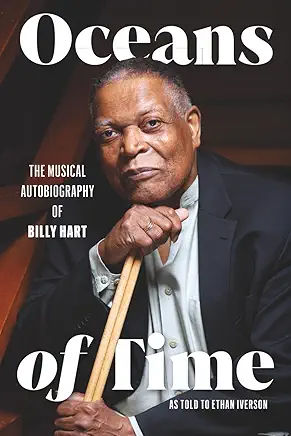
Happily this year saw the release of this very fine & informative “Musical Autobiography” of NEA Jazz Master drummer-bandleader-composer Billy Hart.Oceans of Time (2025 Cymbal Press) “As Told To” pianist and longtime Billy Hart Quartet collaborator, pianist-composer-bandleader Ethan Iverson. Quite a fine and informative writer (look for his lively Substack columns), in addition to his obvious piano prowess and high IQ musicality (something that was indelibly driven home for me during his residency several seasons ago at Umbria Jazz’s winter festival in the lovely town of Orvieto), with Oceans of Time Iverson has quite successfully conveyed a true page-turning interpretation of a jazz life beautifully lived by one of the finest drummers of the last half-century, DC’s own Billy Hart. Clearly some questions were in order for Ethan Iverson
When did you first connect with Billy Hart and what were the circumstances?
When I was first collecting jazz records, I noticed that I particularly liked Billy’s drumming. The first album was the Herbie Hancock live album VSOP, where the Mwandishi sextet plays two tunes, and after that first contact, I started collecting records with Billy’s name listed in the credits. When I moved to New York I started seeing Billy play live; in particular I remember a Marc Copland trio gig at Cleopatra’s Needle where I was just mesmerized by Billy. Trombonist Christiphe Schweitzer put Billy and myself together in the late ‘90s for a gig, and that was that, Billy hasn’t been able to get rid of me ever since.
How long have you been a member of the Billy Hart Quartet and how many recordings has that band made?
The 5th album is coming out this month, MULTIDIRECTIONAL, a live recording from SMOKE. We have been together as a quartet for 22 years! Isn’t that incredible. Most groups don’t get so much road time together.
Have you and Billy Hart performed together in any other contexts besides the Quartet?
Once in a while I hire Billy to play trio with me, for example in February I’ll be playing at Birdland with Billy and his long-term associate [bassist] Buster Williams. I really need to be at the top of my game to play with Billy and Buster!
What have been some of the most stimulating and rewarding factors for you and your artistry stemming from performing with Billy Hart?
I don’t know what swing is, but I know everything Billy Hart plays is always incredibly swinging. A universe of beat.
How did you determine that Billy Hart’s story needed to be developed in book form?
He always told amazing stories, and in fact, many people have told me something like, “Thanks so much for enshrining these wonderful tales, which we have all heard before, in a book that will reach the larger community.” On more personal level, I regard Billy as my greatest teacher. In fact, much of my own critical writing on jazz is deeply informed by Billy’s perspective.
When you started this book process were you at all aware that the list of great jazz artist biographies and autobiographies is relatively short?
Yes. The larger arts world has never understood jazz too well. Perhaps it is the double whammy of the music being genuinely mysterious and institutional racism. Thank you Willard, for your collaboration with Randy Weston!
Once the two of you agreed to begin this book process, how did you proceed with Billy?
We had a significant amount of touring lined up for his 80th birthday [Ed. note: now at 84 Billy Hart is still playing oceans of time!], but then the Covid pandemic halted those plans. Instead, we got on Zoom together, and I asked him to go on record, starting from the beginning. I guess there were about 14 hours worth of new video interviews; I also looked at previous interviews and secondary sources. When I started editing the transcript, I kept in mind a favorite jazz memoir, Raise Up Off Me, [pianist] Hampton Hawes as told to Don Asher. Hawes was not a writer but Asher steps out the frame, it really sounds like Hawes is talking; the book is also reasonably short and jam-packed with incident. I tried to follow the Hawes/Asher model for Oceans of Time.
What is your sense of the ultimate value of Oceans of Time in the overall jazz bibliographyy?
That’s not for me to say, but I do think there is one aspect that is at least slightly innovative, which are the third-person footnotes explaining further historical context and the discography that integrates with the book’s text. This is all content that Billy himself would not say, yet is good to know. The research team (myself and two historians, Scott Douglass and George Korval) are able to frame his conversation from an outsider’s perspective, as if we are making a documentary in real time.
Pianist-composer Burnett Thompson, is quite the busy man – someone who describes his life as splitting time between New York, DC, and Shanghai, China. On November 7th he’ll play “American Rhapsody” in trio with bassist Alex Blake and tabla player Hamid Habib Zada as part of his ongoing Bach to Bebop concert series at intimate confines of the Decatur House Museum in DC (located at 748 Jackson Pl. NW in downtown DC a block from the White House). Bach to Bebop is a lovely series that in overall feeling harkens back to the days of parlor concerts. A man with a wealth of musical ideas and broad cultural perspectives, season 12 of his Bach to Bebop series is part of his ongoing Piano Jazz DC presentations, which was preceded by his Piano Jazz at the Arts Club series in DC.
In New York on December 1 Burnett will lead a band at Mezzrow Jazz Club that includes saxophonist Jon Irabagon, bassist Alex Blake, and clarinetist Kiera Thompson. Clearly it was time for some Independent Ear questions for Burnett Thompson.
GIve us some background on Burnett Thompson My parents were both pianists. My mother could only read musical scores, my father, a pastor, could only play by ear. My father played anything he heard in any key, whether Ellington, Frankie Carle. or Charles WesleyEllington. He travelled around the country as pianist with a camp meeting evangelist in the 1940’s for that very reason. My mother was very fastidious with her music, playing in church services two or three times per week, as one did in those days. My mother was my first teacher, while I inherited my concept of extemporaneous playing from my dad. I went to music conservatories in Vienna and Boston, then in London. When I returned to the U.S., like many of my colleagues, I got a job playing nightly in a restaurant in D.C, and continued this activity five nights per week for 20 years. There were easily 30 other pianists at that time, in all of the major hotels and many restaurants. We were all playing five nights per week, often solo, but often with the many bassists who hopped from venue to venue. The bassists included Keter Betts, James King, Steve Novosel, Paul Langosh, Ephraim Wolfolk, and numerous other fine players.
Many of us wound up at the One Step Down after hours, and that is where I heard some of the greats. I took my training seriously, and practiced as much as 10 hours per day, and just 6 hours during the day when I was working at night. Hence, I was drawn to a certain kind of pianist, and that most notably included Cedar Walton,McCoy Tyner, Ahmad Jamal, and Sir Roland Hanna. These artists had great command of the instrument, and I was inspired to absorb their musical languages as well. When it came to pure art, there was Shirley Horn, yet another master.
What is the guiding mission behind your PianoJazz DC series? I went into some depth when describing my own background as a preface to my personal mission with the PianoJazz DC series. The picture that I drew of D.C. as the home of dozens of working pianists no longer exists. That environment existed for Duke Ellington, who played for high society in D.C. as a teenager and continued in his early twenties. He was among many in D.C., but was among the few who took his ensemble to New York, and we know what happened there. The piano played an enormous role in D.C. society and culture in 19th and 20th centuries, going back to George Washington’s Mount Vernon, where the Austrian composer Alexander Reinagle was hired to teach piano to Martha Washington’s daughter. It is well documented that there was a “piano in every home”, used for popular song, hymns, and for training. Printed songs and collections comprised an enormous industry in the 19th and early 20th centuries, with the assumption that the buyer could play the piano parts. Thus, you could say that my mission is to sustain the piano, in our case fine Steinways, as a vehicle of artistic and musical expression. Keyboards and amplified pianos convey a fraction of the natural sound of a great instrument.
How did you connect the Decatur House Museum as your venue for this series?
The Decatur House Museum is the home of the White House Historical Association. The original series in 2013-2014 was called The Piano in the White House, with assistance from WHHA music historian Dr. Elise Kirk. Four pianists were featured, performing music related to the appearances of major artists who performed in the White House, including Duke Ellington, Dave Brubeck, Marian McPartland, Mary Lou Williams, Hazel Scott, Aaron Copland, William Bolcom, William Schumann, Virgil Thomson, and Elliott Carter. The video archive of that series is at www.tinyurl.com/pianojazzwh
Now that you’re in your 12th season of PianoJazz DC, what have been some of your highlights? There are two principle highlights. The first is the astonishing assembly of forty-four different pianists over the last eleven years. The second feature is the faithful audience that has developed in that time, to where every concert sells out. Rusty Hassan has interviewed each pianist on air at WPFW, and we have archived both the concert videos and the interviews. The overview can be viewed at www.tinyurl.com/historypj.
We have interspersed the jazz concerts with the Goldberg Variations of J.S. Bach, the Etudes of Phillip Glass, the pop tunes of Radiohead, and music of the Viennese classical era. We also presented a Palestinian pianist who focused on the music of the Armenian composer Aram Khachaturian. Other artists have included saxophonists Jon Irabagon and Roxy Coss, as well as the eminent bassist Alex Blake.
The jazz pianists who have appeared on the series are regularly heard at Jazz at Lincoln Center, the Village Vanguard, the Jazz Standard, Jazz Gallery, Smalls, Mezzrow, and Smoke in Manhattan. They regularly travel the world as headliners or in support of other major artists.
Who do you find is the core audience for PianoJazz DC? What we have found is that most of the pianists that we have presented are unknown among the musicians and concert directors in Washington, DC. These pianists anchor the NYC and international scenes, but are nonetheless new to our audiences. Hence, we rely on the reputation of the series itself, where audiences have grown to expect brilliant performance in an intimate environment. The audience is a generous cross section of people who attend other DC jazz venues, and those who attended Jason Moran’s series at the Kennedy Center over the years.
What do you look for in determining the stylistic fit and blend of your series? We aim for the most creative, the most inventive, and the most accomplished pianists in the world today. It is of consequence to note that a full one third of the pianists have been women, in great contrast to most of the venues in New York and Washington that almost exclusively feature men as instrumental headliners. The women have often offered performances that are more compelling than their male counterparts. Many of our performers are Monk Competition winners, Grammy winners, and Grammy nominees, with extensive coverage in international media, whereas others have successfully drawn no attention to themselves. It is important to add that they have been from Panama, Argentina, China, Taiwan, Japan, Korea, Jordan, and Austria, albeit working in New York.
Trombonist Aaron J. Johnson teaches at the University of Pittsburgh, where he serves as Associate Professor and Chair of the Department of Music, positions once occupied at Pitt by the late, great Geri Allen. who succeeded the great Nathan Davis.
Aaron Johnson’s 2024 book is the extremely valuable and informative volume Jazz Radio America (University of Illinois Press). Being someone experienced in and always keenly interested in the evolution of jazz music on the radio, I have to say I devoured Jazz Radio America. As I read the book, clearly some Independent Ear questions were in order for author Aaron J. Johnson. You can learn more about Aaron J. Johnson here: https://www.music.pitt.edu/people/aaron-johnson
1) What was your original motivation for writing Jazz Radio America?
I’m pretty sure it was my love of radio. Radio was such a vital and shared experience in my 60s’ and 70s’ youth. And the 60s and 70s were a period where we were blessed with such explosive musical content. And the black radio developments which were so fueled by the civil rights and black power movements also had the magnificent content of the music of that time. And I got to be a part of radio. I was very blessed as a kid to be good in both music and in math and science. My family (read, me) was given an old piano and that got me started in music. I went to Bunker Hill elementary in NE DC (Michigan Park) and wanted to play drums. My grade school teacher was Hershel McGinnis and years later I found out from Charles Tolliver that McGinnis was considered DC’s Eric Dolphy! (I have been able to track down one recording he made in Europe with someone.)
The point is I was in music deep in school and the DC Youth Orchestra program and in neighborhood funk bands, but I was also a math and science nerd — double majored in Pre-engineering and Music at McKinley Tech. So radio was fascinating to me both in its programming and its technology.
This book had its beginnings as a research topic while I was a PhD student at Columbia University, because it occurred to me that little had been written about jazz and radio’s mutual impact on each other, and most that had been written concentrated on the network radio era between the world wars.
I really wanted to capture the big picture about jazz on the radio. To make the project more manageable I just started with post-war radio–radio mostly about playing records and about DJs. Maybe one day I will go back a take a swing (no pun intended) at the network era. Capturing the big picture is hard. Could I write about all the important jazz DJs and not leave people out? In the end, I didn’t write that kind of book, though that kind of book would be great to have. (I used to love books like that. Through my big brother I had copies of the NBA Register which had every active player’s bio and stats and also every all-time great’s bio and stats. These kind of reference books are so useful for research, so I hope someone writes an encyclopedia of jazz DJs.)
It seemed like there were big themes that played in most markets in both the life of jazz on commercial radio and on noncomercial radio. I wanted to understand what forces played a role in determining content–why some music gets played and some doesen’t. And I wanted to explore what role race played in how radio was owned, programmed, and listened to. And I suppose along the way, I wanted readers to understand the differences between radio stations like WPFW, the old WDCU, WAMU, WRFG, WCLK, and WKCR to name a few types.
2) Talk about your research process for preparing this book.
It was daunting. Because there are thousands of radio stations and maybe a thousand that played a part in jazz radio at one time or another. Sadly, very few airchecks. Fortunately, lots of survivors like Rusty Hassan and, at the time I was writing, Dick LaPalm. And as radio was once a big thing, lots of news and trade publication coverage of developments on radio and in music marketing. My strengths as a researcher are in archival research–I love plunging in to documents, recordings, IRS filings, bylaws, websites. I need to get better at interviewing. Fortunately other people are good at it and an archival researcher like me can find those interviews in various collections and scour through the 30- or 60- minute interview for the 1:27 seconds they say something relevant about jazz.
What was really hard to find was direct interaction evidence between the record company people that needed radio for promotion and the radio people who needed music product for programming. That was the interaction I was most interested in and I did find some folks at labels like Pi and Firehouse that release adventurous music–they illustrated the willingness of college radio (like WKCR or WRCT) and community radio like WPFW or WRFG to play Tyshawn Sorey or Steve Lehman. And I did have Dick LaPalm to talk about record promotion in the commercial era.
When researching the noncommericial era, I am fortunate in that the doings of the CPB and NPR get limited but useful news coverage and the consultant/professional research structure published a lot of documents. Lots of smoking guns about why jazz has been suffering on noncommercial radio.
3) What is your own experience broadcasting jazz on the radio, and how did that experience motivate this book project?
While looking for a concert by brass players from the National Symphony on the old Columbia Union College (now Washington Adventist University) campus, I stumbled upon their radio station WGTS-FM. They let me in and I started working there as a board op. in high school–a good mashup of my love for music and technology. I also did college radio with a 12-3am jazz show at Carnegie Mellon’s WRCT when I was a student there. I was also the station’s chief operator as I had a 2nd class FCC license. But I never returned to radio when I finished college. I was busy enough as an apprentice jazz musician (trombone), full-time electrical engineer, and husband. Although I enjoyed it, I never really missed it.
It certainly informed the project as I had insights on how stations operated, how DJs worked or wanted to work, and how the regulation and ownership play a big part in how rafio works
4) With all of the knowledge and research material you gathered for this book, how has this book writing process colored or in any way changed your perception of good jazz radio broadcasting?
Well, certainly more respect for the programmer/DJs who have managed to hang on through all the obstacles and institutional roadblocks. It makes me think about the disconnect between support for jazz as a cultural asset as in HR57 and the desire of some stations to increase listnership or membership or underwritting.
And the unique challenge jazz programmer/DJs have in screening, selecting, and playing new releases to support current artists and still play the all time great music that there is so much of. I don’t think any format in commercial broadcasting gives over so much space to “oldies.”
5) As you went about investigating the various stations and jazz radio movements you’ve documented, what were some of the most surprising elements you encountered?
Well, at first I was surprised by how much jazz was on AM radio even in the 1960s. No matter what the format, that’s not really true, the jazz DJ shows tended to be on white MOR radio stations like KDKA in Pittsburgh, KMOX in St. Louis or WOR in NYC, usually overnight or around midnight or Saturday morning and there were jazz shows on Black or black-appeal (but white-owned) radio in a similar way, but also, perhaps a dose of jazz records right after the morning shows. One of the things I worked on earliest was the chapter on the attempt to have all-jazz commercial radio station. They pretty much all failed as a result of failing to get advertising. And certainly, racism played a part there 1) in refusing to believe the black middle class listeners existed and 2) in rejecting the notion that jazz listeners were people with sophisticated buying tastes–something that allowed a classical station to exist in almost every market.
I am not sure I did a good job with the underlying message in that chapter, which was, the collaborative “partnership” of all-jazz commercial radio stations and the jazz music industry (record companies and the clubs that had jazz ads) was more open to diverse jazz styles than the succesors in noncommercial radio–particularly on public radio. My idea is that record companies and the WRVRs of the world looked as fusion and jazz with electric instruments and jazz-funk and jazz-soul and of course soul-jazz as paths to making jazz make money. Of course they didn’t care about Air or Art Ensemble or Muhal, but they did give RTF and Billy Cobham’s funk records a chance. You never hear music like that on public radio jazz programs today, everything is in the narrow range of post-bop styles. And my reason is that unlike the unholy collaboration of radio station owners and management with record companies, in public radio, jazz is safely in the hands of jazz experts who never like electric Miles.
6) In your experience writing this book, what jazz radio station(s) or program(s) best exemplified your own sense of the jazz broadcasting responsibility?
Haha! Is the deep dives, marathons, memorial broadcasts, and jazz birthdays of WKCR responsible? That kind of thing works best in college (run by students and volunteers) radio. I think community radio does a great job with jazz. WPFW is a hybrid due to its Pacifica ownership but at times it is my favorite place to listen to jazz today. I dig WRFG. Community radio is not afraid to place jazz in conversation with other black music styles, willing to play advenurous stuff. Also some stations with independent foundations or boards play music that I am happy to stream. Places like WDNA and KSDS. And HBCUs have a different set of imperatives. For most of the jazz world smooth jazz is a dirty word. Smooth jazz is dismissed as instrumental R&B (I am one of those people–but — I like R& B). But HBCU radio sometimes acts like community radio, sometimes like public radio, sometimes like college radio. One key thing is that HBCU stations often feel the need to serve the entire black community and older folks like smooth jazz as do young guys who think it is jazz. But there are some good efforts to spread the word about jazz on HBCUs.